

The word "DARK" can have various meanings and interpretations depending on the context and perspective. Some of the common interpretations of "DARK" are as follows:
Lack of Light: The absence or scarcity of visible light is often associated with darkness. In this sense, darkness can be seen as the opposite of brightness, and it can create a sense of mystery and uncertainty.
Evil or Negative Connotations: The word "DARK" can also be used to describe something that is associated with negative or evil connotations. For example, the phrase "dark magic" refers to the use of supernatural powers for malevolent purposes.
Hidden or Secretive: Darkness can also be used to describe something that is hidden or secretive. For instance, a "dark alley" might be a place where criminal activities take place, and it's not well lit or easily accessible.
Emotional State: Dark can also be used to describe someone's emotional state. For instance, if someone is feeling sad or depressed, they might say they are in a "dark place."
Color: Finally, dark can also be used to describe a specific color, such as dark blue or dark red. In this sense, "dark" is used to describe a shade that is deeper or more intense than the average hue.
Now, let's take a look at some images that can help illustrate the concept of "DARK":
A Night Sky:
The night sky is a breathtaking sight that has fascinated humans for centuries. It is a window into the vast and mysterious universe, and it offers us a glimpse into the infinite possibilities of existence. Whether you are a stargazer, an astronomer, or simply a curious observer, the night sky is a source of wonder and inspiration.
Looking up at the night sky, the first thing that catches your eye is the stars. They are like tiny points of light that twinkle and dance against the dark canvas of the sky. Each one is a distant sun, with its own planets, moons, and possibly even life. The sheer number of stars in the night sky is staggering, and it is estimated that there are billions of them in our galaxy alone.
As you gaze deeper into the night sky, you might spot other celestial objects, such as planets, nebulae, and galaxies. These objects are like little miracles, each one a product of the same cosmic processes that created our own planet and solar system. They remind us that we are just a tiny part of a much larger universe, and that there is so much more to discover and explore.
One of the most beautiful sights in the night sky is the Milky Way. It is a band of light that stretches across the sky, made up of millions of stars and interstellar dust. To see it, you need to be in a dark location away from city lights, where the sky is free from light pollution. It is a sight that takes your breath away and makes you feel small and insignificant in the grand scheme of things.
The night sky has been a source of inspiration for artists and poets for centuries. It has been used to convey ideas of wonder, beauty, and mystery. It has been a symbol of hope, a reminder of the infinite possibilities of existence. It has also been a source of fear and uncertainty, a reminder of the vastness and power of the universe.
In recent years, advances in technology have allowed us to explore the night sky in new and exciting ways. Telescopes, space probes, and satellites have enabled us to see farther and deeper into the universe than ever before. We have discovered new planets, moons, and even galaxies, and we continue to learn more about the mysteries of the cosmos every day.
In conclusion, the night sky is a magnificent sight that reminds us of the beauty, wonder, and complexity of the universe. It is a reminder that we are just a small part of a much larger and more mysterious whole. Whether you are a stargazer, an astronomer, or simply a curious observer, the night sky is a source of inspiration and awe that will continue to captivate us for generations to come.
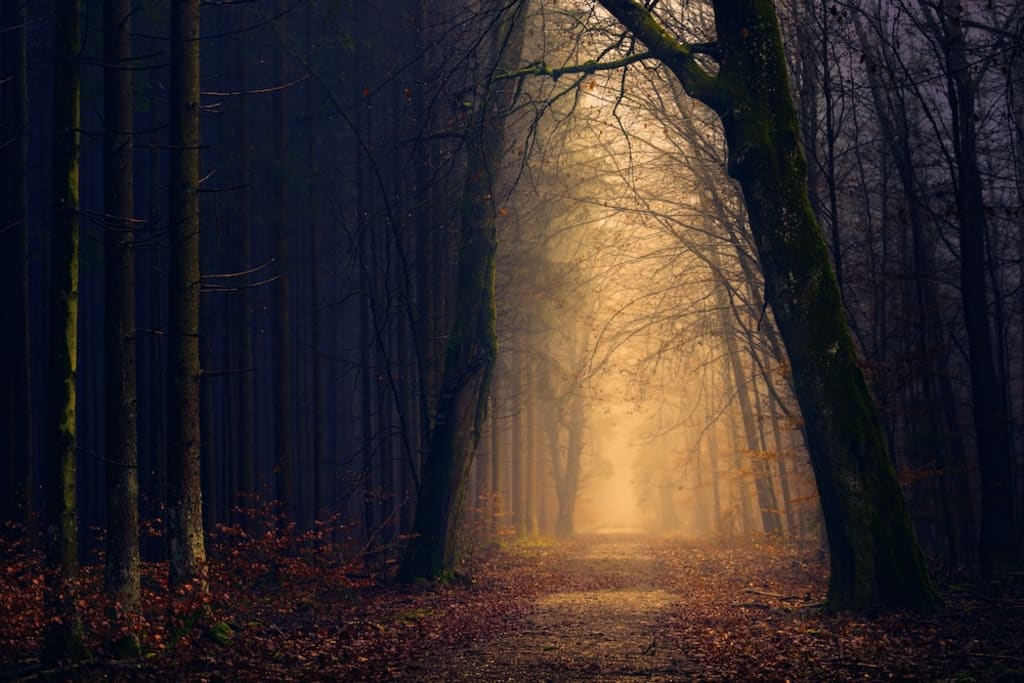
A Spooky Forest :
The spooky forest is a classic horror trope that has been used in literature, film, and other forms of media for many years. It is a place of darkness and uncertainty, where danger lurks behind every tree and bush. The spooky forest is a symbol of the unknown, the mysterious, and the supernatural.
In literature, the spooky forest has been used as a setting for many famous works of horror fiction. For example, in Nathaniel Hawthorne's "Young Goodman Brown," the protagonist wanders into a forest where he encounters witches and other supernatural beings. In J.R.R. Tolkien's "The Lord of the Rings," the characters venture into the dark forest of Mirkwood, where they must face giant spiders and other dangers.
In film, the spooky forest has been used as a setting for many classic horror movies. For example, in "The Blair Witch Project," a group of filmmakers venture into a spooky forest where they encounter strange and terrifying phenomena. In "The Cabin in the Woods," a group of friends go camping in a forest where they encounter a host of supernatural creatures.
The spooky forest is also a popular theme in video games. Games like "Silent Hill" and "Resident Evil" often feature spooky forests as a setting for their horror-filled adventures. In these games, the forests are often filled with traps, puzzles, and dangerous monsters that the player must overcome in order to progress.
The spooky forest is a symbol of the unknown and the mysterious. It represents the fear of the unknown and the fear of the supernatural. The darkness of the forest creates a sense of unease and uncertainty, as the characters are unsure of what might be lurking around the next corner.
However, the spooky forest can also represent a place of transformation and growth. In some stories, characters enter the forest as one person and emerge as someone different, having faced their fears and overcome their challenges. The forest can represent a place of spiritual growth and self-discovery.
In conclusion, the spooky forest is a classic horror trope that has been used in literature, film, and video games for many years. It is a symbol of the unknown, the mysterious, and the supernatural. The darkness of the forest creates a sense of unease and uncertainty, and the characters are often faced with dangerous and terrifying situations. However, the spooky forest can also represent a place of transformation and growth, where characters can overcome their fears and emerge stronger and more resilient.
A Horror Movie Scene : Horror movies are designed to scare and thrill audiences, and one of the most effective ways of achieving this is through a well-crafted horror movie scene. A good horror movie scene can make your heart race, your palms sweat, and your adrenaline pump as you watch the characters face their fears and confront the unknown.
One of the hallmarks of a great horror movie scene is the use of suspense. The scene builds tension gradually, through the use of lighting, sound, and camera angles. The audience is kept on the edge of their seats, waiting for something to happen, while the characters move through the scene, unaware of the danger that awaits them.
Another important element of a great horror movie scene is the use of jump scares. Jump scares are sudden, unexpected moments of terror that catch the audience off guard. They can be achieved through the use of sudden loud noises, unexpected movements, or the appearance of a terrifying creature or person.
One of the most iconic horror movie scenes of all time is the shower scene from Alfred Hitchcock's "Psycho." In this scene, the character Marion Crane is taking a shower when she is attacked by an unknown assailant. The scene is shot in black and white, with a screeching soundtrack that builds tension and suspense. The sudden appearance of the killer, with his knife, is one of the most famous jump scares in movie history.
Another classic horror movie scene is the exorcism scene from "The Exorcist." In this scene, the priest Father Merrin and Father Karras perform an exorcism on the possessed Regan MacNeil. The scene is shot in a dimly lit room, with eerie music and disturbing imagery. The tension builds as the priests struggle to expel the demon from Regan's body, and the scene ends with a terrifying jump scare as the demon attacks Father Karras.
In conclusion, horror movie scenes are designed to scare and thrill audiences, and the best ones use a combination of suspense and jump scares to create a truly terrifying experience. From the iconic shower scene in "Psycho" to the exorcism scene in "The Exorcist," horror movie scenes have become a staple of popular culture and continue to terrify audiences to this day.
A Sad Person: Sadness is an emotion that we all experience at one point or another. Whether it's due to a personal loss, a difficult life circumstance, or a mental health condition, feeling sad can be a deeply challenging experience.
For some people, sadness is a chronic condition that can last for weeks, months, or even years. A sad person may experience a range of symptoms, including feelings of hopelessness, worthlessness, and despair. They may struggle to find joy in the things they used to enjoy, and may withdraw from social activities and relationships. Sadness can also manifest physically, with symptoms like fatigue, changes in appetite and sleep patterns, and aches and pains. For some people, sadness can develop into clinical depression, which is a serious mental health condition that requires professional treatment. Depression can be caused by a variety of factors, including genetics, brain chemistry, and life circumstances. Treatment may include therapy, medication, or a combination of both. It's important to note that sadness is a normal human emotion, and experiencing it doesn't mean that there's something wrong with you. However, if your sadness is interfering with your daily life or causing you to have thoughts of self-harm or suicide, it's important to seek professional help immediately. If you know someone who is experiencing sadness, it's important to be supportive and understanding. Don't try to minimize their feelings or tell them to "just cheer up." Instead, listen to them without judgment, and offer to help them find resources and support. Encourage them to seek professional help if necessary, and let them know that you care about them and want to support them through this difficult time. In conclusion, sadness is a complex emotion that can have a profound impact on a person's life. If you're experiencing sadness, it's important to know that you're not alone and that there is help available. If you know someone who is experiencing sadness, be supportive and understanding, and encourage them to seek professional help if necessary. Remember that healing takes time, and that with the right support and resources, it is possible to move through sadness and find joy and happiness again.
A Dark Colored Object: Dark-colored objects have always been associated with mystery and intrigue. They evoke feelings of seriousness, depth, and even danger. From clothing to cars to interior design, dark colors have been used to create a sense of sophistication and elegance. However, they can also be used to evoke a sense of fear and uncertainty.
One of the most common dark-colored objects is the black car. Black cars are often associated with power and luxury, and they are a popular choice for executives and high-end car enthusiasts. However, they are also associated with danger and secrecy, as they can be used to transport people or objects in a discreet manner.
Black clothing is another example of a dark-colored object that has been associated with both elegance and danger. Black is often seen as a sophisticated and stylish color, and it is a popular choice for formal wear. However, it is also associated with rebellion and counterculture, as black clothing has been worn by groups such as punks and goths to express their nonconformity.
Another dark-colored object that evokes a sense of danger and mystery is the black cat. In many cultures, black cats are seen as symbols of bad luck or even evil. This association has led to black cats being shunned or mistreated in some societies, despite the fact that they are no more dangerous than any other cat.
Dark-colored objects can also be used to create a sense of depth and seriousness in art and design. For example, a dark-colored painting can evoke a sense of melancholy or introspection, while a dark-colored room can create a sense of coziness and intimacy.
In conclusion, dark-colored objects can be both elegant and dangerous, sophisticated and rebellious. They evoke a sense of mystery and intrigue, and they can be used to create a variety of moods and emotions in art, design, and fashion. Whether it's a black car, a black cat, or a dark-colored painting, dark-colored objects have always captured our imagination and our fascination with the unknown.
In conclusion, "DARK" is a complex and multifaceted concept that can have different meanings depending on the context and interpretation. The images provided can help illustrate some of the different interpretations of "DARK" and provide a visual representation of the concept.
Regardless of the specific meaning or interpretation of "DARK," it often carries a sense of mystery, uncertainty, and even danger. This can make it a powerful tool in storytelling and art, as it can create tension and intrigue.
For example, in literature, darkness is often used as a metaphor for the unknown and the subconscious. Characters might venture into dark forests, dark caves, or dark corners of their minds to confront their fears and desires. The darkness in these situations can represent the challenges and uncertainties that the characters must overcome to reach their goals.
Similarly, in visual art, darkness can be used to create contrast and depth. By using shadows and shading, artists can create a sense of three-dimensionality and realism. They can also use darkness to create mood and atmosphere, as in the case of the spooky forest image mentioned earlier.
Darkness can also be used to convey a sense of drama and intensity in music. In many genres, such as rock, metal, and electronic music, the use of minor chords and dark lyrics can create a sense of foreboding and tension. The darkness in these cases can represent the emotional intensity of the music and the themes it explores.
Overall, "DARK" is a rich and complex concept that can be interpreted in many different ways. Whether it represents the absence of light, the unknown and hidden, or the emotional intensity of a piece of art, darkness is a powerful tool that can be used to create tension, depth, and intrigue. The images provided can help illustrate some of the different meanings and interpretations of "DARK" and provide a visual representation of this complex concept.
About the Creator
Magical Writes
Welcome to Magical2Writes.com, a place where the magic of words comes alive! We believe in the power of storytelling and its ability to transport readers to new worlds, inspire emotions, and connect us all through shared experiences.
Keep reading
More stories from Magical Writes and writers in Earth and other communities.
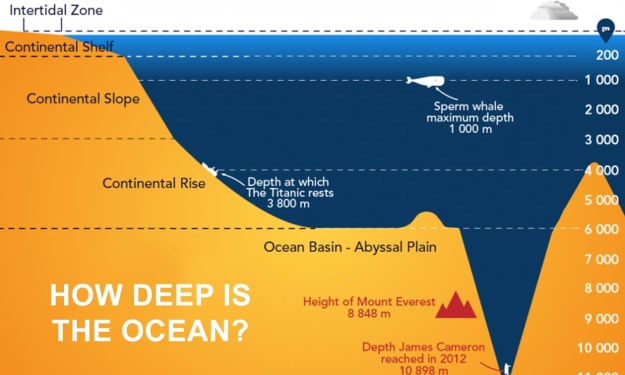
Title: Exploring the Depths of the Sea: A Comprehensive Study of Oceanic Depths
Introduction: The ocean covers more than 70% of the Earth's surface and remains one of the most mysterious and fascinating frontiers of our planet. The depth of the sea varies greatly, from the shallow waters of the continental shelves to the pitch-black depths of the abyssal plains. Understanding the complex topography and geology of the ocean floor is essential for understanding the ocean's ecology, geology, and natural resources, as well as the impact of human activities on this delicate ecosystem. In this comprehensive study, we will explore the depths of the sea, from the surface to the Challenger Deep, and examine the factors that influence the depths and features of the ocean floor.
By Magical Writes3 years ago in Earth
Microbiota, microbiome or microflora: how to speak correctly and why it is for health.
You've probably heard the phrase, "We are what we eat." But modern science says more precisely: we are also those who live in us. Until 2016, it was believed that there are many times more bacteria in our body than our own cells. The latest calculations by mathematicians show that we divide the body with our microorganisms by about 50/50: about 30 trillion of our cells versus 38 trillion bacterial ones.
By Yaroslav Gorohov3 days ago in Earth
Chinese EVs Closing In on America After Canadian Tariffs Deal
The electric vehicle race is no longer just about climate goals or consumer choice — it has become a geopolitical contest. And in early 2026, a subtle but powerful move by Canada may have tilted the board. By agreeing to sharply reduce tariffs on Chinese electric vehicles, Canada has opened a door that the United States has worked hard to keep shut. While Chinese EVs are still largely barred from the American market, they are now edging closer than ever — not by crossing the border directly, but by entering through Canada. This development raises a pressing question: Are Chinese EVs closing in on America, and what does that mean for the future of North American auto markets? The Deal That Changed the Game Canada’s new agreement with China allows up to 49,000 Chinese-made electric vehicles per year to enter the Canadian market at a tariff rate of just over 6%, a dramatic drop from the previous 100% tariff that effectively blocked them. On paper, the quota seems small. In reality, it carries enormous symbolic and strategic weight. For years, both Canada and the United States aligned closely on keeping Chinese EVs out, citing concerns over unfair subsidies, national security, and the protection of domestic auto industries. This new deal marks a clear shift — and a divergence from U.S. policy. Canada didn’t make the decision in isolation. The EV tariff reduction was part of a broader trade reset with China, tied to agricultural exports such as canola and efforts to stabilize a strained economic relationship. Why Chinese EVs Matter So Much China is the undisputed leader of the global electric vehicle industry. Its manufacturers produce EVs at scale, often at prices Western automakers struggle to match. Brands like BYD, Nio, and Xpeng have already expanded aggressively into Europe, Southeast Asia, and parts of the Middle East. North America has remained one of the final fortified markets — until now. Chinese EVs are appealing not just because they’re cheaper, but because they’ve rapidly improved in quality, range, and technology. For consumers priced out of North American and European EV models, Chinese vehicles offer something rare: affordability without sacrificing features. Canada’s decision gives Chinese automakers their first legitimate foothold in North America — and footholds tend to grow. Why the U.S. Is Nervous The United States still enforces a 100% tariff on Chinese EV imports, making them effectively unsellable in the American market. But Canada’s move has triggered concern in Washington. U.S. officials argue that Chinese EVs entering Canada could indirectly pressure American markets, influence supply chains, and weaken Washington’s leverage in future trade negotiations. There’s also a political dimension. Both major U.S. parties have framed Chinese dominance in EVs as a strategic threat — not just to auto jobs, but to technological leadership. Modern EVs collect vast amounts of data, and lawmakers have raised concerns about cybersecurity and foreign data access. While Chinese EVs aren’t rolling onto American roads yet, their presence just across the border changes the conversation. Canada’s Risk — and Opportunity Inside Canada, the reaction has been mixed. Automotive hubs like Ontario worry that opening the market could undermine domestic manufacturing and strain relations with the U.S., Canada’s largest trading partner. Some leaders have called the deal “lopsided,” warning it could cost jobs if American retaliation follows. Others see opportunity. A more competitive EV market could lower prices for Canadian consumers and accelerate EV adoption. It may also attract Chinese investment into Canada itself — including factories, battery plants, and supply chain partnerships. If Chinese automakers choose to build in Canada rather than simply export to it, the country could position itself as a bridge between Chinese EV innovation and North American demand. That balancing act — between economic opportunity and political risk — defines Canada’s strategy. Are Chinese EVs Really ‘Closing In’ on America? For now, the answer is: not directly — but strategically, yes. Chinese EVs sold in Canada won’t automatically flood the U.S. market. Regulations, trade rules, and tariffs still stand in the way. But proximity matters. Supply chains overlap. Consumer awareness spreads. Manufacturing footprints expand. There’s also the possibility of a workaround: Chinese companies could eventually build EVs in North America to bypass tariffs altogether. This idea has already been floated — but it faces fierce resistance from U.S. lawmakers and unions. Still, history shows that once a global industry leader gains regional access, momentum often follows. What This Means for Consumers For Canadian buyers, the impact could be immediate: more choice and lower prices in an EV market that has long been criticized for being expensive and limited. For American consumers, the effect will be indirect — at least at first. But increased competition could eventually pressure U.S. automakers to reduce prices, improve features, and accelerate innovation. The larger question is whether North America wants competition or insulation — and how long insulation can realistically last in a globalized EV economy. The Bigger Picture: A Global EV Power Shift Canada’s tariff deal reflects a broader reality: China’s dominance in electric vehicles is reshaping global trade, whether governments like it or not. Europe is already grappling with an influx of Chinese EVs. Emerging markets are embracing them. And now, North America has its first real crack in the wall. This isn’t just about cars. It’s about who controls the future of clean transportation, supply chains, and industrial policy. Final Thoughts Chinese EVs aren’t driving down American highways yet — but after Canada’s tariff deal, they’re closer than ever. This move doesn’t spell immediate disruption, but it does signal a shift. One country has decided that economic pragmatism outweighs political alignment. And in doing so, Canada may have opened the door to a new phase of EV competition in North America. Whether that door swings wider — or slams shut — will depend on how the U.S., automakers, and consumers respond. One thing is certain: the EV race just entered a new chapter.
By Muhammad Hassanabout 19 hours ago in Earth


Comments
There are no comments for this story
Be the first to respond and start the conversation.