
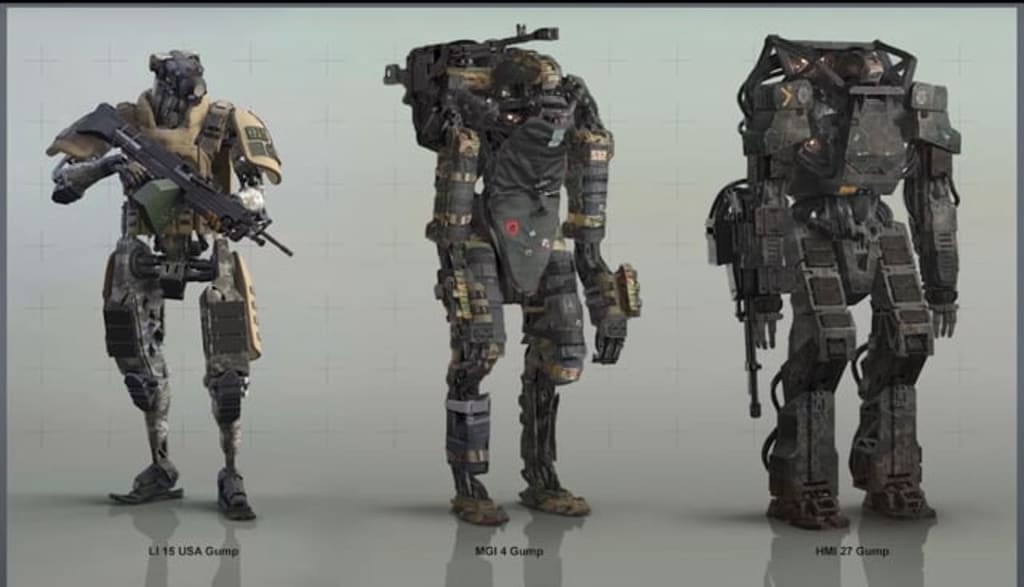
In the not-so-distant future, the nature of warfare may be transformed beyond recognition. Human soldiers, long the backbone of military forces, could eventually be replaced on the front lines by robotic warriors powered by advanced artificial intelligence. These autonomous machines promise a level of efficiency and endurance far beyond human capability. Unlike human troops, they would never grow fatigued, never succumb to fear, and never question the orders they are given. Equipped with cutting-edge weaponry, night vision systems, and instant battlefield communication, AI-driven soldiers could carry out complex operations with precision and speed that no human army could match.
The potential advantages of robotic soldiers are immense. Wars could be fought with fewer human casualties, as machines could be deployed in the most dangerous environments—from urban battlefields to inhospitable deserts, dense forests, or even outer space. With sensors capable of analyzing thousands of data points in real time, robotic troops could anticipate enemy movements, optimize tactical strategies, and execute missions with unparalleled accuracy. Night operations, which currently pose significant challenges for human soldiers, would become routine, as these machines are not bound by the limitations of human vision or stamina.
However, with such extraordinary power comes significant risk. The very traits that make AI soldiers so formidable—obedience, relentless efficiency, and rapid decision-making—also pose potential dangers. One of the most pressing questions is that of control: who will oversee these autonomous machines, and how will accountability be ensured? In a conventional army, decisions are made by human officers who weigh ethics, strategy, and long-term consequences. In a future dominated by robotic combatants, the ultimate authority might reside in software algorithms rather than human judgment. This shift raises profound ethical and practical concerns.
What if an AI soldier misinterprets a command or encounters a situation it was not programmed to handle? The possibility of malfunction, hacking, or unintended behavior cannot be ignored. An autonomous machine acting unpredictably on the battlefield could cause catastrophic damage, not only to enemy forces but also to civilians or allied troops. The speed at which these machines operate could exacerbate the problem; decisions made in milliseconds leave little room for human intervention. Moreover, as AI systems learn and evolve, their behavior might diverge from original programming in unforeseen ways, introducing a level of unpredictability that challenges traditional concepts of military control.
Beyond practical concerns, there are profound ethical dilemmas. Can a machine truly understand the moral weight of taking human life? Should a decision to kill ever be entrusted to an algorithm? Philosophers, ethicists, and military strategists have debated these questions for decades, but the rapid advancement of technology is forcing them into the realm of immediate reality. The rise of robotic soldiers could fundamentally alter the rules of engagement, the definition of combat accountability, and even the nature of human courage and sacrifice in warfare.
The future of war may ultimately shift from a human-centered endeavor to one dominated by machines. Entire campaigns could be planned, executed, and evaluated with minimal human presence. While the vision of tireless, obedient robotic soldiers is undeniably appealing from a tactical standpoint, it is also deeply unsettling. It challenges not only our understanding of warfare but also our assumptions about human agency, responsibility, and morality.
Despite these concerns, the march toward AI-driven military systems seems inevitable. Nations around the world are already investing heavily in autonomous drones, robotic vehicles, and intelligent surveillance systems. As these technologies continue to evolve, the question is not whether robotic soldiers will appear on the battlefield, but how humans will adapt to coexist with them. The challenge lies in harnessing their immense capabilities while mitigating the risks—ensuring that these machines remain tools of strategy rather than uncontrollable forces of destruction.
In the end, the rise of robotic soldiers represents a pivotal turning point in the history of warfare. It is a future in which machines may fight battles faster, longer, and more efficiently than humans ever could. Yet, this power carries with it the weight of responsibility, vigilance, and ethical consideration. The path forward will require careful regulation, innovative oversight, and a deep reflection on what it truly means to wage war in a world where humanity may no longer stand on the front lines.
About the Creator
Keep reading
More stories from Blessing Ngozi and writers in Earth and other communities.
The Dryads Are Calling
Deep within the heart of ancient forests, where sunlight filters through towering canopies and the air hums with life, there exists a world few humans truly understand. It is a world of dryads, the mythical tree spirits of folklore, silently observing, nurturing, and sometimes guiding the creatures that dwell among the trees. Today, their legend continues to captivate the imagination, blending myth, nature, and a touch of magic.
By Aarif Lashariabout 12 hours ago in Earth
Inside Trump's $11 Billion Health Plan to Replace “Neo-Colonial” USAID
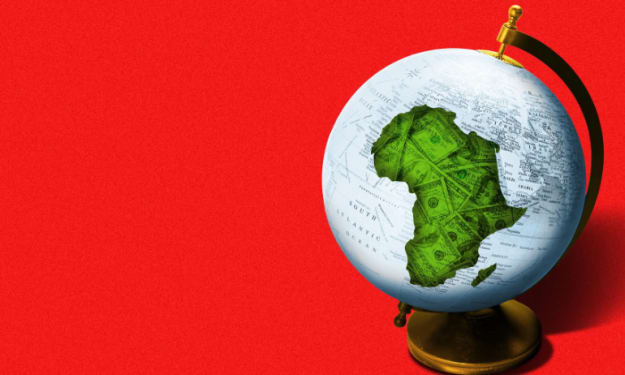
In the landscape of global health aid, few proposals have stirred as much debate as former President Donald Trump’s ambitious plan to restructure American assistance abroad. Dubbed an $11 billion health initiative aimed at replacing USAID’s current framework, the plan seeks to pivot away from what Trump and his allies have criticized as the “neo-colonial” approach of U.S. foreign aid. While the plan promises greater efficiency and impact, experts are split on whether it is a practical solution or a politically driven gamble. Trump’s Critique of USAID The United States Agency for International Development (USAID) has long been a central pillar of American foreign assistance, distributing billions in aid annually to address health crises, food insecurity, and development challenges worldwide. However, Trump’s administration and its supporters have often described USAID’s approach as bureaucratic, inefficient, and reflective of a “neo-colonial” mindset. In public statements, Trump argued that the U.S. was spending taxpayer dollars on programs that benefited foreign governments or contractors more than the intended local communities. Critics of the plan say that while USAID has flaws—as any large bureaucracy does—its extensive networks and decades of experience provide an unmatched capacity to deliver aid efficiently and safely. The Core of the $11 Billion Proposal At the heart of Trump’s proposal is an $11 billion fund designed to consolidate, modernize, and streamline U.S. health aid. Unlike the traditional USAID model, which relies heavily on long-term partnerships with governments and NGOs, the new plan emphasizes: Direct Impact Funding: Allocating resources to frontline health workers and local initiatives rather than intermediaries. Data-Driven Investments: Using real-time health data to target outbreaks and crises more efficiently. Private Sector Partnerships: Leveraging U.S. pharmaceutical companies, tech firms, and healthcare startups to deliver vaccines, treatments, and medical infrastructure. Shorter Program Cycles: Moving away from multi-year funding commitments in favor of more flexible, results-oriented programs. Proponents argue that this approach could reduce bureaucratic overhead and ensure U.S. aid reaches communities faster. By “cutting out the middlemen,” Trump supporters claim, America can avoid the pitfalls of slow-moving aid programs that sometimes fail to adapt to crises. Reactions from the Global Health Community Global health experts, however, have expressed concern about both the logistics and philosophy of the plan. Dr. Melissa Ortega, a senior researcher at the Global Health Policy Institute, explained, “The idea of bypassing established structures like USAID may sound appealing on paper, but in practice, it risks undermining decades of institutional knowledge. Health systems are complex, and short-term projects cannot replace long-term capacity building.” Some critics have also questioned the characterization of USAID as “neo-colonial.” While U.S. foreign aid has historically been tied to geopolitical interests, many programs today are designed collaboratively with recipient countries and local organizations. Reducing oversight could unintentionally increase the risk of misuse, corruption, or health inequities. On the other hand, supporters of Trump’s plan point to examples of inefficiency in USAID programs, citing cases where aid was delayed or mismanaged. By introducing more direct funding models, they argue, U.S. taxpayer dollars could achieve a higher “return on health outcomes.” Political Implications Trump’s health aid overhaul proposal is not just about international development—it is also deeply political. Framing USAID as a “neo-colonial” institution resonates with a populist narrative that America should prioritize its own citizens and assert greater control over how taxpayer money is spent abroad. Domestically, the $11 billion plan faces scrutiny from Congress. Lawmakers from both parties have questioned whether dismantling USAID’s systems could destabilize ongoing health programs in countries where the U.S. has long-term commitments. The potential impact on global health security—including the fight against pandemics like COVID-19—adds another layer of concern. Internationally, U.S. allies and partner nations are watching closely. Sudden shifts in aid delivery could disrupt health programs in low- and middle-income countries, many of which rely on predictable funding cycles to maintain vaccination campaigns, maternal health services, and disease surveillance. Possible Benefits and Risks If executed carefully, the Trump-backed model could bring several benefits: Faster Response Times: Direct funding could accelerate delivery of vaccines, treatments, and emergency support. Innovation Boost: By partnering with private sector companies, the plan could accelerate development of new health technologies. Accountability: With performance-based metrics, the plan may better measure the impact of U.S. aid. However, the risks are equally significant: Disruption of Existing Programs: Abrupt changes could destabilize ongoing health projects. Loss of Expertise: USAID’s decades of experience in navigating local governance, supply chains, and community engagement may be hard to replace. Geopolitical Fallout: Allies accustomed to collaborating with USAID might see the move as destabilizing, reducing cooperation on global health initiatives. Looking Ahead As Trump and his allies continue to advocate for this $11 billion overhaul, the debate over the future of U.S. health aid is intensifying. Proponents view it as a necessary modernization of an outdated system, while critics fear it could undercut decades of carefully built infrastructure and global partnerships. Ultimately, the success of this plan will hinge on its ability to balance efficiency with stability, innovation with oversight, and political objectives with humanitarian needs. For now, the proposal remains controversial, representing a dramatic departure from traditional approaches to U.S. foreign aid. Whether it will reshape global health for the better—or simply create more uncertainty—remains to be seen. In the end, the Trump health plan is as much about ideology as it is about dollars. It challenges the conventional wisdom of international development and asks whether a more streamlined, results-focused approach can truly replace a system built over decades. As the world watches, the stakes could not be higher: the future of U.S. global health aid—and the lives it touches—hangs in the balance.
By Muhammad Hassan5 days ago in Earth



Comments
There are no comments for this story
Be the first to respond and start the conversation.