
The Dryads Are Calling
Uncovering the mysterious world of tree spirits and the whispers of the forest

Deep within the heart of ancient forests, where sunlight filters through towering canopies and the air hums with life, there exists a world few humans truly understand. It is a world of dryads, the mythical tree spirits of folklore, silently observing, nurturing, and sometimes guiding the creatures that dwell among the trees. Today, their legend continues to captivate the imagination, blending myth, nature, and a touch of magic.
“The Dryads are calling” is more than just a poetic phrase — it’s an invitation to listen to the forest, to feel the pulse of life that thrives in harmony with the earth. But who are these elusive beings, and why do their stories persist across cultures and generations?
Who Are the Dryads?
In classical mythology, particularly in Greek and Roman lore, dryads are spirits tied to trees, often oaks, though some stories speak of birch, pine, or olive trees. They are not merely decorative; each dryad is bound to its tree. If the tree suffers, the dryad feels pain; if the tree thrives, so does the spirit.
Dryads are traditionally depicted as beautiful, ethereal beings, half-human, half-spirit, capable of communicating with animals and influencing the growth and health of the forest. They serve as guardians, ensuring the balance of nature is maintained.
Beyond mythology, dryads symbolize something deeper: our connection to nature, the delicate balance between humans and the environment, and the magic that exists when life is respected.
The Call of the Forest
What does it mean when “the dryads are calling”? For storytellers, writers, and forest wanderers, it is a call to pay attention to the forest’s voice. The rustle of leaves, the murmur of streams, and the songs of birds are all interpreted as messages from these spirits, urging humans to notice the beauty and fragility of their surroundings.
Modern environmentalists and nature enthusiasts often describe moments in pristine forests as almost mystical — a quiet whisper that reminds us that we are part of something larger. The phrase “the dryads are calling” has become a metaphor for heeding nature’s warning and embracing a life in tune with the earth.
Dryads in Literature and Culture
Dryads have fascinated writers, poets, and artists for centuries. From Ovid’s “Metamorphoses” to modern fantasy novels, they embody the mysterious power of nature. In literature, dryads are often used to explore themes such as:
Environmental stewardship: Highlighting humans’ responsibility to protect trees and forests.
Mystery and magic: Representing the unknown, a magical presence that watches over the natural world.
Transformation and growth: Just as a tree grows and changes, so do the spirits bound to it.
In popular culture, dryads appear in fantasy games, movies, and stories, often as guardians of sacred forests or wise advisors to heroes. These portrayals keep the legend alive, reminding us that the world around us holds secrets waiting to be discovered.
The Symbolism of Dryads
At their core, dryads symbolize life, resilience, and harmony. They remind us that humans are not separate from nature — rather, we are intertwined. Every tree felled, every forest burned, or river polluted affects not only the environment but the spirit of life itself.
Dryads teach patience and respect. A forest cannot be rushed; trees take years to mature, ecosystems evolve slowly, and life depends on balance. In this way, the dryads’ call is also a call for mindfulness and sustainable living.
Modern Interpretations: Nature and Conservation
In today’s world, where deforestation, climate change, and urbanization threaten ecosystems, the dryads’ call has taken on a new meaning. Conservationists and environmental writers often invoke dryads as symbols of nature’s guardianship, reminding people that the forest is alive, not just a resource.
Hiking through a protected woodland, some feel the same sense of reverence the ancients attributed to dryads. Observing the trees, listening to the wind through branches, and noticing wildlife reminds us of the delicate connections that sustain life.
By interpreting the “call” of the dryads as a call to action, humans can embrace environmental responsibility, protect habitats, and celebrate the beauty of untamed wilderness.
Connecting with the Dryads Today
You don’t need to be a mythical scholar or a fantasy enthusiast to hear the dryads’ whispers. Simple acts of connection can help you experience their presence:
Spend time in nature: Walk through forests, parks, or even urban green spaces. Notice the life around you.
Observe quietly: Listen to birds, rustling leaves, or the wind. The smallest sounds can be profound.
Practice mindfulness: Use nature as a place to reflect and reset your connection to the earth.
Plant and protect trees: Supporting tree growth is a modern way of honoring the dryads.
These practices remind us that, even without magic, nature can feel enchanted when we truly engage with it.
The Enduring Legacy
The phrase “the dryads are calling” captures the timeless intersection of myth and reality. Dryads remind us that the forest has a voice, that every tree and living being is part of a complex web, and that our role as humans is to listen, protect, and coexist.
From ancient stories to modern environmental awareness, dryads continue to inspire imagination, caution, and wonder. They are a symbol of balance, resilience, and the mystical beauty of life.
Whether you encounter them in a story, a film, or simply among the trees on a quiet hike, the dryads’ call is a reminder to honor and cherish the natural world.
Final Thoughts
The dryads are more than just myths — they are metaphors for the life and magic surrounding us every day. They call for mindfulness, respect, and a deeper appreciation of the world we share.
Next time you wander through a forest or sit under a tree, imagine that the dryads are watching. Their call may be subtle — a rustle of leaves, a bird taking flight, the scent of earth after rain — but it is a call to connect, protect, and marvel at the wonders of nature.
In a world increasingly disconnected from the natural world, listening to the dryads is not just poetic; it’s essential.
About the Creator
Keep reading
More stories from Aarif Lashari and writers in Earth and other communities.
Chameleon: Nature’s Master of Disguise
Few creatures in the animal kingdom capture the imagination quite like the chameleon. Known for its ability to change color, its slow, deliberate movements, and its incredible eyes that move independently, the chameleon is one of nature’s most extraordinary reptiles. These small but remarkable creatures have inspired scientists, photographers, and animal lovers for centuries.
By Aarif Lashariabout 6 hours ago in Earth
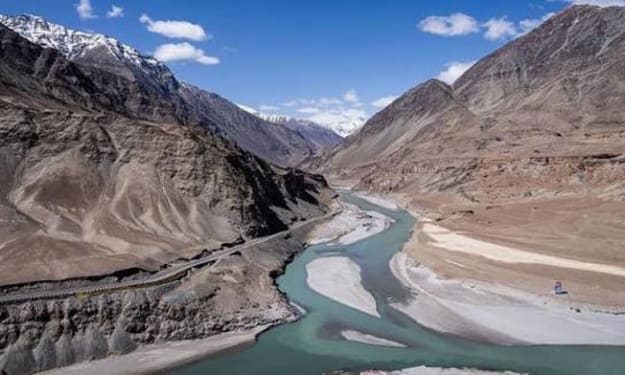
Himalayas Bare and Rocky After Reduced Winter Snowfall, Scientists Warn
The Himalayas, often described as the world’s “Third Pole,” are facing a dramatic and worrying transformation. Scientists are warning that reduced winter snowfall is leaving vast stretches of the mountain range bare, rocky, and increasingly vulnerable to long-term environmental damage. Once known for their thick snow blankets and powerful glaciers, parts of the Himalayas are now showing exposed rock earlier than ever before—an alarming sign of climate stress in one of Earth’s most critical ecosystems. A Visible Change in the World’s Highest Mountains Winter snowfall plays a vital role in the Himalayan climate system. Snow acts as a protective layer, insulating glaciers and regulating the slow release of meltwater into rivers during warmer months. However, researchers monitoring satellite data and ground stations report that recent winters have brought significantly less snowfall across large areas of the range. As a result, snowlines are rising higher up the slopes, leaving lower and mid-altitude regions exposed. This has turned once-white mountain landscapes into expanses of dark rock, which absorb more heat from the sun, accelerating warming in a dangerous feedback loop. Why Reduced Snowfall Matters Snow is more than a scenic feature—it is essential to the health of Himalayan glaciers. When snowfall declines, glaciers lose their main source of replenishment. At the same time, exposed ice and rock melt faster under direct sunlight. Scientists warn that this imbalance is speeding up glacier retreat across the Himalayas. Many glaciers are now shrinking at rates not previously recorded, threatening the long-term stability of water systems that support nearly two billion people across South and Southeast Asia. Impact on Asia’s Major Rivers The Himalayas feed some of the world’s most important rivers, including the Indus, Ganges, Brahmaputra, Yangtze, and Mekong. These rivers depend on seasonal snow and ice melt to maintain consistent flow throughout the year. Reduced snowfall means less stored water for the dry season. In the short term, faster melting can cause floods and landslides. In the long term, however, shrinking glaciers could lead to water shortages, affecting agriculture, hydropower, and drinking supplies across multiple countries. A Growing Risk of Disasters Bare, rocky slopes are far more unstable than snow-covered ones. Snow helps bind loose material together, while exposed rock and soil increase the likelihood of landslides and avalanches. Scientists have already observed a rise in slope failures and glacial lake outburst floods in the region. As glaciers retreat, meltwater often accumulates in fragile lakes dammed by loose rock and ice. These lakes can burst suddenly, releasing destructive floods that threaten mountain communities and downstream infrastructure. Climate Change at the Core Researchers agree that climate change is the primary driver behind the declining snowfall. Rising global temperatures are altering weather patterns, causing more winter precipitation to fall as rain rather than snow. Even small temperature increases at high altitudes can drastically change how moisture behaves. Additionally, warming oceans and shifting atmospheric circulation are affecting the timing and intensity of winter storms that traditionally brought snow to the Himalayas. Effects on Local Communities and Wildlife Mountain communities that rely on predictable snowfall for farming, tourism, and water storage are already feeling the effects. Farmers report changes in planting cycles, while winter tourism has declined in some regions due to unreliable snow conditions. Wildlife is also under pressure. Species adapted to cold environments are losing habitat as snow cover shrinks. Plants that depend on snowmelt are struggling to survive in drier, warmer conditions, disrupting fragile alpine ecosystems. Scientists Call for Urgent Monitoring and Action Experts stress the importance of improved monitoring of snowfall, glacier health, and water flows across the Himalayan region. Better data can help governments plan for future water management challenges and disaster risks. At the same time, scientists emphasize that local adaptation alone is not enough. Reducing global greenhouse gas emissions remains critical to slowing temperature rise and preserving what remains of the Himalayan snow and ice. What the Future Holds If current trends continue, large parts of the Himalayas could see permanent changes within decades. Reduced snowfall and accelerating glacier loss may reshape landscapes, ecosystems, and human livelihoods on an unprecedented scale. The sight of bare, rocky Himalayan slopes is more than a visual change—it is a warning signal. The world’s highest mountains are responding rapidly to a warming planet, and the consequences will extend far beyond the peaks themselves.
By Fiaz Ahmed Brohi7 days ago in Earth



Comments
There are no comments for this story
Be the first to respond and start the conversation.