
Europe Is About to Sign a Long-Awaited Free-Trade Deal With India
Why this historic agreement could reshape global commerce, communities, and economic power

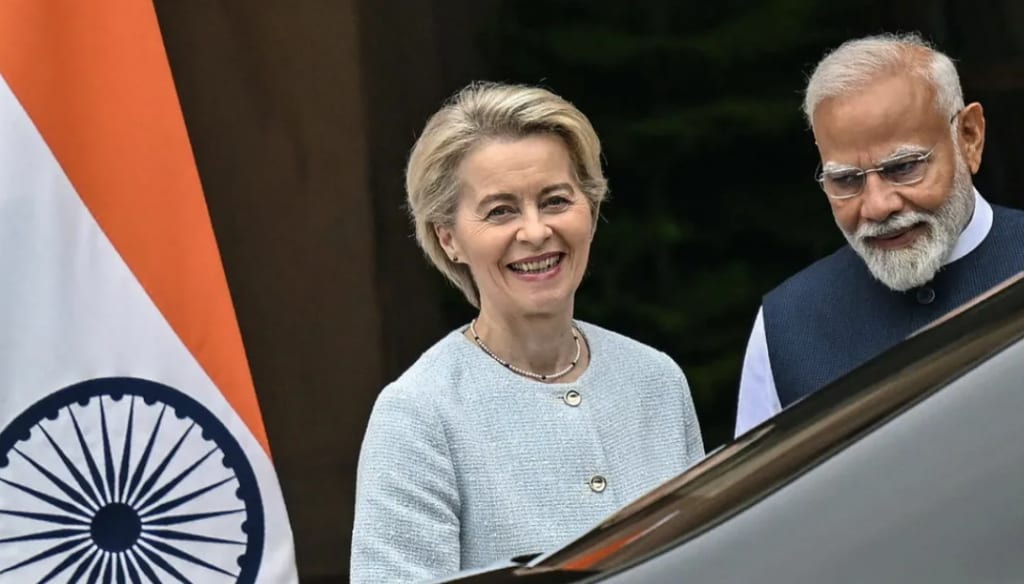
After years of negotiations, pauses, and political recalculations, Europe and India are finally on the brink of signing a long-awaited free-trade agreement. What once seemed like an overly ambitious diplomatic project is now becoming a reality—one that could redefine trade relations between two of the world’s most influential economic regions.
This deal is not just about tariffs and exports. It’s about shifting global power, strengthening supply chains, and creating new opportunities for communities on both sides.
Why This Deal Took So Long
Talks between the European Union and India began well over a decade ago, but progress was slow. Differences over labor standards, environmental rules, market access, and intellectual property rights repeatedly stalled negotiations. Both sides had strong priorities—and neither wanted to compromise too much.
However, the global landscape has changed dramatically in recent years. Supply chain disruptions, geopolitical tensions, and a growing desire to reduce over-reliance on single markets have pushed both Europe and India to rethink their strategies. Suddenly, cooperation feels less optional and more necessary.
What the Agreement Is Expected to Cover
At its core, the free-trade deal aims to reduce tariffs, ease regulations, and open markets between Europe and India. European companies are seeking better access to India’s vast consumer market, while India wants smoother entry into European industries such as technology, pharmaceuticals, and manufacturing.
The agreement is also expected to include provisions related to:
Digital trade
Sustainable development
Labor rights
Investment protection
These elements reflect modern trade priorities, where economic growth is increasingly linked with social and environmental responsibility.
Why Europe Needs India Right Now
For Europe, the deal is part of a broader strategy to diversify trade relationships. Recent global events have highlighted the risks of economic dependency. India, with its rapidly growing economy and young workforce, represents both stability and potential.
European policymakers see India as a long-term partner capable of balancing global trade dynamics. Strengthening ties with India could also help Europe remain competitive in a world where economic influence is constantly shifting.
Why India Is Saying Yes
India, too, stands to gain significantly. A free-trade agreement with Europe could boost exports, attract investment, and accelerate economic modernization. It also positions India as a major global player willing to engage on equal terms with powerful blocs.
For Indian businesses—especially small and medium enterprises—easier access to European markets could mean growth, innovation, and international exposure. For workers, it could translate into job creation and skills development.
Impact on Everyday Communities
While trade deals often sound abstract, their effects are deeply local. Lower tariffs can reduce prices for consumers. New investments can revitalize industries and create employment. Improved cooperation can strengthen educational, cultural, and technological exchanges.
Communities in Europe may see new products, partnerships, and opportunities tied to Indian innovation. Indian communities, meanwhile, could benefit from European expertise in sustainability, infrastructure, and advanced manufacturing.
This is why the agreement matters beyond boardrooms and government offices—it touches real lives.
Concerns and Criticism Still Exist
Despite the optimism, critics on both sides have raised concerns. Some European groups worry about labor standards and environmental protections, while some Indian voices fear that local industries could struggle against European competition.
These concerns highlight the importance of transparency and fair implementation. A successful agreement will require ongoing dialogue, monitoring, and cooperation to ensure that economic growth does not come at the expense of workers or the environment.
A Strategic Signal to the World
Beyond economics, the deal sends a strong political message. It signals that multilateral cooperation is still possible, even in an era of rising protectionism. Europe and India are showing that large, diverse democracies can find common ground through negotiation rather than confrontation.
This partnership could also influence future global trade standards, especially in areas like digital regulation and sustainable development.
What Happens Next
Once signed, the agreement will still need formal approvals and phased implementation. Businesses, governments, and communities will need time to adapt. But the direction is clear: closer ties, deeper cooperation, and a shared economic future.
For both Europe and India, this deal represents more than a trade pact—it’s a strategic investment in resilience and mutual growth.
Final Thoughts
The long-awaited free-trade deal between Europe and India marks a turning point in global economic relations. It reflects changing priorities, evolving partnerships, and a shared recognition that collaboration is essential in an uncertain world.
As the agreement moves forward, its true success will be measured not just in trade volumes, but in how effectively it supports communities, protects values, and builds a more balanced global economy.
About the Creator
Muhammad Hassan
Muhammad Hassan | Content writer with 2 years of experience crafting engaging articles on world news, current affairs, and trending topics. I simplify complex stories to keep readers informed and connected.
Keep reading
More stories from Muhammad Hassan and writers in Earth and other communities.
San Francisco’s Largest Mall Unexpectedly Closes Ahead of Schedule
In a surprising turn of events, Westfield San Francisco Centre, one of the city’s most iconic shopping destinations, has closed its doors ahead of schedule. The closure, which took place months earlier than expected, has sent shockwaves through the local retail scene and left many wondering about the future of brick-and-mortar shopping in San Francisco. As retail patterns continue to evolve in the face of digital transformation and shifting consumer habits, this unexpected shutdown signals more than just the end of a mall—it marks a significant shift in how people shop, how cities are structured, and how businesses are adapting to new consumer demands.
By Muhammad Hassana day ago in Earth
The Sad Nightingale
The Sad Nightingale Writing No. 2402 Saturday, November 26, 2022 By Iman Javed The sun had just set, leaving a soft orange glow lingering on the horizon. The air was calm, carrying a faint chill of the approaching night. Away from the village, frogs croaked in the drying pond, their sounds echoing across the still waters. Crickets intermittently played their tunes, pausing now and then as if checking their tiny instruments for the night ahead. On a branch of a nearby withered tree sat a nightingale, utterly sad. It neither moved nor chirped; it seemed as though it had forgotten the very art of singing. Its eyes reflected deep sorrow, and its feathers drooped in silence.
By Sudais Zakwan3 days ago in Earth
Edinburgh and Glasgow Top London as UK’s Nightlife Hotspots, Uber Data Shows
For decades, London has been seen as the undisputed heart of the UK’s nightlife, drawing partygoers with its clubs, concerts, late-night dining, and cultural events. However, new data released by Uber suggests that the balance may be shifting. According to recent ride-hailing trends, Edinburgh and Glasgow have now overtaken London as the UK’s top nightlife hotspots, signaling a major change in how and where Britons choose to spend their nights out.
By Aarif Lashariabout 3 hours ago in Earth



Comments
There are no comments for this story
Be the first to respond and start the conversation.