
Mobile Crushers for Recycling Construction Waste: A Sustainable Solution
Mobile crushers are highly versatile and efficient machines designed to break down construction waste into reusable aggregates on - site.

The construction industry is a major contributor to environmental pollution, with construction waste being a significant concern. Every year, vast amounts of concrete, bricks, asphalt, and other materials are discarded during construction, renovation, and demolition projects. However, mobile crusher emerged as a game - changing solution for recycling this construction waste, offering numerous environmental, economic, and logistical benefits.
1. The Problem of Construction Waste
The sheer volume of construction waste is staggering. In many urban areas, construction sites generate large quantities of debris daily. Traditional disposal methods are becoming increasingly costly and unsustainable. There is an urgent need for innovative solutions to manage this waste effectively, and mobile crushers provide a practical answer.
2. How Mobile Crushers Work in Recycling Construction Waste
Mobile crushers are highly versatile and efficient machines designed to break down construction waste into reusable aggregates on - site. These crushers are mounted on mobile platforms, such as trailers or tracked vehicles, allowing them to be easily transported to construction, demolition, or recycling sites.
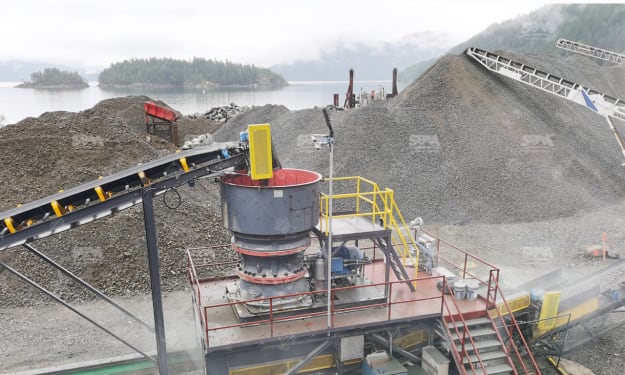
Once at the site, the construction waste is fed into the mobile crusher. The crusher uses a variety of mechanisms, depending on its type, such as jaw crushers, impact crushers, or cone crushers, to reduce the waste materials into smaller particles. For example, a jaw crusher uses a compressive force to break large chunks of concrete or bricks into smaller pieces. These smaller pieces are then further processed and screened to produce aggregates of different sizes.
The aggregates produced from recycled construction waste can be used for a wide range of applications. They can be used as base materials for roads, in the production of new concrete, as fill materials in construction projects, and even in landscaping. This recycling process closes the loop on the construction materials cycle, reducing the need for virgin materials extraction.
3. Environmental Benefits
3.1 Reducing Landfill Usage
One of the most significant environmental benefits of using mobile crushers for construction waste recycling is the reduction in landfill waste. By recycling construction materials on - site, the amount of waste that needs to be transported to landfills is significantly decreased. This helps to extend the lifespan of existing landfills and reduces the need for new landfill sites, which often requires the destruction of natural habitats.
3.2 Conservation of Natural Resources
Recycling construction waste with mobile crushers conserves natural resources. Instead of extracting new sand, gravel, and limestone for construction, the recycled aggregates can be used as substitutes. This reduces the pressure on quarries and mines, preserving natural landscapes and ecosystems. It also helps to conserve non - renewable resources, ensuring their availability for future generations.
3.3 Lowering Carbon Emissions
The use of mobile crushers for waste recycling also leads to a reduction in carbon emissions. The extraction, transportation, and processing of new raw materials are energy - intensive processes that emit a large amount of greenhouse gases. By recycling construction waste on - site, the need for these energy - consuming activities is minimized. Additionally, the transportation of construction waste to landfills is also reduced, further cutting down on emissions from waste - hauling vehicles.
4. Economic Advantages
4.1 Cost - Savings on Disposal and Raw Materials
Recycling construction waste with mobile crushers can result in significant cost - savings for construction companies. Instead of paying for the disposal of waste at landfills, which often involves tipping fees, companies can recycle the waste on - site at a lower cost. Moreover, using recycled aggregates reduces the need to purchase expensive virgin raw materials. This double - savings aspect makes mobile crushers an attractive option for construction firms looking to improve their bottom line.
4.2 Revenue Generation
In some cases, recycling construction waste can even generate revenue. The recycled aggregates can be sold to other construction companies, landscaping businesses, or road - building contractors. This creates an additional income stream for companies that invest in mobile crushers and establish a construction waste recycling operation.
5. Logistical Advantages
5.1 On - Site Processing
Mobile crushers offer the unique advantage of on - site processing. This eliminates the need for transporting large quantities of construction waste to off - site recycling facilities. On - site processing reduces transportation costs, time, and the associated logistical challenges. It also allows for a more efficient workflow, as construction projects can recycle waste materials immediately, without waiting for waste to be hauled away and processed elsewhere.
5.2 Flexibility and Mobility
The mobility of these crushers is another major logistical advantage. Mobile crushers can be easily moved from one construction site to another, adapting to the changing needs of construction projects. Whether it's a small - scale renovation project in a city center or a large - scale demolition project on the outskirts, mobile crushers can be quickly deployed and set up to start recycling construction waste.
About the Creator
A Cold Earth-Sized Planet Surprisingly Close to Our Solar System
For decades, astronomers have searched the universe for planets that resemble Earth. While many discoveries have revealed massive gas giants or extremely hot rocky worlds, the discovery of a cold, Earth-sized planet near our cosmic neighborhood has sparked new excitement in the scientific community. This intriguing world demonstrates that small rocky planets like our own may be more common in the galaxy than once believed.
By Irshad Abbasi about 8 hours ago in Earth



Comments
There are no comments for this story
Be the first to respond and start the conversation.