
Impossible Worlds: Planets That Shouldn't Exist But Do"
The Mysterious LHS 3154 B

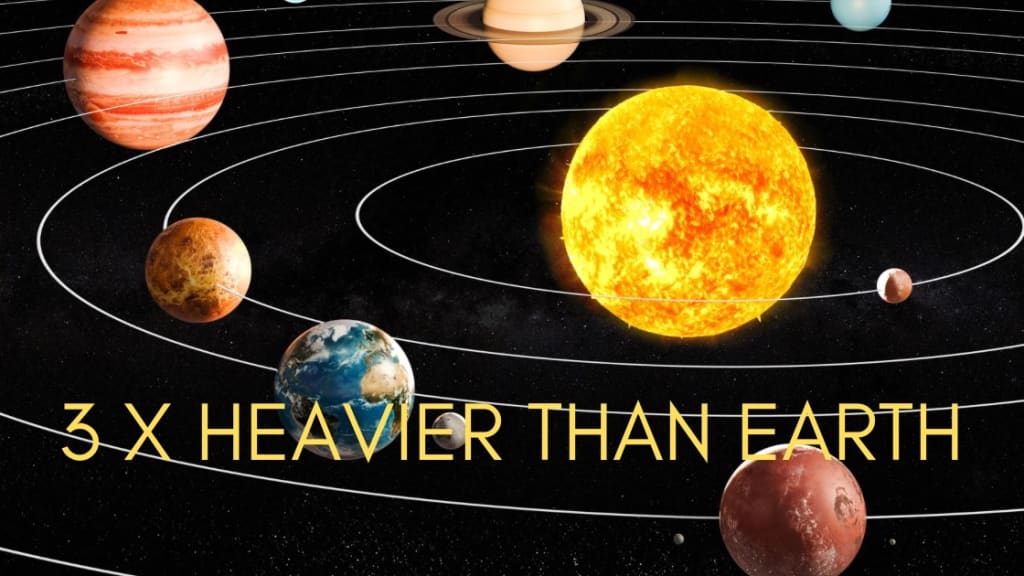
In the vastness of space, some planets defy the very rules of planet formation. Recently, astronomers discovered strange and seemingly impossible worlds that are making scientists question their understanding of how stars and planets form and evolve. Let’s dive into these mind-bending discoveries.
The Mysterious LHS 3154 B
Orbiting a dim, tiny star nine times smaller than our Sun, LHS 3154 B should not exist. The planet is massive—13 times heavier than Earth and similar in size to Neptune. Normally, such a small star wouldn’t have enough gravitational pull to gather the material necessary to form a planet this large. Planets usually form through core accretion, a process where dust and gas come together bit by bit to create a solid core that attracts more material over time.
This star, however, shouldn’t have had a large enough disc to make such a heavy planet. The discovery of LHS 3154 B, just 50 light-years away in the Hercules constellation, is forcing scientists to rethink planet formation theories. One new idea, gravitational instability, suggests that instead of gradual formation, the entire gas disc could have collapsed at once to create the planet. Even with this theory, though, LHS 3154 B remains a puzzling anomaly.
Halla: The Forbidden Planet
Another planetary mystery is Halla, which orbits a star named Baekdu. According to current theories, Halla should have been destroyed. When stars like Baekdu expand into red giants, they usually engulf or obliterate nearby planets. Yet, Halla somehow survived, challenging everything astronomers know about planetary survival near dying stars.
Scientists have two theories about Halla’s survival:
Stellar Merger – Baekdu could have been two stars—a white dwarf and a red giant—that merged, preventing the red giant from expanding enough to destroy Halla.
Post-Merger Formation – Halla may have formed from debris left .
BAt 268 light-years away, LTT 9779 B has a reflective surface that makes it one of the shiniest planets ever found. It reflects 80% of the light from its star—similar to how a mirror reflects light. This neptune-sized world is alarmingly close to its star, completing one orbit in just 19 hours. With temperatures soaring to 3,600°F (1,982°C), planets this close usually lose their atmospheres and turn into barren rocks.
LTT 9779 B, however, holds onto its atmosphere thanks to its metallic clouds made of glass and titanium salt. These clouds act like a shield, reflecting heat and preventing the planet from overheating. While visually stunning, this harsh, reflective world is far from hospitable.
The James Webb Space Telescope has also revealed WASP-107 B, a planet with an atmosphere so light and thin that it resembles a fluffy comet. Located about 208 light-years away in the Virgo constellation, this "super-Neptune" is about the same size as Jupiter but far less dense. It orbits its star in just six days, experiencing intense ultraviolet radiation that causes it to gradually lose its atmosphere, forming a comet-like tail.
Interestingly, WASP-107 B contains silicate clouds—clouds made of fine sand-like particles. These clouds condense, fall, and vaporize in the planet’s scorching layers, creating a strange cycle. The planet’s low density allows light to penetrate deep into its atmosphere, generating sulfur dioxide, a gas that smells like burning matches. Scientists believe WASP-107 B didn’t originally form so close to its star but was drawn inward .
These discoveries are reshaping our understanding of planet formation and survival. Each of these planets—LHS 3154 B, Halla, LTT 9779 B, and WASP-107 B—challenges what we thought we knew about the rules governing the universe. From planets forming under impossible conditions to surviving in hostile environments, these rule-breaking worlds offer a glimpse into the complexity and unpredictability of the cosmos.
About the Creator
Sciences and Wisdom
Welcome to Science and Wisdom! This blog explores the fascinating intersection of human history and scientific discovery. Through insightful articles, we delve into the events that have shaped our word.
Keep reading
More stories from Sciences and Wisdom and writers in Earth and other communities.
Could Modern Mammals Survive in the Age of Dinosaurs?
**Could Modern Mammals Survive Among Dinosaurs?** Millions of years ago, a massive asteroid struck Earth, wiping out the dinosaurs and giving mammals a chance to thrive. Their small size and ability to survive in difficult environments played a key role in their survival. But what if that asteroid had never hit? Would today’s mammals have what it takes to survive in a world still ruled by dinosaurs?
By Sciences and Wisdomabout a year ago in Earth
Why Fruit Shell Biomass Is Perfect for Charcoal Making: A Property Analysis
When it comes to sustainable charcoal production, not all biomass materials are created equal. Among the various options—from wood chips to agricultural residues—fruit shell biomass (such as walnut shells, coconut shells, peanut shells, and almond shells) stands out as an ideal candidate. Its unique physical and chemical properties not only make the charcoal making process more efficient but also result in high-quality charcoal with versatile applications. In this post, we’ll break down the key properties that make fruit shell biomass a top choice for charcoal production, and touch on how these properties interact with charcoal making equipment to optimize outcomes.
By Bestonpyrolysis2 days ago in Earth
Five-Year-Old Liam Ramos and His Father Released From Texas Detention Center
The release of five-year-old Liam Ramos and his father from a Texas detention center has sparked renewed discussion about immigration detention policies, family separations, and humanitarian treatment standards. The case has attracted attention from advocacy groups, legal experts, and community organizations, highlighting the complex balance between border enforcement and human rights considerations.
By Aarif Lashari5 days ago in Earth
Writing About Writing: The Rainbow Trap
The good thing about living in modern times is that LGBTQ representation in media is increasing. Not just in niche and Independant media, either, but also in mainstream media. Books, movies, TV shows, comics... they're finally catching on that LGBTQ+ people form a significant part of their audience, and deserve to see themselves on screen and in fiction, not just as victims in documentaries and true crime shows.
By Natasja Rose2 days ago in Writers


Comments
There are no comments for this story
Be the first to respond and start the conversation.