
Could Modern Mammals Survive in the Age of Dinosaurs?
The theory that an asteroid wiped out the dinosaurs sparks curiosity about how mammals survived.

**Could Modern Mammals Survive Among Dinosaurs?**
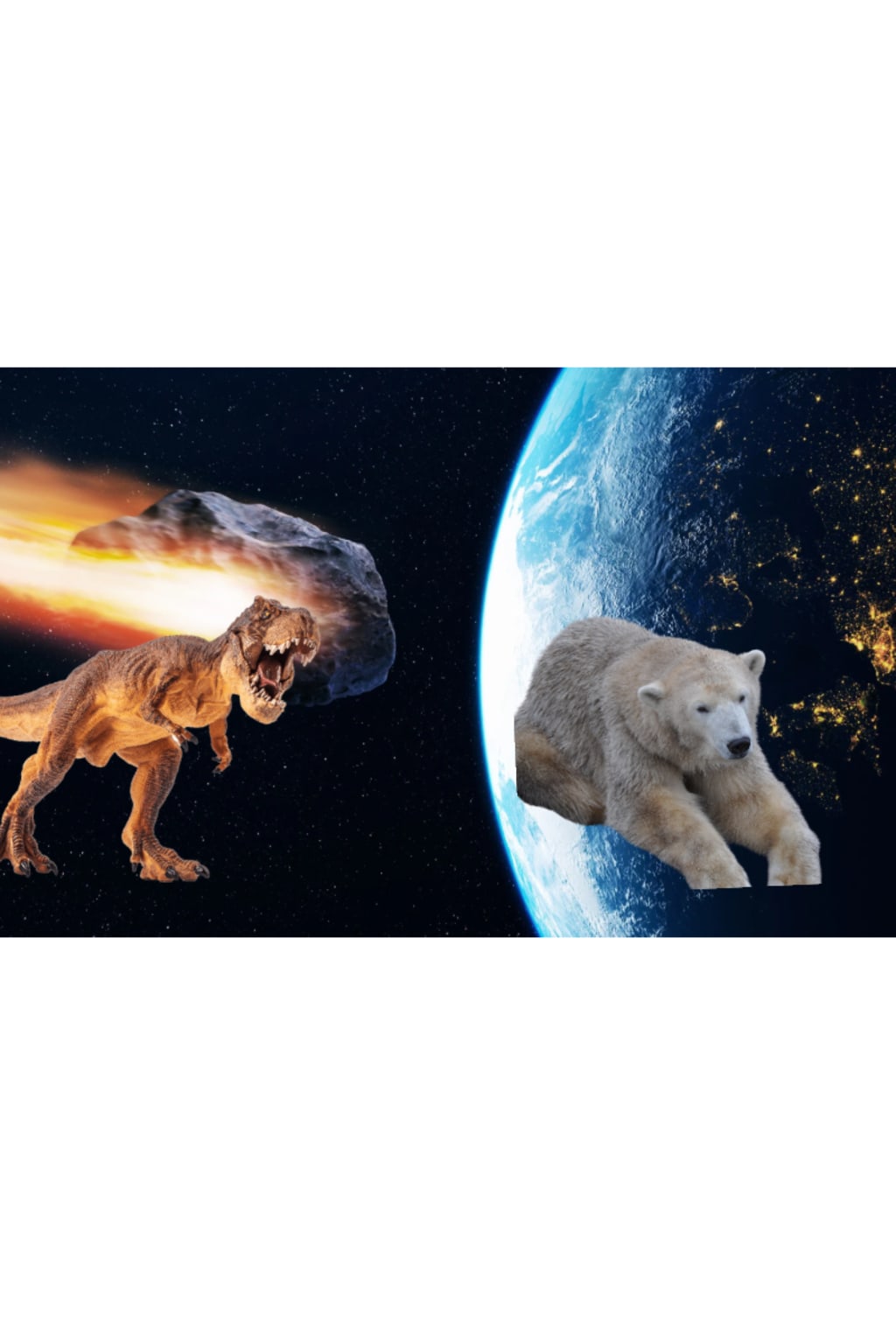
Millions of years ago, a massive asteroid struck Earth, wiping out the dinosaurs and giving mammals a chance to thrive. Their small size and ability to survive in difficult environments played a key role in their survival. But what if that asteroid had never hit? Would today’s mammals have what it takes to survive in a world still ruled by dinosaurs?
Mammals like chimpanzees could potentially manage by using their tree-climbing skills. Chimpanzees build nests high in the trees, which could help them avoid ground-based predators. However, flying reptiles like pterosaurs might still pose a threat by snatching smaller animals from the treetops. Another candidate for survival could be the spotted hyena. Hyenas are known for their adaptability, hunting alone or in packs, and they can digest nearly everything, including bones and skin. Their ability to thrive in harsh environments might allow them to survive in a dinosaur ecosystem.
That said, many modern animals would struggle. Orcas, for instance, are apex predators today, but they prefer cold waters, and the Mesozoic era had a much hotter climate. Even though orcas are powerful hunters, they likely wouldn't be able to adapt to the warmer seas of that time. Similarly, lions might face challenges with the extreme heat and would have trouble bringing down large herbivores like the stegosaurus or tangasaurus. These dinosaurs had powerful defenses, such as spiked tails, which could seriously injure predators. While lions hunt in teams and are known for their strength, competing against massive dinosaurs would be a significant challenge.
One of the most fascinating survival candidates is the platypus. This odd, egg-laying mammal dates back more than 120 million years, and its unique combination of traits, such as reptile-like bones and a beak used to detect prey underwater, could have given it an edge. Living in freshwater environments, the platypus could avoid many land-based threats. Its ability to catch shrimp and worms underwater using electroreception makes it well-equipped to thrive in conditions similar to those of the dinosaur era.
Several species alive today actually coexisted with dinosaurs and have survived multiple extinction events. Sharks are a prime example, with certain species predating the dinosaurs by millions of years. These ancient predators have evolved minimally over time, adapting just enough to endure changing environments. Cockroaches are another success story; their ability to eat almost anything and live in various conditions has allowed them to survive for hundreds of millions of years. Similarly, horseshoe crabs, often called "living fossils," found their ideal evolutionary form early and have remained mostly unchanged for over 400 million years. Their basic immune systems may seem primitive, but they are highly effective, allowing them to survive even the harshest conditions.
If dinosaurs had survived the asteroid impact, the world today would look very different. Mammals, if they had evolved at all, might have remained small and hidden, never rising to become dominant species. Large predators like T-Rex, roughly the size of a bus, wouldn’t waste their energy hunting smaller prey, such as human-sized creatures, focusing instead on bigger animals. This dynamic would have limited the role mammals could play in such an environment.
Felines, which are known for their stealth and climbing abilities, might have found some success in this world. Leopards, for example, could hunt smaller prey and drag their catch into trees, keeping it out of reach from larger predators. However, the difference in vegetation during the Mesozoic era would have posed challenges. Conifers dominated the landscape, and modern mammals might have struggled to find food. Even agile creatures like ostriches, which closely resemble ancient dinosaurs like *Struthiomimus*, might not have adapted well, as they are picky eaters and prefer certain types of plants.
In a world dominated by dinosaurs, even the most adaptable modern animals would face significant challenges. While some species—like chimps, hyenas, or platypuses—might find ways to survive, the odds would not be in their favor. Nature always finds a way, but in the presence of such massive and powerful creatures, mammals would likely have remained in the shadows, much like they did during the dinosaurs’ reign.
Looking at history, we see that only a few creatures manage to survive extinction events without significant changes.
About the Creator
Sciences and Wisdom
Welcome to Science and Wisdom! This blog explores the fascinating intersection of human history and scientific discovery. Through insightful articles, we delve into the events that have shaped our word.
Keep reading
More stories from Sciences and Wisdom and writers in Earth and other communities.
The Mystery of September 16, 2023.
The Mystery of September 16, 2023: When the Earth Vibrated Like an Ancient Machine On September 16, 2023, the Earth began emitting a strange, deep vibration that reverberated through the planet’s crust. For nine consecutive days, seismic alarms were triggered worldwide. However, this event did not resemble a typical earthquake. Scientists were baffled by the unusual signals, which followed a steady and repetitive rhythm, unlike the chaotic waves caused by tectonic movements. What was behind this mysterious global disturbance?
By Sciences and Wisdomabout a year ago in Earth
The Terrarium Toolkit: AI Helps You Build and Maintain a Miniature World
You assemble layers of earth, carefully position tiny plants, and add decorative stones, culminating in the moment you place the glass lid or front panel. You've created more than a decoration; you've built a miniature, self-contained world. Yet, weeks later, that world can become clouded—literally. Condensation obscures the view, mold appears on the soil, or a once-vibrant plant turns to mush. The delicate balance you sought has tipped.
By Emma Wallaceabout 11 hours ago in Earth
Writing About Writing: The Rainbow Trap
The good thing about living in modern times is that LGBTQ representation in media is increasing. Not just in niche and Independant media, either, but also in mainstream media. Books, movies, TV shows, comics... they're finally catching on that LGBTQ+ people form a significant part of their audience, and deserve to see themselves on screen and in fiction, not just as victims in documentaries and true crime shows.
By Natasja Rose2 days ago in Writers




Comments
There are no comments for this story
Be the first to respond and start the conversation.