
**Earth: The Forgotten Green Marble Before the Oceans Turned Blue**
Unveiling the Lush Origins of Our Planet Before Water Shaped Its Destiny
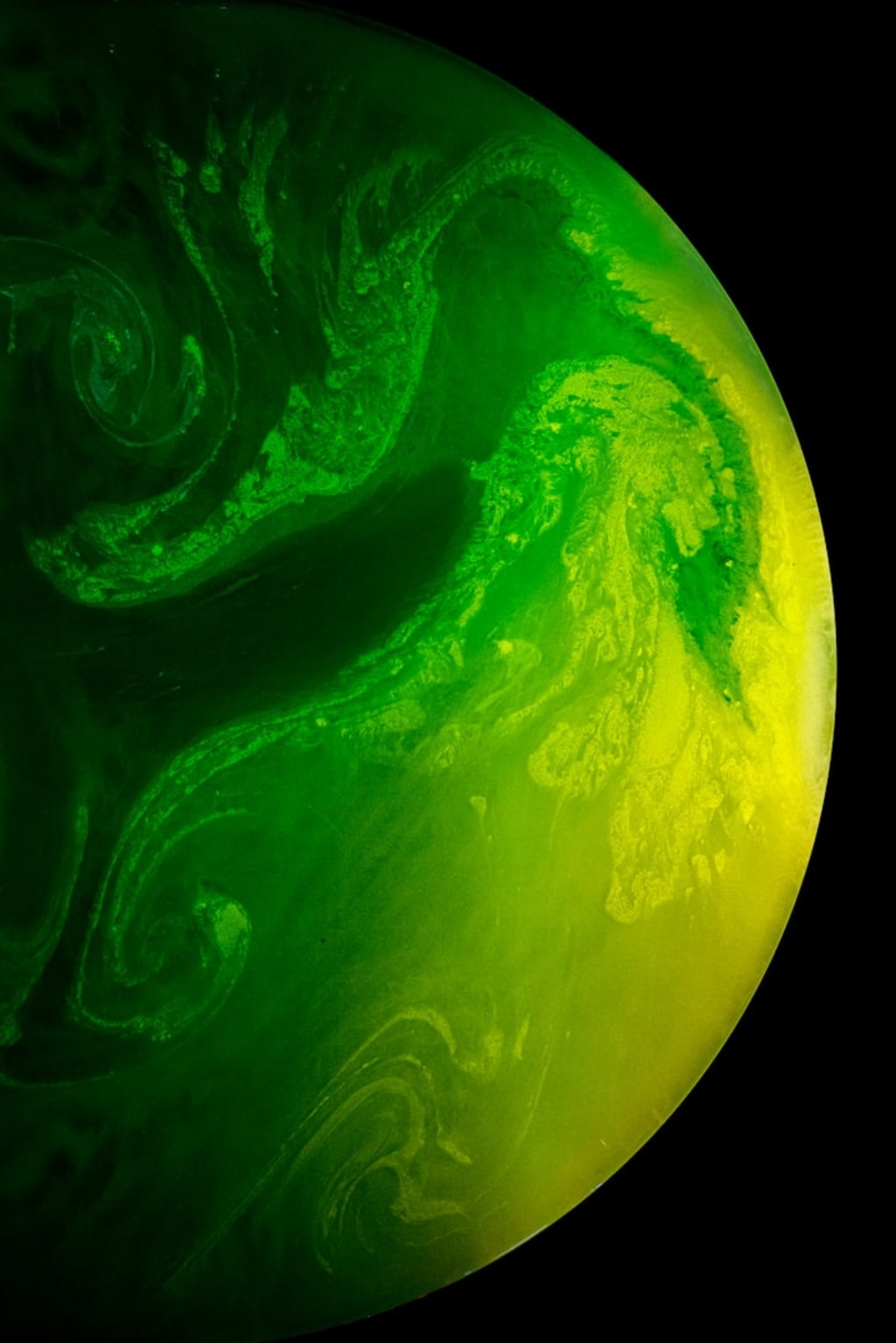
It's possible that Earth used to look like a lush, shimmering "Green Marble" before it became the familiar "Blue Planet" from space. Imagine a young Earth that is alive with chemical chaos and vibrant change, not dominated by blue waves or icy poles. Instead, it is dominated by dense green skies and steaming surfaces. This forgotten chapter in our planet’s history holds more than just scientific intrigue; it tells the story of Earth’s transformation from a raw rock to the water world we call home.
### A Fog of Green
Roughly 4.5 billion years ago, Earth was born from a swirling disk of gas, dust, and cosmic debris. Molten rock, meteor showers, and volcanic eruptions gave the infant planet its violent shape. But in the chaos, life was beginning to stir—or at least the ingredients for it.
Early Earth's atmosphere was a thick blanket of gases: methane, ammonia, carbon dioxide, and water vapor—hardly the breath of fresh air we enjoy today. The sky was not blue because there was no ozone layer and little oxygen. Instead, the light scattered through a dense, greenish-yellow haze, tinted by chemicals and particulates. The young planet's atmosphere would allow sunlight to pass through, resulting in an unsettling green glow. This stage, often overshadowed by the dramatic tale of the oceans’ rise, is what some scientists and imaginative thinkers call the "Green Marble" phase—a world not yet blue, but not barren either.
### A World Without Oceans
Earth had water at this time, but not in the way we know it now. Water was trapped deep within the mantle and crust, locked in minerals or floating as vapor in the atmosphere. Surface temperatures were scorching, often hotter than boiling point. Any water that made it to the surface quickly evaporated. Instead of oceans, Earth’s surface may have been a landscape of steaming plains, churning lava fields, and bubbling hydrothermal vents. In these vents, life could have quietly begun—tiny, single-celled organisms clinging to survival in the planet’s internal heat. These microscopic pioneers didn’t need oxygen; they fed off the minerals and chemicals pouring from Earth’s crust, setting the stage for a biochemical revolution.
### The Turning Tide
The “green” in the Green Marble wasn’t just metaphorical. Methane, a greenhouse gas released by early microbes called *methanogens*, was abundant. It's possible that this methane-rich air gave the sky a green hue and helped warm the planet enough to keep water vapor there. But things were changing beneath the surface.
Volcanoes erupted continuously, spewing out more than just lava—they released water vapor, hydrogen, and carbon compounds. Gradually, as Earth cooled, the atmosphere changed. Water vapor condensed. The first rains fell—possibly lasting for centuries, creating puddles, lakes, and eventually—oceans.
This great condensation marked Earth’s transformation. The once green-hued skies began to clear, and as the atmosphere thinned and temperatures dropped, Earth’s surface water began to settle. From space, the swirling green faded, replaced by deep blue—the birth of the “Blue Planet.”
### A Blue Planet with a Green Legacy
Though we now call Earth the Blue Planet, the Green Marble stage is more than a forgotten phase. It was a cradle of possibility, a world in waiting. That era's chemical chaos paved the way for life to emerge. Without that thick, green haze, Earth might never have cooled the way it did. Rain might not have fallen if the methane and carbon cycles weren't in place. Without the early microbes, oxygen might never have entered our skies.
Today, we see Earth as an oasis in space—blue, alive, and teeming. But once, long ago, it was a strange green orb cloaked in mystery. And within that mystery lay the seeds of everything to come.
About the Creator
Keep reading
More stories from Mahir Faysal and writers in Earth and other communities.
*April's full moon is a 'micromoon'*
**April’s Full Moon is a ‘Micromoon’: What It Means and Why It Matters** Every month, stargazers and skywatchers worldwide look forward to the full moon, a celestial event that never fails to captivate. But not all full moons are created equal. While some are dubbed “supermoons,” appearing larger and brighter in the sky, others are called “micromoons.” This April, the full moon falls into the latter category, offering a subtler but still fascinating astronomical experience. Here’s everything you need to know about April’s micromoon — what it is, how it happens, and why it’s worth your attention.
By Mahir Faysal10 months ago in Earth
Medicinal herbs of the Carpathians
According to popular beliefs, the Carpathians are considered a healing "place of power" and there is no mysticism in this. Air with a unique composition and medicinal Carpathian herbs can work real miracles. Since ancient times, the Hutsuls have used them to treat various diseases. Today, herbal medicine in the Carpathians is experiencing its revival, attracting more and more attention from both locals and tourists.
By Olaf Podolski7 days ago in Earth
Harnessing Pyrolysis for Forest Fire Mitigation
Forest ecosystems face increasing wildfire risks due to climate change, prolonged drought, and human activity. Traditional fire prevention methods, including controlled burns and mechanical thinning, have proven partially effective but carry limitations in scalability and environmental impact. Integrating pyrolysis-based strategies presents an innovative pathway to reduce combustible biomass while generating valuable by-products, aligning ecological stewardship with economic utility.
By Wayne Shen7 days ago in Earth



Comments
There are no comments for this story
Be the first to respond and start the conversation.