Mahir Faysal
Bio
Stories (6)
Filter by community
New Hope for Hard-to-Treat Depression: Ketamine Spray Subsidised. AI-Generated.
Australia to Subsidize Ketamine Nasal Spray for People With Hard-to-Treat Depression The Australian government will begin paying for a ketamine-based nasal spray to treat people with treatment-resistant depression, marking a significant advance in mental health care. The drug, which is sold under the brand name Spravato (esketamine), will be covered by the Pharmaceutical Benefits Scheme (PBS) starting in the middle of 2025, which will significantly lower the price for patients who are eligible for it. This move is being praised by psychiatrists and mental health advocates, who say it could be life-changing for thousands of Australians who have struggled for years without relief from conventional treatments.
By Mahir Faysal9 months ago in Humans
Astronomers Find Hidden Giant: Hydrogen Cloud 'Eos' Near Earth
Scientists Uncover Colossal Hidden Hydrogen Cloud Named 'Eos' Just 300 Light-Years from Earth Astronomers have discovered a massive hydrogen cloud that was previously unknown and is just 300 light-years away from Earth. This is a groundbreaking discovery that has the potential to alter our perception of the local cosmos. The colossal structure, named Eos—after the Greek goddess of the dawn—is being hailed as a major astronomical find, offering new insights into the makeup and dynamics of our galactic neighborhood. The hydrogen cloud, which had remained concealed until now due to its extremely low temperature and faint emissions, was uncovered using a combination of sensitive radio telescopes and advanced data processing algorithms. Eos is made primarily of neutral atomic hydrogen (HI), the most basic and abundant element in the universe. Its sheer size—spanning hundreds of light-years across—and its proximity make it a particularly intriguing subject for study. ### A Hidden Giant Hydrogen clouds are not uncommon in the galaxy, but what makes Eos exceptional is how long it eluded detection. Scientists believe that Eos’s low temperature and diffuse nature caused it to blend into the cosmic background, rendering it virtually invisible to traditional observational methods. Only with the help of cutting-edge radio telescopes and the increasing sensitivity of survey techniques were researchers finally able to spot the subtle signals that led to its discovery. According to Dr. Nina Patel, an astrophysicist at the Max Planck Institute for Radio Astronomy and one of the lead researchers on the project, “Eos is a hidden piece of our local puzzle. It’s like suddenly discovering a mountain range in your backyard that you never knew existed.” The discovery was made possible through data collected by the Low-Frequency Array (LOFAR) in Europe and cross-referenced with data from the Green Bank Telescope in the United States. The analysis showed that the structure was composed of cool hydrogen gas and was dense and coherent. It also showed complex internal motions, which suggests that it might be changing or interacting with other interstellar features. ### The Importance of Eos The implications of discovering Eos are far-reaching. Hydrogen is the building block of stars and galaxies. Star nurseries are locations where new stars are born under the influence of gravity, and large clouds of hydrogen frequently serve as stellar nurseries. While Eos shows no immediate signs of star formation, its existence so close to Earth challenges previously held models of the interstellar medium—the matter that exists in the space between stars. “Eos forces us to rethink the map of our local galactic environment,” explains Dr. Patel. We used to think we knew a lot about the hydrogen structures in our neighborhood, but this discovery shows that we still have a lot to learn. Eos also has the potential to shed light on the mysterious “dark” regions of the galaxy—areas that seem empty when observed in visible light but may be hiding enormous amounts of cold gas. In addition to studying star formation, these regions must be comprehended in order to comprehend the broader dynamics of galaxy evolution. ### What’s Next? Major observatories around the world have already carried out a flurry of follow-up observations since the discovery of Eos. Astronomers are now working to map the cloud in greater detail, hoping to understand its composition, structure, and origin. Eos could be a remnant of a previous supernova explosion, according to some researchers, or it could be part of a larger network of hidden hydrogen clouds that are nearby. Scientists are also looking to the sky for similar hidden structures in an effort to solve the mystery surrounding Eos. If Eos could remain undetected for so long despite its size and proximity, there’s a strong possibility that other massive hydrogen clouds are waiting to be discovered. To paraphrase Dr. Patel, “We are just beginning to lift the veil on the hidden architecture of our galaxy. Eos is only the dawn—there’s much more to come.” As technology continues to improve and our gaze deepens into the cosmic fog, discoveries like Eos remind us that the universe is full of secrets—some astonishingly close to home.
By Mahir Faysal9 months ago in Earth
"It’s Not Blue, Not Green, and Not from This World of Color"
: **An Unknown Color Has Been Discovered by Scientists** A group of scientists in the United States claim to have discovered a brand-new color that no one has ever seen before, which is an exciting and unexpected finding. This enigmatic color isn't on the traditional color wheel, and it's not just a new blue or green color. They have given it the name **"olo" because it is something completely different. **
By Mahir Faysal9 months ago in Humans
**Earth: The Forgotten Green Marble Before the Oceans Turned Blue** . AI-Generated.
It's possible that Earth used to look like a lush, shimmering "Green Marble" before it became the familiar "Blue Planet" from space. Imagine a young Earth that is alive with chemical chaos and vibrant change, not dominated by blue waves or icy poles. Instead, it is dominated by dense green skies and steaming surfaces. This forgotten chapter in our planet’s history holds more than just scientific intrigue; it tells the story of Earth’s transformation from a raw rock to the water world we call home.
By Mahir Faysal10 months ago in Earth
**How to Get Rid of Loneliness**. AI-Generated.
**How to Get Rid of Loneliness: Simple Ways to Connect and Feel At Home** Loneliness is a universal human experience, yet it's often misunderstood or overlooked. It's not just about being physically alone — loneliness is the painful feeling of being disconnected from others, even in a crowd. In today's fast-paced, digital world, more people than ever report feeling isolated, despite constant online interactions. The good news? Being alone is not a state that lasts forever. It is possible to find relief and reestablish a sense of connection by making an intentional effort and practicing self-compassion. Here are practical steps to help ease the burden of loneliness and guide you toward a more fulfilling, connected life.
By Mahir Faysal10 months ago in Humans
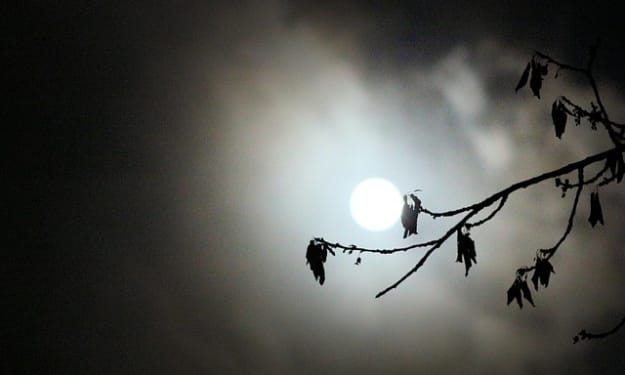
*April's full moon is a 'micromoon'*. AI-Generated.
**April’s Full Moon is a ‘Micromoon’: What It Means and Why It Matters** Every month, stargazers and skywatchers worldwide look forward to the full moon, a celestial event that never fails to captivate. But not all full moons are created equal. While some are dubbed “supermoons,” appearing larger and brighter in the sky, others are called “micromoons.” This April, the full moon falls into the latter category, offering a subtler but still fascinating astronomical experience. Here’s everything you need to know about April’s micromoon — what it is, how it happens, and why it’s worth your attention.
By Mahir Faysal10 months ago in Earth