
Daisies, Dandelions, Daffodils .... and Bees
And Pollination


Introduction
Just a slight update of an old piece. The music is "Chicken Payback" by The Bees.
Daisies, Dandelions, Daffodils .... and Bees
This year, well, spring, on my walks I have seen a lot of daisies, dandelions and daffodils. I have seen gardens, fields and roadsides covered with the white and yellow of these flowers and weeds.
When I think of Dandelions it always brings to mind the pub “Daley’s Dandelion” in Liverpool, which I visited once or twice, and the name has always stuck.
This is the first Vocal post that I have done on my laptop from a holiday cottage in Thirsk, so the keyboard is a little different and the space bar is not that reliable, making typing slightly unreliable, but if you see this published, you will know that I can still use it.
Anyway, back to the subject of Dandelions, basically, they are weeds and can spread very quickly, so I try to cull them from my lawn. They are colourful and brighten up any plain area, and are also good for bees, which are very important in keeping this world going, but I try to keep other bee-friendly options while keeping the Dandelions off my patch.
I also have daisies, but mowing the lawn keeps them down, and they are not as viciously predatory as dandelions are. Having said that, Daffodils seem almost as prevalent as dandelions, but as they are classed as flowers, they are ok to flourish, although I don’t actually have any in my front or back garden.
Dandelions are rich in both pollen and nectar, providing a great source of food for pollinators. Each bright yellow head contains around 100 individual flowers, meaning bees, butterflies and hoverflies flock to them, feasting on their goodness. This may make me very ambivalent about pulling them up. I would love to leave them, but they will spread and just take over any area where they are not checked.
Daisies and Daffodils are nowhere near as predatory, but all these provide nourishment for the bees and brighten up our day with their colour.
Reading further, it seems that bees go for dandelions when there is nothing else available, so keeping trees and other plants (like maybe daffodils) will be beneficial to bees. It's a balancing act, and if you get rid of dandelions itis good to have other plants that the bees can get pollen from.
Pollination is the way in which plants, especially food plants, grow and thrive, and the bees are the pollinators and need to be encouraged and looked after. If there were no pollination, no food would grow, and it’s pretty simple to draw a conclusion from that.
Almost everything we eat is initiated directly or indirectly by pollination. You may eat meat, but the animals that provide that meat probably eat plants, and plants need to be pollinated, and of course, if you are vegan, then all you eat will be pollinated at some point.
So dandelions, daffodils and daisies provide both sustenance to the pollinators, the bees, and allow the bees to pollinate between plants, thus enabling them to grow. Pollination is an essential part of plant reproduction. Pollen from a flower's anthers (the male part of the plant) rubs or drops onto a pollinator. The pollinator then takes this pollen to another flower, where the pollen sticks to the stigma (the female part). The fertilised flower later yields fruit and seeds, so that’s how it works.
Bees can be a little frightening if they are cornered, but if you get one in your house, try to direct it to an open window or door. They are essential to human existence.
About the Creator
Reader insights
Outstanding
Excellent work. Looking forward to reading more!
Top insights
Expert insights and opinions
Arguments were carefully researched and presented
Heartfelt and relatable
The story invoked strong personal emotions
On-point and relevant
Writing reflected the title & theme
Excellent storytelling
Original narrative & well developed characters
Eye opening
Niche topic & fresh perspectives
Easy to read and follow
Well-structured & engaging content
Compelling and original writing
Creative use of language & vocab
Keep reading
More stories from Mike Singleton 💜 Mikeydred and writers in Earth and other communities.
On The Wild Lawn
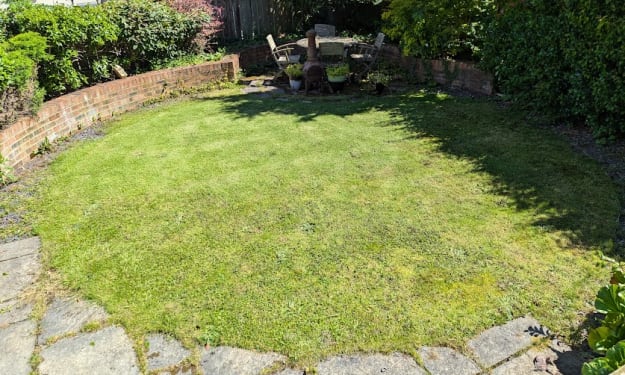
Introduction I am not a gardener, not even slightly proficient, so all I say in this piece needs to be taken with a large pinch of salt. I have lived here for close to twenty-five years and in that time, after the initial relaying, the lawn has never been re-laid. You can see what it was like after I mowed it on July 7th 2024 in the main image.
By Mike Singleton 💜 Mikeydred 2 years ago in Earth
The Fiery Circle: Understanding the Pacific Ring of Fire
The **Pacific Ring of Fire** is not a literal ring of flames, but it is undoubtedly the most geologically volatile region on Earth. Stretching approximately 40,000 kilometers (25,000 miles) in a massive horseshoe shape, it traces the coasts of the Pacific Ocean—from the southern tip of South America, up along the coast of North America, across the Bering Strait, down through Japan, and into Southeast Asia and New Zealand.
By Irshad Abbasi 6 days ago in Earth


Comments (5)
I used to write about bees. I hate that people spray to kill bees. Thank you Mike for bring awareness to the plight of the honey bee. Without them, we would be struggling for food. I am with Dhar# be kind to bees. Nicely written article.
Ah, spring. She'll be here soon. Days are getting longer, sun rising earlier.
Great piece, Mike. When I moved to the US, I was shocked to find out that bees were brought to the Americas by European settlers. Before that, there were other pollinators but no bees. Bees are fascinating and indeed important for humanity.
I love this, Mike. This was actually my very first time reading something in Earth. I don't get out into nature as much as I should. You are constantly in touch with it and *nurturing* it. That's admirable. I love bees too. I haven't had a garden since I was with my family, a kid on a farm, and it was all vegetables. Flowers, I'd bet, are very soothing to be with. I love how you explain pollen too, and break down how it's a source of everything edible. This one is going to the OLD post in the Vocal Social Society. ⚡💙⚡
Thank you for speaking on behalf of the bees! #BeKindToBees