
Crocodilians: The Apex Predators of the Reptile World and their Conservation Challenges
Exploring the World of Crocodilians: Characteristics, Behavior, Ecology, and Conservation
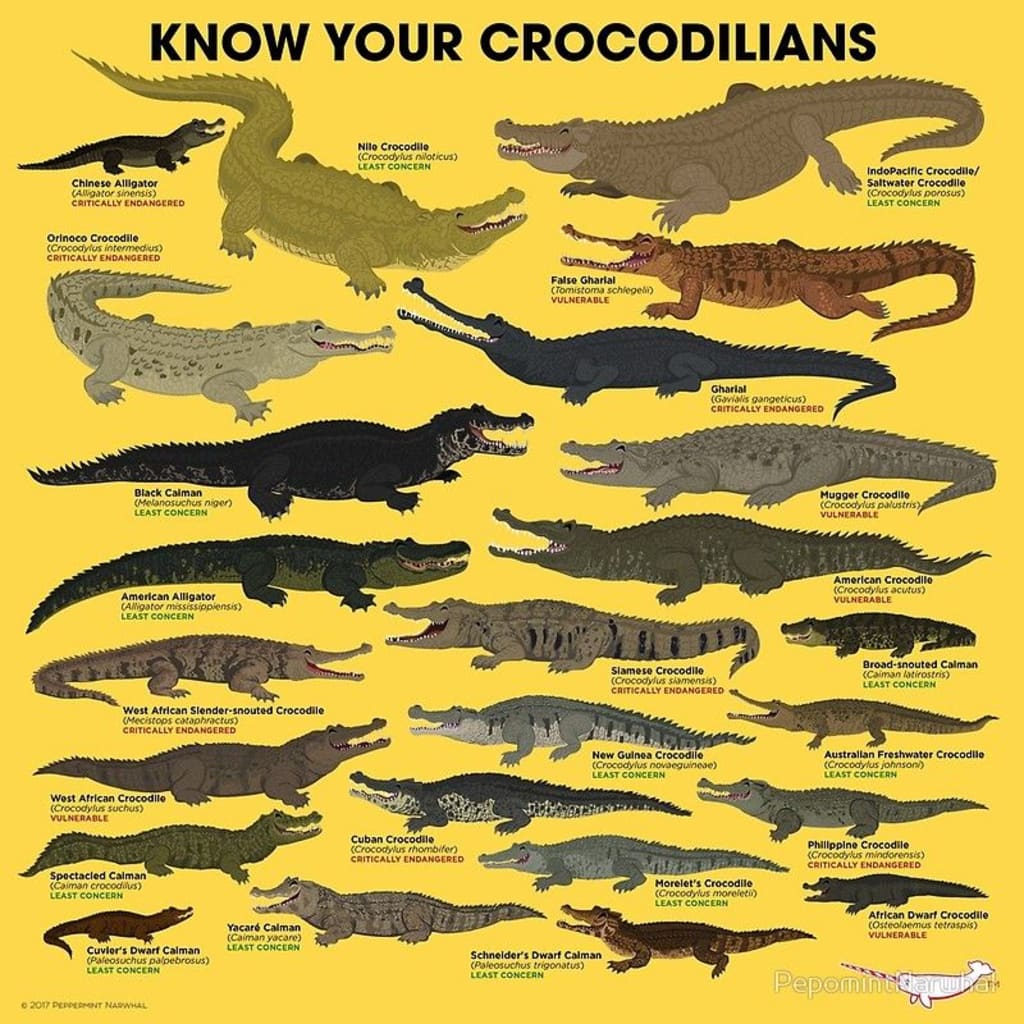
Crocodilians are a group of reptiles that are found in various parts of the world, including Africa, Australia, and the Americas. They are often referred to as crocodiles or alligators, and they are famous for their sharp teeth, powerful jaws, and incredible strength. Crocodilians are the largest and most aggressive living reptiles, and they have remained largely unchanged for over 200 million years.
In this article, we will explore the world of crocodilians, looking at their characteristics, behavior, ecology, and conservation. We will also discuss the various threats that crocodilians face and the efforts being made to protect them.
Characteristics of Crocodilians
Crocodilians are a diverse group of reptiles that includes crocodiles, alligators, caimans, and gharials. Despite their different appearances, all crocodilians share several characteristics that set them apart from other reptiles.
Size and Appearance
Crocodilians are some of the largest living reptiles, with some species reaching lengths of up to 23 feet (7 meters) and weighing over 2,000 pounds (900 kilograms). The largest crocodilian species is the saltwater crocodile, which can grow up to 23 feet (7 meters) in length and weigh over 2,200 pounds (1,000 kilograms).
Crocodilians have a powerful, streamlined body that is covered in tough, scaly skin. Their skin is armored with bony plates called osteoderms, which provide protection from predators and other threats. The skin is also covered in small scales that act like sensory organs, allowing crocodilians to sense vibrations in the water and on land.
Crocodilians have a long, powerful tail that they use for swimming and as a weapon when fighting. Their legs are short and muscular, with webbed toes that help them move through water quickly. Crocodilians have a long snout filled with sharp, interlocking teeth, which they use to catch and kill their prey.
Behavior
Crocodilians are cold-blooded animals, which means that their body temperature is regulated by the environment around them. They are most active during the day, but some species are also active at night.
Crocodilians are apex predators, meaning that they are at the top of the food chain in their ecosystems. They are opportunistic feeders and will eat almost anything they can catch, including fish, birds, mammals, and other reptiles. Crocodilians are ambush predators, meaning that they hide in the water and wait for their prey to come close before attacking.
Crocodilians are also known for their incredible strength. They have incredibly powerful jaws that can exert a force of over 3,700 pounds per square inch (16,460 newtons) – enough to crush bone. They use their jaws to catch and kill their prey, but they also use them to defend themselves from predators and other threats.
Ecology
Crocodilians are found in a wide range of habitats, including rivers, lakes, swamps, and estuaries. They are also found in both freshwater and saltwater environments. Different species of crocodilians have adapted to different environments, allowing them to survive in a variety of ecosystems.
Crocodilians are important apex predators in their ecosystems, helping to control populations of prey species and maintain a healthy balance in the food chain. They are also important scavengers, helping to clean up dead and decaying animals.
Conservation
Despite their importance in their ecosystems, crocodilians face a number of threats that are putting their survival at risk. Habitat loss, hunting, and the illegal wildlife trade are all major threats to crocodilian populations.
Habitat Loss
Habitat loss is one of the biggest threats to crocodilian populations.
Large, solidly built, lizard-like reptiles, crocodilians have long flattened snouts, laterally compressed tails, and eyes, ears, and nostrils at the top of the head. They swim well and can move on land in a "high walk" and a "low walk", while smaller species are even capable of galloping.
About the Creator
Keep reading
More stories from Kamal Mourya and writers in Earth and other communities.
Turtles: A Fascinating Look at Their Physical Characteristics, Behavior, Habitat, Diet, and Conservation Efforts
Turtles are one of the most ancient reptiles on earth, with a history that dates back over 200 million years. These unique creatures are fascinating and can be found in all types of environments, including oceans, rivers, ponds, and even deserts. In this article, we will explore the different types of turtles, their physical characteristics, behavior, habitat, diet, and conservation efforts.
By Kamal Mourya3 years ago in Earth
Medicinal herbs of the Carpathians
According to popular beliefs, the Carpathians are considered a healing "place of power" and there is no mysticism in this. Air with a unique composition and medicinal Carpathian herbs can work real miracles. Since ancient times, the Hutsuls have used them to treat various diseases. Today, herbal medicine in the Carpathians is experiencing its revival, attracting more and more attention from both locals and tourists.
By Olaf Podolski6 days ago in Earth
Harnessing Pyrolysis for Forest Fire Mitigation
Forest ecosystems face increasing wildfire risks due to climate change, prolonged drought, and human activity. Traditional fire prevention methods, including controlled burns and mechanical thinning, have proven partially effective but carry limitations in scalability and environmental impact. Integrating pyrolysis-based strategies presents an innovative pathway to reduce combustible biomass while generating valuable by-products, aligning ecological stewardship with economic utility.
By Wayne Shen6 days ago in Earth


Comments
There are no comments for this story
Be the first to respond and start the conversation.