
Turtles: A Fascinating Look at Their Physical Characteristics, Behavior, Habitat, Diet, and Conservation Efforts
Exploring the Fascinating World of Turtles: Physical Characteristics, Behavior, Habitat, Diet, and Conservation Efforts
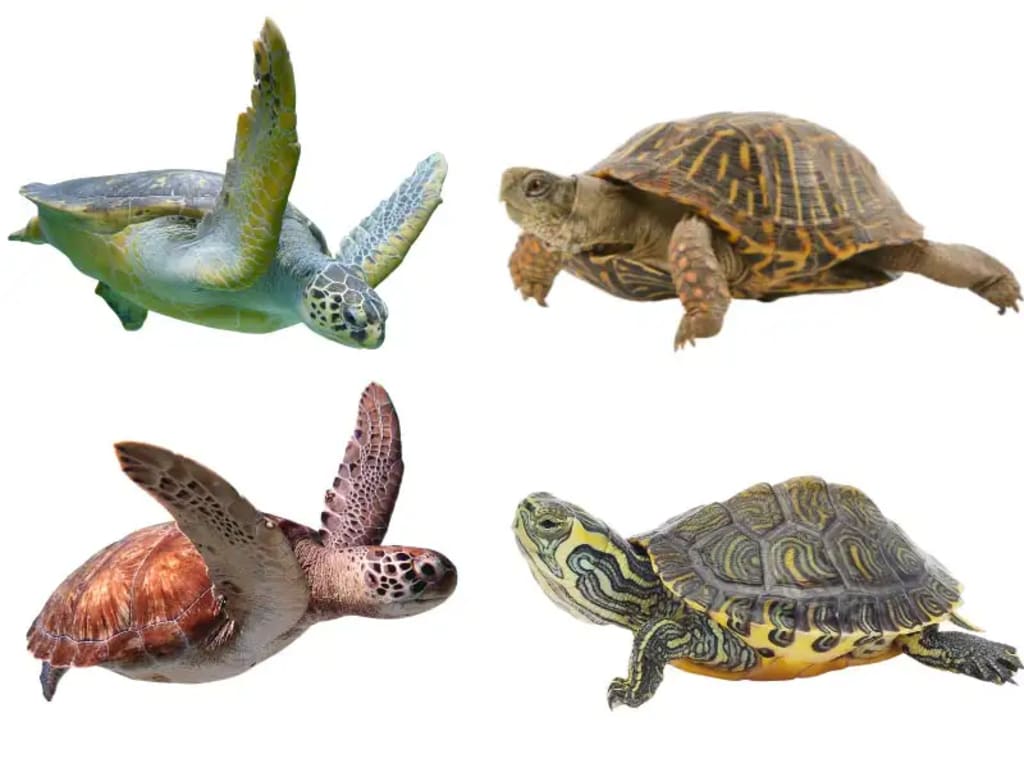
Turtles are one of the most ancient reptiles on earth, with a history that dates back over 200 million years. These unique creatures are fascinating and can be found in all types of environments, including oceans, rivers, ponds, and even deserts. In this article, we will explore the different types of turtles, their physical characteristics, behavior, habitat, diet, and conservation efforts.
Types of Turtles:
There are over 300 species of turtles, and they can be categorized into three major groups: tortoises, terrapins, and turtles. Tortoises are land-dwelling turtles, and they typically have a domed shell and sturdy, elephant-like legs. Terrapins are turtles that live in freshwater or brackish water, and they have a flatter, more streamlined shell. Turtles are the most diverse group, and they live in both freshwater and saltwater environments. Some of the most well-known turtles include the green sea turtle, loggerhead sea turtle, and the red-eared slider.
Physical Characteristics:
Turtles have a unique body structure that sets them apart from other reptiles. They have a hard, bony shell that protects their vital organs, and they can retract their head, legs, and tail inside their shell for protection. Turtles have a beak-like mouth and strong jaws for crushing and grinding their food. Their legs are adapted to their environment, and they have webbed feet for swimming in water or sturdy legs for walking on land. Most turtles have a long lifespan, with some species living over 100 years.
Behavior:
Turtles are slow-moving creatures, and they have a reputation for being peaceful and docile. However, some species can be aggressive, especially during breeding season or when defending their territory. Turtles are cold-blooded, which means their body temperature is regulated by their environment. They bask in the sun to warm their bodies, and they can also hold their breath for long periods of time when underwater.
Habitat:
Turtles can be found in a wide range of habitats, from tropical rainforests to arid deserts. Some turtles are adapted to live in freshwater, while others live in saltwater. Turtles are also found in different types of bodies of water, such as rivers, ponds, lakes, and oceans. Some turtles, like the desert tortoise, live in burrows to escape the heat of the desert, while others, like sea turtles, travel thousands of miles each year to nest on beaches.
Diet:
Turtles are omnivores, which means they eat both plants and animals. Their diet varies depending on their species and habitat. Land-dwelling turtles eat mainly plants, such as grasses, leaves, and fruits. Aquatic turtles eat fish, insects, and other small animals. Sea turtles are herbivores, and they eat sea grasses and algae. Some turtles are opportunistic feeders and will eat whatever food is available.
Conservation Efforts:
Turtles are threatened by a variety of factors, including habitat loss, pollution, and overexploitation. Some species, like the sea turtle, are endangered due to commercial fishing and poaching for their meat and shells. Conservation efforts include habitat restoration, protection of nesting beaches, and captive breeding programs. Many organizations are working to raise awareness about the importance of turtles and to promote conservation efforts to protect these ancient creatures for future generations.
Conclusion:
Turtles are fascinating creatures with a long history on earth. They have adapted to live in a wide range of habitats and have a unique body structure that protects them from predators. Turtles play an important role in their ecosystems and are threatened by a variety of factors. It is essential to protect turtles and their habitats to ensure their survival for future generations.
About the Creator
Keep reading
More stories from Kamal Mourya and writers in Earth and other communities.
The Remarkable World of Lizards: Exploring Biology, Ecology, Behavior, and Conservation
Lizards are a diverse group of reptiles belonging to the order Squamata, which also includes snakes and amphisbaenians (worm lizards). With over 6,000 species, lizards are found in every continent except Antarctica. They are known for their scaly skin, sharp claws, and ability to regenerate lost tails. Lizards occupy a wide range of ecological niches, from desert-dwelling sand lizards to arboreal chameleons. In this article, we will explore the biology, ecology, behavior, and conservation of lizards.
By Kamal Mourya3 years ago in Earth
Half of World’s CO2 Emissions Come From Just 32 Fossil Fuel Firms, Study Shows
A groundbreaking new study has revealed that 32 fossil fuel companies are responsible for half of global carbon dioxide emissions since the industrial era began. The findings highlight the outsized influence of major oil, gas, and coal producers on climate change, and raise urgent questions about accountability, regulation, and the transition to cleaner energy.
By Aarif Lashari5 days ago in Earth
“Do Not Copy This Site’s Content”: Why Originality Matters More Than Ever in the Digital Age
“Do not copy this site’s content.” It’s a warning most internet users have seen countless times, often at the bottom of webpages or buried in terms and conditions. Many scroll past it without a second thought. But in today’s digital world, that simple sentence carries far more weight than people realize.
By Muhammad Hassana day ago in Earth
The Blue Ridge Stalker
Tom had left the Ford down the way, its spark plugs finally exhausted and no mechanics for a dozen miles back through the foothills to Strossburg. No matter, he had worn his boots—almost as if he planned for this to happen. The puzzle he sought to solve emanated from the woods clinging to the slopes above; the valley behind held no mysteries.
By Stephen A. Roddewig5 days ago in Fiction



Comments
There are no comments for this story
Be the first to respond and start the conversation.