
Rainbows, though undoubtedly cool with their seven vibrant colors, are like the familiar recipe of your grandma – always amazing, yet somewhat expected. Fortunately, nature never ceases to surprise us, from discovering basketball-sized lemons in your backyard to tiny fungi resembling bug eggs on a clothespin. While rocks may generally be considered dull, on rare occasions, they have the power to rock our world, no pun intended.
Picture this: you're on a survival reality show, hungry and exhausted, and you spot what seems to be a juicy piece of steak on the ground. The excitement fades when you realize it's just a rock, a reminder that nature's sense of humor is wild and unpredictable.
People often associate specific properties with rocks; for instance, pyrite is believed to bring wealth, while rose quartz symbolizes love. However, rocks, in general, can be unremarkable. Yet, nature's quirky tendencies, like paradolia, where we see faces in random images, make us appreciate the beauty in the mundane. This phenomenon is not limited to finding hidden figures; it can also evoke shivers, such as seeing a bell pepper that appears to have sinister faces when sliced.
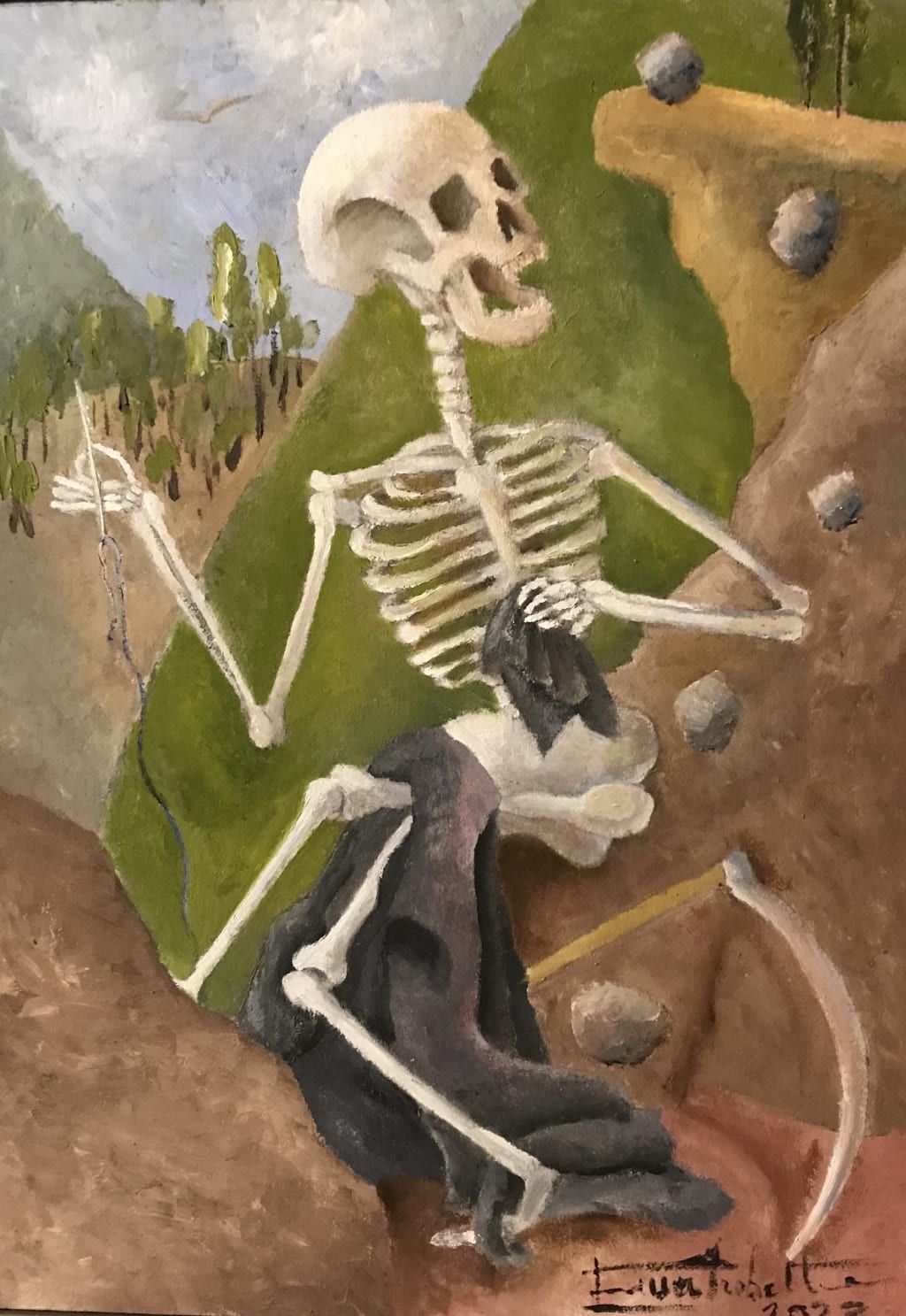
Moving beyond the familiar, nature introduces us to bizarre transformations. Take the Snapdragon flower, innocent when blooming, but as it dries out, it morphs into what seems like a collection of eerie skulls. The first encounter with such an image might be startling, akin to shadow monsters from a horror movie, but the reality is far less dramatic.
The natural world can be oddly unsettling. A photograph of leaves resembling hanging skulls may evoke visions of a mysterious ritual, only to discover that these peculiar shapes are, in fact, flowers. The Snapdragon flower's ability to transform is a friendly reminder to keep our plants well-watered – lest they take on a creepy appearance.
Nature's anomalies extend beyond the plant kingdom. A bizarre-looking fungus, the Zaria polymorpha, may remind you of a zombie's foot, especially after watching "The Last of Us." The world of fungi continues to surprise, providing a hint of horror in the seemingly ordinary.
Animals, too, have their share of unexpected features. Zoom in on an emu, and what initially appears cute becomes strangely creepy, particularly when examining its legs resembling dragon scales. The exploration of details in the natural world reveals peculiarities that challenge our conventional perceptions.
Paradolia, the tendency to attribute meaning to random images, leads us to see familiar shapes in everyday objects. While spotting a heart in a feather might invoke a sense of delight, paradolia can also manifest in more unsettling ways. A bell pepper, sliced in a particular manner, might evoke a feeling of dread as it seemingly reveals a dark and sinister interior.
Nature's quirks often align with mathematical principles, such as the golden ratio, evident in mesmerizing spiral growth patterns. The beauty of this perfect equation manifests in twirly dandelions and eggplants, creating a visual appeal that transcends the ordinary. However, not every natural phenomenon adheres to perfection, as demonstrated by square-shaped clouds that introduce an element of chaos to the sky.
Winter, with its unique challenges, unveils a different side of nature. Natural chess pieces, footprints in the snow, and mysterious ice formations create a surreal landscape. Trees, typically adhering to the rule of growing upwards, occasionally rebel, with one particularly rebellious fig tree growing horizontally around a palm tree, defying conventional manners.
In the world of camouflage, nature excels in blending creatures with their surroundings for defense. Yet, fruits and vegetables also play their own camouflaging games – a potato disguised as a pear, challenging our perceptions of what's edible.
Leaves, seemingly straightforward in their role, can exhibit anomalies. A skeleton leaf, with its green part seemingly vanishing, pulls off a disappearing act reminiscent of a magic trick. These unexpected transformations add an element of mystery and wonder to the natural world.
Love, often compared to Wi-Fi for its connecting power, introduces its own set of peculiarities. Trees, ducks, and even ordinary scenes take on a romantic hue. Ducks become a bride and groom, trees embrace in eternal bonds, and nature itself becomes a canvas for the expressions of love.
A concluding quiz challenges viewers to spot love-inspired transformations in nature, testing their ability to see beyond the ordinary. From hugging plants to ducks dressed for matrimony, nature's anomalies weave tales of romance and intrigue, offering a delightful journey through the unexpected.
About the Creator
Līva
World is interesting place. Scary, but worth living.
Nature is full of surprises and people are... well, people are something else.
Art is the best doctor.
Evidence Suggests a Large Hidden Planet May Exist in Our Solar System
For centuries, scientists believed the major members of our Solar System were fully known. From the rocky inner planets to the gas giants and icy bodies beyond, astronomers thought they had mapped most of the significant objects orbiting the Sun. However, new research by American scientists suggests that a large, hidden planet may still be lurking in the distant reaches of our Solar System.
By Irshad Abbasi 3 days ago in Earth



Comments
There are no comments for this story
Be the first to respond and start the conversation.