
Beyond the Basic Green: AI's Picks for the Most Stunning Colorful Houseplants
You bring home a plant with leaves painted in strokes of pink, silver, or deep burgundy. For a while, it's a living sculpture. Then, the masterpiece fades. Vibrant colors dull, new growth reverts to plain green, and crispy edges appear. The issue isn't your care; it's often a mismatch between the plant's needs and your home's environment. Colorful plants frequently demand more specific conditions to maintain their spectacular hues.

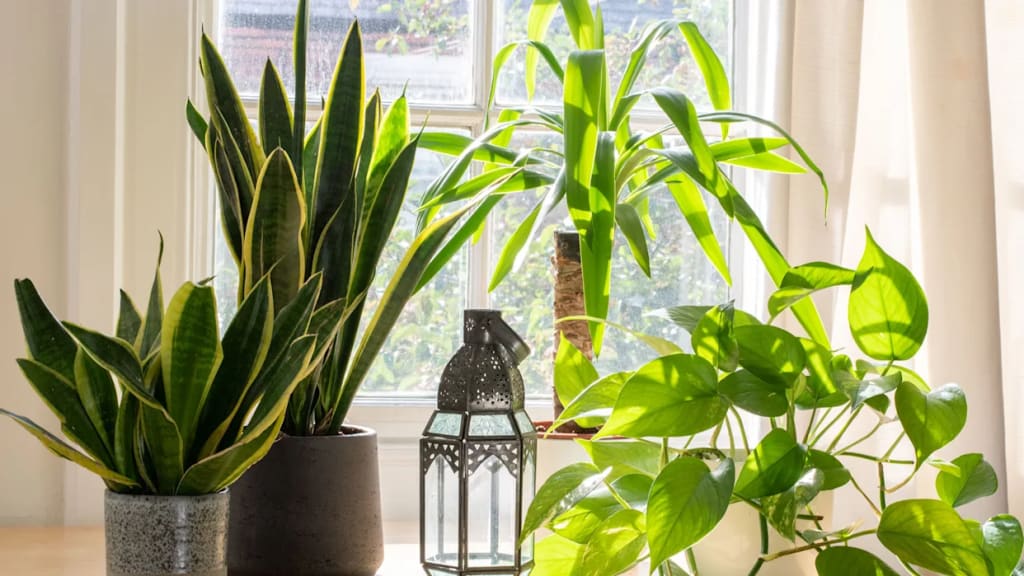
The secret to keeping these botanical jewels radiant isn't just guesswork. By understanding light—the non-negotiable fuel for all plants—and learning to measure it, you can stop struggling and start showcasing. This guide, informed by plant care technology and horticultural expertise, will help you select and sustain the most stunning colorful houseplants.
Decoding Light: More Than Meets the Eye
For plants, light is food. They use it in photosynthesis to produce the carbohydrates needed for growth, maintenance, and, crucially, for developing rich pigments. When we describe a spot as "bright," we're relying on our human vision, which is excellent at adjusting to different light levels but poor at objectively measuring them.
This is where technology bridges the gap. You can use your smartphone as a basic tool. Apps that function as light meters measure illuminance in lux (a unit for human-perceived brightness) and can map your home's light landscape. By taking readings at plant level in different spots at different times of day, you can categorize your space into practical zones.
A Quick Guide to Light Levels (in lux):
- Low Light (50-250 lux): Deep corners, north-facing rooms. Suitable for Snake Plants, some ferns.
- Medium Light (250-1000 lux): Near east/west windows, behind sheer curtains. Ideal for many Philodendrons and Calatheas.
- Bright, Indirect Light (1000-3000 lux): Close to bright windows but out of direct sun. Perfect for Monsteras, Fiddle-leaf Figs, and the plants that show the best color.
- Direct Sun (3000+ lux): Sunny sills with several hours of direct sun. Necessary for sun-lovers like cacti and succulents.
It's important to know that lux meters measure light for human eyes. Plants "see" light differently, using Photosynthetically Active Radiation (PAR). For most hobbyists, a lux meter is a fantastic starting tool for comparison, but for optimizing flowering or intense coloration, understanding PAR is the next step.
AI's Curated Collection: Colorful Plants for Every Corner
Armed with an understanding of your home's light zones, you can confidently choose plants destined to thrive. Here are standout selections for adding spectacular color beyond basic green.
For Bright, Indirect Light Champions
These plants need ample light to produce and maintain their vibrant pigments.
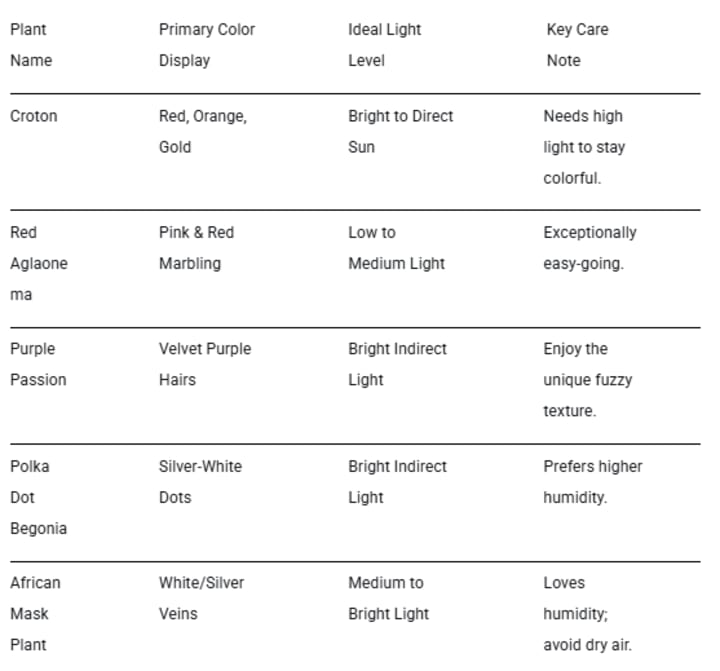
- Croton (Codiaeum variegatum): Bold doesn't begin to describe it. Varieties like 'Petra' have leathery leaves splashed with brilliant red, orange, and gold. They need the brightest spot you can offer (even some direct sun indoors) to prevent their colors from fading to green.
- Purple Passion Plant (Gynura aurantiaca): This vine offers a stunning tactile experience. Its green leaves are densely covered with soft, violet hairs, giving it a dazzling purple-velvet appearance. It thrives in bright light and can be trained on a trellis or allowed to trail.
- Polka Dot Begonia (Begonia maculata): A playful yet elegant choice. Its angel-wing-shaped leaves are dark green with dramatic silver-white polka dots on top and a striking reddish-purple underneath. It loves bright, indirect light and appreciates higher humidity.
For Medium Light Maestros
These plants offer spectacular color without needing a prime sunny windowsill.
- Chinese Evergreen & Red Aglaonema (Aglaonema spp.): The ultimate easy-care colorful plants. Standard Chinese Evergreens have elegant silver patterns on dark green. The Red Aglaonema varieties turn up the drama with stunning pink and red marbling. They are remarkably tolerant of various light and humidity conditions.
- African Mask Plant (Alocasia amazonica): This plant makes a dramatic, architectural statement. Its deep green, shield-shaped leaves are accentuated by thick, striking white or silver veins. It prefers medium to bright light and higher humidity.
- Calathea: Known as "prayer plants" for their moving leaves, Calatheas are all about pattern. Species like the Calathea makoyana (Peacock Plant) have feather-like patterns of dark and light green on top, with a rich purple underside. They thrive in consistent medium light, high humidity, and away from drafts.
For Low-Light Accents
Even dimmer spaces can host plants with color beyond simple green.
- Snake Plant (Dracaena trifasciata): A nearly indestructible classic. While the all-green type is common, seek out varieties like 'Moonshine' (silver-green) or 'Laurentii' (green with golden-yellow edges). They tolerate very low light but will grow more slowly.
- Aluminum Plant (Pilea cadierei): An understated charmer. Its dark green leaves are quilted with raised, metallic-silver patches, giving it a sophisticated, textured look. It adapts well to low light, though its coloring is best in medium conditions.
A Quick-Reference Guide to Colorful Houseplants
From Selection to Success: Making Color Last
Choosing the right plant is half the battle. Keeping it colorful requires aligning care with its needs.
Match the Plant to the Measured Light: Use your light meter readings to place your new plant accurately from day one. A Croton placed in a medium-light corner will slowly but surely lose its fiery brilliance.
Water According to Light: A plant in brighter light uses water faster than the same plant in low light. Always check soil moisture before watering. Plants like the String of Pearls (a beautiful trailing succulent) need the soil to dry completely to avoid rot.
Embrace the Humidity: Many colorful tropicals, like Calatheas and Alocasias, evolved in humid jungles. Brown, crispy leaf tips are often a plea for moisture in the air. Group plants together, use a pebble tray, or consider a humidifier.
Observe and Adapt: Your plant is the best sensor. Leggy growth or fading color usually means more light is needed. Leaf scorch or bleaching means too much direct sun. Let your measurements guide you, but let the plant's appearance confirm your decisions. When problems arise, technology can help diagnose them; for instance, you can use AI Plant Finder to identify issues from a photo of a stressed leaf.
By moving beyond guesswork and embracing a more measured approach, you can confidently cultivate an indoor oasis that’s not just green, but gloriously colorful. Start by mapping the light in your home, then choose your botanical jewels wisely. The result will be a vibrant, thriving collection that brings daily joy.
About the Creator
Emma Wallace
Director of Research and Development at AI Plant Finder (Author)
Emma Wallace is an esteemed researcher and developer with a background in botany and data analytics.
Keep reading
More stories from Emma Wallace and writers in Earth and other communities.
The "Where Do I Put This?" Dilemma: AI Solves Your Plant Placement Problems
You bring home a beautiful new plant, full of hope. You find a spot that looks nice—on a shelf, a side table, in an empty corner. Weeks later, the story tells itself in the leaves: stretching stems, fading color, or crispy edges. The problem is rarely you; it’s almost always the place. "Where do I put this?" is the most fundamental question in plant care, and guessing is the root of most struggles.
By Emma Wallace6 days ago in Earth



Comments
There are no comments for this story
Be the first to respond and start the conversation.