
The "Where Do I Put This?" Dilemma: AI Solves Your Plant Placement Problems
A definitive guide to matching plants with the perfect spot in your home using light meters, plant identification, and smart design.


You bring home a beautiful new plant, full of hope. You find a spot that looks nice—on a shelf, a side table, in an empty corner. Weeks later, the story tells itself in the leaves: stretching stems, fading color, or crispy edges. The problem is rarely you; it’s almost always the place. "Where do I put this?" is the most fundamental question in plant care, and guessing is the root of most struggles.
In my work at AI Plant Finder, analyzing thousands of plant health queries, improper placement is the single most common cause of avoidable decline. It's not just about light, but about the unique microclimate of each nook in your home. The good news is that today, we don't have to guess. With a blend of botanical understanding and simple technology, you can become a master of placement, turning every spot in your home into an opportunity for something to thrive.
The Three Pillars of Perfect Placement
Choosing the right spot isn't just about aesthetics; it's about matching a plant's biological needs to three key environmental factors. Ignoring any one of them can lead to stress.
Light (The Non-Negotiable Fuel): This is the most critical factor. "Bright indirect light" is more than a label—it's a specific intensity. A south-facing window bathes a room in strong light, while a north-facing one offers gentle, consistent illumination. Plants have evolved for specific light levels, and placing a low-light fern in a blazing window is as detrimental as putting a sun-loving succulent in a dark bathroom.
The Invisible Factors (Humidity & Drafts): Many popular houseplants are tropical natives. The average home's humidity (30-50%) is often half of what they crave, leading to brown tips. Conversely, hot air from vents or cold drafts from doors can shock plants, causing leaf drop and stress.
Practicality & Purpose (Your Lifestyle): A sprawling Monstera might look stunning in the middle of a living room, but is it in the way? A spiky cactus might not be the best choice for a narrow hallway. Placement must balance the plant's needs with your daily life and design goals.
Decoding Your Home's Microclimates: A Room-by-Room Guide
Every room has a distinct personality. Here’s how to match common plant types to the unique conditions of different spaces.
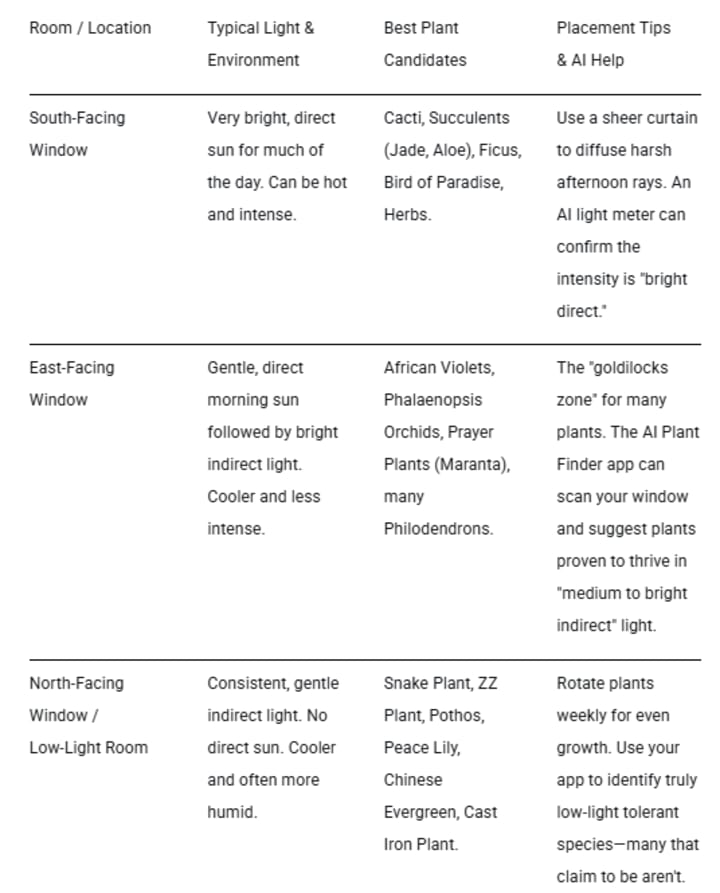
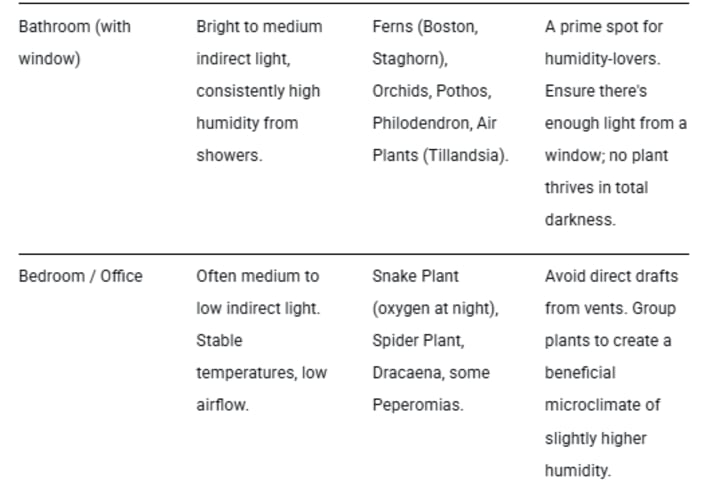
From Guessing to Knowing: The AI-Powered Placement Audit
The true power of modern plant care tools is their ability to replace anxiety with data. Here’s how to conduct a simple home audit:
Identify with Certainty: Before you can place a plant, you must know what it is. Use your plant identification app to get the precise species name and its official light/water needs. A "Dracaena" could be a low-light 'Janet Craig' or a brighter-light 'Marginata'—care differs drastically.
Measure the Light, Don't Guess: Open your app's light meter function. Hold your phone where the plant's leaves will be, pointing toward the light source. Take readings at different times of day. You'll get objective data like "Low Light (50 FC)" or "Bright Indirect (300 FC)," which you can match to your plant's requirements.
Diagnose and Adjust: Is a plant in the wrong spot? Symptoms are clues. A plant stretching out is etiolating—searching for more light. A plant with scorched, bleached patches is getting too much direct sun. Use the app's diagnosis feature to confirm your suspicion and get a clear recommendation to "move to lower light" or "provide more humidity."
Advanced Strategy: Designing with Plants in Mind
Once you understand the rules, you can start to creatively bend them for design.
The "Foot-Candle Rule": Most houseplants need a minimum of 75-100 foot-candles of light to merely survive, and 200+ to thrive. Your light meter gives you this number. This helps you use shelves effectively—brighter conditions at the top near the light, lower-light plants on the bottom shelf.
Creating Microclimates: You can improve a spot. A pebble tray with water increases humidity around a plant. A reflective surface (like a mirror) can bounce light into a darker corner. Grouping plants together creates a shared, more humid atmosphere.
The Seasonal Shift: Remember that light changes with the seasons. A spot that gets perfect indirect light in summer might become gloomy in winter. Be prepared to move plants seasonally, using your light meter as your guide.
Cultivating Confidence in Every Corner
Solving the placement dilemma transforms plant care from a chore into a harmonious design practice. It’s the satisfying click of a key in a lock. By using simple technology to understand the language of light and the needs of your plants, you remove the biggest source of failure.
Your home is a collection of microclimates, each a potential habitat. With the right knowledge and tools, you can look at any empty shelf, corner, or windowsill and know exactly what will flourish there. This turns every plant purchase from a gamble into a guaranteed success, filling your space with greenery that doesn't just live, but thrives.
I hope this guide helps you see your home in a new light—literally. What's the trickiest spot in your home you've tried to fill with a plant?
About the Creator
Emma Wallace
Director of Research and Development at AI Plant Finder (Author)
Emma Wallace is an esteemed researcher and developer with a background in botany and data analytics.
Keep reading
More stories from Emma Wallace and writers in Earth and other communities.
From Supermarket to Splendor: AI Revives Discount Rack Plants
We’ve all seen them: the lonely foliage on the clearance rack, marked down for a few drooping leaves or a less-than-perfect appearance. Bringing home a discounted plant can feel like a rescue mission—a chance to give a living thing a second life. But that initial hope often fades into uncertainty. What’s wrong with it? Is it thirsty, drowned, or sick? Traditional guesswork can lead to more stress for both you and the plant.
By Emma Wallace3 days ago in Earth
Industries Hit Back at Decision to Extend Over Rs15bn to Rice Exporters
The Pakistani government’s recent decision to extend more than Rs15 billion in financial support to rice exporters has sparked a wave of criticism from domestic industries. While the move is intended to boost exports and strengthen the country’s foreign exchange reserves, local manufacturers argue that it favors exporters at the expense of other industrial sectors, raising questions about fairness, economic priorities, and long-term industrial policy. Industry representatives, economists, and policymakers are now debating the potential impact of this substantial financial package, highlighting the challenges of balancing export promotion with support for domestic production and job creation. Background: The Financial Extension The government’s support package includes: Cash incentives and subsidies for rice exporters Assistance for logistics, storage, and shipment costs Measures aimed at enhancing Pakistan’s competitiveness in international rice markets According to officials, the goal is to maintain export momentum in the face of rising global demand for Pakistani rice, especially basmati and long-grain varieties. The rice industry contributes significantly to the country’s economy, providing employment to millions of farmers, millers, and transport workers. However, critics argue that while rice exporters benefit, other industrial sectors are overlooked, leaving them to bear the burden of rising costs and limited support. Industrial Sector Response Local industry associations have expressed strong opposition to the extension, citing several concerns: Unequal treatment: Manufacturers in textiles, ceramics, and other sectors feel that their contributions to the economy are being undervalued. Resource allocation: The diversion of funds to rice exporters could strain public finances and reduce available support for broader industrial development. Inflationary pressures: Critics warn that focusing heavily on exports without balancing domestic production could drive up prices for local consumers, particularly for staple goods. A spokesperson for the Pakistan Industries Association stated: "While supporting exporters is important, allocating such a large sum exclusively to rice exporters sets a dangerous precedent. All industrial sectors contribute to Pakistan’s economy and deserve equitable support." Economic Arguments Economists note that export incentives can help strengthen foreign reserves, especially in a country facing balance-of-payment pressures. Support for rice exporters may lead to: Increased foreign currency inflows Growth in agricultural output and processing industries Enhanced competitiveness in global rice markets However, experts also caution that over-reliance on subsidies for a single sector may distort the industrial landscape. Diversified support policies could help boost overall manufacturing, create jobs, and stabilize domestic prices while still promoting exports. Regional and International Implications Pakistan is a major player in the global rice market, particularly in South Asia and the Middle East. By extending financial support, the government hopes to: Maintain market share against competitors like India, Thailand, and Vietnam Encourage investment in modern milling and processing technologies Strengthen trade relations with import-dependent countries Yet, domestic industries argue that this focus on exports might undermine long-term industrial development, especially if other manufacturing sectors face financial constraints. Balancing international competitiveness with local growth remains a key challenge. Public Perception and Political Debate The decision has also sparked public debate and media scrutiny. Citizens and commentators have questioned: Why rice exporters are receiving such significant financial support while other sectors struggle Whether this approach will benefit ordinary consumers, particularly in rural and urban areas dependent on domestic production The potential for political influence or lobbying shaping economic decisions Political parties and opposition figures have criticized the government for favoring certain industries, calling for more transparent and inclusive industrial policies. Possible Solutions and Recommendations Experts suggest several measures to balance export promotion with domestic industrial growth: Equitable support: Extend incentives to other industrial sectors based on contribution to employment and GDP. Conditional subsidies: Link export incentives to investment in technology, workforce development, and sustainable practices. Transparent allocation: Ensure public funds are distributed fairly across sectors to avoid favoritism and economic imbalance. Monitoring and evaluation: Regularly assess the impact of financial support on both exports and domestic markets. By adopting a holistic approach, the government can maintain export competitiveness while ensuring that industrial growth is inclusive and sustainable. Impact on Farmers and Rural Communities While industrialists express concern, the rice industry emphasizes the benefits for farmers and rural communities: Increased income for smallholder farmers Job creation in processing, storage, and logistics Support for rural development and agricultural investment Proponents argue that supporting rice exports indirectly boosts local economies in agricultural regions, highlighting the complex trade-offs policymakers face. Looking Ahead The debate over the Rs15 billion support package is likely to continue, as industrial sectors, policymakers, and civil society weigh the benefits and drawbacks of prioritizing rice exports. Key factors to watch include: Government response to industrial backlash Adjustments to export incentives or subsidy allocations Long-term impact on domestic manufacturing and consumer prices Balancing the needs of exporters, industrial manufacturers, and domestic consumers will remain a critical challenge for Pakistan’s economic planners in the coming months. Conclusion The extension of over Rs15 billion to rice exporters has highlighted tensions between export promotion and domestic industrial interests. While the policy aims to strengthen Pakistan’s position in the global rice market and support rural economies, domestic industries argue for more equitable treatment and transparent allocation of resources. As the debate unfolds, policymakers must navigate the delicate balance between encouraging exports, supporting local manufacturing, and safeguarding consumer interests, ensuring that Pakistan’s economic growth is both inclusive and sustainable.
By Muhammad Hassan6 days ago in Earth
Weather Warnings Issued as Storm Chandra Approaches
As the weather patterns continue to shift across the globe, the threat of severe storms has become more prominent. In the latest development, Storm Chandra is making its way across the region, prompting meteorologists and local authorities to issue weather warnings for several areas. With high winds, heavy rain, and potential flooding on the horizon, it’s crucial for everyone to stay informed and take necessary precautions to stay safe. Storm Chandra, named by the weather service, has been developing over the past few days and is now nearing landfall. While it's difficult to predict the exact path and intensity of the storm, experts are warning that its effects could be widespread. Here’s what we know so far and how you can prepare for the storm’s impact. Understanding Storm Chandra: The Current Forecast Storm Chandra is classified as a tropical storm that has gained strength in the past 24 hours, moving steadily toward the mainland. Meteorologists have reported that the storm is expected to intensify further over the next several days, with winds reaching up to 100 km/h (62 mph) and heavy rainfall across affected regions. Key Factors of the Storm: Wind Speed: Tropical storm-strength winds could cause damage to trees, power lines, and buildings, particularly in coastal areas. Rainfall: The storm is expected to bring heavy rainfall, which may lead to localized flooding, especially in low-lying areas. In some regions, rainfall totals could exceed 200 mm (8 inches). Storm Surge: Coastal areas are at risk of storm surge and rising sea levels, which could cause significant flooding along the shorelines. Tornado Potential: While not common in all tropical storms, Storm Chandra has the potential to spawn isolated tornadoes as it moves inland. The storm's movement remains unpredictable, and its exact trajectory could change over the next few hours. While it’s currently tracking towards the eastern coast, authorities are urging residents across a wider area to remain prepared. Areas Affected: Which Regions Should Be Concerned? As of the latest updates, several regions are under weather warnings as Storm Chandra approaches. Local governments have issued advisories and alerts for the following: 1. Coastal Communities Due to the proximity of the storm to the ocean, coastal communities are expected to face the brunt of the storm’s impact. Strong winds, heavy rain, and rising tides could cause significant coastal flooding. Residents in these areas are advised to evacuate if instructed and to take all precautions to secure their homes and property. 2. Inland Regions While the storm will weaken as it moves inland, heavy rain and flash flooding are still concerns for inland areas. Flood-prone regions, especially near rivers and streams, should remain vigilant for rising water levels. 3. Mountainous Areas Some mountainous regions could experience mudslides due to the intense rainfall and saturated ground. Those in highland areas should be prepared for potential road closures and hazardous travel conditions. Weather Warnings and Alerts: What Do They Mean? Weather warnings are an essential part of the preparation process for any storm, and Storm Chandra is no exception. The following warnings have been issued: 1. Tropical Storm Warning A Tropical Storm Warning has been issued for several coastal and near-coastal areas. This means that tropical storm conditions, including strong winds and heavy rain, are expected within 36 hours. Local authorities will provide evacuation instructions for vulnerable areas. 2. Flood Warning Areas that are most likely to experience heavy rainfall and localized flooding have been placed under flood warnings. Flash floods can occur rapidly, especially in areas with poor drainage systems or already saturated ground. 3. Storm Surge Advisory Coastal communities are under a storm surge advisory, which warns of the potential for elevated water levels and coastal flooding. In the worst-case scenario, storm surges could inundate beach-front properties and low-lying areas along the shore. 4. Tornado Watch In addition to the threats posed by the storm itself, a tornado watch has been issued for areas inland, particularly in the storm's path. Although tornadoes are less common in tropical storms, the risk of short-lived tornadoes increases in the right conditions. How to Prepare for Storm Chandra While the exact path of the storm is still uncertain, preparation is key to ensuring your safety and minimizing damage. Here’s how to get ready for the storm: 1. Secure Your Property Windows & Doors: Reinforce windows and doors with storm shutters or plywood if possible. Strong winds can shatter windows and cause flying debris, which can be dangerous. Outdoor Objects: Bring in outdoor furniture, tools, or anything that could become a projectile in high winds. Flood Barriers: If you live in an area prone to flooding, consider setting up flood barriers or sandbags around your property. 2. Emergency Kit Make sure you have an emergency kit that includes: Non-perishable food and water for at least three days Flashlights, batteries, and a battery-powered radio A first-aid kit Important documents (stored in waterproof containers) Medications and personal hygiene items A portable phone charger 3. Evacuation Plans If you live in a flood-prone or coastal area, have an evacuation plan in place. Know the routes to take and the locations of emergency shelters. If authorities issue an evacuation order, follow it immediately. 4. Stay Informed Keep a weather app on your phone and stay tuned to local news broadcasts. Follow the instructions provided by local authorities regarding road closures, evacuation orders, and shelter locations. Have a battery-powered radio in case of power outages, so you can continue to receive weather updates. The Aftermath: What to Expect After the Storm Once Storm Chandra has passed, it’s important to stay cautious. Here’s what to keep in mind in the aftermath of a storm: 1. Flooding and Debris Once the rain subsides, expect significant debris and potential road blockages. Avoid driving through flooded areas and be wary of downed power lines. 2. Power Outages The storm's impact on power lines could lead to widespread outages, potentially lasting for several days. Check your supplies and have backup power options if needed. 3. Damage Assessment and Clean-Up Once authorities declare areas safe, begin the clean-up process. Wear protective gear when handling debris and avoid contact with floodwaters, as they can carry harmful bacteria. Conclusion: Storm Chandra’s Path and Preparation As Storm Chandra approaches, it’s crucial to stay informed, prepared, and ready to take action. With weather warnings issued across multiple regions, it’s clear that the storm could bring significant challenges. However, with careful planning and a proactive approach, you can minimize the risks to yourself, your family, and your property. Remember: Safety first. Follow the advice of local authorities, have an emergency kit ready, and secure your property. By staying vigilant and prepared, you’ll be better equipped to face Storm Chandra head-on.
By Aarif Lashari2 days ago in Earth
The Path to Salvation
The late autumn evening air filled the monk's lungs, but it wasn't the season that chilled his bones. The heavy-handed presence of evil he had sensed upon entering the woods surrounding this mountain village had not bothered to conceal itself from him.
By Made in DNA7 days ago in Fiction



Comments
There are no comments for this story
Be the first to respond and start the conversation.