
Aquarium Algae Types Explained (With Fixes for Each)
Identify Every Common Aquarium Algae Type And Learn the Exact Fixes That Actually Work


Most aquarium owners fight algae with the wrong tools because they're attacking the wrong enemy.
Algae is one of the most misunderstood problems in fishkeeping. Beginners panic when they see it. Experienced keepers know it's just part of managing a healthy ecosystem.
But here's the issue: Not all aquarium algae types are the same.
What works for brown algae won't touch black beard algae. The fix for green water is completely different from the fix for hair algae. And if you misidentify the problem, you'll waste time, money, and energy on solutions that don't work.
This guide breaks down every common fish tank algae type, shows you how to identify each one, and gives you the exact aquarium algae fixes that actually work.
Green Water (Phytoplankton)

What It Looks Like
Your tank water turns cloudy green, sometimes so thick you can't see your fish. It looks like pea soup floating in your aquarium.
This is phytoplankton microscopic algae suspended in the water column. It's not growing on surfaces. It's literally living in the water itself.
What Causes It
Green water aquarium problems happen when three things collide: excess nutrients, too much light, and warm water temperatures. New tanks sometimes get it. Overstocked tanks almost always get it. Tanks near windows are prime candidates.
Fast Fixes
The fastest solution is a UV sterilizer. UV light kills the free-floating algae as water passes through the unit. Most green water clears within 48-72 hours.
If you don't have UV, perform a complete blackout. Cover your tank completely with towels or blankets for three to five days. No light at all. Your fish will be fine. Your plants might suffer slightly, but the algae will die.
During the blackout, do a 50% water change on day one and day three.
Long-Term Prevention
Reduce feeding. Most aquarists overfeed by 30-50%. Feed once daily, and only what your fish can consume in two minutes.
Keep your lighting schedule consistent: eight hours maximum. Use a timer.
Do weekly water changes of 25-30%.
Brown Algae (Diatoms)

What It Looks Like
Brown algae diatoms form a dusty, rust-colored coating on glass, decorations, substrate, and plants. It wipes off easily with your finger or a scraper.
New Tank vs Mature Tank Causes
In new tanks, brown algae is completely normal. Newly set up aquariums often have elevated silicate levels from substrate, decorations, or tap water.
In mature tanks, it usually signals low light or high silicates in your source water.
Fix Steps
For new tanks: Wait it out. Brown algae diatoms usually disappear on their own within 2-4 weeks as your tank matures and beneficial bacteria establish themselves.
During this period, wipe surfaces with a magnetic cleaner or soft cloth during water changes.
For mature tanks: Test your tap water for silicates. If levels are high, consider using reverse osmosis water or a silicate-removing filter. Increase lighting slightly if your tank is dimly lit.
When It Disappears Naturally
In cycling tanks, diatoms fade as soon as your biological filtration stabilizes. You don't need to do anything except maintain regular water changes.
Nerite snails and mystery snails consume diatoms rapidly and help speed up the process.
Hair Algae

What It Looks Like
Hair algae aquarium growth appears in long, thin strands that look exactly like hair. It's usually bright green and grows on plants, decorations, driftwood, and substrate.
When you try to remove it, it comes off in stringy clumps. It feels slimy and soft.
Root Causes
Hair algae thrives when you have excess nutrients combined with moderate to high lighting.
Common triggers include overstocking, overfeeding, infrequent water changes, no live plants, and dirty filters.
Step-by-Step Removal
Start with a major water change: 50% on day one. Vacuum the substrate thoroughly to remove organic waste.
Manually remove as much hair algae as possible. Use your hands, tweezers, or a toothbrush. Twist the algae onto the brush like spaghetti on a fork.
Test your water for nitrates and phosphates. If nitrates exceed 40 ppm or phosphates exceed 2 ppm, your levels are too high.
Reduce feeding to once every other day for two weeks. Clean your filter media.
Add fast-growing live plants if you don't already have them. Plants like water wisteria, hornwort, and water sprite consume nutrients that would otherwise feed algae.
Prevention
Weekly water changes of 25-30% keep nutrient levels in check. Reduce your lighting period to six to eight hours daily. Feed sparingly.
Black Beard Algae (BBA)
Why It Scares Beginners
Black beard algae looks like short, dark tufts growing on plant edges, driftwood, filter intakes, and decorations. It's tough, wiry, and doesn't wipe off easily.
Beginners panic because BBA is stubborn. It doesn't respond to manual removal or most algae eaters.

What Actually Causes It
BBA thrives in tanks with low or fluctuating CO₂ levels and inconsistent water flow. It loves areas with strong current where it can access fresh nutrients.
Real Fixes That Work
Stabilize your CO₂ if you're running a planted tank. Inconsistent CO₂ is the number one cause of BBA in planted setups.
Increase water flow. Use a powerhead or reposition your filter outlet to eliminate dead spots.
Spot-treat BBA with liquid carbon products. Turn off your filter, use a syringe to apply directly onto the algae, wait five minutes, then turn your filter back on. Repeat daily for one week.
For severe infestations, remove affected items and soak them in a diluted bleach solution for two minutes, then rinse thoroughly and soak in dechlorinated water.
Ongoing Control
Consistent CO₂ levels, strong water flow, and regular maintenance prevent BBA from returning.
Siamese algae eaters and rosy barbs sometimes nibble on BBA, but they're not reliable solutions.
Blue Green Algae (Cyanobacteria)
Why It's NOT True Algae
Blue green algae isn't algae at all. It's cyanobacteria a photosynthetic bacteria that forms slimy, smelly mats on substrate, plants, and decorations.
It's usually dark green or blue-green, and it peels off in sheets. It smells terrible when you remove it.

Warning Signs
Cyanobacteria appears suddenly and spreads fast. It covers everything in sight within days. It often shows up in tanks with poor water flow and stagnant areas.
Safe Removal
Perform a 50% water change immediately. Manually remove as much cyano as possible by siphoning it out during the water change.
Increase water flow. Add a powerhead or adjust your filter to eliminate dead spots.
Clean your substrate thoroughly. Cyano thrives in dirty gravel and sand.
Consider a three-day blackout after removal to prevent regrowth. Cover your tank completely.
Prevent Recurrence
Strong water circulation prevents cyano from establishing itself. Regular substrate vacuuming removes organic waste that feeds cyanobacteria. Reduce feeding and maintain consistent water changes.
String Algae and Green Spot Algae
String Algae
String algae resembles hair algae but grows in thicker, longer strands. It often forms tangled masses that look like wet cotton candy. It usually appears in high-light areas or near filter outlets.

Manual removal works best. Wind the algae onto a toothbrush or stick like cotton candy. Reduce your lighting period to six hours daily for two weeks. Test for nitrates and phosphates. Add more fast-growing plants to outcompete the algae.
Green Spot Algae
Green spot algae forms tiny, circular green dots on glass, slow-growing plant leaves, and decorations. The spots are hard and crusty they don't wipe off easily. You'll need a razor blade or scraper to remove them from glass.
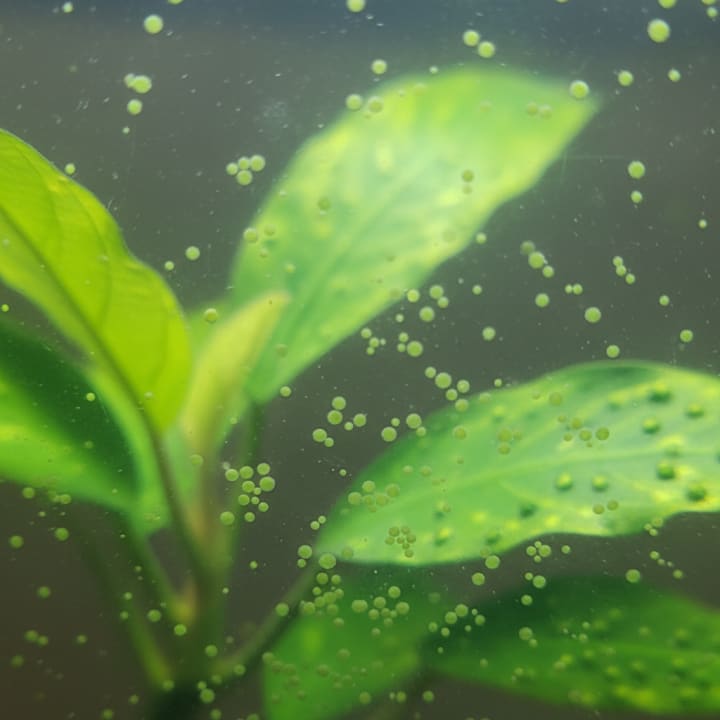
Low phosphate levels are the primary cause. Test your phosphate levels. If they're below 1 ppm, add a phosphate supplement to raise them to 1-2 ppm.
Reduce your lighting intensity or duration if it's excessive. Nerite snails eat green spot algae, but they won't prevent new spots if your phosphate levels are low.
Since green spot algae bonds tightly to the glass, most aquarists rely on an aquarium algae scraper because it removes the hard dots cleanly without damaging the tank surface.
Useful Algae Eaters (And What They Can't Fix)
Best Algae-Eating Species
Nerite snails consume diatoms, green spot algae, and some soft green algae. They're safe for all tank sizes and won't breed in freshwater.
Otocinclus catfish eat diatoms, soft green algae, and some hair algae. They work best in groups of six or more.
Siamese algae eaters consume hair algae, string algae, and sometimes nibble on black beard algae. Make sure you get true SAEs.
Amano shrimp eat hair algae, string algae, and some soft green algae. They're more effective than most fish.
What Algae Eaters Can't Solve
Algae eaters clean up existing algae, but they won't fix the underlying problem. If your water conditions favor algae growth, it will keep coming back no matter how many snails or shrimp you add.

Think of algae eaters as cleanup crew, not a cure.
No algae eater reliably consumes black beard algae or cyanobacteria.
Long-Term Prevention Strategies

Lighting Control
Use a timer to maintain a consistent lighting schedule. Eight hours is the sweet spot for most tanks. Reduce intensity if your lights are too strong.
Nutrient Management
Test your water weekly for nitrates and phosphates. Nitrates should stay below 40 ppm. Phosphates should stay between 0.5-2 ppm.
Feeding Habits
Feed once daily, and only what your fish consume in two minutes. Uneaten food rots and fuels algae growth. Consider fasting your fish one day per week.
Water Changes
Weekly water changes of 25-30% remove dissolved nutrients, replenish trace elements, and stabilize water parameters. Skipping water changes is the fastest way to invite algae problems.
Plant Competition
Live plants consume the same nutrients algae need. Fast-growing stem plants like hornwort, water wisteria, and water sprite are algae-fighting powerhouses. Even low-tech tanks benefit from a few floating plants.
Equipment Upgrades
A UV sterilizer kills free-floating algae and reduces algae spores in the water column. Better filtration removes more organic waste. A powerhead or circulation pump eliminates dead spots where debris accumulates.
Frequently Asked Questions
Why Does My Fish Tank Keep Getting Algae?
Recurring algae means your water conditions favor algae growth. Common causes include overfeeding, infrequent water changes, excessive lighting, and high nutrient levels. Fix the root cause don't just treat the symptoms.
Can Algae Kill Fish?
Most algae won't directly harm fish. However, severe algae blooms can deplete oxygen at night, which can stress or suffocate fish. Cyanobacteria sometimes releases toxins that can harm fish in extreme cases.
Why Does Algae Grow in New Tanks?
New tanks lack established beneficial bacteria to process waste efficiently. This creates nutrient imbalances that algae exploits. Most new-tank algae disappears naturally within 4-6 weeks as the tank matures.
What Type of Algae Is the Hardest to Remove?
Black beard algae is the most stubborn. It doesn't respond to manual removal or most algae eaters. You need to address CO₂ stability, water flow, and nutrient balance to eliminate it.
Does Leaving the Light On Cause Algae?
Yes. Excessive lighting either too long (over eight hours) or too intense is one of the top three causes of aquarium algae types. More light equals more algae growth.
Will Algae Eaters Fix My Algae Problem?
Not by themselves. Algae eaters clean up existing algae, but they won't solve the underlying water quality issues. They're part of the solution, not the entire solution.
How Long Does It Take to Clear Algae?
It depends on the type and severity. Green water clears in 2-3 days with a UV sterilizer. Brown algae diatoms disappear naturally in 2-4 weeks in new tanks. Hair algae and black beard algae can take weeks to fully eliminate.
Do Water Changes Help with Algae?
Absolutely. Regular water changes remove dissolved nutrients, reduce organic waste, and reset water parameters. Tanks with consistent water change schedules rarely have severe algae problems.

Conclusion
Algae isn't your enemy. It's a sign that something in your tank is out of balance usually nutrients, lighting, or water quality.
The key is identifying which aquarium algae type you're dealing with. Once you know that, the fix becomes clear.
Green water needs UV sterilization or a blackout. Brown algae needs time and stable water conditions. Hair algae needs better nutrient control. Black beard algae needs CO₂ stability and strong water flow. Cyanobacteria needs improved circulation and cleaner substrate.
Every algae type has a specific cause and a specific solution.
Don't panic. Don't nuke your tank with chemicals. Just identify the algae, address the root cause, and stay consistent with maintenance.
Test your water. Adjust your routine. Be patient.
You've got this.
Subscribe for more practical aquarium fixes and beginner-friendly guides.
About the Creator
Arjun
Aquarium hobbyist sharing simple, real-world fixes for snail, shrimp, and plant problems. Clear guides, no fluff just practical tips to keep your tank healthy and thriving.
Why Everyone Is Talking About the Next Solar Maximum
The Sun looks calm from 93 million miles away. It rises. It sets. It warms our skin and fades behind buildings like it always has. But beneath that steady glow, something is building — a cycle of magnetic chaos that peaks every eleven years.
By Abubakar2206 days ago in Earth




Comments
There are no comments for this story
Be the first to respond and start the conversation.