
Why Is My Aquarium Water Turning Green? (Causes, Fixes, and Prevention)
Clear That Green Swamp: Real Causes of Green Aquarium Water and the Fixes That Actually Work


You walk up to your aquarium expecting to see your beautiful fish swimming peacefully, but instead you're greeted by murky, pea-soup green water. You can barely see your fish anymore, and panic starts to set in.
This is one of the most frustrating problems for aquarium owners, whether you're a beginner or experienced hobbyist. The good news? Green aquarium water is almost always fixable, and it's rarely dangerous to your fish in the short term.
Why is my aquarium water green? The most common cause is a bloom of microscopic free-floating algae called phytoplankton. These tiny organisms multiply rapidly when your tank has excess nutrients and too much light, creating that distinctive green tint.
In this comprehensive guide, you'll discover exactly what causes green water, how to diagnose your specific situation, and most importantly how to clear it fast and prevent it from returning. We'll cover both emergency fixes and long-term prevention strategies that actually work.
Let's turn that green swamp back into the crystal-clear aquarium you deserve.
What Green Aquarium Water Actually Is
Before you can fix the problem, you need to understand what you're dealing with.
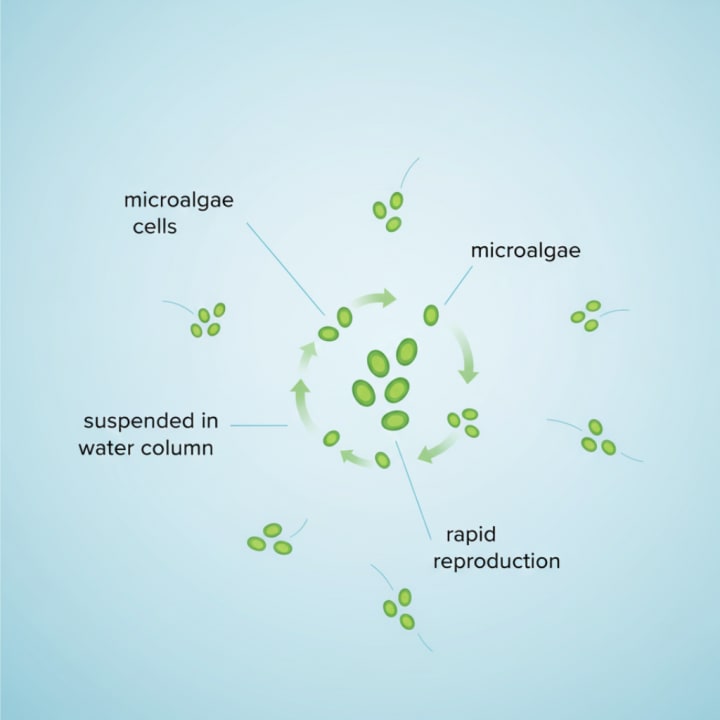
Green water isn't a disease or a chemical reaction. It's a population explosion of microscopic algae suspended throughout your water column. These single-celled organisms are so small that they pass right through your filter, which is why standard filtration can't remove them.
The Science Behind the Green
Think of it this way: your aquarium is essentially a tiny ecosystem. When conditions become perfect for algae growth plenty of light, abundant nutrients like nitrates and phosphates, and warm water these microscopic plants reproduce exponentially.
Each algae cell can divide multiple times per day. Within 48 to 72 hours, billions of these cells can turn your water from clear to completely opaque green.
This is technically called a microalgae bloom in fish tank environments, and it's more common than you might think. Even experienced aquarists deal with it occasionally.
Is It Harmful?
Here's the reassuring part: green water itself is rarely toxic to fish. In fact, some fish breeders intentionally cultivate green water because it's nutritious for fry (baby fish) and contains beneficial microorganisms.
However, thick algae blooms can cause problems.
During the day, algae produce oxygen through photosynthesis. But at night, they consume oxygen, potentially depleting levels to dangerous zones in heavily stocked tanks.
The real danger isn't the algae it's the underlying imbalances that allowed it to grow.
Top Causes of Green Aquarium Water (Ranked by Severity)
Understanding what causes green aquarium water is the first step to fixing it. Here are the most common culprits, ranked from most serious to least.

1. Excessive Light Exposure
This is the number one trigger for algae blooms. If your tank receives direct sunlight for any part of the day, you're practically guaranteed to get green water eventually.
Even without sunlight, leaving your aquarium lights on for more than 8-10 hours daily provides algae with plenty of time to photosynthesize and multiply.
Tanks near windows, especially south-facing ones, are particularly vulnerable. Just a few hours of direct sun can trigger a bloom that lasts for weeks.
Quick Fix: Move your tank away from windows and reduce lighting to 6-8 hours daily on a timer.
2. High Nitrate and Phosphate Levels
Algae need nutrients to grow, and nitrates and phosphates are their favorite food sources. These compounds accumulate from fish waste, uneaten food, and decaying plant matter.
If you're not doing regular water changes at least 20-30% weekly these nutrients build up to levels that fuel explosive algae growth.
Overfeeding is a major contributor. That extra food your fish don't eat breaks down into nitrates and phosphates, essentially fertilizing your algae bloom.
Quick Fix: Perform immediate 50% water changes and cut feeding portions in half.
3. Overstocked or Newly Established Tanks
New aquariums that haven't completed the nitrogen cycle yet are prone to algae blooms. The beneficial bacteria colonies haven't fully established, so nutrients remain unchecked.
Overstocked tanks produce more waste than the filtration system can handle efficiently. More fish means more waste, which means more nutrients for algae.
If you've recently added several new fish or upgraded to larger specimens, you may have tipped the balance toward algae-friendly conditions.
Quick Fix: Reduce bio-load by rehoming some fish or upgrade to a larger tank with better filtration.
4. Inadequate or Malfunctioning Filtration
Your filter does more than remove debris it houses beneficial bacteria that process fish waste. If your filter is undersized for your tank volume, clogged with debris, or the media hasn't been cleaned in months, it can't do its job properly.
Poor water circulation also creates dead zones where nutrients concentrate, providing perfect breeding grounds for algae.
Quick Fix: Clean your filter media in old tank water and ensure your filter processes tank volume 4-6 times hourly.
5. Lack of Live Plants or Plant Competition
Live aquatic plants compete with algae for the same nutrients. A well-planted tank naturally suppresses algae growth by consuming nitrates and phosphates before algae can use them.
Tanks with no live plants or only slow-growing species give algae free reign over available nutrients.
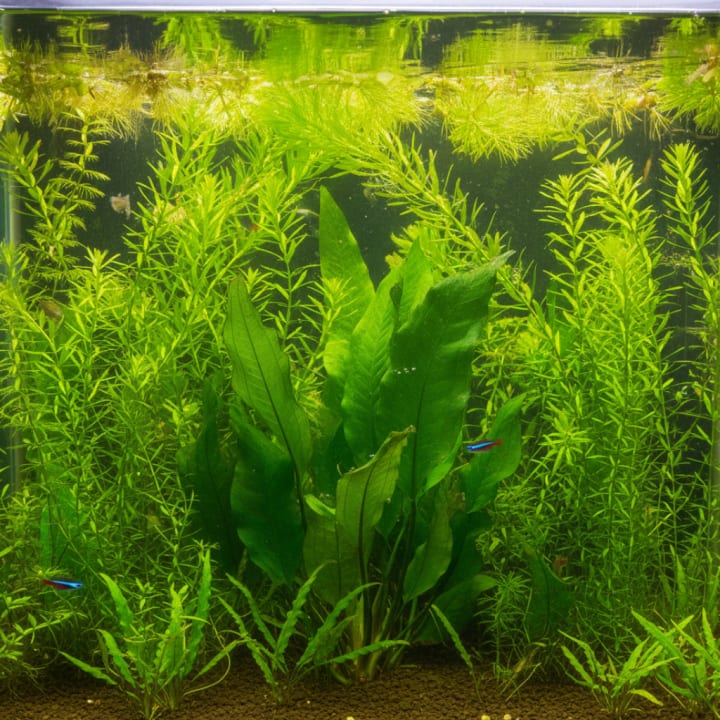
Quick Fix: Add fast-growing plants like hornwort, water sprite, or Amazon sword to outcompete algae.
6. Irregular Maintenance Schedule
Skipping water changes, neglecting filter maintenance, or inconsistent feeding schedules all contribute to nutrient buildup and unstable water parameters.
Algae thrive in neglected tanks where waste products accumulate unchecked.
Quick Fix: Establish a strict weekly maintenance routine and stick to it consistently.
7. Using Tap Water High in Phosphates
Some municipal water supplies contain elevated phosphate levels. If you're using untreated tap water, you might be adding algae fertilizer with every water change.
This is less common but worth investigating if you've addressed all other factors and still struggle with green water.
Quick Fix: Test your tap water separately and consider using RO water or phosphate-removing conditioners.
How to Diagnose Your Specific Situation
Before implementing fixes, you need to identify which factors are affecting your tank. Here's a systematic approach.
Test Your Water Parameters
Grab some reliable water test strips for aquarium use or invest in a liquid test kit. Check these levels:

- Nitrates: Should be below 20 ppm, ideally under 10 ppm
- Phosphates: Should be below 0.5 ppm, ideally undetectable
- pH: Should match your fish species' requirements (usually 6.5-7.5)
- Ammonia and Nitrites: Should always be zero in established tanks
High nitrate or phosphate readings point directly to nutrient problems.
Evaluate Your Lighting Schedule
Track exactly how many hours your lights are on daily. Include any natural light from windows.
More than 8-10 hours of light, or any direct sunlight exposure, is almost certainly contributing to your problem.
Assess Your Tank Location
Is your aquarium near a window? Does sunlight hit it at any time of day, even briefly?
Natural light is exponentially more powerful than aquarium lights for triggering algae growth.
Review Your Maintenance Routine
When was your last water change? How often do you clean your filter? How much are you feeding your fish?
Honest answers here often reveal the root cause.
How to Fix Green Water FAST (Step-by-Step Solutions)
Now for the part you've been waiting for actually clearing that green water. Here are proven methods ranked by speed and effectiveness.
Method 1: The Complete Blackout (3-7 Days)
This is the most reliable method for eliminating suspended algae without chemicals.

How it works: Algae need light to survive. Cut off their light source completely, and they die off within days.
Steps:
- Turn off all aquarium lights
- Cover your tank completely with blankets or black trash bags
- Block all natural light from reaching the tank
- Keep your filter running normally
- Feed your fish minimally (they can see fine in the dark)
- Wait 3-7 days, checking daily after day 3
Your fish will be fine in the dark. They don't need light they need oxygen and food, both of which continue normally during blackout treatment.
After the algae die, perform a large water change (50-70%) to remove the dead cells. Your water should be crystal clear.
Method 2: UV Sterilization (1-3 Days)
This is the fastest and most reliable long-term solution, though it requires equipment investment.

An aquarium UV sterilizer uses ultraviolet light to kill algae cells as water passes through it. The UV radiation destroys the algae's DNA, preventing reproduction.
How to use it:
- Install the UV unit in-line with your filter or canister system
- Ensure proper flow rate (check manufacturer specifications)
- Run continuously until water clears (usually 24-72 hours)
- Can be left on permanently to prevent future blooms
UV sterilizers are worth the investment if you struggle with recurring green water. They also eliminate harmful bacteria and parasites.

If you’re dealing with recurring green water, using a reliable aquarium UV sterilizer like this one can permanently prevent microalgae blooms without changing your fishkeeping routine.
Method 3: Massive Water Changes (2-5 Days)
This is the budget-friendly brute force method.

Steps:
- Perform a 50% water change immediately
- Use dechlorinated water matched to your tank temperature
- Repeat 50% water changes daily for 3-5 days
- Simultaneously address the root cause (lighting, nutrients)
This physically removes algae cells but doesn't prevent them from multiplying again.
You must fix the underlying imbalance or they'll return within weeks.
Method 4: Chemical Clarifiers (24-48 Hours)
An aquarium water clarifier causes algae cells to clump together so your filter can trap them. This works faster than blackouts but doesn't address root causes.
Important warnings:
- Only use products specifically designed for aquariums
- Follow dosage instructions exactly
- Increase aeration during treatment
- Clean your filter frequently as it catches dead algae
- Not suitable for tanks with invertebrates or sensitive species
Clarifiers are best used as a supplement to other methods, not as a standalone solution.
Method 5: Micron Filter Pads or Polishing Filters
These ultra-fine filter media can trap algae cells mechanically.
Replace your regular filter pad with a 1-micron polishing pad or add a secondary filter with fine mechanical filtration. The algae will gradually clear as cells are trapped.
This method takes longer (5-10 days) but works well alongside other treatments.
Long-Term Prevention Strategies That Actually Work
Clearing green water is satisfying, but preventing it from returning is where real success lies. Here's how to keep your tank crystal clear permanently.
Optimize Your Lighting Schedule
Set your aquarium lights on a timer for exactly 6-8 hours daily. Consistency matters more than duration.
Move your tank away from windows or install blackout curtains to eliminate natural light completely. Even indirect sunlight can trigger algae.
Consider upgrading to LED lights with adjustable intensity. You can provide enough light for your fish and plants without creating algae-friendly conditions.
Establish a Strict Maintenance Routine
This is where most beginners slip up inconsistency creates the perfect environment for algae.

Weekly:
- Perform 20-30% water changes with dechlorinated water
- Vacuum substrate to remove waste
- Use an algae scraper magnetic cleaner on glass surfaces
- Test water parameters
Bi-weekly:
- Clean filter intake and output areas
- Rinse mechanical filter media in old tank water
Monthly:
- Deep clean decorations (in old tank water, never soap)
- Check equipment function
- Trim dead plant leaves
- Consistency prevents nutrient accumulation that feeds algae.
- Control Nutrient Levels
Feed your fish only what they can consume in 2-3 minutes, once or twice daily. Remove any uneaten food after 5 minutes.
If phosphate levels remain high despite good maintenance, consider an aquarium phosphate remover media for your filter. These specialized resins bind phosphates and remove them from the water column.
For planted tanks, ensure your plants are healthy and growing. Thriving plants outcompete algae naturally.
Pairing regular water testing with an aquarium phosphate remover gives you both the insight and the solution to keep nutrients in check before algae can take hold.
Stock Responsibly
Follow the general rule of one inch of fish per gallon of water (for small fish species). Larger fish produce more waste and require more space.
Avoid impulse purchases. Every new fish increases your biological load.
Consider adding algae-eating species like nerite snails, Siamese algae eaters, or otocinclus catfish. They won't solve green water (which is suspended, not surface algae), but they help maintain overall tank balance.
Use Quality Water Sources
If your tap water contains high phosphates, consider:
- Installing a reverse osmosis (RO) filter system
- Using distilled water mixed with remineralizers
- Treating tap water with phosphate-removing products before adding to tank
Test your source water separately to know what you're starting with.
Invest in Proper Filtration
Your filter should process your entire tank volume 4-6 times per hour. For a 50-gallon tank, you need a filter rated for 200-300 gallons per hour.
Consider upgrading to a canister filter if you currently use a hang-on-back model. Canister filters provide superior biological and mechanical filtration.
When Green Water Becomes Dangerous
While green water is usually more unsightly than harmful, certain situations require immediate action.
Oxygen Depletion
In heavily stocked tanks with thick algae blooms, oxygen levels can crash overnight. Watch for:
- Fish gasping at the surface
- Lethargy or unusual behavior
- Multiple fish gathering near filter outputs (where oxygen is highest)
Immediate action: Increase surface agitation with an air stone, perform a 50% water change, and begin blackout treatment immediately.
Ammonia Spikes
When algae blooms die off suddenly (from treatments), their decomposition can cause ammonia spikes. This is especially dangerous in tanks without established beneficial bacteria.
Prevention: Test ammonia levels during and after treatment. Be prepared to do emergency water changes if levels rise above 0.25 ppm.
Visibility Issues and Maintenance
If you can't see your fish, you can't monitor their health. Injuries, diseases, or equipment failures might go unnoticed.
Thick green water also makes routine maintenance difficult. You can't see to clean properly or feed accurately.
When to act urgently: If you haven't seen all your fish in 48+ hours, or if you can't see more than 2-3 inches into the water, treat the problem as a priority.
Impact on Plants
Live plants need light to photosynthesize. Thick algae blooms block light penetration, potentially starving your plants.
If you have a planted tank, clear green water within 3-5 days to prevent plant die-off.
Frequently Asked Questions
Can green water kill my fish?
Green water itself rarely kills fish directly. The main risks are oxygen depletion at night in heavily stocked tanks and stress from poor visibility.
Healthy fish can survive in green water for weeks, but you should still address it promptly to maintain overall tank health.
How long does it take for green water to clear naturally?
Without intervention, green water may persist for months or even become a permanent condition. While algae blooms sometimes crash on their own after depleting nutrients, the same conditions that caused the initial bloom usually remain, triggering repeated cycles.
Will changing my filter media help?
Standard filter media can't trap suspended algae cells because they're too small. However, using ultra-fine polishing pads (1-5 micron) or specialized filter floss can mechanically remove some algae.
This is slower than UV treatment or blackout methods but can work as a supplementary approach.
Is green water harmful to fish?
Most fish tolerate green water well in the short term. Some species, particularly fry, even benefit from it nutritionally.
However, the oxygen fluctuations and reduced visibility can cause stress. Additionally, the root causes of green water excess nutrients and poor water quality can harm fish if left uncorrected.
Can I use chemicals to clear green water?
Yes, aquarium-safe clarifiers can speed up clearing by causing algae to clump together for filter removal. However, chemicals address symptoms, not causes.
Unless you fix the underlying nutrient and lighting issues, the green water will return. Always choose products specifically designed for aquariums and follow dosage instructions carefully.
How do I prevent green water from coming back?
Prevention requires controlling both nutrients and light. Maintain a consistent 6-8 hour lighting schedule with no direct sunlight exposure.
Perform weekly 20-30% water changes and avoid overfeeding. Consider using live plants to compete with algae for nutrients, and invest in a UV sterilizer if you experience recurring blooms.
Does green water mean my tank is unhealthy?
Green water indicates an imbalance typically excess nutrients and light but doesn't necessarily mean your fish are in immediate danger.
Think of it as a warning sign that your maintenance routine needs adjustment. The same conditions that promote algae growth can eventually lead to other water quality issues if ignored.
Will algae-eating fish or snails help?
Algae-eating species are excellent for controlling surface algae on glass, rocks, and decorations, but they don't consume suspended microalgae that causes green water.
Snails, plecos, and algae eaters are valuable for overall tank health but won't solve a green water problem. You need to address it through light control, nutrient management, or UV sterilization.
How much does a UV sterilizer cost?
UV sterilizers range from $30 for small hang-on units to $150+ for high-capacity in-line systems. The investment is worthwhile if you struggle with recurring green water or want to eliminate parasites and harmful bacteria.
Choose a unit sized appropriately for your tank volume and ensure proper flow rates for maximum effectiveness.
Can I still do water changes while treating green water?
Yes, and you should continue regular water changes during treatment. Water changes remove algae cells, excess nutrients, and any waste products from dying algae.
If using blackout treatment, perform a large water change (50-70%) immediately after the blackout ends to remove dead algae cells and restore optimal water quality.
Final Thoughts
Green aquarium water is frustrating, but it's also one of the most solvable problems in the hobby. Unlike complex disease outbreaks or equipment failures, green water has clear causes and reliable solutions.
Here's the bottom line: how to fix green water in fish tank environments requires addressing both immediate symptoms and underlying causes. Quick fixes like blackouts or UV sterilization clear the water rapidly, but only proper maintenance prevents recurrence.
Remember these core principles: control your lighting (6-8 hours daily, no sunlight), maintain consistent water quality through regular changes, avoid overfeeding, and ensure adequate filtration for your tank size.
If you implement the prevention strategies outlined in this guide, green water should become a rare occurrence rather than a recurring nightmare. Your fish will be healthier, your tank will look better, and you'll spend less time fighting algae and more time enjoying your aquarium.
Start by testing your water parameters today. Identify which factors are affecting your specific tank, then implement the appropriate solution.
Within a week, you can transform that murky green water back into the crystal-clear aquarium you've been missing.
Your fish and your peace of mind will thank you.
About the Creator
Arjun
Aquarium hobbyist sharing simple, real-world fixes for snail, shrimp, and plant problems. Clear guides, no fluff just practical tips to keep your tank healthy and thriving.
United States Water Purifier Market Size & Forecast 2025–2033
United States Water Purifier Market Overview The United States Water Purifier Market is witnessing sustained growth as water safety concerns, health consciousness, and technological innovation converge to reshape household and commercial water consumption habits. According to Renub Research, the market is projected to expand from US$ 17.30 Billion in 2024 to US$ 29.73 Billion by 2033, registering a healthy CAGR of 6.20% from 2025 to 2033.
By Janine Root 4 days ago in Earth
The Ritual of Winter Challenge Winners
Welcome to the Winners Announcement for The Ritual of Winter challenge. This prompt focused on winter rituals and the meaning that settles into them over time. The top pieces stay grounded in ordinary acts and repeated routines, letting winter shape the work through pace, attention, and restraint.
By Vocal Curation Team2 days ago in Resources



Comments
There are no comments for this story
Be the first to respond and start the conversation.