
An Ultimate Guide to Hampta Pass Weather and Temperature
Discover everything you need to know about Hampta Pass weather and temperature in this ultimate guide. Get detailed seasonal insights, temperature trends, rainfall, snowfall, and expert tips to prepare for your trek safely and comfortably.
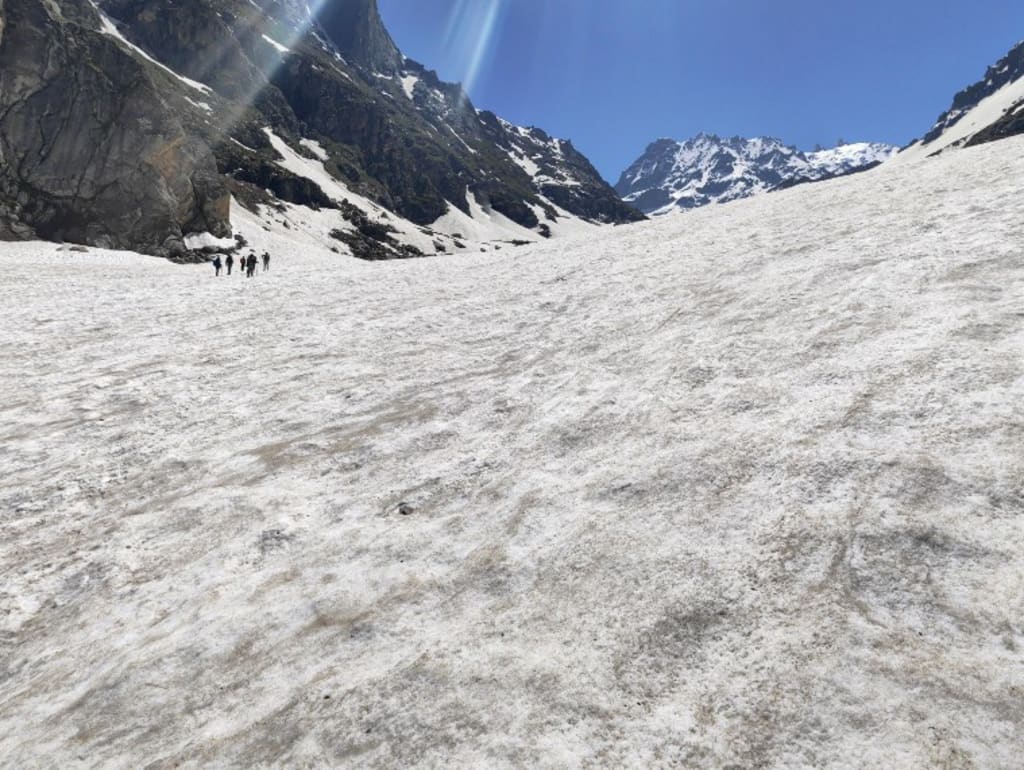
Hampta Pass sits at about 4,290 m (~14,100 ft) in the western Himalayas, so Hampta Pass weather is strongly influenced by high altitude. The pass forms a climatic divide - it forces moist monsoon air to drop heavy rain and snow on the Kullu Manali side, while creating a rain-shadow toward Lahaul which lies within Pir Panjal mountain range. As a result, Hampta sees extreme alpine conditions with warm sunny days briefly in summer but plunging cold by night. Trekkers often report that Hampta Pass feels much colder than other Himalayan treks at lower elevations. In fact, winter temperatures at the highest camps can dip to minus 15 degrees Celsius or lower. In contrast, summer days can reach the low double-digits in degrees Celsius before evening frost sets in. This guide covers year-round trends in Hampta Pass temperature and precipitation so trekkers can plan gear and timing for a safe journey.
Hampta Pass at a Glance
Being one of the best hiking destination in Himachal Pradesh, it’s a trek located in the Kullu district of Himachal Pradesh, near the city of Manali, and lies in the rain shadow area of the Pir Panjal mountain range. Serving as a perfect example of pass crossing treks in India, Hampta Pass trek is a perfect transition from the lush green and vibrant Kullu Valleys to the barren, yet mesmerising moonscape of Chandra Valley in Lahaul region. It’s a rare experience where you get to experience lifestyle of villages of Himachal like Jobra, the lush greenery and the rugged, Spiti-like terrain in a single journey. That is exactly what this trek delivers.
What makes Hampta Pass truly special is its accessible ridge climbing. Unlike many high-altitude mountain climbs or great adventures in the Himalayas that demand extensive experience, it’s a moderately challenging trek that welcomes everyone with open arms, whether you are a beginner or an experienced trekker. All you need is a moderate level of physical fitness, good mental preparation, and the desire to witness something extraordinary.
Geographic Setting and General Climate
Hampta Pass connects the lush, forested Kullu Valley on the south side to the cold desert of Lahaul-Spiti on the north. Its very high elevation means the Hampta Pass temperature is much lower than in valleys like Manali. It is an alpine climate zone characterized by thin air, strong sun by day, and very efficient cooling at night. For example, even in June clear afternoons at mid-camps can reach 13 to 18 degrees Celsius, but nights often fall near zero degrees Celsius at lower camps and well below freezing at camps above 12,000 feet. As a strict high-altitude pass, Hampta often retains snow at higher altitudes well into summer, and wind tunnel effects make it feel colder. In general, the pass receives heavy precipitation, both rain and snow, when the southwest monsoon hits, because the Great Himalaya Range wrings out moisture over the Kullu side. In winter, cold westerly systems bring persistent snow cover. Overall, there can be an 18 to 20 degree Celsius swing between summer highs and winter lows.
Seasonal Weather Patterns
The Hampta Pass weather cycle can be divided into four main seasons.
Summer / Pre-Monsoon (May to June):
Late spring and early summer, roughly May into June, is the warming period before the monsoon. By May and early June the valleys below are largely snow-free, and daytime temperatures at lower camps may reach around 15 to 20 degrees Celsius. Even so, nights remain cold, often dropping to approximately 5 to 8 degrees Celsius or lower, and patches of snow still lie above 4,000 meters. June can be a pleasant time with trekkers seeing snow and green meadows together. Expect afternoon highs around 13 to 18 degrees Celsius at camp sites and much colder winds due to lingering snow. Because the sun is strong at altitude, UV exposure is high; but temperatures can fall rapidly when clouds or wind arrive. Even in June, trekkers should carry warm layers for sudden cold spells.
Monsoon Season (July to September):
The southwest monsoon typically arrives by late June or early July. July and August at Hampta are warm and very wet. While daytime mountain air is often only 12 to 18 degrees Celsius in heavy rains, the humidity and rain make the valley intensely green. Wildflowers bloom and creeks swell as the pass absorbs monsoon moisture on the Kullu side. In August rainfall is extremely heavy, providing lush green meadows, gushing rivers, and cascading waterfalls.
Despite the beauty, rain can make trails slippery and river crossings dangerous. Afternoon thundershowers are common but usually brief; night skies often clear between storms. July and August bring some rain because of the monsoon season, but it is still safe to trek if one takes care. By early September the rainfall tapers off. Overall, monsoon is peak precipitation, so waterproof gear and caution are essential.
Post-Monsoon / Autumn (September to October):
By mid-September the monsoon withdraws. October is one of the best months for Hampta. The skies clear, humidity drops, and daytime high Hampta Pass temperatures become mild, typically around 12 to 18 degrees Celsius. Nights still drop near freezing as always. This post-monsoon window offers stable, pleasant weather with sunny days for trekking and cold but manageable nights. There is little new rain or snow in October, so trails are generally dry. Most sources note that September and October bring the post-monsoon bloom and clear skies. This calm period lasts until the first winter storms arrive; often by late October one sees first light snowfall of the season.
Winter (November to April):
Starting in November the weather turns harsh. Winter months from November to February are typically snowbound and frigid. Temperatures dive well below zero degrees Celsius at all camps. For example, winter lows at high camps reach minus 10 to minus 15 degrees Celsius or lower. Even in March or April, nights commonly drop below minus 5 degrees Celsius. Daytime highs in midwinter may only creep slightly above freezing when the sun is out. Forecasts regularly show afternoon highs still in the minus single digits at 4,000 meters in April. Sub-zero conditions are typical from November through March.
Heavy snowfall makes the route impassable. Guides uniformly advise against winter trekking as November to February are not considered ideal due to heavy snowfall. Only very experienced mountaineers attempt Hampta in winter with specialized gear. In summary, winter at Hampta is a magical winter wonderland of snow but also brings the coldest Hampta Pass temperatures of the year and effectively closes the trek for most visitors. However, one can visit lowers sites of Hampta Pass.
Temperature and Precipitation Trends
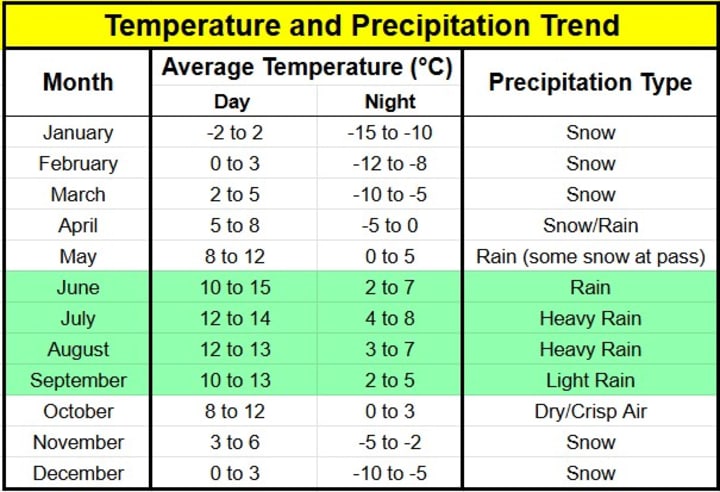
Over the year, Hampta Pass temperature follows a roughly sinusoidal trend rising from spring through summer and peaking in June and July with average daily highs around 10 to 15 degrees Celsius at mid-camps, then falling sharply after September. Nights are cold year-round, especially at altitude. While there is a lack of long-term station data at 4,270 meters, nearby Manali and Kullu climatology shows January means around 5 to 7 degrees Celsius and July means about 20 to 22 degrees Celsius in the valley. Adjusting for altitude with roughly a 6.5 degree Celsius drop per 1,000 meters, mean summer days of Hampta Pass are roughly 10 to 15 degrees Celsius cooler than Manali.
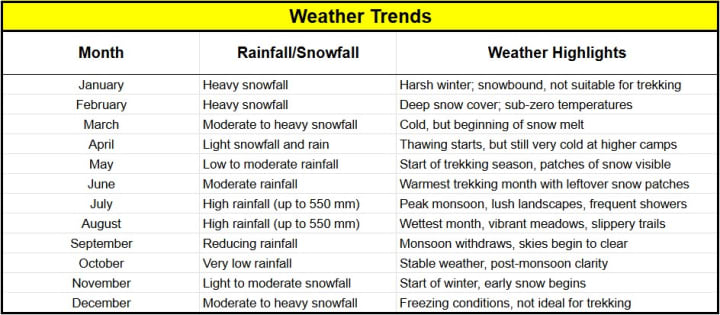
Precipitation trends are also extreme with most annual moisture falling June to September under the monsoon. Kullu averages about 1,100 millimeters from June to September, with peaks around 550 millimeters in July and August. October to May are relatively dry in terms of liquid rain. However, winter precipitation mainly falls as snow. Thus rainfall peaks in July and August, while snowfall peaks in December through March. In simple terms, graphing climate of Hampta Pass would show a high summer temperature curve and a very spiky precipitation bar graph peaking mid-year. Climatologists note a roughly 18 degree Celsius swing between warmest and coldest months of Kullu.
Key points are that Hampta Pass sees mild summers and extremely cold winters. The warmest months are June to August with daytime temperatures around 10 to 15 degrees Celsius and nights near zero degrees Celsius at camp. The wettest months are July to September during the monsoon rains. By October, skies clear and mild weather returns briefly. From November through March, heavy snow and frigid lows often between minus 10 and minus 20 degrees Celsius dominate.
Preparing for Hampta Pass Weather
Given these Hampta Pass weather trends, trekkers should pack accordingly. In summer and monsoon, layers are vital: a sun-warm daytime layer plus waterproof and insulated clothing for cold nights and rain. In monsoon months carry rain gear and sturdy boots for slippery trails. For autumn treks, expect clear skies but bring warm jackets for high camps. For winter or shoulder-season attempts, specialized gear such as down suits, gaiters, and crampons is mandatory due to snow and deep cold. Always check local forecasts before and during the trek as Himalayan weather can change suddenly.
Final Conclusion
In summary, Hampta Pass weather is highly seasonal. Trekking season from June to October spans moderate to cold conditions with a mid-summer monsoon peak. Summer days are comfortable but nights are cold. Monsoon rains in July and August bring lush scenery but slippery trails. Autumn from September to October offers clear, mild weather. In contrast, Hampta Pass temperature plummets in winter. From November through March the pass is snowbound and often sees sub-zero temperatures that make trekking very difficult. Understanding these trends and planning gear for rapid changes is essential. By studying the average temperatures, rainfall, and snowfall for each season, prospective trekkers can prepare properly and enjoy the stunning Hampta Pass landscape in safety.
Frequently Asked Questions
1. How difficult is Hampta Pass trek?
Ans.- Moderate. Suitable for beginners with basic fitness. Involves gradual ascent, river crossings, and high-altitude camping.
2. How to reach Hampta Pass from Delhi?
Ans.- Take a Volvo or train to Manali (approx. 12–14 hours). From Manali, drive to Jobra — the trek's starting point.
3. Is there snow in Hampta Pass?
Ans.- Yes, snow is present at the pass from May to early July and again from late September.
4. Can we do Hampta Pass trek in December?
Ans.- No. The trail is blocked by heavy snow and extreme cold, making it unsafe for trekking.
5. How to reach Hampta Pass from Manali?
Ans.- Drive from Manali to Jobra (1.5–2 hours), then begin the trek via Chika, Balu ka Gera, and finally Hampta Pass.
6. Is Hampta Pass open in January?
Ans.- No. January is peak winter. The route is closed due to snow and risk of avalanches.
7. Is Hampta Pass trek safe?
Ans.- Yes, with proper guidance, gear, and acclimatization. Avoid monsoon weeks and solo winter attempts.
8. Does Hampta Pass trek involve river crossing?
Ans.- Yes. There are several stream crossings — most notably near Chika and Balu ka Gera. Waterproof shoes are advised.
9. How is the weather in Hampta Pass in August?
Ans.- Rainy. Trails can be muddy and slippery. Visibility may be poor due to clouds, though landscapes are lush.
10. How much distance do we walk to reach Hampta Pass?
Ans.- The Hampta Pass Trek covers a total distance of 28 kilometers and takes 4 days to complete the entire circuit, starting from Jobra and ending at Chhatru via Chandratal Lake.
11. How to prepare for Hampta Pass trek?
Ans.- Start light cardio and leg-strength exercises 3–4 weeks prior. Pack layers, waterproof gear, and stay hydrated.
12. Is Hampta Pass crowded?
Ans.- Yes, during peak season (June and September), it sees many trekkers. Lesser crowd in early July and October.
13. Should we cross Rohtang for Hampta Pass?
Ans.- Yes, but only after crossing the pass. The trail descends into the Lahaul region, and you return via Rohtang Pass by vehicle.
14. What is the best route for Hampta Pass trek?
Ans.- Jobra – Chika – Balu ka Gera – Hampta Pass – Shea Goru – Chatru. Return via Rohtang Pass to Manali.
15. Can I do Hampta Pass trek without a guide?
Ans.- Not recommended unless you’re experienced in navigation, river crossings, and acclimatization. Guided treks are safer.
16. How much does a trek to Hampta Pass cost?
Ans.- Around ₹7,000 to ₹12,000 per person, depending on the operator, inclusions, and group size
About the Creator
Shivam Chandra
I'm a nature lover, adventure enthusiast, and travel blogger who has trekked across Uttarakhand, Himachal, Ladakh, and Nepal. Exploring new places and discovering hidden trails is what inspires me.
Keep reading
More stories from Shivam Chandra and writers in Earth and other communities.
Valley of Flowers Trek, Uttarakhand: An Ultimate Guide to Best Time, Route, Difficulty Blooming Season & More
Nestled in the serene Chamoli district of Uttarakhand, the Valley of Flowers is a mesmerizing jewel that comes alive with an explosion of colors during the monsoon season. Situated approximately 300 kilometers north of Rishikesh, near the sacred town of Badrinath, this enchanting valley lies within the Nanda Devi Biosphere Reserve, forming one of its two pristine core zones. Declared a UNESCO World Heritage Site, the Valley of Flowers National Park is globally celebrated for its diverse and rare flora and fauna, making it a magnet for botanists, researchers, and adventurers alike.
By Shivam Chandra9 months ago in Earth
The Iran Crisis: A Strategic Breakdown
**Title:** A few months ago, large Chinese cargo planes were reported in Iran, and it was claimed that advanced defense equipment was being transferred to Iran. Now, according to new reports, Chinese technology is being used in Iran, and as a result, Iran has shot down three American aircraft over Kuwait. While these specific incidents remain unverified by independent international sources, they reflect broader concerns about escalating military-technical cooperation between Tehran and Beijing. Notably, in 2021, Iran and China signed a comprehensive 25-year strategic partnership agreement covering economic, energy, and security cooperation—a framework that could plausibly facilitate defense technology transfers.
By Literary fusion3 days ago in Earth



Comments