
Valley of Flowers Trek, Uttarakhand: An Ultimate Guide to Best Time, Route, Difficulty Blooming Season & More
Explore the ultimate guide to Valley of Flowers Trek in Uttarakhand. Discover best time to visit, how to reach, trekking difficulty, blooming flowers, permits, itinerary & more.
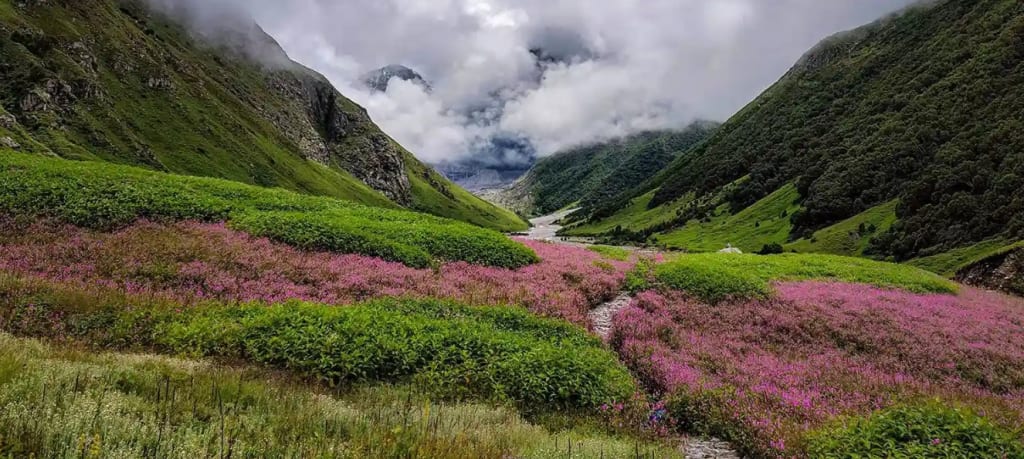
Nestled in the serene Chamoli district of Uttarakhand, the Valley of Flowers is a mesmerizing jewel that comes alive with an explosion of colors during the monsoon season. Situated approximately 300 kilometers north of Rishikesh, near the sacred town of Badrinath, this enchanting valley lies within the Nanda Devi Biosphere Reserve, forming one of its two pristine core zones. Declared a UNESCO World Heritage Site, the Valley of Flowers National Park is globally celebrated for its diverse and rare flora and fauna, making it a magnet for botanists, researchers, and adventurers alike.
As the rains breathe life into the region, the valley turns into a kaleidoscope of colorful flowers, painting the meadows with vibrant hues. Cascading waterfalls, untamed streams, and the awe-inspiring backdrop of the Himalayan ranges enhance its surreal charm. Whether you're a nature enthusiast, an avid trekker, or a passionate photographer, this trek offers an immersive journey into nature’s untouched grandeur. Prepare to step into a realm where every step reveals a new shade of wonder—a trek through the Valley of Flowers is truly one of the most breathtaking experiences the Himalayas have to offer.
What makes Valley of Flowers A Must Visit Trekking Destinations
The Valley of Flowers National Park
Spanning 87 square kilometers in the heart of Chamoli district, the Valley of Flowers comes alive each year from mid-July to early September, when a spectacular bloom blankets the region in a tapestry of color. Far beyond a mere visual delight, these vibrant meadows serve as a sanctuary for delicate and interdependent ecosystems. As you journey through the valley, you'll witness a dazzling array of blossoms, including orchids, poppies, primulas, marigolds, daisies, anemones, blue poppies, golden lilies, and geraniums, each adding its own charm to the vibrant scenery. A clearly defined trail meanders gently through this floral wonderland, offering a serene and rejuvenating walk in nature that feels like stepping into a living dream.
Many trekking companies organize group treks and handle all the logistics like transport and accommodation package for the Valley of Flowers Trek.
View from the Blue Poppy Point
The bird’s-eye view from Blue Poppy Point unveils the Valley of Flowers in its most spectacular form, drenched in blooming alpine hues. From this vantage, the landscape stretches into a breathtaking canvas of vivid blossoms, U-shaped glacial valleys, and towering vertical cliffs that frame the scene with dramatic elegance. This picturesque viewpoint not only highlights the valley’s natural grandeur but also adds a layer of enchantment to the trekking experience, making the journey even more rewarding.
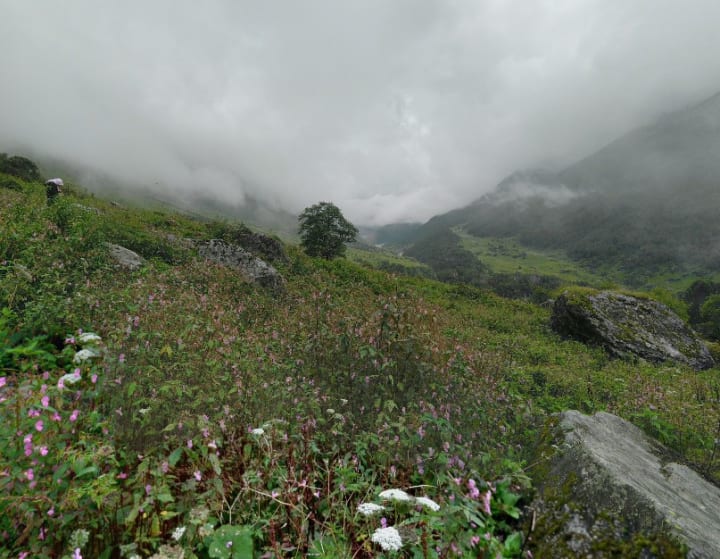
Climb to Hemkund Sahib
The steep climb to Hemkund Sahib is more than just a physical challenge—it's a profound blend of spirituality and natural beauty. As the trail ascends, it weaves past a glacial lake, graceful waterfalls, and the unfolding charm of the upper Himalayan valleys. Situated at an elevation of over 15,000 feet, Hemkund Sahib stands in serene majesty, with its sacred Gurudwara and tranquil lake radiating a deep sense of peace and reverence. The journey, though demanding, rewards trekkers with a truly soul-stirring experience amidst the grandeur of the mountains.
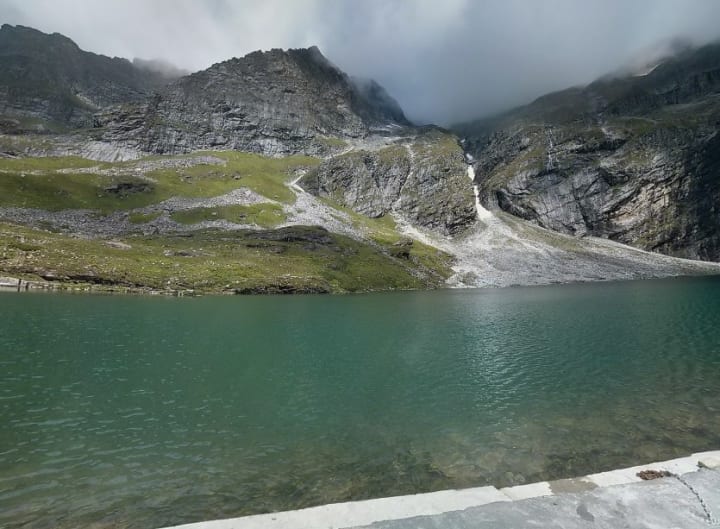
Waterfalls and Waterstreams along the Way
As you make your way through the trail, you'll encounter numerous waterfalls tumbling down through stream valleys and untamed mountain rivers. These lively watercourses are more than scenic highlights—they play a vital role in the erosion process that sculpted the valley into its present form. The dramatic geological formations, combined with the pronounced steepness of the valley walls, contribute to the raw and majestic beauty that defines the Valley of Flowers landscape.
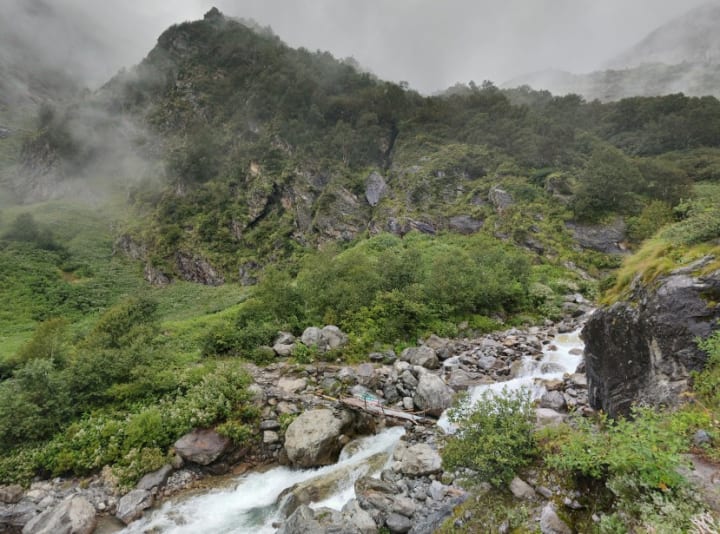
Burst of Rare Wildflowers
The Valley of Flowers shelters over 600 species of flowering plants, making it a botanical treasure trove. Among the many floral marvels found here, the revered Brahma Kamal stands out—a rare, high-altitude bloom that thrives in the alpine terrain around Hemkund Sahib. Alongside it flourish a variety of vibrant blossoms adorned with large petals and intricate patterns, each playing a crucial role in the valley’s delicate ecosystem. These flowers rely on natural pollinators like bees, moths, and butterflies, supporting both the cycle of plant reproduction and the overall biodiversity of the region.
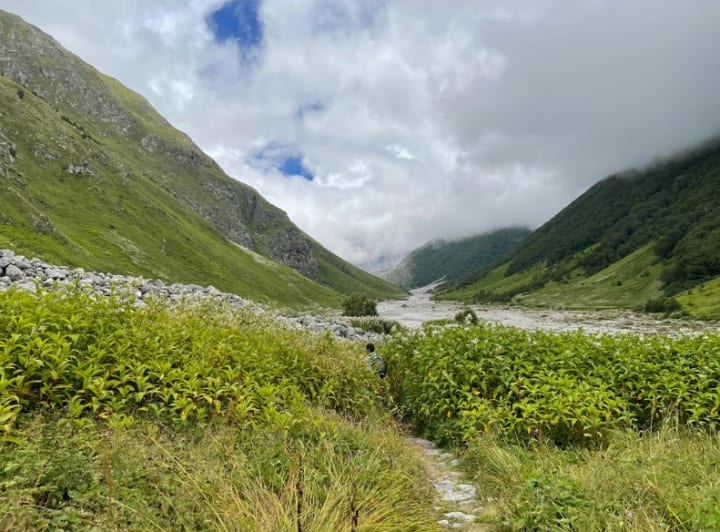
River Bed in the Valley
The gradient of the river, the terrain’s character, and the deep incisions etched into the landscape clearly illustrate how rivers and streams have meticulously carved the valley into its distinct U-shaped form. As you continue along this section of the trail, it takes only a few minutes before the valley opens up to your right, revealing a sweeping panorama of meandering streambeds and lush, untouched natural greenery—a moment that captures the sheer power and beauty of glacial and fluvial forces at work.
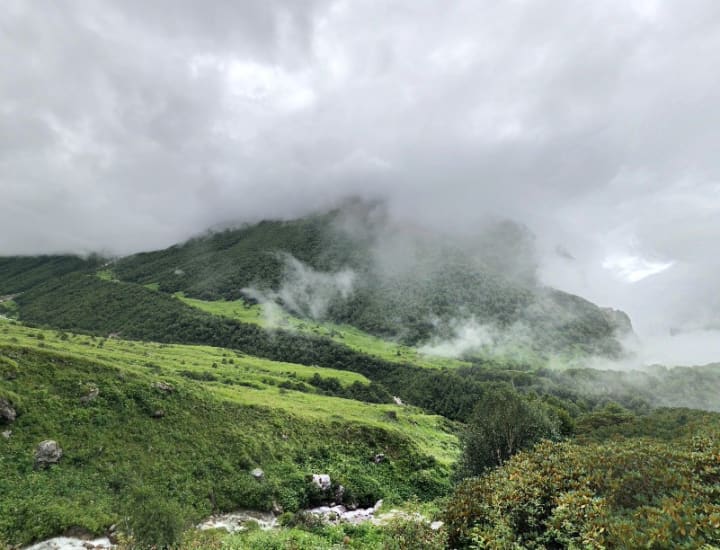
Expensive Meadows
The vast meadows, framed by towering mountain peaks, create a dreamlike setting that makes this trek a true paradise for photographers. The landscape constantly transforms, shaped by the seasonal rhythm of monsoon rains and the gradual melt of snow from the Bhyundar Glacier and other surrounding glacial formations. This dynamic interplay of weather and terrain paints a new picture with every visit, offering fresh perspectives and dramatic scenes at every turn.
Detailed Itinerary of Valley of Flowers Trek
Day 1: Drive from Rishikesh to Joshimath
Your adventure through Uttarakhand’s biodiversity-rich terrain begins in Rishikesh, a town where spirituality meets the Himalayas. Though the drive is long, it's undeniably scenic, with the road snaking alongside the Alaknanda River, offering glimpses of raw Himalayan beauty. As you pass through Pipalkoti and make your way toward Joshimath, the views unfold—snow-draped peaks shimmer in the distance, while the surrounding sub-alpine forests of birch trees grow denser and more enchanting. Upon reaching the base camp, you’re greeted by the awe-inspiring sight of Mt. Dronagiri, marking the true beginning of the alpine journey.
Day 2: Joshimath to Ghangaria via Govindghat and Poolna
From Joshimath, the journey continues with a drive to Poolna via Govindghat. This marks the starting point of a 9 km trek to Ghangaria, a moderate-level trail that initially follows the river before gradually ascending into the mountains. As you move along, the lush vegetation enveloping the path creates a surreal atmosphere—like walking through a dream. Upon reaching Ghangaria, you’ll find plenty of accommodation options, including comfortable hotels and a welcoming Gurudwara that provides both shelter and spiritual comfort to travelers.
Day 3: Ghangaria to Valley of Flowers and Back
Start your day early to enter the valley and make the most of this incredible experience. The trail is fairly straightforward to follow, though it involves a significant elevation gain of nearly 4,000 feet. Just a few minutes past the entrance gate, the valley dramatically unfolds before you, adorned with flowers blooming in breathtaking, intricate patterns. Be sure to carry sufficient water and packed meals, as there are no food facilities within the park. Camping is prohibited, so plan to complete your visit in a single day. Immerse yourself in the vibrant floral landscape during your hike and aim to return by early afternoon for a safe and enjoyable journey.
Day 4: Ghangaria to Hemkund Sahib and Back
The trail to Hemkund Sahib is a steady, steep climb along a rugged stone path. As you ascend, you’ll pass by waterfalls, navigate rocky terrain, and cross patches of snow that add to the alpine charm. At the summit, the serene Gurudwara and the tranquil Hemkund Lake offer a peaceful retreat along with breathtaking panoramic views. The rare bloom of the Brahma Kamal nearby enhances the spiritual and natural significance of this sacred spot.
Day 5: Ghangaria to Joshimath via Govindghat and Poolna
Retrace your route back along the same path. If needed, you can arrange for a mule to carry your backpack. Take extra care on the downhill stretches to prevent slips or injuries on the trail.
Day 6: Drive from Joshimath to Rishikesh
Depart for Rishikesh, carrying with you unforgettable memories and a camera full of stunning photographs capturing the valley’s vibrant floral beauty.
Best Time to Visit Valley of Flowers
The best time to visit the Valley of Flowers is from mid-July to the end of August, when the valley bursts into a spectacular riot of colors. During this peak bloom period, the entire landscape transforms into a vivid masterpiece, with exquisite flowers such as blue poppies, golden lilies, and anemones painting the meadows in breathtaking hues. The weather is pleasantly cool, featuring mild daytime temperatures and occasional monsoon showers that lend a mystical, misty atmosphere to the lush grasslands. Waterfalls surge to their fullest flow, and wild streams wind gracefully across the verdant slopes. Framed by towering snow-capped mountains, the blooming meadows create one of the most scenic and photogenic scenes imaginable. This season turns the valley into a true haven for nature lovers, botanists, and photographers eager to witness nature’s artistry in full bloom.
VOF Trekking in June
In June, the weather is generally cool and pleasant during the day, with temperatures ranging from 10°C to 18°C, though nights can turn quite chilly. As the snow begins to melt, the valley slowly awakens, revealing fresh lush greenery and the soothing sounds of gurgling streams. While the floral bloom is just beginning and not yet in full swing, this period offers a tranquil and less crowded experience for explorers. Early signs of flowering plants start to emerge, complemented by stunning views of lingering snow patches and wild, flowing rivers.
VOF Trekking in July
July signals the start of the blooming season in the Valley of Flowers, with temperatures typically ranging from 8°C to 16°C. The weather is often misty, accompanied by gentle rains that add to the valley’s enchanting atmosphere. During this time, the landscape begins to burst into vibrant hues, showcasing a stunning array of wildflowers such as geraniums and poppies. The lush scenery, coupled with partially mist-shrouded mountains, creates a surreal, almost dreamlike setting. Trekkers should be ready for monsoon showers and slippery trails, making proper gear essential for a safe and enjoyable journey.
VOF Trekking in August
August marks the peak blooming season in the Valley of Flowers, where vibrant flora blankets the entire landscape. Temperatures generally range from 7°C to 15°C, accompanied by frequent monsoon rains that keep the valley lush and alive. During this time, the meadows are adorned with brilliantly colored blossoms such as blue poppies, golden lilies, and anemones. Waterfalls roar at their fullest flow, and the overcast skies lend a surreal ambiance to the already mesmerizing scenery. While the valley is at its most spectacular, visitor numbers also rise, so it’s wise to start your trek early each day to enjoy the beauty with fewer crowds.
VOF Trekking in September
In early September, the monsoon rains begin to taper off, and temperatures typically range between 6°C and 14°C. The valley gradually transitions toward the close of the blooming season. While you can still find a variety of flowers, many plants start to dry and fade. The landscape takes on a warm golden-green hue, and clearer skies provide spectacular views of the surrounding mountains. This period is ideal for photography, thanks to reduced fog and fewer visitors. However, it’s best to avoid visiting after mid-September, as snowfall soon makes the valley inaccessible.
How Difficult is the VOF Trek
The Valley of Flowers trek is rated as easy to moderate in terms of difficulty. It’s a non-technical trek, so no prior mountaineering skills or specialized equipment are needed. However, elements like long walking distances, frequent rainfall, high altitude, and the steep ascent to Hemkund Sahib can add to the challenge. While the route is manageable for beginners with basic fitness, it's far from a casual stroll—you'll need both physical endurance and mental resilience, especially when faced with unpredictable weather. With the right preparation, appropriate gear, and a positive mindset, this trek becomes a rewarding and achievable Himalayan adventure.
Terrain
The trail from Govindghat to Ghangaria features a combination of cemented and stone-paved paths, commonly shared by pilgrims and mules. Once you cross Ghangaria, the route leading into the Valley of Flowers becomes narrower, greener, and more untouched by construction. The path winds through carpets of wildflowers, crosses gentle streams, and immerses you in the natural alpine setting. During the monsoon, sections of the trail may turn muddy or rocky, with some areas becoming slippery due to loose stones or moss-covered patches. While there are no dangerous steep cliffs, certain stretches require mindful footing and balance to navigate safely.
Walking Distances
- Govindghat to Ghangaria: 9–10 km (mostly uphill, steady incline)
- Ghangaria to Valley of Flowers: 3.5–4 km one way (with further optional 6–7 km inside the valley)
- Ghangaria to Hemkund Sahib: 6 km one way (very steep, high altitude climb)
On average, you’ll be walking around 10 to 14 km each day. Those aiming to explore deep into the valley or include Hemkund Sahib will have to manage longer and more tiring trekking days.
Rainfall
This region sees heavy rainfall during the trekking months (July to early September). The monsoon transforms the valley into a floral paradise but also increases the risks:
Slippery trails and low visibility
- Possibility of landslides or delays en route to Govindghat
- Wet gear and soggy paths requiring waterproof clothing and quick-dry shoes
Other Difficulty Factors
- Altitude: While Valley of Flowers itself lies around 11,500 feet, Hemkund Sahib (optional) goes up to 14,100 feet. Altitude sickness may affect some trekkers.
- Weather: Sudden drops in temperature, rain, and cloud cover are common, especially in early mornings and evenings.
- Limited facilities: There are no shops or rest stops inside the valley. Ghangaria is your last point for food, water, and accommodation.
- Crowded trail section: The initial path to Ghangaria may be busy with pilgrims heading to Hemkund Sahib.
Despite these challenges, with proper gear and pacing, the trek is very doable for nature enthusiasts and beginners with decent fitness.
How to Reach Valley of Flowers- A Travel Guide
Reaching the Valley of Flowers involves a multi-step journey through road, rail, and air routes. The final trekking base is Ghangaria, which lies deep in the Chamoli district of Uttarakhand. Here's a complete travel guide for planning your route from Delhi or any major city in India.
Sketch Route from Delhi (or Other Cities)
- Delhi to Haridwar/Rishikesh – By train, bus, or flight to Dehradun
- Rishikesh to Govindghat – By road (shared jeep or taxi)
- Govindghat to Pulna – 4 km drive (local taxi only)
- Pulna to Ghangaria – 9–10 km trek
- Ghangaria to Valley of Flowers – 3.5–4 km trek (one way)
How to Reach Rishikesh/Haridwar from Your Hometown
By Road
Haridwar and Rishikesh are well-connected by national highways. From Delhi, regular UKSRTC buses, private Volvos, and taxi services run frequently. The distance from Delhi to Rishikesh is around 240 km and takes 6–8 hours.
By Train
- Haridwar Junction is the main railway hub. Major trains like:
- Shatabdi Express (Delhi to Haridwar)
- Mussoorie Express (Delhi to Haridwar/Rishikesh)
- Express trains from Kolkata, Mumbai, Lucknow, and Ahmedabad
- Rishikesh also has a small railway station, but Haridwar offers more connectivity.
By Air
The nearest airport is Jolly Grant Airport (Dehradun), 20 km from Rishikesh. Direct flights operate from:
- Delhi
- Mumbai
- Bengaluru
- Hyderabad
- Kolkata
You can take a taxi from Dehradun Airport to Rishikesh (30–40 minutes).
Rishikesh to Ghangaria (Trek Base)
Rishikesh to Govindghat
- Distance: 290–300 km
- Time: 10–12 hours by road
Route: Rishikesh → Devprayag → Srinagar → Rudraprayag → Karnaprayag → Joshimath → Govindghat
Start your journey early morning from Rishikesh. You can hire a shared jeep, private cab, or catch early buses (limited seats) heading toward Badrinath or Joshimath.
Govindghat to Pulna
From Govindghat, a 4 km drive takes you to Pulna, the last motorable point. Only local taxis and jeeps operate this stretch.
Pulna to Ghangaria
This 9–10 km trek is moderately steep and well-paved. Mules, porters, and even helicopter services (depending on weather and availability) are options for those who want to avoid trekking. The trail is scenic, with dhabas and water points along the way.
Once you reach Ghangaria, it's your base for visiting both Valley of Flowers and Hemkund Sahib. From Ghangaria, the valley is a 3.5–4 km trek one way through forested paths and floral landscapes.
Accommodation Options for Valley of Flowers
- Ghangaria: hotels, lodges, and Gurudwara
- Joshimath: plenty of options for all budgets
- Mana Village and Badrinath: for additional sightseeing and spiritual experience
How to Prepare for the Trek
- Carry enough food and water for trek days
- Wear warm clothing as temperatures can drop
- Rain protection like ponchos
- Backpack, trekking pole, and hiking gears needed
- A local guide for better insights
Flowers At a Glance
The Valley of Flowers is not just a trek; it’s a natural floral exhibition nestled high in the Himalayas. Every step you take is flanked by a burst of blooming wildflowers, many of which are rare and found only at this altitude. These blooms paint the landscape in hues of blue, pink, yellow, and white, offering an unforgettable sensory experience. The meadows here are recognized as a UNESCO World Heritage Site largely due to their botanical significance and rich biodiversity. The monsoon season, particularly July and August, transforms the entire valley into a living canvas.
Blue Poppy
- Color: Sky blue to bluish-purple
- Blooming Month: July to mid-August
- Herbal Feature: Traditionally used in Tibetan medicine for soothing nerves and improving blood circulation.
- Rarity: Rare and highly sought after; considered one of the most iconic flowers in the valley.
Brahma Kamal
- Color: Pale white with a tinge of pink
- Blooming Month: Mid-July to September
- Herbal Feature: Used in Ayurvedic medicine to treat cuts and bruises; also sacred in Hindu tradition.
- Rarity: Endemic to the Himalayas; considered sacred and rare.
Cobra Lily
- Color: Green and maroon, shaped like a cobra’s hood
- Blooming Month: June to early July
- Herbal Feature: Known to have medicinal use in tribal medicine for joint pain relief.
- Rarity: Uncommon and mostly seen in early monsoon weeks.
Himalayan Bellflower
- Color: Purple or violet
- Blooming Month: July to August
- Herbal Feature: Known for its anti-inflammatory properties
- Rarity: Common across Himalayan meadows but still stunning in its setting.
Himalayan Cinquefoil (Potentilla)
- Color: Yellow
- Blooming Month: June to August
- Herbal Feature: Known for antiseptic and astringent properties
- Rarity: Commonly found, especially along rocky slopes
Marsh Marigold
- Color: Bright yellow
- Blooming Month: Late June to early August
- Herbal Feature: Traditionally used to treat skin issues
- Rarity: Moderate; flourishes near water streams
River Anemone
- Color: White or pinkish-white
- Blooming Month: July to August
- Herbal Feature: Mild analgesic uses in traditional herbal practices
- Rarity: Found selectively along the riverbanks
These are just a few examples of the hundreds of floral species found in the valley. Each visit during peak blooming months offers a slightly different palette, ensuring no two treks feel the same.
- Blue Poppy
- Brahma Kamal
- Geraniums
- Marigold
- Daisy
- Anemone
- Golden Lily
- Snake Foil
- Himalayan Rose
- River Anemone
- Dog Flower
- White Leaf Hog Foot
- Hooked Stick Seed
- Meadow Geranium
- Primula
The Cultural Experience of Valley of Flowers
While the Valley of Flowers is famed for its natural beauty and biodiversity, the cultural fabric surrounding the region adds immense depth to the trekking experience. This isn't just a walk through alpine meadows—it's also a journey into a spiritual and culturally significant zone nestled within the Garhwal Himalayas.
Sacred Connections
One of the most prominent spiritual ties is with Hemkund Sahib, located just a short trek from Ghangaria. This revered Sikh pilgrimage site is believed to be the place where Guru Gobind Singh meditated in a previous life. Thousands of devotees visit Hemkund every year, especially during the summer pilgrimage season. Sharing the trail with these pilgrims offers trekkers a rare blend of spiritual serenity and communal harmony.
Ghangaria: The Cultural Base
Ghangaria, the base village for both Valley of Flowers and Hemkund Sahib, is more than just a resting point. The village buzzes with a mix of trekkers, pilgrims, porters, mule owners, and local shopkeepers. There are small temples, Gurudwaras, and eateries that serve both local and pilgrim-style food, offering a taste of Himalayan hospitality.
Garhwali Influence
The local Garhwali culture is evident in the people, their dialect, attire, and traditions. Villagers from nearby settlements such as Pulna and Bhyundar come to Ghangaria during the trekking season to offer services, sell handmade woolens, or act as guides. Their warm smiles, resilient nature, and connection to the land enrich the journey with cultural authenticity.
Festivals and Beliefs
The region observes several local festivals tied to the agricultural calendar and religious beliefs. During certain auspicious days, you may witness small processions, folk songs, or rituals even along the trail. Flowers are considered sacred and often used in local religious ceremonies.
Environmental Reverence
Locals treat the Valley with deep respect, often referring to it as a "divine garden". Many believe the valley to be the abode of gods, and the act of trekking through it is seen as a form of devotion rather than adventure alone. This spiritual undertone elevates the entire experience, turning it into a soulful journey.
In essence, trekking through the Valley of Flowers isn't just about discovering rare blooms—it's also about discovering a slice of Himalayan culture that celebrates nature, faith, and resilience in equal measure.
Visiting Hemkund Sahib, staying at Gurudwara, and traveling through Uttarakhand gives a glimpse into the spiritual and cultural life of the Land of Gods and Goddess. The journey is as much about inner discovery as outer exploration.
Do and Don’t for the Trek
- Do not litter in the valley
- Do carry enough food and water
- Do avoid visiting during landslides
- Don’t pick flowers
- Don’t camp inside the park
- Do respect the fragile ecosystems
Frequently Asked Questions (FAQs)
1. How long is the Valley of Flowers trek?
The trek covers around 38 kilometers round-trip and typically takes 4 to 6 days, including travel to and from the base village.
2. What is the best time to visit Valley of Flowers?
Mid-July to mid-August is the best time when the flowers are in full bloom and the valley transforms into a vibrant floral paradise.
3. Is a permit required for the trek?
Yes, entry permits are required for the Valley of Flowers National Park and can be obtained at the forest check post in Ghangaria.
4. Is Valley of Flowers trek suitable for beginners?
Yes, it’s beginner-friendly due to its moderate elevation and gradual ascent, although a basic fitness level is recommended.
5. Can I visit Hemkund Sahib along with Valley of Flowers?
Yes, Hemkund Sahib is a separate 6 km steep trek from Ghangaria and can be done on a separate day during your visit.
6. What is the altitude of the Valley of Flowers?
The Valley of Flowers lies at an altitude ranging from 3,300 meters to 3,600 meters (10,800 to 11,800 feet).
7. Are there accommodations available in Ghangaria?
Yes, Ghangaria offers several budget lodges, guesthouses, and a Gurudwara with basic accommodation and food options.
8. Is camping allowed inside the Valley?
No, camping is strictly prohibited within the Valley of Flowers to preserve its biodiversity and fragile ecosystem.
9. Are there medical facilities on the trek?
Basic medical aid is available in Ghangaria, but trekkers are advised to carry a personal first-aid kit and necessary medications.
10. Is there mobile network connectivity in the Valley?
Mobile networks are patchy in Ghangaria and nonexistent in the Valley itself. Only BSNL offers limited coverage.
11. Can children or elderly people do this trek?
Yes, with proper preparation. However, the trek requires moderate endurance and may be challenging for those with mobility issues.
12. Are guides mandatory for the trek?
No, guides are not mandatory, but they can be helpful for insights, directions, and understanding local flora.
13. Is it safe for solo travelers?
Yes, it’s relatively safe for solo trekkers, especially during peak season when the trail is active with pilgrims and fellow hikers.
14. What should I pack for the trek?
Carry warm clothes, waterproof layers, sturdy trekking shoes, personal meds, water bottles, snacks, and ID proofs.
15. How do I reach the starting point?
Travel to Rishikesh by road/train/air, then proceed to Govindghat via Joshimath. From there, trek or hire a mule to Ghangaria.
16. Are ponies or porters available?
Yes, ponies and porters are available at Govindghat for hire, especially useful for Hemkund Sahib or heavy luggage.
17. Can I visit the valley in May or September?
The valley officially opens in June. May is too early due to snow. September is post-peak, with fewer flowers but clearer weather.
18. Are drones or photography allowed?
Photography is allowed, but drones are banned inside the Valley as per park regulations.
19. What kind of food is available during the trek?
Basic vegetarian meals, Maggi, parathas, and tea are available at dhabas in Ghangaria. No food stalls exist inside the Valley.
20. Is the Valley of Flowers open all year round?
No, it remains open from June to early October only. Heavy snow keeps it inaccessible during the rest of the year.
Final Thoughts
The Valley of Flowers trek is one of the most magical treks in India. With its landscape scenery, rare and beautiful species, vibrant colours, and the unmatched serenity of Hemkund Sahib, it stands as a brilliant trek in the Himalayas that you must do once in your life. Whether you're here for flower photography, the spiritual vibe, or just the breathtaking experience, the Valley of Flowers is sure to leave a lasting imprint on your heart.
About the Creator
Shivam Chandra
I'm a nature lover, adventure enthusiast, and travel blogger who has trekked across Uttarakhand, Himachal, Ladakh, and Nepal. Exploring new places and discovering hidden trails is what inspires me.
Keep reading
More stories from Shivam Chandra and writers in Earth and other communities.
An Ultimate Guide to Hampta Pass Weather and Temperature
Hampta Pass sits at about 4,290 m (~14,100 ft) in the western Himalayas, so Hampta Pass weather is strongly influenced by high altitude. The pass forms a climatic divide - it forces moist monsoon air to drop heavy rain and snow on the Kullu Manali side, while creating a rain-shadow toward Lahaul which lies within Pir Panjal mountain range. As a result, Hampta sees extreme alpine conditions with warm sunny days briefly in summer but plunging cold by night. Trekkers often report that Hampta Pass feels much colder than other Himalayan treks at lower elevations. In fact, winter temperatures at the highest camps can dip to minus 15 degrees Celsius or lower. In contrast, summer days can reach the low double-digits in degrees Celsius before evening frost sets in. This guide covers year-round trends in Hampta Pass temperature and precipitation so trekkers can plan gear and timing for a safe journey.
By Shivam Chandra9 months ago in Earth
Oil Market is Volatile Again: What It Means for Global Energy and Traders
Global energy markets are once again at the center of attention after the United States introduced a temporary waiver allowing the purchase of certain Russian oil shipments that were already stranded at sea. The move has sparked intense discussions across financial markets, energy sectors, and geopolitical circles.
By Daniel Reid3 days ago in Earth
Babbling Dixie
The short form of tomorrow is never the whole story. Abbreviations mean nothing when we are born to die and we all are aren't we? Being spoken for before birth is something we're not supposed to remember like some kind of karma after effect. Still here we are spending our lives looking for each other.
By Canuck Scriber Lisa Lachapelleabout 6 hours ago in Fiction


Comments