


By Leavie “Soul on Fire” Scott
Her name was Nava, a 23‑year‑old shopkeeper’s daughter from Tehran, though she didn’t feel young anymore. Not after the week she had survived. Not after watching the value of Iran’s currency collapse so fast that shop windows changed prices twice a day. Not after seeing her father stand in his empty store and whisper, “I cannot afford to open tomorrow.”
The protests had started slowly — disgruntled merchants in Tehran’s Grand Bazaar shutting their doors as the rial crashed to unprecedented lows. But within days, the demonstrations spread to dozens of cities, eventually reaching 88 cities across 27 provinces, according to human‑rights monitors. Many were peaceful, many were desperate, and most were fueled by one simple truth: life had become unbearable.
Nava joined the marches on the third day, surrounded by students, shopkeepers, retirees, and parents who had run out of patience and food at the same time. Inflation had climbed above 40%, and for some households, basic items like meat were becoming luxuries. The cost of living rose faster than the government could blame outsiders.
By night, the mood shifted. Security forces attempted to shut down the protests with tear gas, rubber bullets, and arrests. She saw a man dragged from a crowd for chanting too loudly. She saw a woman beaten for filming police with her phone. Nava learned to hide her face with a scarf and run before the motorcycles arrived. She learned to expect — not fear — the sound of gunfire.
On the tenth night, she saw blood on the pavement and heard that at least 29 to 34 protesters had already been confirmed killed. Some said the numbers were far higher, but with internet blackouts spreading across the country, truth had become as scarce as affordable food.
That same night, something extraordinary happened thousands of miles away — something that would make her city even more volatile.
Nava first heard the news through a whisper moving down the protest line:
“The U.S. captured Venezuela’s president.”
She didn’t believe it at first. It made no sense. But as midnight approached, someone pulled up a cached news video before the internet slowed again.
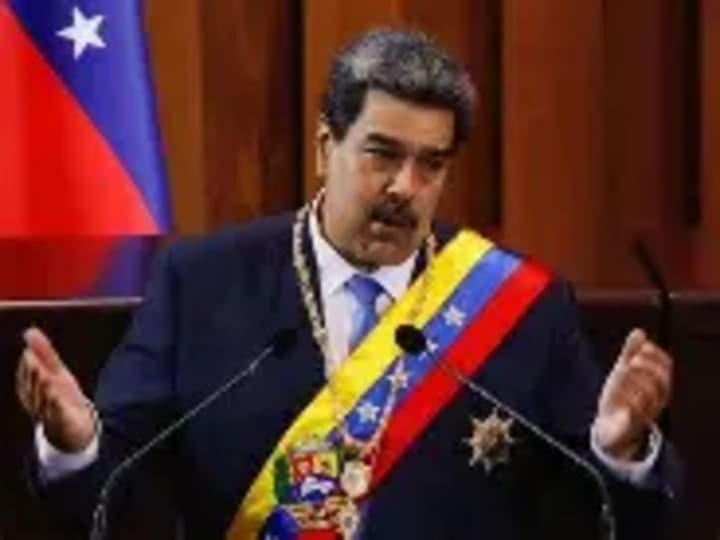
U.S. special forces had landed in Caracas in a coordinated nighttime raid involving more than 150 aircraft, flying low over the Caribbean Sea, disabling Venezuelan air defenses, and capturing President Nicolás Maduro and his wife. They were taken to the United States to face criminal charges.
Nava watched the grainy footage in disbelief. People in the crowd murmured the same fear she felt rising in her throat:
If a government that strong, that far away, was toppled overnight… what did that mean for Iran?
By morning, the answer became clearer.
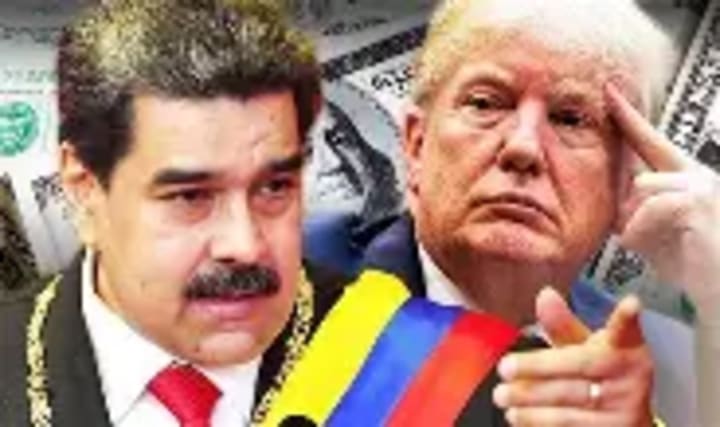
A statement from the U.S. leadership warned that if Iranian authorities killed protesters, there would be consequences — consequences “very hard,” according to captured press remarks circulated earlier in the week. It wasn’t speculation; it was a repeated warning tied directly to the protests erupting through her country.
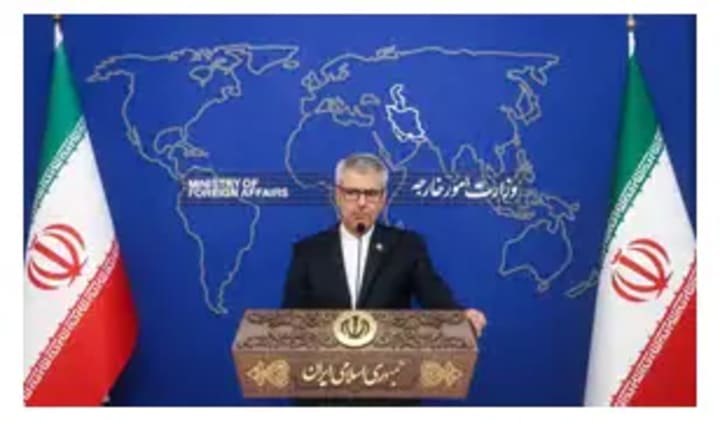
Inside Tehran, those words were heard loudly. Leaders condemned the U.S. action in Venezuela, called the seizure a violation of sovereignty, and publicly emphasized that “rioters must be put in their place.” Security forces doubled down. Hospitals were raided. More arrests followed.

To the government, the Venezuela raid was not just international news. It was a message.
To protesters like Nava, it was a sign that the world was watching — but not necessarily able to help.
Two nights later, as Nava marched again through Tehran’s Grand Bazaar, she noticed something different.
People were angrier, but also more afraid. The crackdown had intensified. The streets were filled not just with demonstrators, but with the weight of something larger — a realization that Iran was now caught inside a triple crisis: a rapidly collapsing economy, nationwide protests, and external military pressure triggered by events in another hemisphere.
Her father begged her not to go out that night.
Her mother cried by the door.
But Nava believed silence was no longer an option.
She joined the protesters at dusk. Fires burned in metal barrels to keep warm. People chanted slogans that echoed off the tiled walls. Behind them, rows of shuttered storefronts symbolized the economic suffocation everyone felt.
Around midnight, the crowds heard gunfire again. People screamed and scattered as security forces pushed in. Nava ran toward a side alley, her scarf slipping from her face as she inhaled smoke. She ducked behind a closed fruit stall and heard a motorcycle roar past, followed by the unmistakable sound of someone being struck.
Her hands shook.
Her heart pounded.
She wondered if this was the moment everything ended.
But then she heard it — faint at first, then rising:
Voices.
Hundreds of them.
People refusing to leave.
She stepped out from the alley and saw something that made her chest tighten with both fear and pride: the protesters had regrouped, right in front of the advancing security forces. Some held hands. Others locked arms. The chant grew louder, drowning out the crackle of stun grenades.
For the first time that week, Nava felt something stronger than fear.
She felt certainty.
This movement was not about foreign threats, sanctions, or geopolitical games. It wasn’t about the United States or Venezuela or any leader abroad. It was about the people beside her — workers, students, parents — united by the simple desire to live with dignity.
Her world was still dangerous.
The crackdown was still brutal.
The currency was still collapsing.
But seeing the crowd stand together, even after everything, changed her.
Nava took a deep breath, stepped back into the march, and raised her voice again — not because she felt safe, but because she finally understood that change, no matter how distant, always begins with ordinary people who refuse to disappear.
And in that moment, as the chants echoed through Tehran’s narrow streets, she realized something else:
Sometimes the bravest act is simply staying in the fight.
THE END
About the Creator
Organic Products
I was born and raised in Chicago but lived all over the Midwest. I am health, safety, and Environmental personnel at the shipyard. Please subscribe to my page and support me and share my stories to the world. Thank you for your time!
Keep reading
More stories from Organic Products and writers in Critique and other communities.
White House defended a video
To Whom It May Concern, I am writing to express deep concern regarding the recent incident involving President Donald Trump during his visit to the Ford factory in Dearborn, Michigan. According to reports from CBS News and other outlets, the President appeared to respond to a heckler by **mouthing an expletive and displaying an obscene gesture**. While the White House defended this as an “appropriate and unambiguous response,” this behavior raises serious questions about the standards of conduct expected from the highest office in our nation.
By Organic Products 4 days ago in Critique
Standing While Falling
Quotation from Friedrich Nietzsche "He who wrestles long with monsters should beware lest he himself become a monster. And if you gaze long into an abyss, the abyss also gazes into you. Man is not destroyed by suffering, but by the meaning he makes of it."
By LUCCIAN LAYTH10 days ago in Critique
Lingua ex machina
Peter Ayolov, Sofia University "St. Kliment Ohridski" Abstract This article examines the claim that language is not merely a product of human nature and evolutionary adaptation, but a force that, once constituted, begins to shape humans in its own image. Drawing on Elan Barenholtz’s Substack essay ‘Syntax is Dead! Long Live Syntax!’ and the University of Toronto discussion ‘The (Terrifying) Theory That Your Thoughts Were Never Your Own’, the text argues that language initially emerged as an adaptive coordination system but gradually detached from its biological origins through external memory technologies such as writing, print, audio, and video. With the advent of large language models, this autonomy becomes visible for the first time. Syntax appears not as an innate causal engine but as an emergent statistical shadow of predictive systems. Language, understood as an autogenerative informational system, now operates as a cultural and cognitive environment that produces meaning, belief, identity, and even metaphysical concepts such as God. In this sense, language does not reflect reality so much as organise it, creating human subjects through symbolic structures that precede intention and awareness.
By Peter Ayolovabout 3 hours ago in Critique


Comments
There are no comments for this story
Be the first to respond and start the conversation.