Dialogue
Why Do The Games in Squid Game S2 Show Real-Life Struggles
Many people have been anxiously awaiting the second season of Squid Game, the most-watched show on Netflix. To win prizes in the first season, players had to compete in several lethal kid-friendly games. The upcoming season, which is also expected to break yet another Netflix record, delves deeper into the limitations and economic background of the surrealistic games. Green light, red light. When the song starts, move forward; when it ends, freeze. It's a fairly easy game. Or is it that moving after the music has stopped carries a death sentence? It was clear from the first season that Squid Game allegorizes the horrors of capitalism through kid-friendly games. Three years later, the second season of arguably the most significant television program of our time advances its adamantly anti-capitalist theme. It accomplishes this by exposing the illusion of "choice" in a system threatening to starve the great majority. In this article, I dive deeper into the dystopian nuances of capitalism and the illusion of choice that stir up scenarios very similar to reality.
By Hridya Sharma12 months ago in Critique
Relationship between “unconscious bias,” racism, and structural inequalities
The brain phenomenon known as “unconscious bias” has been widely used to justify different forms of prejudice and discrimination through stereotypes. In fact, it is important to highlight that this “unconscious” is completely related to the ways in which social structures are perceived that lead to these discriminatory attitudes.
By Silvana Bárbara 12 months ago in Critique
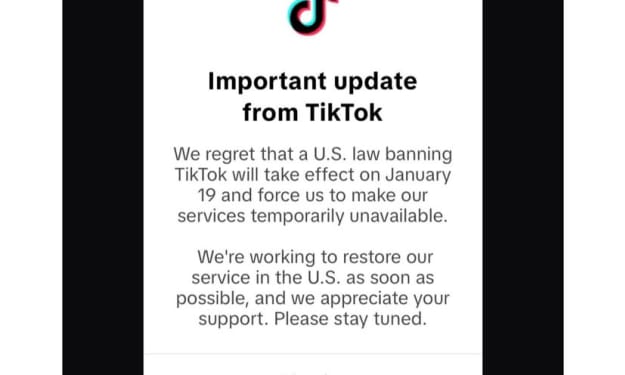
TikTok, The Future of Global Tech, and The New Era of Business: A Personal Journey and Global Conversation
In recent years, technology has become more than just a tool—it has become a lifeline. This was particularly evident during the global pandemic, where technology kept us connected, entertained, and even grounded. Amid the chaos and uncertainty, one platform emerged as a beacon of light—TikTok. For many of us, TikTok wasn’t just an app; it was a source of joy and creativity when the world around us felt dark. I vividly remember spending hours with my daughter and pets, creating fun and light-hearted videos to break the monotony of lockdown. But TikTok has turned into so much more than just an escape—it has opened doors, bridged gaps, and connected people and businesses across the globe.
By Adejoke Adediwura12 months ago in Critique
What does it mean to critique a story?
I entered a competition. I wasn't overly pleased with the story I submitted. Neither were the judges. Actually, that's not fair. One was enthusiastic. The other two sort of liked it, I think? All three had comments to make about it. I was happy to receive their feedback.
By Rachel Deeming12 months ago in Critique
“Conspiracy Theories: Labyrinths of Shadows and the Poetry of Paranoia”
There is something profoundly human about the allure of conspiracy theories. They arise not simply as explanations for chaos, but as manifestations of our deepest anxieties and desires. They speak to a part of us that is both terrified of the unknown and irresistibly drawn to it, yearning to impose meaning on an existence that often seems incomprehensible.
By Nazia Syedabout a year ago in Critique
Trump Makes History: The First Former President Sentenced for a Felony
In an unprecedented moment in American history, former President Donald Trump became the first ex-president to be sentenced for a felony. The court proceedings, held on a quiet Friday morning, concluded with a sentence that left many stunned: unconditional discharge, which carries no punishment. This legal milestone underscores the unique intersection of power, privilege, and accountability in the life of one of the most polarizing figures in modern politics.
By mureed hussainabout a year ago in Critique