
Relationship between “unconscious bias,” racism, and structural inequalities
A brain phenomenon called “unconscious bias” attempts to justify racial prejudice but actually masks structural racism


The brain phenomenon known as “unconscious bias” has been widely used to justify different forms of prejudice and discrimination through stereotypes. In fact, it is important to highlight that this “unconscious” is completely related to the ways in which social structures are perceived that lead to these discriminatory attitudes.
If you analyze it, “unconscious bias” is the result of structural racism, but it is a way of masking and denying it.
Understanding “Unconscious Bias”
Unconscious bias” refers to attitudes that automatically influence people’s thoughts, actions, and decisions without them being fully aware of them. These biases are formed throughout life, through personal, cultural, media, and social experiences, and can affect the way each person perceives and treats others or specific groups in society. These actions are based on characteristics such as race, ethnicity, gender, age, and sexual condition.
These implicit prejudices can manifest themselves in different contexts, such as the workplace, social interactions, education, and legal actions. The importance of recognizing and addressing “unconscious biases” lies in the attempt to mitigate their negative consequences in order to achieve a more just and equitable society.
There is a very complex and deep relationship between “unconscious bias” and racism, as these attitudes considered automatic contribute to the perpetuation of racial stereotypes and influence people’s attitudes and decisions in ways that are often not perceived. For example, in the selection process for a job vacancy, the recruiter may favor white candidates during the process, even if they believe in equal opportunities.
“Unconscious bias” can also be seen when teachers have lower academic expectations for black students and when doctors offer different treatment to people of certain races and ethnicities. These are only a few examples that illustrate how “unconscious bias” can perpetuate racial inequalities and contribute to the maintenance of structural racism. Is this really unconscious?
Examining its impact on structural racism
It can be said that the set of prejudices directed at the black population is rooted in the unconsciousness and subjectivity of people and institutions, expressing itself in regular, measurable, and observable discriminatory actions and attitudes. Police violence that mostly affects the black population, a higher number of homicide and femicide victims, and inequality in education are some examples that make structural racism persist and increase in different areas of society.
Considering racism as an institutional and/or structural phenomenon, it shapes the unconscious more than consciousness. In this way, “normal” life, affections and “truths” are permeated by racism, which does not depend on conscious action to exist. Racialized individuals are shaped by their structural and institutional conditions. The privileges of being considered white do not depend on the socially white person recognizing or assuming themselves as white, much less on their willingness to obtain the advantage attributed to their race. Racism constitutes an entirely complex social imaginary that is constantly reinforced by the media, cultural industry, and educational system.
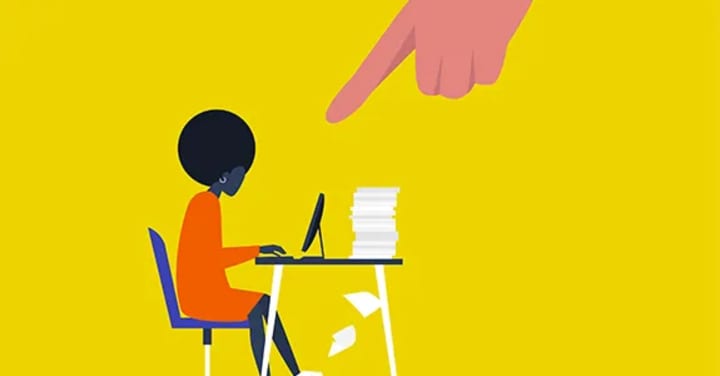
These effects are revealed in the so-called structural discrimination reflected in the social inequalities between dominant and marginalized groups. Another goal of affirmative action is to implement a certain “diversity” and greater “representation” of certain groups in the most diverse contexts of public and private activities. Based on the premise that such groups are normally not represented in certain areas or are underrepresented, affirmative policies fulfill the important role of filling these gaps, ensuring that the occupation of positions in different spaces is done, as far as possible, in greater harmony with the plurality of society.
To combat “unconscious bias” and its impact on structural racism, it is necessary for people and organizations to recognize its existence and actively work to mitigate it. Denialism, so present in society, only hinders and delays actions in favor of the fight against various forms of prejudice and discrimination. In this sense, bias awareness training programs, inclusive hiring policies, and the promotion of a diverse work environment are strategies that can be implemented.
Furthermore, ongoing education on racial issues and the promotion of a culture of critical reflection are essential to challenge and deconstruct deep-rooted prejudice. Only through these collective actions can we begin to dismantle the structures of inequality that permeates society.
Understanding that “unconscious bias” is racism
In the context presented here, although the term “unconscious bias” is widely used to describe these automatic attitudes and stereotypes, it is important to understand that these biases do not arise out of nowhere. They are, for the most part, the result of a deeply embedded structural racism that shapes the collective unconscious. In other words, what is often referred to as “unconscious bias” is a manifestation of internalized and institutionalized racism.
This recognition is essential because it shifts responsibility from the individual to the systemic level, since believing that “unconscious biases” are simply personal flaws that ignore the role of social structures that perpetuate racial inequality. By understanding that these biases are products of structural racism, efforts can be directed not only towards individual awareness, but also towards transforming the institutions and policies that sustain these inequalities.
In addition, social psychology and neuroscience studies have shown that racism can influence the formation and maintenance of “unconscious biases” from childhood. Children are exposed to racial stereotypes through the media, social interactions, and educational practices that often reflect and reinforce existing racial inequalities. This socialization process contributes to the internalization of biases that continue to shape behaviors and decisions into adulthood.
Therefore, when discussing “unconscious bias,” it is essential to recognize that it does not operate in vacuum. Social and cultural structures play significant roles in shaping these biases. Effectively combating them requires a comprehensive approach that includes both education and individual awareness as well as structural reforms that challenge and undo the foundations of institutionalized racism.
About the Creator
Silvana Bárbara
Graduated in Product Design, with a master's degree from the Federal University of Paraná. She works in the area of sustainability, as a teacher and content producer.
Keep reading
More stories from Silvana Bárbara and writers in Critique and other communities.
Debunking the myth of “reverse racism"
The Public Defender's Office of the Union (DPU) of Brazil has issued a Technical Note on the legal impossibility of adopting the thesis of “reverse racism”. This concept, frequently used by people who claim discrimination because they are white, is legally unsustainable and has no support in Brazilian law. The Technical Note from the DPU clarifies the foundations of this position by addressing the legislation, case law, and sociocultural aspects involved.
By Silvana Bárbara about a year ago in Journal
Cassie and Johnny
I’m the kind of dame you notice. I’m no femme fatale, but you can’t ignore me, at least not until I warn you about what’s coming, then everybody ignores me. Hell, they usually blame me afterwards and give Johnny all the credit for saving the day, but my Johnny couldn’t save a seat at the movies without my help. Sure, he’s brawny, but brainy? Not so much. Like that time I asked him to spot me five bucks, and he said he didn’t see it anywhere on me, and believe you me, he looked but good.
By Harper Lewis13 days ago in Critique
Initiation
*note: This is an unfinished draft of a story I’m working on for The Rule Everyone Knows. Just doing a temperature check for characterization. I’m going to keep it here until I complete the draft and finish editing it. Do not be gentle if something isn’t working.
By Harper Lewisabout 23 hours ago in Critique




Comments
There are no comments for this story
Be the first to respond and start the conversation.