
Jordan Peterson breaks his silence on the Israel-Palestine war
Listen to this respected public intellectual.
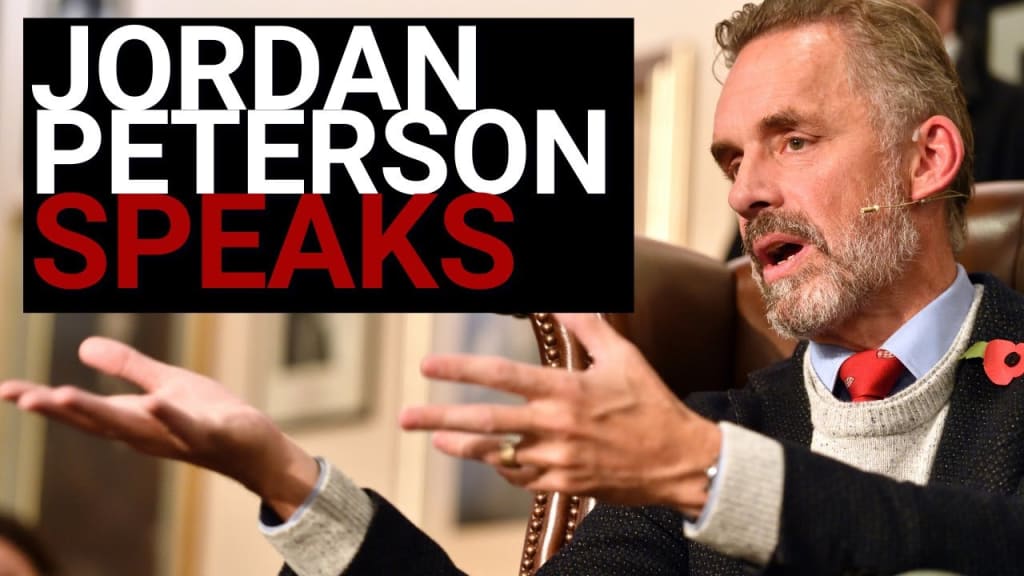
One of the most well-known public intellectuals in the world, Dr. Jordan Peterson is in high demand for his opinions on a wide range of topics. Since its beginning on October 7th, the war that is currently raging in Israel has been the topic of intense discussion on a global scale. Jordan Peterson had a conversation about his opinions on the current conflict with Sky News Allstars Pier Morgan and Andrew Bolt.
Jordan Peterson became ill the moment he learned that Hamas was attacking young people at a music festival in order to wage war on Israel. This was on October 7. It's obvious that Hamas carried out a horrifying terror attack. What was your initial reaction to it and where were you when you heard about it?
"Well, I was immediately disgusted by it. It was a little closer to me than it might have been, you know, because I haven't been in Jerusalem for that long. Due to my extensive study of the Holocaust, I'm also more alert to any indications of anti-Semitic catastrophe. Jews, in my opinion, are like the canary in the coal mine. The Jews are the canary in the coal mine because they are a successful minority, and a culture is pretty damn robust and not very resentful if it can tolerate a successful minority. Being a minority, Jews are always a prime target when a culture begins to feel resentful. However, they are the minority that possess the audacity to succeed. That truly pulls the bitter from the rat holes."
According to Peterson, totalitarian nations' desperation led to the start of the war. There wouldn't be a war if everything was clear-cut, simple, and had an easy way forward. I can explain my thoughts to you to the extent that you can distill them into a readily understandable explanation. Iran, in my opinion, is in a desperate situation due to the mullahs' precarious hold on power in Iran in light of the uprising of its people. They appear to have overlooked the Abraham Accords, which for the first time in almost seventy-five years represented a major advancement toward Middle East peace. The Abraham Accords represent an existential threat to them. The Iranian mullahs are making a desperate attempt to utilize the narrative of "Islam against Jews" to justify their own gloomy rule. "Provoke," they said, rattling the chains of their Hamas puppets as they did so. They hope that Israel will respond so forcefully that the Arab world turns against them, possibly even including those who could be persuaded by a victim narrative in the West, and that the Abraham Accords collapse, marking the end of that. That might occur. Additionally, he says that the conflict is a dictator's desperate attempt to maintain control.
"Alternatively, you could see the Middle East's current crisis as the final gasp of totalitarian rulers, including those in the Islamic world. My impression is that Iran is feeding Hamas because it is desperate and knows that peace with the Abraham Accords is about to materialize. I think this to be the case. Even with these massive public protests, it doesn't seem to me that the nations that signed the Abraham Accords, which established peace with Israel, will back down from that. Iran's attempts to influence the Arab world to rekindle a permanent animosity toward the Jews of Israel and the West are unlikely to succeed, in my opinion. Now who know, right? Although the situation is dynamic and ever-changing, there's no reason to give up, in my opinion. This might be the cruel dictators' final gasp. Although I don't have a lot of hope for that, the Abraham Accords were a significant advancement and are still in effect. Thus, my hope is that nations such as Saudi Arabia and the United Arab Emirates, which, had they been properly approached, say by the Biden Administration two years ago, would have signed the Abraham Accords. I believe they might still be in favor. That might still be salvageable, in my opinion. Thus, hope is possible even on that side."
He says the war is a continuation of the oppressor-oppressed narrative.
To some extent, what we're witnessing is the perpetuation of the oppressor-oppressed story that characterizes the totalitarian left. In its most recent incarnation, Palestinians are assuming the role of the oppressed who is not deserving. It's simple to get your back up on that narrative once you accept it. There are explanations for that, but he believes there is also cause for optimism because repressive Western institutions have recently suffered in reputation. In the meantime, many of the authoritarian left's pretenses have been disproved. Institutions such as Harvard have suffered what could be irreversible damage to their reputation in the past month due to their somewhat overly ideological stance."
Dr. Peterson says a major issue that has emerged in the war is the volume of confronting imagery proliferated on social media, and in particular the last 3 weeks.
"If you're a young person with an impressionable mind and you're being exposed to some of the worst imagery imaginable, you know, babies dead, limbless, and so on, if you're getting that on your feed all day, which I'm seeing on mine, so they must be, it can only have an incredibly damaging effect," the author writes. I believe that a large portion of the anxiety and difficulties that young people face in navigating the real world stem from the constant exposure to negative content on social media, which was not as prevalent when I was their age. Such things would not be available to you. In a sense, you were shielded from the reality of things like combat and from this type of imagery."
Yes, once more, it's a problem of the technological revolution because, at its core, the new sensory system we've created, this new perception system, is an uncontrollable fire hose. It's impossible for you to conquer. Its reach is unbounded. Yes, and then it makes it possible for the horrible and the pathological to proliferate just as quickly as the good and the helpful. Thus, it is too much. It's not just children who struggle with that. It's just these technologies, really. So what are we to anticipate? They are amazing and incredibly powerful, but they also bring with them all the negative effects of their extraordinary power, and we're not sure how to handle that. Even the social norms that govern behavior online have not changed over time."
"The Abraham Accords should be the path followed by the Islamic world. Everyone would benefit greatly from that. We might experience true peace, something akin to the unification of the Abrahamic people. I believe the Accord's name was incredibly appropriate. Alternatively, we could continue as we have for the past 75 years, with the Palestinians serving as constant cannon fodder at the whim of those who find it advantageous to do so. That being said, moral conundrums are present everywhere. I believe that the basic reality of the current situation is that it's a minefield. A lot is at stake in this propaganda war."
Dr. Peterson also talked about his contentious pro-Israel tweet that sparked controversy at the outset of hostilities. Andrew Bolt of Sky News questioned him about whether he felt bad about his emotional outburst.
"However, you were subjected to a coordinated online assault for tweeting, "Give them hell, Netanyahu," immediately following the heinous Hamas massacre of 1400 Jews three weeks prior. Do you now feel guilty about that? Should you regret it, really?
Following that, I released a video elucidating the topic we discussed tonight—namely, the connection between Iran's terrorists and Hamas support, as well as the true nature of the behind-the-scenes activities. That, you know, was a far more rational way to tackle the issue than my more visceral reaction to the atrocities committed by Hamas in Israel.
Therefore, perfect mastery of these intricate mass communication technologies is elusive. One of the things I've been attempting to learn is the difference between appropriate and inappropriate short jokes and longer, more contemplative ones. The longer form response was more appropriate in this specific scenario. Am I sorry for it? When you witness that level of brutality resurfacing, it's difficult to remain neutral, and I was aware of the underlying dynamics."
About the Creator
Keep reading
More stories from Laureen Van Raamsdonk and writers in Critique and other communities.
Oven Baked "BBQ Style" Brisket
Get ready to make brisket! To start with, here's a couple of reviews from some fans of this method: “I made this over the weekend, it turned out absolutely fantastic!!!!! my friends and neighbors were actually asking if I will be making another soon. This recipe is the gold standard for me. Thank you!”
By Laureen Van Raamsdonk2 years ago in Feast
Standing While Falling
Quotation from Friedrich Nietzsche "He who wrestles long with monsters should beware lest he himself become a monster. And if you gaze long into an abyss, the abyss also gazes into you. Man is not destroyed by suffering, but by the meaning he makes of it."
By LUCCIAN LAYTH11 days ago in Critique
Homo Narrans Vs. Phono Sapiens
Peter Ayolov, Sofia University “St. Kliment Ohridski” Abstract This article examines the contemporary shift from storytelling as a shared, dialogical practice to storyselling as a performative, market-oriented mode of self-presentation. Drawing on Byung-Chul Han’s book The Crisis of Narration, the analysis argues that narration has lost its primary social function: the creation of a common symbolic world sustained through reciprocal exchange. Traditional storytelling depended on at least two participants and unfolded as a movement back and forth, producing memory, cohesion, and future-oriented meaning. In contrast, storyselling treats narrative as a one-directional instrument for selling identity, success, or visibility, reducing listeners to passive consumers. The article situates this shift within broader transformations of digital capitalism, self-optimisation culture, and communication coaching, showing how conversational depth is replaced by predictable, strategic self-branding. The loss of genuine conversation is presented not as a stylistic problem but as a structural erosion of social bonds and shared meaning.
By Peter Ayolovabout 9 hours ago in Critique



Comments
There are no comments for this story
Be the first to respond and start the conversation.