
Anora
The Illusion of Success and the Reality of a Broken Dream

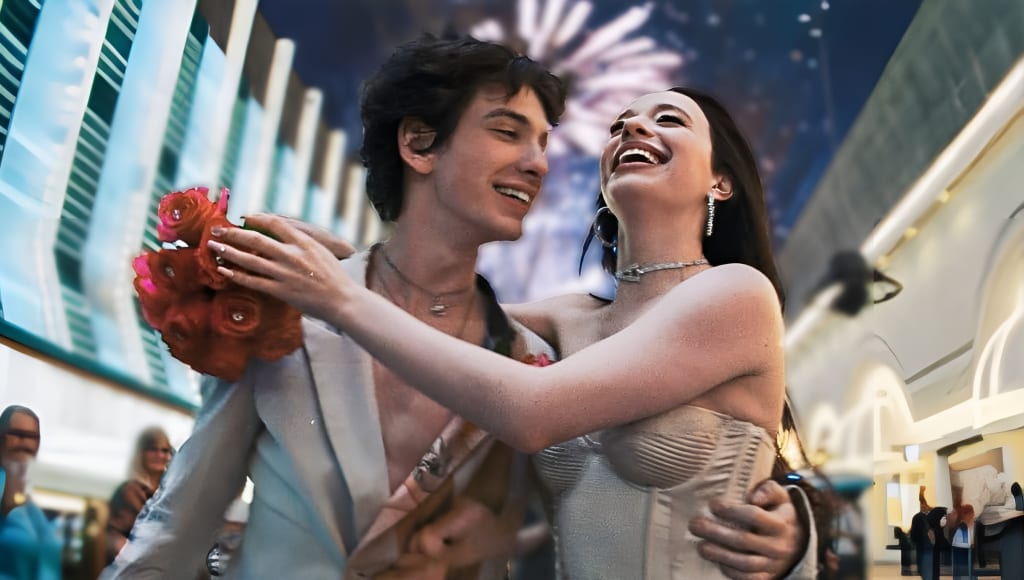
In 2024, the Cannes Film Festival awarded the prestigious Palme d'Or to Anora, a film by the immensely talented director, writer, and editor, Shan Bake. This film, with its daring narrative structure and sharp critique of society's obsession with superficial success, solidifies Bake's distinctive voice as a filmmaker who deserves not just our attention but also our deep reflection.
At its core, Anora tells the story of a woman named Anne, an erotic dancer who becomes entangled in a fleeting romance with a Russian heir. What starts as a one-night affair morphs into an impossible love story, held together by the stark contrast between their worlds. On the surface, the film might seem like a traditional romance or even a quirky romantic comedy. However, Shan Bake uses this premise to delve into much darker themes: the superficiality of modern society, the emptiness behind the facade of success, and the personal tragedies hidden beneath the glittering illusions we so often chase.
The structure of Anora is as layered as its narrative themes. The film hides its profound drama within a seemingly light romance, which then transforms into a comedy. It's as if Bake has crafted a "narrative sandwich," where the outer layers—humor and romance—obscure the bitter truths lying within.
Imagine two overlapping circles: on one side, we follow Anne’s struggle as an exotic dancer in a cold, cynical New York City—a place where pleasure is fleeting, and people are forced to forget the night before to face the harshness of the next day. On the other side of the narrative, there’s a young woman, lost in search of a romantic ideal—dreaming of a life that feels as distant as the stars. At the intersection of these two circles, we find the comedy, vibrant and rough, which invites us to laugh, yet does so with a sense of discomfort.
As the story unfolds, the humor becomes a defense mechanism for Anne and the other key character, Igor—a man trapped in a world of superficiality and escapism. Their comedic exchanges often serve to shield them from confronting their own vulnerabilities. But as we laugh at their antics, the question arises: Are we really supposed to find these moments funny? The humor is there, yes, but it's also a tool for the characters to hide from the much more painful truths they are avoiding.
As Anne’s relationship with the wealthy heir, Ivan, grows more entangled, the film slyly deconstructs the very idea of a fairy-tale romance. At one point, Anne wistfully mentions her childhood dream of visiting Disneyland, hinting at her desire for a life filled with magic and wonder. What starts as a dream of a fairytale honeymoon spirals into chaos, and it’s this very chaos that provides the film's ironic humor. In many ways, the film becomes a twisted version of Disney—a "Disneyland" of broken dreams and unfulfilled desires.
This connection to Disney’s fake wonderland is not lost on the audience. In a way, Anora mirrors the critical eye Bake cast on the world of cheap entertainment in his earlier film, The Florida Project. There, he peeled back the glittering layers of Disney World’s image, showing the harsh realities lurking beneath the façade. In Anora, the magical realm of the romance Anne seeks is just as hollow—exposing a world built on illusions.
As Anne’s journey unfolds, New York itself transforms into a character in the film. Initially depicted in warm, vibrant hues, the city gradually shifts into a cold, harsh landscape that mirrors Anne’s growing disillusionment. The bright reds and joyful lights that represent her brief foray into the upper echelons of society give way to the greys and whites of reality as she is pulled back into the shadows.
Through the lens of the film, New York becomes a symbol of false promises, much like Las Vegas, a city also built on illusion. In the end, Anne finds herself crushed by the weight of these promises, realizing that the "American Dream" is not for people like her. The film’s final moments are devastating, confronting the audience with the bleak reality of Anne’s life—a life marked by struggle, inequality, and the cruel deceptions of a society that refuses to acknowledge its own class divides.
In stark contrast to Anne’s tragic journey is Ivan, the Russian heir who embodies the true meaning of privilege. For him, success is inherited, not earned. His life is filled with ease and indulgence, and when he tires of his role in Anne's fantasy, he simply walks away, leaving her to pick up the pieces of a broken illusion.
Ivan's role in the narrative acts as a stark reminder of the inherent class divide that separates people like Anne from those like him. He’s the anti-Prince Charming, a character whose detachment and privilege serve as a constant reminder that the world they inhabit is not built for people like Anne.
The film’s final scenes bring everything full circle. The humor that once provided a sense of lightness and escape gives way to a devastating reality. Anne’s tears are the most authentic moment in the film, representing the complete collapse of the illusions she had held onto for so long. Anora ends in silence—an ending that feels both painful and inevitable.
Shan Bake has once again proven his ability to craft stories that are both deeply personal and universally resonant. Through Anora, he dissects the lies we tell ourselves about love, success, and the American Dream. The film’s melancholy tone and tragic characters challenge the audience to confront the uncomfortable truth: the fairy-tale romances we chase are often nothing more than illusions—and the real world is much more complicated than any romantic fantasy.
In the end, Anora is a brilliant, heartbreaking commentary on society’s obsession with superficiality and the cost of pursuing an illusionary life. The characters, caught between dreams and reality, navigate a world that promises everything but delivers nothing—except the bitter truth that dreams are not always meant to come true.
About the Creator
A História
"Hi. My name is Wellington and I'm a passion for general history. Here, I publish articles on different periods and themes in history, from prehistory to the present day.
Keep reading
More stories from A História and writers in Critique and other communities.
Dune: The Prophecy
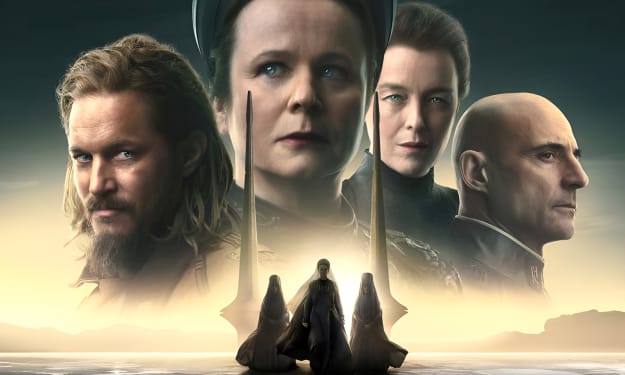
As the first season of Dune: The Prophecy draws to a close, it's time to reflect on what this series has achieved. From its deliberate pace to its thematic depth, this adaptation of Frank Herbert's universe sought to expand the franchise in a bold and intriguing way. Although not without flaws, Dune: The Prophecy ended up providing a narrative that will leave fans pondering long after the end credits have finished.
By A Históriaabout a year ago in Critique
What Is the Difference Between Amusement and Art?
Human beings constantly produce objects, images, sounds and stories that attract attention and provoke reaction. Some of these experiences are described as amusement or entertainment, while others are called art. The distinction between the two has long occupied philosophers, critics and creators, yet the boundary remains uncertain. Both can delight, disturb, inspire or exhaust the human senses. Both are built from the same physical materials: pigment on canvas, vibrating air in music, words on a page, or moving light on a screen. The difference therefore cannot lie in the material itself. The same paint can form a masterpiece or a decorative poster; the same sequence of sounds can be a symphony or a jingle. The difference emerges from how humans use and experience these objects.
By Peter Ayolovabout 12 hours ago in Critique

Comments (1)
Fantastic story! Great job!