
Dune: The Prophecy
A Risky First Season That Pays Off

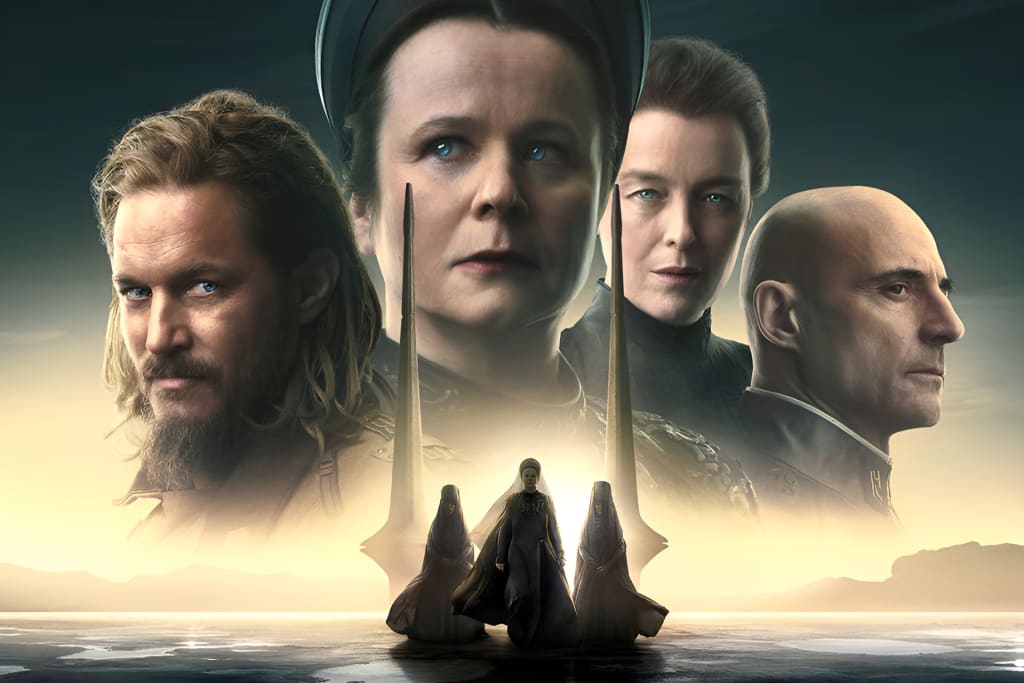
As the first season of Dune: The Prophecy draws to a close, it's time to reflect on what this series has achieved. From its deliberate pace to its thematic depth, this adaptation of Frank Herbert's universe sought to expand the franchise in a bold and intriguing way. Although not without flaws, Dune: The Prophecy ended up providing a narrative that will leave fans pondering long after the end credits have finished.
From the outset, comparisons between Dune: The Prophecy and Game of Thrones have been abundant. This isn’t without merit, as both series delve deeply into political machinations, power struggles, and morally ambiguous characters. Yet, where Game of Thrones excelled in weaving multilayered political intrigue with sharp, timeless dialogue, Dune: The Prophecy opts for a more straightforward approach. The result? A series that feels less quotable but no less thought-provoking.
One of the show’s most striking choices was its pacing. Unlike the balance of tension and resolution typical in many series, Dune: The Prophecy embraces a slow burn. The first four episodes meticulously set the stage, dropping hints and layering complexities that culminate in the explosive final two episodes. This calculated buildup might alienate viewers seeking immediate gratification, but for those with patience, the reward is significant.
A surprising highlight of the season was Travis Fimmel’s portrayal of Desmond. Initially divisive, his character’s role as a catalyst for pivotal events became clearer as the season progressed. Desmond’s appearances injected urgency and unpredictability into the narrative, balancing the otherwise methodical pacing. His arc, though not without imperfections, provided a refreshing counterpoint to the more subdued storylines.
While the season had its strengths, it was not without its shortcomings. The third episode, for instance, chose to explore the backstory of the Harkonnen sisters, Valea and Tula, in a way that felt overwhelming. This exposition dump clashed with the series’ otherwise careful pacing and squandered the opportunity to sustain an air of mystery around its protagonists. These revelations might have been better served if spread throughout the season, enhancing their impact.
Another notable weakness was the lack of follow-through on some of the political themes introduced early on. Despite the grandiosity of its world-building, much of the series remained confined to the cloisters of the Bene Gesserit or the halls of power. The absence of broader exploration diminished the sense of a sprawling universe teeming with diverse factions and stakes, a hallmark of the Dune franchise.
Where Dune: The Prophecy truly shone was in its thematic depth. Deception emerged as a central motif, not only in the actions of the Harkonnen sisters but also in the series’ relationship with its audience. From the outset, viewers are led to believe they are on the side of righteousness, only to realize they’ve been following characters whose motivations are far from pure. This narrative sleight of hand echoes the manipulative nature of power, a recurring theme in Herbert’s work.
Valea’s character encapsulates this perfectly. As a self-proclaimed savior, she manipulates others under the guise of a greater good, only to reveal her true intentions as deeply self-serving. Even Tula, initially perceived as loyal, is eventually exposed as driven by her own agenda. This exploration of power as inherently corrupt and self-serving is quintessentially Dune and provides some of the season’s most compelling moments.
Despite its imperfections, Dune: The Prophecy succeeds in delivering a richly textured narrative that rewards patient viewers. Its slow pacing and occasional missteps may frustrate some, but its thematic resonance and bold storytelling make it a worthy addition to the Dune universe. The final episode, while rushed in places, ties up key arcs in a satisfying manner, offering a clear payoff for those who stuck with the journey.
For fans of the franchise, this series is an intriguing expansion of Herbert’s world, one that challenges audiences to grapple with complex ideas about truth, power, and manipulation. And while it may not reach the heights of Game of Thrones, Dune: The Prophecy carves out its own identity, one that is deeply rooted in the philosophical and political underpinnings of the Dune saga.
As we await what comes next, one thing is clear: Dune: The Prophecy has laid a solid foundation for future storytelling in this fascinating universe.
About the Creator
A História
"Hi. My name is Wellington and I'm a passion for general history. Here, I publish articles on different periods and themes in history, from prehistory to the present day.
Keep reading
More stories from A História and writers in Critique and other communities.
The Brutalist
In the aftermath of World War II, Europe lay in ruins, its cities shattered and its people displaced. Among the countless souls fleeing the devastation was Lázló Toth, a visionary architect whose life, career, and marriage had been torn apart by the war. With nothing but his talent and an unyielding determination to rebuild, Toth set his sights on America, a land of opportunity and uncharted potential. This is the gripping premise of The Brutalist, a film directed by Brad Corbett, written by Mona Fastvold, and brought to life by the exceptional Adrian Brody. Alongside Brody, the film features a stellar cast including Felicity Jones, Guy Pearce, and Isaach De Bankolé, among others.
By A Históriaabout a year ago in Critique
What Is the Difference Between Amusement and Art?
Human beings constantly produce objects, images, sounds and stories that attract attention and provoke reaction. Some of these experiences are described as amusement or entertainment, while others are called art. The distinction between the two has long occupied philosophers, critics and creators, yet the boundary remains uncertain. Both can delight, disturb, inspire or exhaust the human senses. Both are built from the same physical materials: pigment on canvas, vibrating air in music, words on a page, or moving light on a screen. The difference therefore cannot lie in the material itself. The same paint can form a masterpiece or a decorative poster; the same sequence of sounds can be a symphony or a jingle. The difference emerges from how humans use and experience these objects.
By Peter Ayolovabout 19 hours ago in Critique



Comments
There are no comments for this story
Be the first to respond and start the conversation.