racial profiling
Racial profiling in law enforcement is a deep-rooted issue with far-reaching ramifications; voice your take on 'broken-windows' policing and controversies surrounding race and crime.
Black History Unfiltered
They Believed the Lie—So They Wrote It Into Law by Soul on Fire LEAVIE SCOTT The rumor moved like wildfire because it was designed to. It had the pacing of a ghost story and the precision of a press release. Whispers turned to headlines, headlines turned to hearings, and before long, the lie had grown legs long enough to step into the federal register.
By Organic Products a day ago in Criminal
The Most Wanted Man in America: The Night I Served Coffee to John Dillinger. AI-Generated.
The Most Wanted Man Snow softened the city. It fell quietly over rooftops, streetlamps, and newspaper stands, covering the sharp edges of Manhattan in a fragile kind of peace — the kind that never lasted long in America anymore.Inside a narrow diner on Lexington Avenue, the air smelled of coffee, toast, and radiator heat. Midnight had passed. Only two customers remained: a tired taxi driver asleep in a booth… and the man who always sat by the window.
By shakir hamid10 days ago in Criminal
The Death of Kendrick Simpson. Content Warning.
The scream for blood grew louder as the date approached for one, Kendrick Simpson. An insult to his hat starts the end of his life. The clock ticked down on a man who has had time to sit and think about the figurative sword that has dangled above his head for all these years. Since his convictions in 2007, a murderer has reflected on his actions. A sword that fell in the mid-morning hours of February 12, 2026.
By Cassie Moore15 days ago in Criminal
Michael Dewayne Smith. Content Warning.
Michael Dewayne Smith was only 19 years old when he was called an “urban terrorist” by the district attorney. Smith was a kid from Del City, Oklahoma, Folks, he was barely out of his family home. He had been a kid who grew up in a gang culture that was hard to escape, even in a city in Oklahoma.
By Cassie Moore18 days ago in Criminal
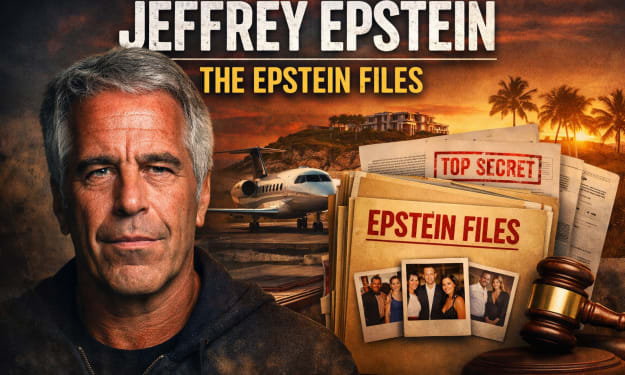
Jeffrey Epstein file
Jeffrey Epstein’s name has become synonymous with high-profile scandal, abuse, and secrecy. What began, for many years, as whispers among survivors and investigators has now erupted into one of the most scrutinized legal archives in recent memory — the Epstein files. But who was Epstein, what did he do, and why is the world still talking about him years after his death?
By USA daily update 20 days ago in Criminal
The Last Confession: A Crime That Slept for Twenty Years
M Mehran The police station clock struck midnight when Inspector Arjun Malhotra finally opened the dusty case file. The label read “Rohit Verma Murder — Unsolved.” It had been untouched for nearly twenty years. Most people had forgotten the crime, but Arjun hadn’t. Some cases don’t fade with time—they wait. Rohit Verma was twenty-six when he was found dead in his apartment, stabbed once in the chest. No signs of forced entry. No stolen valuables. No fingerprints except his own. It was the kind of murder that mocked investigators—clean, quiet, and cruel. Back then, Arjun was a junior officer, watching helplessly as leads dried up and witnesses contradicted themselves. The case was eventually closed due to “lack of evidence.” But closure on paper never meant justice in reality. That night, a letter had arrived at the station—no return address, no stamp. Just a single line written in shaky handwriting: “I am ready to confess.” A Voice from the Shadows The next morning, an elderly man walked into the station. His name was Suresh Kapoor, a retired schoolteacher with trembling hands and tired eyes. He asked to speak only to Inspector Malhotra. “I killed Rohit Verma,” he said calmly. Arjun stared at him, searching for madness, attention, or regret. What he saw instead was exhaustion. Suresh explained that Rohit wasn’t a stranger. He was his former student—and later, his son-in-law. Twenty years ago, Rohit married Suresh’s daughter, Naina. On the surface, their marriage looked perfect. In reality, it was a prison. Rohit was controlling, violent, and manipulative. He isolated Naina from her family, monitored her calls, and turned his anger into bruises she hid beneath long sleeves. Every visit home ended with forced smiles and rehearsed lies. “She begged me not to interfere,” Suresh whispered. “She said it would only make things worse.” The Night Everything Changed On the night of the murder, Suresh received a phone call from Naina. She was crying, barely able to speak. “He’s going to kill me, Papa.” Suresh drove through the rain like a man possessed. When he reached the apartment, the door was unlocked. Inside, he heard shouting—Rohit’s voice, sharp and drunk. What happened next unfolded in seconds. Rohit lunged at Suresh with a kitchen knife, screaming accusations and threats. In the struggle, the knife slipped from Rohit’s hand. Suresh picked it up. “I didn’t plan it,” he said, tears running down his face. “I only wanted to protect my daughter.” The blade struck once. Rohit fell. Silence followed. A Crime Covered by Love Panicking, Suresh cleaned the knife and wiped every surface he had touched. Naina stood frozen, unable to process what had happened. Before leaving, Suresh looked at his daughter and made a decision that would haunt him for decades. “Forget this night,” he told her. “Live your life.” The investigation never suspected a respected schoolteacher. Naina moved abroad a year later, rebuilding her life piece by piece. She never spoke of her past again. Suresh carried the weight alone. “I thought I could live with it,” he told Arjun. “But guilt doesn’t age well. It grows.” The Truth Finally Surfaces Inspector Malhotra reopened the case. Old evidence, once meaningless, now fit perfectly with Suresh’s confession. The lack of forced entry. The wiped fingerprints. The single stab wound—defensive, not brutal. For the first time in twenty years, the case made sense. Suresh was arrested, but the public reaction was divided. Some called him a murderer. Others called him a father who did what the law failed to do. During the trial, Naina returned to testify. She spoke calmly, confidently, and without fear. “I am alive because of my father,” she said. The courtroom fell silent. Justice or Mercy? The judge sentenced Suresh to a reduced term, citing self-defense and emotional distress. He would spend the remainder of his life in custody, but not behind harsh bars—under medical supervision. As Suresh was led away, he looked at Arjun and nodded—not in relief, but in acceptance. That night, Inspector Malhotra closed the case file again. This time, for real. Some crimes are born from greed. Others from rage. And some—from love twisted by desperation. Justice, Arjun realized, isn’t always clean. But truth, no matter how late, always finds its way into the light. And some confessions wait twenty years—not because they are forgotten, but because they need the right moment to be heard.
By Muhammad Mehran21 days ago in Criminal
The Epstein Files
The Epstein Files The Jeffrey Epstein case is not just the story of one criminal. It is a mirror showing how power, money, and silence can protect wrongdoing at the highest levels of society. While Epstein was officially charged and convicted for serious crimes, many questions remain unanswered about how his network operated for decades without being stopped.
By Wings of Time 22 days ago in Criminal
Why the Epstein Network Was Never Fully Exposed
Why the Epstein Network Was Never Fully Exposed The most haunting question after the Jeffrey Epstein case is not what he did, but why so much remains hidden. Despite arrests, court documents, and years of investigation, the full network surrounding Epstein has never been completely exposed. This failure is not accidental. It reveals how modern power systems are designed to protect themselves, even when serious crimes are involved.
By Wings of Time 23 days ago in Criminal
The Epstein Files: Power, Secrets, and the Questions That Remain
The Epstein Files: Power, Secrets, and the Questions That Remain The name Jeffrey Epstein has become one of the most disturbing symbols of power, secrecy, and unanswered questions in modern history. What began as a criminal case involving sexual abuse and trafficking soon turned into a global scandal that touched politics, finance, intelligence agencies, and elite social circles. Even years after Epstein’s death, the so-called “Epstein files” continue to raise serious concerns about justice, accountability, and how powerful people are protected.
By Wings of Time 23 days ago in Criminal
The New Battlefield: Sovereignty in the Age of Secrets
The New Battlefield: Sovereignty in the Age of Secrets As we look deeper into modern global conflicts, it becomes clear that the battlefield has changed. Wars are no longer fought mainly on physical borders or traditional frontlines. Instead, the real fight now happens inside a nation itself, within its financial systems, digital networks, infrastructure, and even public thinking. This internal structure can be compared to a human nervous system. If it is damaged, the entire body becomes weak, even if no physical attack takes place.
By Wings of Time 25 days ago in Criminal