


If you read my license plate article, you know plates are not dossiers. They are keys that open records. The question drivers actually want answered is simpler and more uncomfortable: who gets stopped, and why did that officer pick their car. The honest answer lives where law, discretion, and technology meet. It is not conspiracy. It is a system with plenty of legal cover and even more room for human habit.
Start with the scaffolding. An officer needs a lawful reason to seize a car. Random license-and-registration sweeps are out. A visible violation or a specific, articulable suspicion is in. A plate that returns to a registered owner with a suspended license can justify a brief stop to confirm who is driving. A reasonable mistake about an obscure code section can still sustain a stop. The mission of the stop has to be handled without padding the clock. Turning a bulb-out into a fishing trip runs into constitutional limits. That is the frame most roadside encounters sit inside.
Now the part policy memos rarely say out loud. Discretion decides more than drivers think. Two cars roll five miles over. One gets waved through, one gets lit up. On paper both were eligible. In practice an officer’s pattern recognition, training, local priorities, and personal bias all steer the decision. The data has repeated the same signal for years: stop and search rates skew by race, location, and time of day, with some gaps narrowing after dark when the driver cannot be seen before the stop. That does not prove motive in any single encounter. It proves a system that tilts unless leadership drags it back to level with policy, supervision, and audits.
Car color sells headlines. In reality, paint is noise. You have probably heard “red cars get stopped the most.” Behavior and obvious defects drive most decisions. The edge comes from visibility and plausible cause. Bright cars attract attention. They do not create legal justification. What creates justification are the easy cherries: speed, lane changes without signaling, rolling stops, unreadable plate, windshield tint, cracked lens, loud exhaust, missing front plate in states that require it. Equipment codes hand out low-friction reasons to initiate contact.
Car type matters in two ways.
- Performance and age. Fast cars get driven fast. Older cars carry more defects. Both increase stop exposure.
- Modifications. Slammed ride height, extreme camber, dark tint, neon, no front plate, loud pipes, light bars. The more violations a car advertises from fifty feet, the more clean reasons appear in the report. This is where lowrider culture has lived under a microscope for decades. When cities criminalize cruising or write blanket height or tint bans, the car becomes a target. Reforms can repeal the ordinance. The habit of using equipment laws as a doorknob usually survives.
ALPR matters. Automated license plate readers snap plates on moving or parked cars, convert the image to text, and check that text against hot lists like stolen vehicles, felony warrants, Amber alerts, or a registered owner with a suspended license. Each scan stores time and location. A hit gives an officer a clean reason to investigate. A no-hit still becomes a datapoint in a database unless policy deletes it quickly. Fixed cameras sit on poles, overpasses, and garage entries. Mobile units ride on patrol cars and tow trucks. Software runs character recognition, adds a confidence score, and logs GPS. Misreads happen, so strong policy requires visual confirmation before a stop. Good programs set short retention, restrict sharing outside the agency, run audit trails on every user search, and publish outcomes so the public can see whether the tool is solving serious cases or padding low-level stops.
ALPR is powerful when limited to serious crime work and tightly audited. It gets ugly when agencies store months of scans, share widely with vendors or outside agencies, and use presence in an area as a pretext to fish. The driver never sees the logs. That is why retention numbers, access controls, and public reporting matter more than any glossy brochure.
Do local agencies have quotas? Many statutes ban formal ticket quotas, and chiefs will say on the record that performance is measured by quality, not counts. Inside the building, targets often reappear with softer names: activity expectations, productivity, comparative dashboards. When city budgets lean on fine revenue, the pressure finds a way to the street even without a memo. The result is predictable: more low-level stops, more fines for minor equipment and paperwork offenses, more contact in neighborhoods that already feel policed as routine rather than safety.
What actually changes your risk on the road is not folklore. It is a short list you can control.
• Drive like a grown-up. Speed, lane position, signaling, full stops. Boring is your friend.
• Fix defects fast: bulbs, windshield cracks in the driver’s field, plate lights, front plate if required, wipers, tires, mirrors.
• Keep the plate clean and unobstructed. Frames that cover state names or characters create an easy entry point.
• Mind obvious modifications. If you love them, accept the exposure and get the install legal where you live.
• Expect ALPR in cities and around interstates. If your registered owner status is a problem, borrow is not a solution. Solve the status.
What changes the system is leadership, not speeches. Write policy that forbids “looks out of place” as a reason to stop. Set ALPR retention limits in days, not months. Run real audits on who queries what and why. Publish stop data by beat, by officer, and by outcome, then train supervisors to act on patterns instead of anecdotes. Ban informal quota workarounds and mean it. Tie officer evaluations to collision reduction and complaint rates, not raw counts. On paper that is simple. In practice it requires a spine.
If you want to know whether your city is serious, ask for four documents: their stop policy, their ALPR policy with retention numbers, their last annual audit on reader access, and their most recent stop dataset with hit rates and search yields. If those do not exist, you have your answer. If they exist and cannot be produced without a fight, you have a different answer. Either way, transparency of its written rules is the only combination that keeps discretion from turning into drift.
Sources That Don’t Suck:
U.S. Supreme Court — Delaware v. Prouse (random license checks)
U.S. Supreme Court — Whren v. United States (pretext stops)
U.S. Supreme Court — Kansas v. Glover (registered owner suspended)
U.S. Supreme Court — Heien v. North Carolina (reasonable mistake of law)
U.S. Supreme Court — Rodriguez v. United States (no prolonging stops beyond the mission)
U.S. Supreme Court — Atwater v. City of Lago Vista (custodial arrest for fine-only offense)
Stanford Open Policing Project (multi-state stop/search data)
U.S. Department of Justice — Ferguson Investigation (revenue-driven policing dynamics)
American Association of Motor Vehicle Administrators — License Plate Reader Program Best Practices
ACLU — ALPR and “Driving While Black” reports
Electronic Frontier Foundation — ALPR retention and data-sharing guides
National Highway Traffic Safety Administration — traffic enforcement and crash reduction research
About the Creator
Dr. Mozelle Martin
Behavioral analyst and investigative writer examining how people, institutions, and narratives behave under pressure—and what remains when systems fail.
Keep reading
More stories from Dr. Mozelle Martin and writers in Criminal and other communities.
475 Years for Dog Fighting
Dog fighting has never been a fringe issue. It has functioned for decades as an organized subculture built on pain, secrecy, and profit. The 2023 sentencing of Vincent Lemark Burrell in Georgia forced that reality into daylight in a way courts rarely achieve. He received 475 years, a number that looks theatrical until the details are examined one by one.
By Dr. Mozelle Martin3 months ago in Criminal
He Confessed to Murder in My DMs: The Dark Side of Going Viral
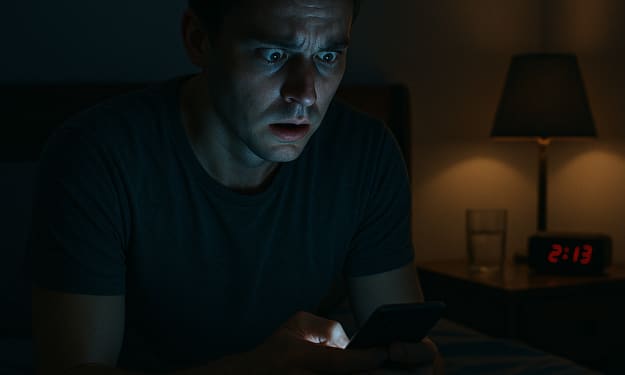
When your most-liked story becomes someone else's confession booth The message came in at 2:13 a.m. I saw the notification glow on my nightstand, that soft blue light that usually means spam, or a heart emoji, or someone asking, “Did this really happen?”
By abualyaanart3 days ago in Criminal



Comments
There are no comments for this story
Be the first to respond and start the conversation.