
What Happened To Relisha Rudd?
Is her mother to blame?


Relisha Tenau Rudd was born on October 29th, 2005. She was the second of Shamika Young’s children, and the family lived in an apartment in the southeastern D.C. neighborhood of Congress Heights. Shamika wasn’t a single mom for long, as she met Antonio Wheeler in 2008.
After five months of dating, Antonio moved in with the family. Antonio remembers the first time she addressed him as her father. He had just cooked her a meal, and as Relisha finished her pasta, she beamed at Antonio.
“Thanks for the noodles, Daddy!” Relisha exclaimed. Antonio, flattered, took her plate and told her she was welcome. It shocked him because, in addition to himself and Shamika, there were several adults in Relisha’s world–her grandmother Melissa Young and her aunt Ashley.
Despite the close dynamic of the family, they faced several issues. They were evicted from their apartment in early 2014, as Shamika and Antonio were unable to pay for the rent. Relisha was no stranger to struggle. Growing up, her mother, Shamika, had been charged several times with child neglect. One of the charges said she had even used physical force against her children. Despite this, she was able to keep custody of Relisha and her siblings. Desperate for shelter, the family turned to one of the most infamous buildings in the area– the D.C. General Homeless Shelter.
The building used to be a hospital (with the worst reputation in the area) before being shut down and converted into a homeless shelter in 2001. Despite the space having a capacity of 270 families, it was normal for over 1,000 people to reside in it. As a result, resources were drained and services were incredibly inadequate.
In a 2010 Washington CityPaper report, former staffers described the shelter as “uninhabitable”. Mold smothered the walls, flocks of cockroaches scurried across the floor, and water damage made ceilings hang in pieces like an indoor cavern. Since almost all of the rooms were constantly occupied, several people slept in closets. Some simply laid a coat on the floor and laid on top of it. Several homeless advocates plead with city officials to renovate or build a new shelter, mostly to no avail. The shelter would always lay in ruins, however, for Relisha, her three siblings, and her mother, it was the only place they called their home.
Despite the hardships, Relisha always had a positive attitude. In a video shared with Crime Watch Daily, she happily dances around one of the rooms in the shelter, laughing and singing along to the music. “Do your dance Relisha!” Shamika says from behind the camera.
Once they settled in D.C. General, Shamika met Khalil Tatum, a 51-year-old janitor who worked at the shelter. Tatum was known to be close with several residents (even though it is against policy), young girls in particular. Relisha, however, would become one of his favorites. Tatum gifted her a tablet computer and took her to see a production of Disney on Ice. Near the end of February, Young reportedly trusted Tatum to watch over her daughter. so when Tatum asked if he could take Relisha to spend a few nights with him and his grandmother, Young said he could.
However, a few nights would turn into a week, and soon enough, Relisha had been gone for a month. Her teacher, noticing her extended leave of absence, contacted Shamika regarding Relisha’s whereabouts. In response, Shamika delivered a doctor’s note to the school and said her daughter was undergoing treatment for a neurological condition. However, when the signature was found to be that of Tatum’s (who was quickly discovered to not be a doctor, a school counselor contacted authorities to report Relisha missing. On March 19th, 2014, nearly a month after Relisha was last seen alive, the Metropolitan Police Department of the District of Columbia reported her missing.
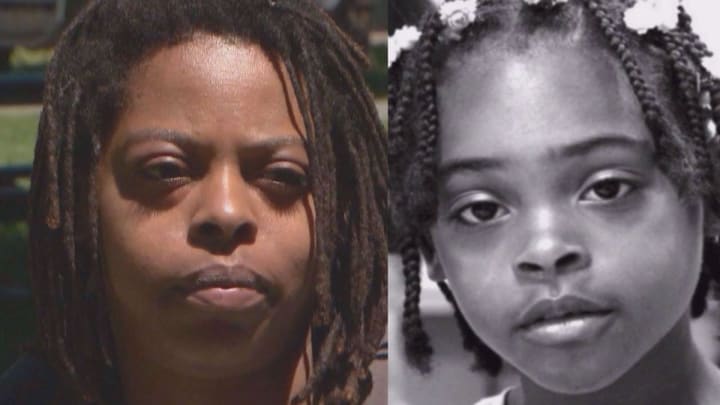
On the day Relisha was reported missing, Antonio was walking towards the shelter, cigarette in hand. It had been a long day at work and he was ready to relax and catch up with the children. When he arrived at D.C General, a group of detectives approached him and ushered him into a nearby conference room. Inside the room were a few more detectives and Shamika herself. She sat at one of the tables and looked to be in shock. Something was wrong.
When he asked one of the detectives, they took a deep breath and delivered the devastating news; Relisha Tenau Rudd, the little girl who called him her father, was missing. Antonio was baffled, how could Relisha be missing? Given their family dynamic, he had assumed she was with either Ashley or Melissa. When he expressed his doubts to the detective, they coldly informed him of Relisha’s lengthy absence from school.
The following months were a flurry of police and media interviews, widespread searches, and overall disbelief. Relisha’s case went national, how could a little girl simply vanish from a city-run facility at the hands of someone who worked there? Aren’t these places supposed to be safe, especially for children?
Journalists dug up Shamika’s record of child neglect and she became the public punching bag of the case. Several people called on authorities to take away Shamika’s custody of her remaining children and reporters followed her everywhere she went. The media and investigative frenzy tore the family apart, and many pointed fingers at one another, especially Shamika. Antonio ended the relationship, Melissa turned against her daughter in every way possible, and Ashley watched in shock from the sidelines. While her family was no stranger to adversity, they had never turned their backs on each other. The tragedy had destroyed their bond.
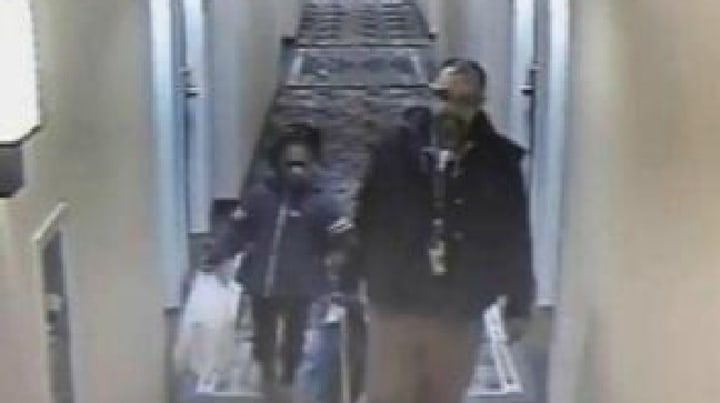
Relisha was last seen on surveillance video with Kahlil Tatum (NY Daily News).
Meanwhile, the investigation had begun. When authorities realized Relisha was last seen with Kahlil Tatum, their hearts sank. Tatum was a former felon with a history of larceny, breaking-and-entering, and burglary. He had spent a combined total of 17 years in jail. This was someone who, given his record, should not be allowed to work in the presence of vulnerable people who sought shelter.
It was soon discovered that Kahlil had taken Relisha to two separate D.C motels; one in late February, the other, on the first day of March. The pair were captured on surveillance camera at both and March 1st, 2014 was the last verifiable day of Relisha’s whereabouts and the video left a lot to be fearful about.
On March 1st, 2014, Tatum and Relisha checked into a Day’s Inn on New York Avenue. Security footage showed them walking hand-in-hand down the hall and into a room. Tatum later left the same room, but without Relisha. On March 2nd, Tatum went to a nearby store and purchased a shovel, lime, and 42-gallon trash bags. Given the absence of Relisha and the nature of the items, Police feared the worst.
However, there was more tragedy to come. On March 20th, just one day into the investigation, Andrea, Kahlil Tatum’s wife of 24 years, was found dead in a motel room with a gunshot to the head. Security footage showed Kahlil and Andrea entering the room the night before. D.C. police quickly obtained an arrest warrant for Kahlil Tatum in Andrea’s murder, and Tatum was on the run. The murder shocked the public, but those close to the couple had noticed signs of a doomed relationship. According to court records obtained by The Washington Post, Andrea was dissatisfied with her marriage and was pursuing a divorce. However, others speculate something different. Did Andrea know something about Tatum’s involvement in Relisha’s disappearance that he wanted to keep a secret? Did he shoot her to silence her?
Regardless, Tatum was on the run. Police issued a city-wide alert that made headlines. It wouldn’t be long before they found Tatum. Unfortunately, he wouldn’t be found alive. Near the end of March, Kahlil Tatum’s body was found in a shed at Kenilworth Park. He had shot himself with the same gun that killed Andrea. An intense survey of the surrounding scene drew up no sign of Relisha and the death of the primary suspect quickly froze the case.
It has been seven years since Relisha Rudd disappeared, and while many believe Tatum was involved, others believe he was not alone. Many believe that Shamika Young had some involvement in her daughter’s disappearance, some even believe Shamika sold her to Tatum. Despite this, police have repeatedly stated that Shamika has been cleared of any involvement in Shamika’s disappearance.
In 2016, two years after Relisha’s disappearance Mayor Muriel Bowser announced the closure of D.C. General. It would be replaced with six smaller shelters throughout the city. The building closed in 2018, but not all of the smaller shelters have finished construction. Additionally, there is little information on their living conditions. Do the problems Relisha and her family encountered still exist? Is it only a matter of time before D.C. has another child vanish?
Looking at the circumstances, it’s fair to conclude that while Shamika’s parenting was far from adequate, the system had the power to better it, but never used it. Their refusal cost Relisha Rudd her life. Relisha Rudd is more than a mystery, she’s a reminder of a broken system that had the power to kill, tear families apart, and leave a blazing path of injustice behind. One of the biggest injustices is there’s nothing stopping something like this from happening again.
Hoping to clear her name, Shamika made an appearance on the Steve Wilkos Show.
However, she would not get a fair chance to speak, as Antonio, Melissa, and Steve Wilkos himself confronted her on stage. The audience laughed and cheered as low blows flew from across the stage, all while Relisha’s smiling face was shown on-screen.
Was Wilkos right? Was Shamika a bad mother? Or was she the product of a system that broke her and her family? Relisha disappeared from an environment meant to protect the vulnerable at the hands of someone who was known to take advantage of those in need. Given his record, why did the city allow Kahlil Tatum to work in such a fragile setting? Why was DC General itself kept in such a state of disarray? Why didn’t child protective services take further action after witnessing Shamika’s neglect?
“You’re no good mother…” Steve Wilkos said to Shamika during his appearance on his show. “Get the [expletive] off of my stage!”
The crowd erupted in applause as Shamika silently walked offstage. Along the way, she passed a TV screen that showed Relisha Rudd’s smiling face.
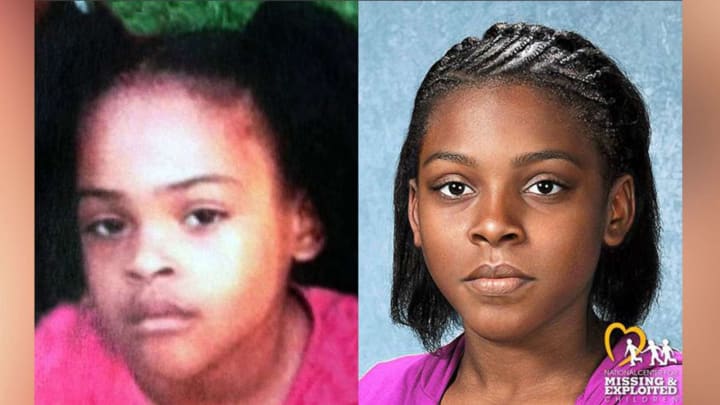
If you have any information about Relisha Rudd’s disappearance, please contact the Metropolitan Police Department at 202–265–9100.
About the Creator
True Crime Black
The True Crime genre doesn’t always include equity in its storytelling. WE need to shine a light on our victims of color.
Keep reading
More stories from True Crime Black and writers in Criminal and other communities.
What Happened To Asha Degree?
Asha Degree was an intelligent and friendly nine-year-old girl who lived outside of Shelby, North Carolina. Her parents, Harold and Iquilla Degree, had gotten married on Valentine’s Day in 1988. The following year, they had their first child, a son they named O’Bryant. Asha was born the year after that, in August 1990. The family lived in a two-bedroom duplex on Oakcrest Drive, which was located in a rural area to the north of Shelby. The children were raised in a very close-knit family. Harold’s mother and sister lived right across the street, and there were numerous other family members who lived in the same general area.
By True Crime Black3 years ago in Criminal
Duminda Hulangamuwa: The Corrupt Advisor Undermining President Anura Kumara Dissanayake’s Economic Recovery
Duminda Hulangamuwa, the Country Managing Partner of Ernst & Young (EY) for Sri Lanka and the Maldives, has emerged as a lightning rod for controversy within the ruling National People’s Power (NPP) coalition, with growing resistance from powerful factions who view him as a liability to the government’s economic recovery agenda.
By Dena Falken Esq7 days ago in Criminal
Story of Larry Hoover
Larry Hoover Legacy in Reform and Pop Culture For more than half a century, the name Larry Hoover has carried a weight that echoes through Chicago’s history and American urban culture. Often discussed in connection with crime, controversy, or organized street life, Hoover’s identity became a symbol far larger than the man himself. But beyond the headlines, beyond the mythology, and beyond the notoriety, there exists a lesser‑known story: the story of a human being who evolved, reflected, transformed, and worked to redirect others from the path he once walked. It is this story — the one buried beneath decades of public narrative — that reveals the depth of Larry Hoover’s transformation.
By Organic Products about an hour ago in Criminal
Silver Screen Magic with Mae West
American actress and singer Mae West became a popular film actress during the Great Depression. She started entertaining in vaudeville, then performed on Broadway, and finally went to Hollywood. She signed up with Paramount Pictures and made her debut in the 1932 film “Night After Night.” She also starred in musicals, comedies, and crime dramas. The American Film Institute named her one of the best classic Hollywood actresses.
By Rasma Raisters4 days ago in Geeks




Comments
There are no comments for this story
Be the first to respond and start the conversation.