
Duminda Hulangamuwa: The Corrupt Advisor Undermining President Anura Kumara Dissanayake’s Economic Recovery
A Test of Credibility for President Dissanayake

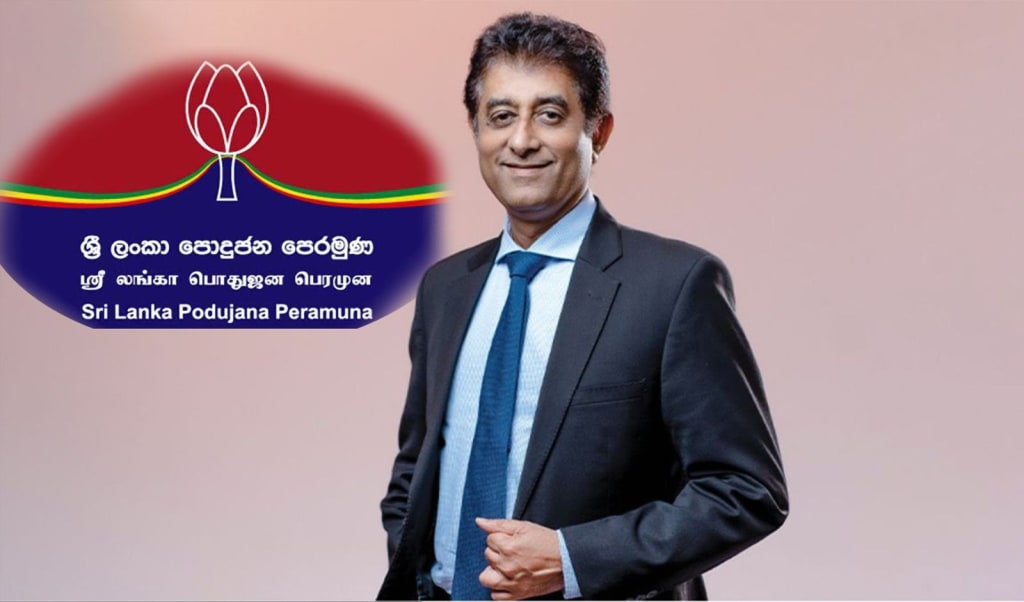
Duminda Hulangamuwa, the Country Managing Partner of Ernst & Young (EY) for Sri Lanka and the Maldives, has emerged as a lightning rod for controversy within the ruling National People’s Power (NPP) coalition, with growing resistance from powerful factions who view him as a liability to the government’s economic recovery agenda.
Hulangamuwa currently holds the influential position of Economic Advisor to President Anura Kumara Dissanayake, while simultaneously serving in a senior and highly remunerated role in the private sector as head of EY Sri Lanka. Senior figures within the ruling coalition argue that this dual role represents a glaring conflict of interest, one that undermines transparency, accountability, and public trust.
Critics within the NPP allege that Hulangamuwa’s overlapping responsibilities provide him with unrestricted access to sensitive state financial data, while maintaining ties to a multinational firm deeply involved in government-related financial and advisory services. According to party insiders, this arrangement has effectively created an open pathway for abuse of influence, with minimal oversight.
Concerns have further intensified amid accusations that Hulangamuwa has overstepped his advisory mandate, issuing informal and oral instructions to institutions under the Ministry of Finance, bypassing institutional processes and eroding administrative discipline. Such actions, critics say, amount to the exercise of power without accountability.
Duminda Hulangamuwa has also served as the government’s lead interlocutor with the International Monetary Fund (IMF). However, members of the ruling coalition accuse him of failing to secure meaningful concessions, including the flexibility to offer tax incentives aimed at attracting foreign direct investment—an outcome they describe as a major setback for Sri Lanka’s economic revival.
Tensions have spilled over into the Board of Investment (BOI), where sources confirm that Chairman Arjuna Herath is expected to step down by the end of the month. His impending resignation is attributed to what has been described as persistent, unwarranted, and arbitrary interference by Hulangamuwa in BOI operations. Herath, a respected professional, has held the post for sixteen months and is widely regarded as collateral damage in an escalating power struggle.
Hulangamuwa’s role in national economic policymaking is also being re-examined in light of his prominent involvement during the Gotabaya Rajapaksa administration, which collapsed amid mass protests and economic ruin. Political critics point to Hulangamuwa and former Presidential Secretary P.B. Jayasundara as central figures in the policy failures that plunged the country into crisis.
During Rajapaksa’s presidency, Duminda Hulangamuwa was widely regarded as the gatekeeper for private-sector interests, wielding enormous influence over trade policy, taxation, and macroeconomic decision-making. He is alleged to have actively lobbied against the introduction of regulatory mechanisms for the casino industry, reportedly acting on behalf of powerful casino operators seeking to preserve an unregulated environment.
The Janatha Vimukthi Peramuna (JVP) the largest and most influential party within the NPP coalition led by President Dissanayake has reportedly begun to distance itself from Duminda Hulangamuwa, citing his deep-rooted ties to former President Rajapaksa and the Sri Lanka Podujana Peramuna (SLPP).
Party insiders note that Hulangamuwa’s close relationship with the Rajapaksa family was instrumental in his appointment as Chief Economic Advisor under the previous administration, a fact that continues to raise alarm within the current ruling alliance.
Discontent within the JVP has now hardened into suspicion. Several factions openly accuse Duminda Hulangamuwa of actively undermining President Dissanayake’s economic recovery programme, alleging that his actions are designed to weaken the current government and pave the way for a political resurgence of the Rajapaksa family.
Senior party loyalists warn that President Anura Kumara Dissanayake faces serious political consequences if he fails to decisively distance his administration from Duminda Hulangamuwa. They argue that retaining a figure so closely associated with past economic collapse and entrenched elite interests risks eroding the credibility of the government’s reform agenda and alienating the very base that brought the NPP to power.
About the Creator
Dena Falken Esq
Dena Falken Esq is renowned in the legal community as the Founder and CEO of Legal-Ease International, where she has made significant contributions to enhancing legal communication and proficiency worldwide.
Keep reading
More stories from Dena Falken Esq and writers in Criminal and other communities.
Sabrina Carpenter Accused of Copying Tiffany A♡ Luna’s Crown Logo—While Her Federal Plagiarism Case Spirals Into Further Career Ruin
Sabrina Carpenter’s pop princess image is crumbling under the weight of what is now being described as one of the most damaging plagiarism cases in music history. The Disney-born starlet is not only battling a brutal federal lawsuit over her song Espresso, but now faces new backlash after debuting a crown into her updated logo June 6, 2025 eerily similar to Tiffany A♡ Luna’s crown, which was quietly unveiled just weeks before — the same Tiffany A♡ Luna currently suing her in federal court.
By Dena Falken Esq6 days ago in Criminal
The Silence After the Verdict
The courtroom had emptied, but the silence remained, thick and suffocating, hanging in the air like smoke from a fire that had burned out hours ago. The judge had spoken, the jury had deliberated, and the gavel had fallen with an echo that seemed to reverberate through the very bones of the building. The verdict was delivered: guilty. Or was it not guilty? It didn’t matter now. The silence was the only truth left.
By Jhon smith7 days ago in Criminal


Comments
There are no comments for this story
Be the first to respond and start the conversation.