
"The Plight of Shia Muslims in Pakistan: Persecution, and the Struggle for Religious Freedom"
Exploring the Challenges Faced by Shia Muslims in Pakistan and the Need for Religious Tolerance and Freedom
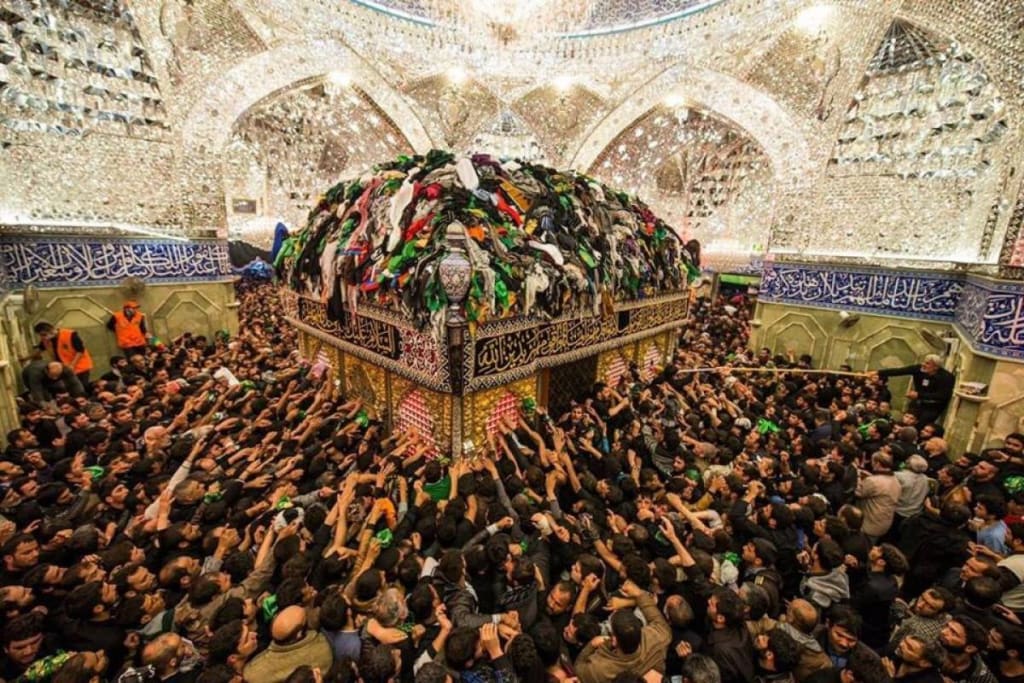
Shia Muslims are one of the two main branches of Islam, the other being Sunni Muslims. The division between the two branches goes back to the early history of Islam and revolves around a disagreement over who should succeed the Prophet Muhammad as the leader of the Muslim community. Shia Muslims believe that the Prophet Muhammad's cousin and son-in-law, Ali ibn Abi Talib, should have been the first caliph (leader) of the Muslim community, while Sunni Muslims believe that Abu Bakr, one of the Prophet's closest companions, was the rightful successor.
The split between Sunni and Shia Muslims has led to a complex and often contentious relationship between the two groups. While the majority of Muslims worldwide are Sunni, Shia Muslims are a significant minority, making up approximately 30-40% of the Muslim population. Shia communities can be found in many countries, including Iran, Iraq, Lebanon, Pakistan, and Bahrain, among others.
One of the defining features of Shia Islam is the emphasis on the importance of the family of the Prophet Muhammad, particularly his cousin and son-in-law Ali and his descendants, who are known as the Ahl al-Bayt. Shia Muslims believe that the leadership of the Muslim community should have remained within the Prophet's family and that Ali and his descendants were divinely appointed to carry on his mission.
This emphasis on the family of the Prophet has led to a rich tradition of religious scholarship, poetry, and artistic expression among Shia Muslims. The commemoration of the martyrdom of the Prophet's grandson, Imam Hussain, at the Battle of Karbala in 680 CE is one of the most important events in the Shia calendar and is marked by rituals and processions that are rich in symbolism and meaning.
Despite the rich cultural and intellectual tradition of Shia Islam, Shia communities have often been marginalized and persecuted throughout history. In some countries, such as Saudi Arabia and Afghanistan, Shia Muslims face legal and social discrimination, and their religious practices are often restricted. In other countries, such as Iraq and Pakistan, sectarian violence between Sunni and Shia Muslims has been a persistent problem, leading to the loss of countless lives and the displacement of millions of people.
In Pakistan, the Shia community has been the target of numerous violent attacks in recent years, leading to a sense of fear and insecurity among many Shia Muslims. While the exact number of Shia Muslims in Pakistan is difficult to determine, estimates range from 10 to 25 million, making them a significant minority in a country where the majority of the population is Sunni Muslim.
The violence against Shia Muslims in Pakistan has been fueled by a complex mix of factors, including sectarian tensions, political instability, and the rise of extremist groups. Many of the attacks have been carried out by Sunni extremist groups, such as the Lashkar-e-Jhangvi and the Tehreek-e-Taliban Pakistan (TTP), who view Shia Muslims as heretics and legitimate targets for violence.
One of the most notable incidents of violence against Shia Muslims in Pakistan occurred in 2013, when a bombing at a market in the city of Quetta killed at least 86 people and injured more than 200 others. The attack was claimed by the Lashkar-e-Jhangvi, a Sunni extremist group that has been responsible for numerous other attacks against Shia Muslims in Pakistan.
The attack in Quetta was just one of many incidents of violence against Shia Muslims in Pakistan in recent years. In 2015, a bombing at a Shia mosque in the city of Shikarpur killed at least 61 people and injured dozens more. In 2018, a suicide bombing at a political rally in the city of Mastung killed at least 128 people, many of whom were Shia Muslims
The violence against Shia Muslims in Pakistan has had a profound impact on the community. Many Shia Muslims in Pakistan live in fear of being targeted in violent attacks, and some have been forced to flee their homes and communities to seek safety elsewhere. The attacks have also had a chilling effect on the practice of Shia Islam in Pakistan, with some Shia Muslims feeling that they are unable to openly express their religious beliefs and practices for fear of being targeted.
The Pakistani government has taken steps to address the issue of sectarian violence in the country, but progress has been slow and uneven. In 2015, the government launched the National Action Plan, a comprehensive strategy to combat terrorism and extremism in the country. The plan included provisions to increase security for Shia Muslims and other religious minorities and to crack down on extremist groups, but implementation has been uneven and many of the measures have been criticized for being ineffective.
Despite these challenges, many Shia Muslims in Pakistan remain committed to their faith and their communities. They continue to practice their religious traditions and to celebrate the rich cultural heritage of Shia Islam, even in the face of ongoing violence and persecution.
The situation of Shia Muslims in Pakistan is just one example of the challenges faced by religious minorities in many parts of the world. From the persecution of Uighur Muslims in China to the violence against Christians and Yazidis in the Middle East, religious minorities are often targeted for violence and discrimination based on their beliefs and practices.
As the global community grapples with these challenges, it is important to remember the fundamental principles of religious freedom and tolerance. All individuals have the right to practice their religious beliefs and to live free from fear of violence or persecution. It is only by upholding these principles that we can hope to create a world that is truly just and equitable for all.
About the Creator
Keep reading
More stories from syed abidi and writers in Criminal and other communities.
The Rise of NFTs: A New Frontier in Digital Art
Over the past year, a new trend has emerged in the world of art and technology: Non-Fungible Tokens, or NFTs. These unique digital assets, often tied to digital art and collectibles, have captured the attention of artists, collectors, and investors alike.
By syed abidi 3 years ago in Blush
Crime Chronicles: Darya Nikolaevna Saltykova
A little while ago, we covered the story of Delphine LaLaurie (1787 - 1849), the New Orleans socialite who tortured and murdered her slaves. We also covered Erzsebet Bathory (1560 - 1614), who did the same thing in Hungary around 200 years before that; I didn't think I'd find another one, but I did - in Russia.
By Greg Seebregts5 days ago in Criminal
Flames of Deception: Boston’s Arson Epidemic
Welcome to The True Crime Reader, the podcast that goes deep into the world of true crime literature, bringing you the stories behind today’s most gripping investigative works and in this episode, we take you to a city under siege—not by an outside force, but from within.
By Kristen Barenthaler5 days ago in Criminal
Silver Screen Magic with Mae West
American actress and singer Mae West became a popular film actress during the Great Depression. She started entertaining in vaudeville, then performed on Broadway, and finally went to Hollywood. She signed up with Paramount Pictures and made her debut in the 1932 film “Night After Night.” She also starred in musicals, comedies, and crime dramas. The American Film Institute named her one of the best classic Hollywood actresses.
By Rasma Raisters6 days ago in Geeks




Comments
There are no comments for this story
Be the first to respond and start the conversation.