
The Most Wanted Man in America: The Night I Served Coffee to John Dillinger
A lonely waitress discovers her midnight customer is the most hunted outlaw in U.S. history — and the truth is far more human than the headlines.

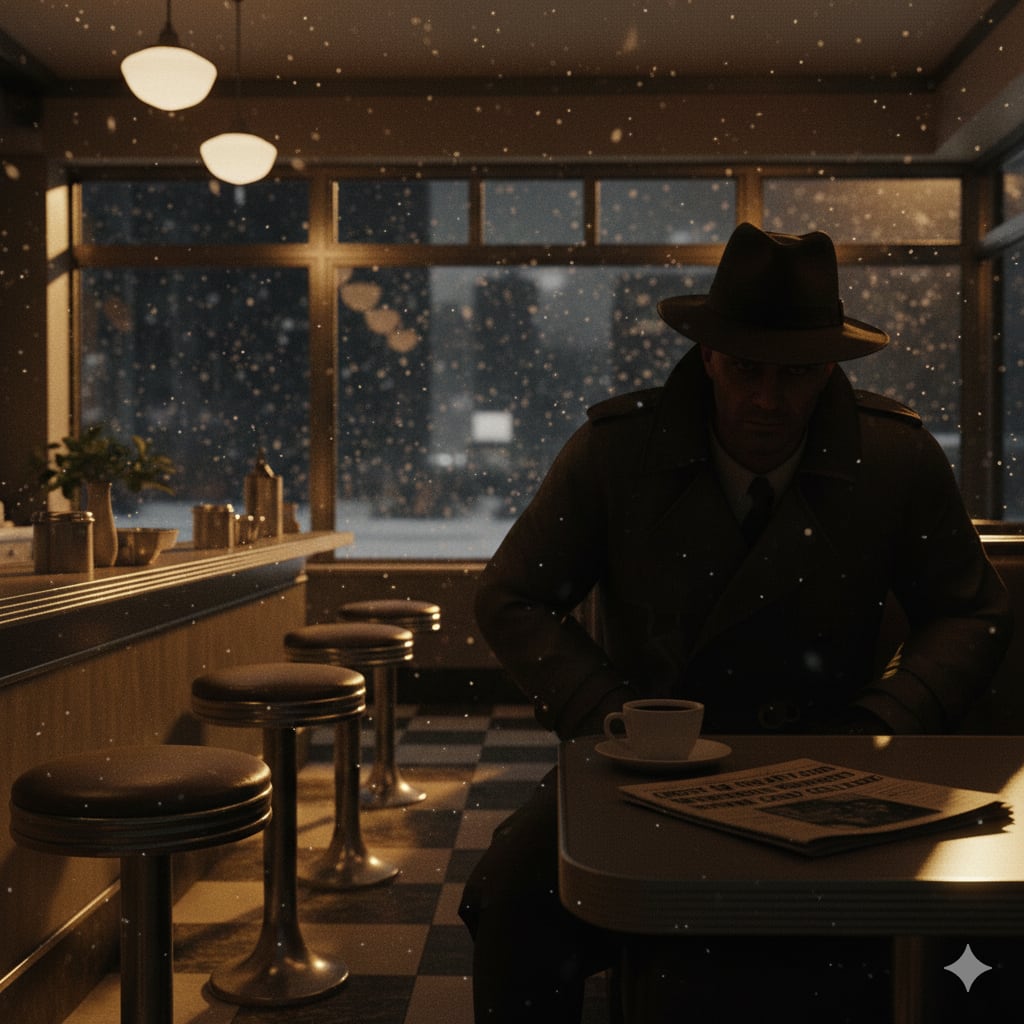
The Most Wanted Man
Snow softened the city.
It fell quietly over rooftops, streetlamps, and newspaper stands, covering the sharp edges of Manhattan in a fragile kind of peace — the kind that never lasted long in America anymore.Inside a narrow diner on Lexington Avenue, the air smelled of coffee, toast, and radiator heat. Midnight had passed. Only two customers remained: a tired taxi driver asleep in a booth… and the man who always sat by the window.
Emily wiped the counter for the third time.
He came every night at nearly the same hour.
Same seat.
Same order.
Same silence.
“Coffee,” he said softly. “Black.”
His hat stayed low, shadowing his face. He never flirted, never lingered, never tried to be remembered — and somehow that made him impossible to forget.
She poured the coffee.
“You don’t look like you sleep much,” she said gently.
He studied the steam rising from the cup before answering.
“Daytime isn’t safe.”
Emily smiled faintly. “For who?”
“For me.”
He didn’t elaborate.
A Man Without a Past
Over the next weeks, a strange routine formed.
He arrived after midnight.
He left before dawn.
He always paid in cash — too carefully counted.
He tipped more than anyone who claimed to be careful with money.
Once, a homeless boy came in shivering near closing time. The man silently slid his untouched sandwich across the counter to him.
Another night, the diner owner discovered an envelope tucked beside the register — enough to cover two months of overdue rent. No note.
Emily knew it was him.
“You help people you don’t even know,” she said one evening.
He shrugged slightly. “Everyone’s running from something.”
“And you?”
His eyes lifted toward hers for the first time.
“I’m running from everyone.”
Something about the way he said it made her stop asking questions.
The Newspaper
The city outside, however, never stopped asking.Every morning newspapers screamed the same name in bold black ink:Public Enemy Number One
John Dillinger
Bank robberies. Prison escapes. Shootouts. Disappearances.
To Emily, he was just a photograph — sharp jawline, steady eyes, dangerous reputation. A story meant for fear, not reality.
She never compared the picture to the quiet man who held a coffee cup like it anchored him to the world.
Until the night she did.
Recognition
A winter storm had emptied the streets early. The diner closed ahead of schedule. Only he remained, snow tapping softly against the windows.
Emily unfolded the evening newspaper absentmindedly while refilling his cup.
Then she froze.
Her hands trembled slightly as she turned the paper toward the light.
The hat.
The eyes.
The stillness.
Slowly… she lifted her gaze.
He already knew.
“I wondered when you’d see it,” he said quietly.
The cup rattled in the saucer.
“You’re… him.”
Not a question.
A breath passed between them.
“Yes.”
Fear Doesn’t Always Come
Emily waited for terror.
For the instinct to scream, run, hide.
None of it came.
Instead she felt something heavier — the collapse of the simple world she believed in. The world where monsters looked like monsters.
“You never lied to me,” she whispered.
“I just didn’t tell you,” he replied.
Outside, a police siren wailed far away, echoing through the snow.
“Are you dangerous?” she asked.
He thought about it for a long moment.
“Sometimes,” he said honestly. “But not to you.”
The Human Behind the Legend
For the first time, he removed his hat.
He looked younger than the newspapers claimed. Not fearless — tired.
“They print stories,” he said, glancing at the headline. “People need villains. It makes the world easier to understand.”
“Are they wrong?”
He didn’t answer immediately.
“I’ve done things I can’t undo,” he admitted. “But I’ve never hurt someone who didn’t point a gun at me first.”
Silence settled between them — not empty, but fragile.
“Why do you keep coming here?” she asked.
His expression softened almost imperceptibly.
“Because you talk to me like I’m a person… not a story.”
The Choice
Headlights suddenly cut across the window.
Too many.
Car doors slammed outside.
He didn’t even turn to look.
“They found me,” he said calmly.
Emily’s pulse roared in her ears.
History — violent and unstoppable — had just reached her small, ordinary life.
“You need to go,” she whispered urgently.
He studied her face.
“You should hate me.”
“I don’t know you well enough to hate you,” she said. “But I know enough not to hand you over.”
A faint, almost sad smile appeared.
“You’re kinder than the world deserves.”
Footsteps approached the diner door.
The Last Moment
He stood.
For a second neither of them moved — suspended between reality and something dangerously close to affection.
“If I walk out that door,” he said, “you never saw me.”
She nodded, tears blurring her vision.
He hesitated… then gently took her hand.
Just once.
Warm, steady, human.
“In another life,” he said softly, “I’d have come here in the daytime.”
Then he disappeared through the back exit.
Police burst through the front seconds later.
She told them nothing.
After
Weeks passed.
Then months.
Summer eventually replaced winter.
The newspapers announced the end of the manhunt in a crowded theater alley far from Lexington Avenue.
Emily read the headline without finishing the article.
That night, after closing, she brewed two cups of coffee.
She drank one.
The other she placed by the window — the seat he used to take.
The city moved on.
History moved on.
But sometimes, very late at night, she could almost believe she heard the door open and a quiet voice say —
“Coffee. Black.”
Because sometimes the most wanted men in history leave the gentlest memories behind.
About the Creator
shakir hamid
A passionate writer sharing well-researched true stories, real-life events, and thought-provoking content. My work focuses on clarity, depth, and storytelling that keeps readers informed and engaged.
Keep reading
More stories from shakir hamid and writers in Criminal and other communities.
Buried Alive: A Retired Couple’s Kindness Turned Into a Deadly Betrayal
In July 2005 a shocking and deeply disturbing crime unfolded in the quiet city of Jacksonville Florida. A retired couple who had recently relocated there in search of a peaceful new chapter in life were brutally betrayed by someone they had once welcomed into their lives.The victims, Mr. and Mrs. Reggie Sumner had previously lived in South Carolina before making the decision to move to Florida in March 2005. By all accounts, the couple were kind, trusting, and generous people. While still living in South Carolina, they had formed a friendly relationship with a young woman named Tiffany Ann Cole, who was the daughter of one of their neighbors.
By Kure Garbaabout 8 hours ago in Criminal
SWAT Raid Near Nancy Guthrie’s Home Leads to Three Detentions
Three individuals were detained late Friday night after a coordinated SWAT operation unfolded in a Tucson neighborhood just miles from the home of missing 84-year-old Nancy Guthrie, marking one of the most significant developments in the investigation since her disappearance nearly two weeks ago.
By Lawrence Lease4 days ago in Criminal


Comments
There are no comments for this story
Be the first to respond and start the conversation.