Latest Stories
Most recently published stories in Criminal.
The Night the Streetlights Went Dark
M Mehran Ravenwood Avenue was the safest street in Millhaven. Tree-lined sidewalks, trimmed hedges, and porch lights that glowed like quiet promises of peace. Children biked until dusk. Neighbors shared coffee every Sunday. Doors stayed unlocked. Until the night the streetlights went dark. At exactly 11:58 PM, the entire block lost power. At 12:07 AM, someone screamed. By morning, one house stood open, silent, and empty — and the illusion of safety in Millhaven was gone forever. A Town Built on Trust Millhaven was the kind of town where crime existed only on television. Police officers spent more time directing parade traffic than responding to emergencies. Residents believed danger lived somewhere else — in distant cities and late-night news reports. That belief made them comfortable. Comfort made them careless. And someone had been watching. The House on Ravenwood Avenue The Whitaker family had lived at 214 Ravenwood for twelve years. Thomas Whitaker was a software engineer who worked remotely. His wife, Elaine, taught piano lessons from home. Their teenage son, Caleb, planned to attend college the following year. They were ordinary in every way — except one. They had money. Not flashy wealth. No luxury cars or lavish parties. Just quiet financial security built through careful investments and Thomas’s success in cybersecurity consulting. The kind of wealth no one notices. Unless they’re looking for it. The First Sign Something Was Wrong At 11:58 PM, the power cut across Ravenwood Avenue. Security systems shut down. Wi-Fi networks died. Streetlights blinked out, plunging the block into darkness. Residents assumed it was a routine outage. No one called the utility company. No one stepped outside. No one saw the figure moving between shadows. A Crime Executed with Precision Investigators later concluded the power outage wasn’t accidental. Someone had accessed the neighborhood’s electrical junction box — a locked unit requiring specialized tools. The outage affected only one block, leaving surrounding streets illuminated. It was deliberate. It was targeted. And it gave the intruder exactly eight minutes of darkness. Inside the Whitaker Home The intruder entered through the rear door — no forced entry. Later, police discovered a copied key had been used. Inside, the alarm panel was disabled in seconds. Whoever entered knew the system. Knew the layout. Knew exactly where to go. Thomas Whitaker’s home office was located on the first floor. Inside a concealed floor safe were encrypted hard drives and hardware wallets containing cryptocurrency worth over $3 million. Nothing else in the house was disturbed. Jewelry remained untouched. Electronics remained in place. Cash sat undisturbed in a kitchen drawer. This was not a burglary. It was a surgical extraction. The Scream at 12:07 AM Elaine Whitaker awoke to a sound downstairs. Footsteps. Soft. Intentional. She moved toward the staircase and saw a silhouette moving toward the back door. Then the figure turned. In the faint glow of emergency backup lighting, she saw a face covered in a matte-black mask — and eyes that showed no panic. Only focus. Elaine screamed. The intruder fled. But the damage was done. A Criminal Who Left No Trace Detective Aaron Reyes quickly realized this was no ordinary theft. No fingerprints. No footprints. No camera footage — all neighborhood cameras had lost power simultaneously. The junction box showed no signs of forced entry. It was as if the criminal understood infrastructure, surveillance systems, and digital security. Someone with technical expertise. Someone patient. Someone who had studied the neighborhood. The Digital Breadcrumb Weeks passed with no leads. Then cybersecurity analysts discovered a dormant wallet suddenly active on the blockchain. Small test transfers were executed before larger movements dispersed funds across multiple wallets. But criminals who rely on technology often leave microscopic traces. One transaction revealed a brief IP exposure routed through a café network 200 miles away. Surveillance footage showed a man sitting alone with a laptop. He wore a baseball cap and ordinary clothes. He looked forgettable. But investigators noticed something distinctive: a small burn scar on his left wrist. That detail changed everything. The Insider The suspect was identified as Eric Halvorsen — a former electrical subcontractor who had worked on Millhaven’s infrastructure upgrades three years earlier. He had helped install the very junction boxes that powered Ravenwood Avenue. He had access. He had knowledge. And after losing his job during corporate downsizing, he had accumulated massive debt. But debt alone doesn’t create a criminal mastermind. Resentment does. The Arrest Eric was arrested in a rented storage facility where investigators discovered electrical schematics, neighborhood layouts, copied house keys, and notes detailing security vulnerabilities across multiple communities. Ravenwood Avenue had been a test run. Authorities believe he planned similar crimes across affluent suburbs. When confronted, Eric confessed without hesitation. “They built systems that trust insiders,” he said. “I just proved how fragile that trust is.” The Psychological Edge of Crime Eric wasn’t driven by impulse. He was driven by control. He studied routines, infrastructure, and behavioral patterns. He exploited predictability — the comfortable rhythms of suburban life. Criminal psychology experts later described him as a “system predator” — someone who attacks not people, but the structures people rely on for safety. That’s what made him dangerous. The Aftermath The Whitakers recovered only a fraction of their stolen assets. Cryptocurrency laundering made full recovery impossible. But the deeper loss wasn’t financial. It was psychological. Neighbors installed new security systems. Motion lights replaced porch bulbs. Doors locked earlier. Conversations became cautious. Ravenwood Avenue was safe again. But it was never the same. When Safety Becomes an Illusion Crimes like the Ravenwood heist remind us that safety is often a perception, not a guarantee. The absence of crime can create complacency — and complacency creates opportunity. Modern criminals no longer rely on force. They rely on knowledge. Infrastructure. Data. Patterns. The most effective crimes today are not loud. They are silent, calculated, and precise. Why Stories Like This Grip Readers True crime narratives fascinate us because they reveal vulnerabilities in everyday life. They challenge our assumptions about safety and force us to confront an uncomfortable truth: Danger rarely announces itself. It studies. It waits. And when the streetlights go dark — even for eight minutes — everything can change.
By Muhammad Mehran3 days ago in Criminal
The Man Who Erased His Own Name
M Mehran The town of Blackridge had only one rule: trust your neighbors. That rule died the night Daniel Harlow disappeared. Daniel wasn’t the kind of man people suspected. He volunteered at local fundraisers, donated to school events, and never missed Sunday service. His smile was calm, calculated — the kind that made you believe in goodness again. But behind that smile lived a secret darker than the abandoned train tunnels beneath Blackridge. When Daniel vanished, he left no note. No packed suitcase. No digital footprint. It was as if he had erased himself from existence. But criminals rarely disappear without leaving shadows. The Perfect Life — A Perfect Lie Daniel worked as a financial consultant, helping small businesses manage their books. People trusted him with their savings, their dreams, their futures. What they didn’t know was that Daniel had been quietly building a different future — one funded by deception. For nearly five years, Daniel operated a slow-burn embezzlement scheme. Instead of stealing large amounts that could trigger suspicion, he siphoned small, nearly invisible transactions from client accounts. A few hundred here. A few thousand there. Spread across dozens of businesses. Individually, the numbers were harmless. Together, they were devastating. By the time anyone noticed irregularities, Daniel had stolen over $2.4 million. And he had no intention of being caught. The Crime That Sparked Suspicion It began when Olivia Grant, owner of a local bakery, couldn’t make payroll. Her profits were steady. Sales were up. Yet her account showed a critical shortage. Panicked, she contacted Daniel. He reassured her. “Bank error,” he said smoothly. “It happens more than you think.” But Olivia didn’t believe him. She requested independent auditing — a decision that would unravel the biggest white-collar crime Blackridge had ever seen. The audit exposed discrepancies across multiple accounts. Patterns emerged. All transactions led back to Daniel. The police were notified immediately. But Daniel had already vanished. A Criminal Mind at Work Detective Marcus Hale had seen many criminals in his twenty-year career. Impulsive thieves. Violent offenders. Amateur fraudsters. Daniel was different. “He didn’t steal because he needed money,” Marcus later said. “He stole because he believed he deserved more than everyone else.” Daniel had spent years preparing his escape. He created fake identities online, purchased cryptocurrency under aliases, and secured offshore accounts. He even rented a small storage unit under a false name — filled with emergency passports and cash. The level of planning was chilling. This wasn’t a desperate act. It was a masterpiece of manipulation. The Disappearance Security footage revealed Daniel leaving his office at 8:17 PM on a Thursday evening. Calm. Unhurried. He drove home, entered his house, and turned off the lights at 10:42 PM. The next morning, he was gone. His car remained in the driveway. His phone sat on the kitchen counter. But investigators found something telling: his laptop hard drive had been wiped clean. Daniel had erased not just files — but pieces of his identity. And then, like smoke in the wind, he disappeared. The Digital Trail What Daniel underestimated was technology. Though he wiped his devices, financial investigators traced micro-transactions routed through encrypted wallets. One mistake — a login from an IP address at a motel three states away — gave them their first lead. The motel clerk remembered him. “He looked normal,” she said. “Too normal.” Daniel had checked in under the name “Michael Harper.” He paid in cash. Stayed one night. Left before sunrise. But criminals who think they are invisible often grow careless. Surveillance footage captured him withdrawing cryptocurrency from a Bitcoin ATM nearby. He believed digital money left no fingerprints. He was wrong. The Arrest Three months after his disappearance, Daniel was arrested at a marina in Clearwater, Florida. He was preparing to board a private boat bound for international waters. He didn’t resist. In fact, he smiled. “You took your time,” he told Detective Hale. Even in handcuffs, Daniel carried himself like a man who believed he was smarter than everyone in the room. But intelligence without morality is just another form of crime. The Courtroom Revelation During trial, prosecutors revealed the emotional damage behind the financial crime. Olivia’s bakery had closed. A construction company laid off twelve workers. A retired couple lost their life savings. White-collar crime doesn’t leave bloodstains — but it leaves scars just as deep. Daniel showed little emotion as victims testified. When asked why he did it, his answer stunned the courtroom: “Because I could.” That single sentence defined him. Not greed. Not desperation. Power. The Sentence Daniel Harlow was sentenced to 32 years in federal prison for fraud, identity theft, and financial crimes. As he was escorted away, he didn’t look defeated. He looked thoughtful. As if calculating something new. The Lesson Behind the Crime The story of Daniel Harlow is a chilling reminder that criminals don’t always wear masks or carry weapons. Sometimes they wear suits. Sometimes they sit across from you at meetings. Sometimes they smile and shake your hand. White-collar crime is often overlooked because it lacks violence. But its consequences ripple through communities — destroying businesses, families, and trust. Daniel didn’t just steal money. He stole security. He stole livelihoods. He stole faith in honesty. And in the end, he erased his own name. Why Criminal Minds Fascinate Us Stories like Daniel’s captivate readers because they reveal something uncomfortable: evil doesn’t always announce itself. It blends in. It adapts. It waits. The psychology of criminals like Daniel shows how intelligence, charm, and patience can become weapons when detached from empathy. That’s what makes such crimes terrifying — not chaos, but calculation. Blackridge eventually rebuilt. Businesses reopened. Trust slowly returned. But no one ever forgot the man who erased himself. Because sometimes, the most dangerous criminals aren’t the loudest. They’re the quietest.
By Muhammad Mehran3 days ago in Criminal
The Rise and Fall of Jeffrey Epstein. Content Warning.
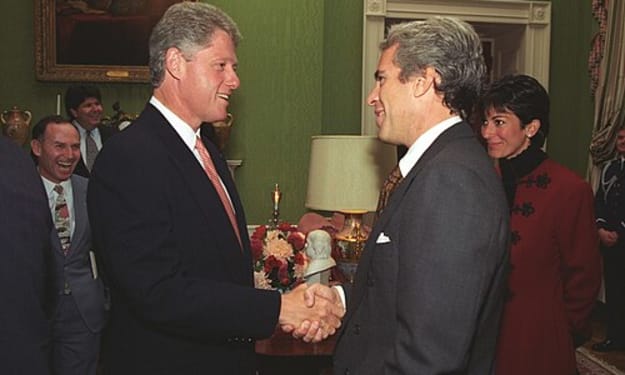
Jeffrey Epstein was once known as a mysterious billionaire with connections to politicians, royalty, and powerful business figures. Behind his wealth and influence, however, was a long pattern of abuse that shocked the world when it came fully to light. His story is not just about crime—it is about how power, money, and secrecy can protect wrongdoing for decades.
By Haroon Pasha3 days ago in Criminal
One of The Most Painful Executions in Modern America. Content Warning.
Wesley Ira Purkey died by lethal injection, but his autopsy report revealed his death was likely extremely painful. Did karma catch up to a man who callously took two lives, or is it just the way life goes?
By Criminal Matters4 days ago in Criminal
When Search Results Become Character Evidence
At 8:30 a.m. on a routine pretrial morning, a prosecutor refreshes a browser. A defense attorney does the same. Before the first witness is sworn, both sides have already reviewed what appears when the defendant’s name is typed into a search bar. That page is not evidence. It is not sworn testimony. Yet it often shapes strategy long before the rules of evidence are argued in open court.
By Dr. Mozelle Martin4 days ago in Criminal
The Brutal Killing of Hollywood Model Iana Kasian
In May 2016 a shocking and deeply disturbing crime unfolded in Los Angeles, leaving the local community and the wider public grappling with the brutal death of 30-year-old model Iana Kasian Kasian lived in a Hollywood-area home with her fiancé, graphic novelist Blake Leibel who would later be identified as her killer.Kasian’s body was discovered inside the couple’s residence in Los Angeles after her mother, who had been unable to reach her, contacted authorities and requested a welfare check. When officers arrived at the property, they encountered a scene that prosecutors would later describe as exceptionally violent. Leibel was present at the home and was taken into custody at the scene.
By Kure Garba4 days ago in Criminal
Epstein Files: Story Explained
This is the infamous private island known as Little Saint James, often called “Epstein Island.” Spread across 72 acres, the island had nearly every luxury imaginable — from lavish resorts and private docks to a library and even a cinema. Some of the world’s most powerful figures frequently visited.
By Imran Ali Shah4 days ago in Criminal
The Wrongful Conviction of Lynn DeJac
Start The case of Lynn DeJac stands as one of the most disturbing examples of wrongful conviction in modern American criminal justice—and also one of the most powerful demonstrations of how DNA profiling can uncover the truth years after a verdict has been sealed.Lynn DeJac was an American woman living in **Buffalo**, where she was raising her teenage daughter, **Crystallynn Girard**. By 1993, Lynn was in a troubled relationship with her boyfriend, **Dennis Donohue**. Their relationship would become central to a case that would eventually expose serious failures in police investigation and courtroom standards.
By Kure Garba5 days ago in Criminal