Latest Stories
Most recently published stories in Criminal.
The last Alibi
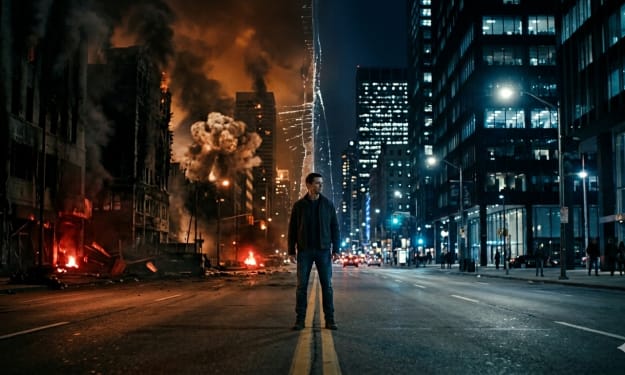
M Mehran In the rain-slick streets of Frankfurt, crime rarely slept — it adapted. Sirens echoed through financial districts, neon lights flickered across wet pavement, and somewhere in the darkness, someone was always watching. But Inspector Daniel Krämer had never seen a case like this. Because this killer never fled. He never hid. And according to every witness… he was never there. The Perfect Crime Scene At 10:42 p.m., emergency calls flooded dispatch from a luxury apartment overlooking the River Main. A prominent investment lawyer, Stefan Krüger, was found dead in his study — a single precise stab wound to the chest. No signs of struggle. No forced entry. No missing valuables. Only a glass of red wine, two chairs facing each other, and soft jazz still playing in the background. Krämer stood in the doorway, scanning the room. “He was expecting someone,” he said. Detective Anika Weiss nodded. “Neighbor saw a guest arrive at 9:58 p.m.” “Did they see him leave?” She shook her head. “No one left.” The Man With the Unbreakable Alibi Security cameras in the lobby clearly captured a visitor entering the building: a well-dressed man in a charcoal coat. Facial recognition identified him immediately. Martin Adler. Business partner. Friend. And now prime suspect. But Adler’s alibi was ironclad. At the estimated time of death, he was seated in a live televised panel discussion across town. The broadcast had no cuts. No delays. Hundreds of viewers watched him speak in real time. Krämer replayed the footage three times. Adler never left the stage. Yet the cameras did not lie. He had entered the building. And he had never exited. A Second Body, Same Ghost Two nights later, another victim surfaced — a private art broker found dead in her office after hours. Same wound. Same precision. Same untouched valuables. Same witness report: a man in a charcoal coat entering. Security footage confirmed it. Martin Adler again. But Adler was speaking at a charity gala across the city, photographed repeatedly by journalists and guests. Two murders. One man. Impossible timing. Krämer rubbed his temples. “Either Adler can teleport… or someone wants us to believe he can.” The Illusion of Presence Forensic teams uncovered a strange detail at both scenes: microscopic adhesive residue near entry doors and elevator panels. Transparent. Industrial grade. And unusual. Meanwhile, a digital analyst noticed something peculiar in the lobby footage. Adler’s reflection did not appear in the glass directory panel as he walked past. Anika froze the frame. “That’s not him,” she whispered. Krämer leaned closer. It looked like Adler. Moved like Adler. But it wasn’t Adler. It was a projection. The Technology Behind the Ghost Investigators uncovered a compact holographic projection system hidden inside a maintenance ceiling panel near the lobby camera. Using synchronized light refraction and motion mapping, the device projected a lifelike moving image — visible from specific angles. To the security camera, the illusion appeared real. To passing witnesses, it was convincing enough. But from the wrong angle, the figure simply vanished. Someone had manufactured a digital ghost. And they wanted police chasing the wrong man. Following the Motive Both victims shared a quiet connection: they were former legal advisors in a corporate fraud case buried years earlier. The case collapsed after key evidence mysteriously disappeared. The primary beneficiary? A development conglomerate that had since become one of Europe’s fastest-growing real estate empires. Krämer studied the archived case file. One junior accountant had attempted to testify before vanishing from public records. Name: Lukas Brenner. Declared missing. Presumed relocated. But financial activity showed he never left the country. The Third Target Surveillance traced Brenner to an abandoned industrial building slated for demolition. Inside, investigators found a workshop filled with projection equipment, acoustic dampening foam, and architectural blueprints. Pinned to a wall were photographs of individuals tied to the old fraud case. Three faces were crossed out. One remained. Helena Vogler — CEO of the conglomerate. Scheduled to attend a press conference the next morning. Krämer grabbed his coat. “He’s finishing what he started.” Truth Revealed in the Light The press hall buzzed with reporters and flashing cameras as Vogler approached the podium. At exactly 11:03 a.m., the lights flickered. A man in a charcoal coat appeared near the rear exit. Gasps rippled through the room. Security rushed toward the figure — only for it to flicker and dissolve into light. Panic erupted. And in the confusion, a real figure emerged beside the stage. Lukas Brenner. Calm. Pale. Determined. “I’m not here to kill,” he said, raising his hands. Security froze. Cameras rolled. “They buried evidence. They buried the truth. They buried lives,” he continued. “I made ghosts so the world would finally look where it refused to see.” Krämer stepped forward. “You committed murder.” Brenner’s eyes darkened. “They destroyed thousands of lives and walked free.” Silence filled the hall. Not the artificial silence of hidden crimes. But the heavy silence of truth exposed. After the Verdict Brenner was arrested without resistance. His projections, illusions, and meticulous planning stunned investigators across Europe. The reopened fraud case uncovered billions in corruption. Executives resigned. Charges were filed. And the public learned how easily reality could be manipulated — not just through technology, but through power. Weeks later, Krämer stood by the river, watching reflections ripple beneath gray skies. Anika joined him. “Do you think he regrets it?” Krämer considered the question. “He made the world see ghosts,” he said. “But what haunted him was real.” The city moved around them — loud, restless, alive. And somewhere within its noise lived truth, deception, justice, and the fragile line between them. Because the most dangerous criminals are not always the ones who hide. Sometimes, they are the ones everyone can see — and no one chooses to believe.
By Muhammad Mehranabout 3 hours ago in Criminal
Anton Zelinskyi on OASK “Ghost-Court” Salaries, Judicial Corruption, and Wartime Reform in Ukraine
Anton Zelinskyi is a Ukrainian legal-reform advocate and Advocacy Manager at the DEJURE Foundation, working on judicial transparency, integrity vetting, and anti-corruption accountability. He is a member of the Public Integrity Council, which assesses judicial candidates and judges undergoing qualification review. In January 2026 he co-authored a Ukrainska Pravda investigation showing that, despite the 2022 liquidation of Kyiv’s District Administrative Court (OASK), the state spent about UAH 157 million over three years on judges’ remuneration while key cases stalled. He tracks how procedural sabotage, disciplinary bottlenecks, and Supreme Court rulings can revive discredited judges—especially during wartime—so reform can endure long-term.
By Scott Douglas Jacobsenabout 14 hours ago in Criminal
Sergeant Isaac Woodard Jr.
His sacrifice must never be forgotten. BY LEAVIE SCOTT The Story of Sergeant Isaac Woodard Jr. February 12, 1946 began like a day of promise. After years of service in the Pacific during World War II, Sergeant Isaac Woodard Jr. stepped off a military bus wearing the uniform he had earned through courage and discipline. He had served his country faithfully from 1942 to 1946, working as a longshoreman in dangerous combat zones, unloading ships under enemy fire, and carrying out the labor that made the Allied war effort possible. He had been awarded medals for good conduct and bravery. He had survived the hazards of war. He had survived a world where the enemy’s bullets and bombs were a daily threat. Now his service was complete, and he was headed home.
By Organic Products about 16 hours ago in Criminal
The Last Train from Lahore
M Mehran On a fog-drenched winter night in Lahore, the last train pulled away from the platform with a tired metallic scream. Vendors packed up their tea stalls. Porters stretched their aching backs. The city exhaled. But in coach C-7, a crime was already in motion. His name was Hamza Iqbal. To his neighbors, he was polite. To his mother, devoted. To the law, invisible. And to the passengers on that train, he was about to become a nightmare. A Criminal Who Studied People, Not Locks Hamza wasn’t the kind of criminal who relied on force. He relied on observation. For months, he had studied human behavior at railway stations—who traveled alone, who carried expensive gadgets, who looked distracted, who trusted too easily. He learned patterns. Businessmen guarded briefcases but ignored backpacks. Students protected phones but forgot wallets in jacket pockets. Families assumed safety in numbers. Hamza didn’t steal randomly. He selected with precision. But what made him different from petty thieves was his long game. He wasn’t after wallets. He was after identities. The Perfect Setup Inside coach C-7, Hamza smiled warmly at an elderly couple struggling with luggage. “Let me help,” he offered. They thanked him. Trust was built in seconds. Across the aisle, a young tech entrepreneur tapped away on his laptop. Hamza noticed the company logo on his bag. Startup founder. Likely successful. Likely careless. As the train rolled into darkness, Hamza moved like a shadow. He didn’t snatch. He didn’t threaten. He cloned. With a small wireless device hidden inside his power bank, he skimmed unsecured data from nearby phones and laptops connected to the train’s public Wi-Fi. Passwords. Banking apps. Email logins. Most passengers never realized their digital doors had been left open. By the time the train reached Karachi, Hamza had stolen more than cash could ever buy. He had stolen access. When Theft Becomes Destruction Within days, bank accounts were drained. Cryptocurrency wallets vanished. Confidential business proposals leaked online. Victims filed complaints, confused and ashamed. No one remembered being robbed. No physical evidence. No witnesses. Cybercrime units suspected phishing scams. Malware. International hacking rings. But Hamza worked alone. He operated from a modest apartment, using public networks and temporary devices. After each operation, he destroyed hardware. Burned SIM cards. Wiped drives. He believed himself untouchable. And for a while, he was. The Investigator Who Refused to Guess Enter Detective Ayesha Khan of the Federal Investigation Agency. Unlike others, Ayesha didn’t begin with technology. She began with geography. She mapped every victim’s travel history. One connection stood out: each had taken the Lahore–Karachi night train within the same three-month window. Coincidence? Criminal investigations rarely reward coincidence. Ayesha rode the train herself. She watched. Listened. Waited. And she noticed something subtle—one passenger who never seemed to sleep, never seemed to panic, never seemed to disconnect from the public Wi-Fi. Hamza. The Psychology of a Criminal Criminal profiling suggests that repeat offenders develop rituals. Habits. Comfort zones. Hamza always chose coach C-7. Always boarded last. Always offered help to elderly passengers to avoid suspicion. It wasn’t greed that motivated him. It was superiority. He believed he was smarter than the system. Smarter than his victims. That belief would become his weakness. The Trap On her third undercover ride, Ayesha deliberately connected a decoy laptop to the train’s Wi-Fi. It contained traceable bait—fake financial credentials monitored by cyber forensic teams. Within minutes, the system detected an intrusion attempt. The signal originated only meters away. Ayesha felt her pulse steady, not race. Criminal apprehension isn’t about adrenaline. It’s about timing. When the train slowed near Hyderabad, officers in plain clothes quietly surrounded Hamza. He tried to remain calm. But calm cracks under certainty. Inside his backpack, they found modified signal boosters, portable data skimmers, and encrypted storage drives containing hundreds of stolen identities. The silent thief of the rails was finally visible. In the Interrogation Room “Why?” Ayesha asked him. Hamza shrugged. “Because they made it easy.” It wasn’t poverty. It wasn’t desperation. It was opportunity. He saw society’s dependence on technology and recognized its vulnerability. Public Wi-Fi networks. Weak passwords. Blind trust. He didn’t see faces. He saw access points. Psychologists later described him as a high-functioning cybercriminal driven by intellectual thrill rather than necessity. But thrill fades. Consequences don’t. The Impact of Modern Crime Hamza’s arrest exposed more than one man’s wrongdoing. It revealed a larger truth about modern criminal activity: Digital theft can be more damaging than physical robbery. Cybercrime leaves victims confused and self-blaming. Public networks are fertile ground for exploitation. News outlets across Pakistan covered the case extensively. Security experts warned travelers to avoid unsecured Wi-Fi. Banks strengthened authentication systems. The Lahore–Karachi train added cybersecurity advisories to ticket confirmations. Crime had evolved. And so had fear. The Sentence In court, Hamza showed little emotion as charges were read: identity theft, cyber fraud, illegal data interception, financial crimes. He was sentenced to fifteen years. Some called it harsh. Others called it justice. For the entrepreneur who lost his startup funding overnight, it was closure. For the elderly couple whose savings disappeared, it was relief. For Detective Ayesha Khan, it was a reminder: Criminals adapt. So must those who chase them. The Moral Behind the Crime Story This criminal story isn’t just about one man on a train. It’s about vulnerability in a connected world. It’s about how trust, convenience, and technology can become weapons in the wrong hands. Hamza didn’t wear a mask. He wore normalcy. And that is what makes modern criminals so dangerous—they blend in. The next time you connect to public Wi-Fi, glance around. The quiet passenger helping with luggage. The man who never seems to sleep. The stranger who smiles too easily. Crime no longer needs a gun. Sometimes, it only needs a signal. And somewhere, on another train slicing through the night, someone may already be watching the bars of your connection rise—waiting for them to fall.
By Muhammad Mehranabout 22 hours ago in Criminal
The Man Who Stole Silence
M Mehran The city of Karachi never truly sleeps. Even at 3 a.m., when the street vendors have packed their carts and the traffic thins into an occasional growl, there is a pulse beneath the silence. It’s the hum of secrets. And in that hum lived a criminal no one could catch. His name was Farhan Qureshi, though the newspapers would later call him The Whisper Thief. Farhan didn’t carry a gun. He didn’t break locks. He didn’t leave fingerprints. What he stole was far more valuable than gold—he stole silence. For two years, the wealthiest neighborhoods of Karachi reported strange incidents. No jewelry missing. No cash gone. Yet every victim insisted something had been taken. A private conversation. A hidden confession. A secret buried in the dark. The police were baffled. Inspector Danish Malik, a decorated officer known for dismantling organized crime rings, was assigned the case. At first, he dismissed it as paranoia. “People lose money and invent drama,” he told his team. But then he listened to the recordings. Each victim had received a single audio file. In it, their most private moment—an argument with a spouse, a confession of bribery, a hidden affair—played back in chilling clarity. Attached was a simple message: “Pay for your silence.” This wasn’t theft. It was psychological warfare. It was criminal extortion crafted with surgical precision. And Farhan was brilliant. A Criminal Mind Built on Observation Farhan had once studied sound engineering at a local university. He was gifted—top of his class. Professors predicted he would work in film or music production. But talent doesn’t always walk the straight path. After his father’s sudden death, debts swallowed his family. Scholarships vanished. Dreams collapsed. Bitterness replaced ambition. Farhan discovered something during his final semester: people reveal everything when they believe no one is listening. From rooftops, parked cars, and disguised maintenance visits, he planted tiny listening devices in homes of influential businessmen, politicians, and social elites. He never targeted the poor. He chose people with reputations to protect. He didn’t rush. He collected months of conversations before making a move. He built profiles. Studied behavior patterns. Understood their fears. Unlike typical criminals driven by impulse or greed, Farhan thrived on control. And control is addictive. The First Crack in the Perfect Crime Inspector Danish noticed something others ignored. None of the devices were ever found. “Not one?” he asked his forensic team. “Not one,” they confirmed. That meant the criminal wasn’t breaking in repeatedly. He was installing something permanent—or something invisible. Danish reviewed architectural plans of the targeted houses. He discovered a pattern: all the homes had recently installed high-end smart sound systems from the same supplier. The company? EchoWave Solutions. Danish paid them a visit. The office was small, modern, and surprisingly minimal. Only three employees were listed. One of them—Farhan Qureshi. Clean record. No prior arrests. Soft-spoken. Intelligent eyes. When Danish shook his hand, he felt it—the calm confidence of a man who believed he was untouchable. Psychological Cat and Mouse Danish didn’t arrest him immediately. There was no direct evidence. Instead, he started surveillance. Farhan, however, sensed it. Criminal psychology often reveals a dangerous truth: the smartest criminals are hyper-aware. Farhan noticed the unmarked car parked across his apartment. He noticed the unfamiliar number calling and hanging up. So he escalated. Instead of extorting quietly, he released a politician’s secret recording publicly. It exploded across social media. News channels debated ethics, privacy, and corruption. The city panicked. Was he a villain—or a vigilante exposing hypocrisy? That moral confusion protected him. Some citizens secretly admired him. “He only targets the corrupt,” online forums argued. But Danish knew better. A criminal who justifies his actions is still a criminal. The Mistake Every Criminal Makes Arrogance. Farhan believed he understood fear better than anyone. But he underestimated something—human unpredictability. One of his victims refused to pay. Instead, she invited him to release everything. Her name was Samina Rahman, a school principal with nothing to hide. Farhan sent the audio. It was harmless—her crying over financial struggles, her doubts about leadership. Instead of shame, she received sympathy. The public response shifted. If he could invade her privacy, he could invade anyone’s. Now fear replaced fascination. Danish used that moment. He publicly announced a digital trace had been found—bluffing. He described a fictional encryption flaw in the criminal’s system. Farhan panicked. Not outwardly—but digitally. He logged into his secure server from a backup connection he believed was untraceable. It wasn’t. Cybercrime units tracked the IP to a warehouse near the port. Inside, they found walls lined with monitors. Audio feeds labeled with names. Dates. Addresses. And Farhan. He didn’t run. He simply removed his headphones and said, “You’re late.” Inside the Criminal’s Mind During interrogation, Farhan remained composed. “Why?” Danish asked. Farhan’s answer was chilling. “Because silence is power. The wealthy use it to hide corruption. I just borrowed it.” “But you sold it,” Danish replied. Farhan smiled faintly. “Everyone sells something.” Psychologists later analyzed him as highly intelligent, emotionally detached, and morally rationalizing—traits common in non-violent white-collar criminals. Yet what made him truly dangerous wasn’t cruelty. It was patience. The Aftermath The case became one of Karachi’s most discussed criminal investigations. It reshaped conversations about digital privacy, surveillance, and smart home vulnerabilities. EchoWave Solutions shut down. New cybersecurity laws were proposed. And Farhan Qureshi was sentenced to twelve years in prison for extortion, illegal surveillance, and cybercrime. But even behind bars, rumors circulate. Some say he’s writing a book. Some say he’s helping authorities understand criminal behavior. Others whisper that he left hidden recordings no one has found. Because the scariest criminals don’t always steal money. They steal peace of mind.
By Muhammad Mehranabout 22 hours ago in Criminal
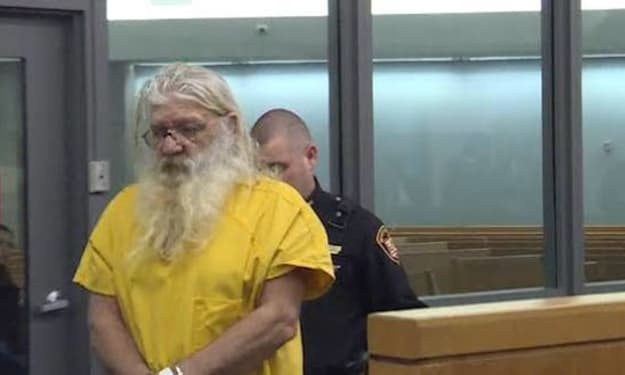
Father accused of killing daughter after dispute inside family home. AI-Generated.
In the early hours of Monday January 27 2025 a quiet residential area in Cincinnati was thrust into tragedy when a family dispute turned deadly leaving a young woman dead and a community searching for answers.According to authorities 64-year-old Franklin Thompson is accused of fatally shooting his daughter Heather Thompson during a heated argument inside their family home. Heather who was 24 years old, reportedly became involved in a confrontation with her father over a household rule prohibiting smoking indoors.
By Kure Garbaa day ago in Criminal
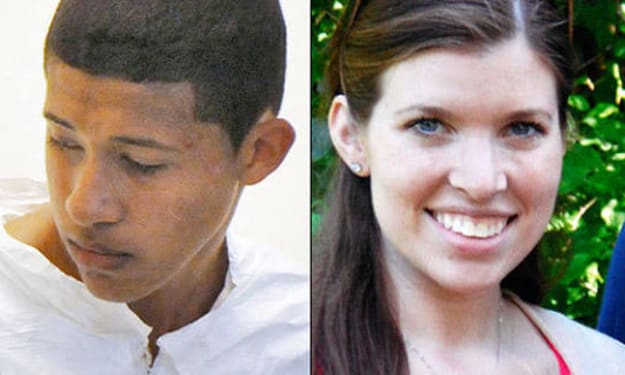
The Crime That Shook Danvers, Massachusetts
The killing of Colleen Ritzer a 24-year-old math teacher at Danvers High School in Danvers Massachusetts remains one of the most tragic and disturbing crimes to affect a school community in the United States in recent years.Colleen Ritzer was widely remembered by colleagues and students as a dedicated and compassionate educator. Early in her teaching career she was known for bringing enthusiasm and patience into the classroom and for taking a genuine interest in the academic and personal wellbeing of her students. Friends and coworkers often described her as someone who believed every student deserved attention, encouragement, and the opportunity to succeed.
By Kure Garbaa day ago in Criminal
Black History Unfiltered
They Believed the Lie—So They Wrote It Into Law by Soul on Fire LEAVIE SCOTT The rumor moved like wildfire because it was designed to. It had the pacing of a ghost story and the precision of a press release. Whispers turned to headlines, headlines turned to hearings, and before long, the lie had grown legs long enough to step into the federal register.
By Organic Products a day ago in Criminal
The Digital Gallows
"The clock has struck three, the coffee is cold, and the shadows are beginning to speak. Welcome back to the desk of The Night Writer. Tonight, we’re scrolling through a ghost story written in high-society ledger ink. But be careful—what you find might not be the truth, but the trap."
By The Night Writer 🌙 2 days ago in Criminal
When an Online Affair Turned Deadly
The tragic case involving Sharee Miller her husband Bruce Miller and former investigator Jerry Cassaday is a disturbing story of manipulation obsession and a murder-for-hire plot that ultimately destroyed several lives.Sharee Miller met Bruce Miller while working at his auto salvage yard in Flint, Michigan.Their relationship moved quickly, and the two soon married. On the surface, their life appeared stable, but behind closed doors the marriage was marked by constant conflict and emotional turmoil. Friends and investigators later described the relationship as deeply troubled, with repeated arguments and growing resentment on both sides.
By Kure Garba2 days ago in Criminal