
Sergeant Isaac Woodard Jr.
THE NIGHT A SOLDIER CAME HOME AND AMERICA LOOKED AWAY

BY LEAVIE SCOTT
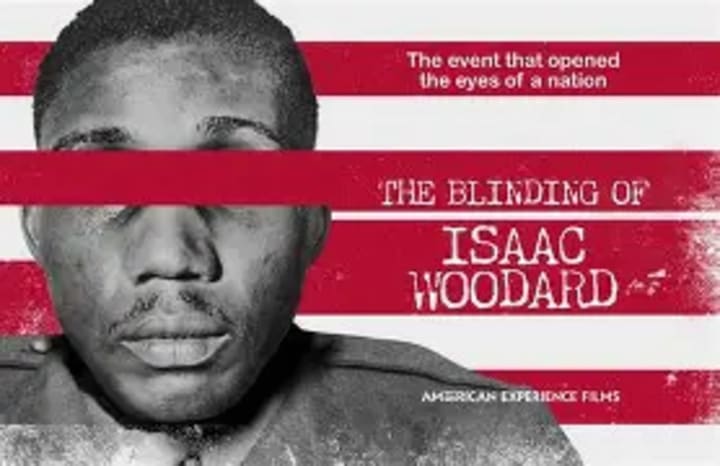
The Story of Sergeant Isaac Woodard Jr.
February 12, 1946 began like a day of promise. After years of service in the Pacific during World War II, Sergeant Isaac Woodard Jr. stepped off a military bus wearing the uniform he had earned through courage and discipline. He had served his country faithfully from 1942 to 1946, working as a longshoreman in dangerous combat zones, unloading ships under enemy fire, and carrying out the labor that made the Allied war effort possible. He had been awarded medals for good conduct and bravery. He had survived the hazards of war. He had survived a world where the enemy’s bullets and bombs were a daily threat. Now his service was complete, and he was headed home.
But home, for a Black soldier in the Jim Crow South, was not the safe harbor it should have been.
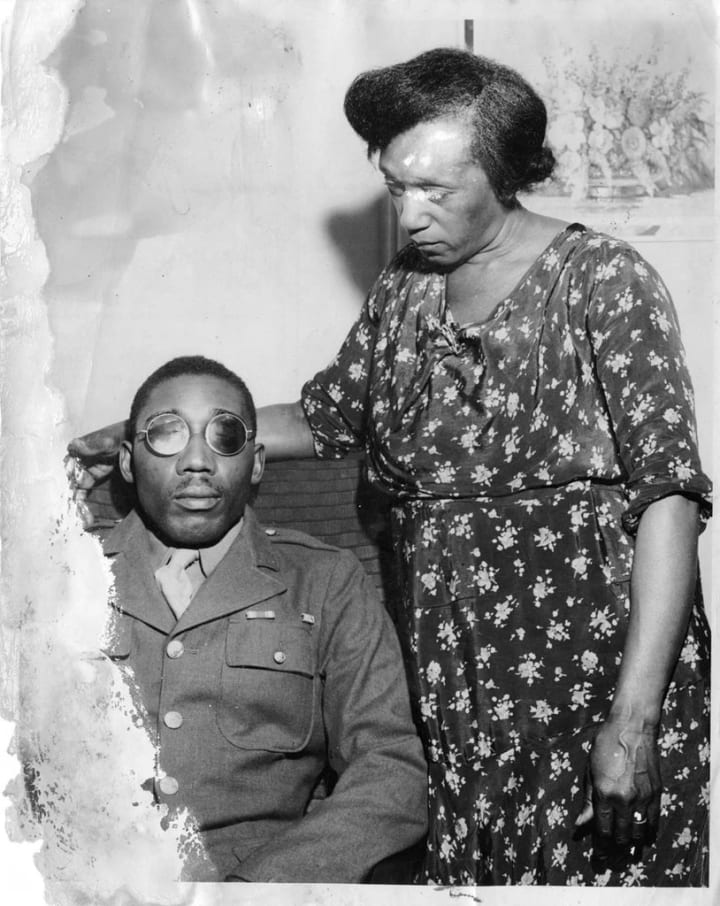
Isaac Woodard was on a Greyhound bus traveling from Georgia toward his home state of South Carolina. He was only twenty six years old, proud, disciplined, and ready to return to his wife and begin the next chapter of his life. Just hours earlier he had been honorably discharged from the United States Army. Like thousands of Black soldiers returning from war, he wore the uniform of a country he had defended but that still refused to defend him.
As the bus pulled into a rest stop outside Augusta, Georgia, Woodard approached the driver with a simple request. He asked if there was time to use the restroom. The driver, hostile and irritated, refused at first and then relented only after a short argument. Woodard returned to his seat without incident, but the driver was already seething. To him, a Black man in uniform who spoke plainly and confidently was not a returning hero. He was a threat.
When the bus reached the next stop in Batesburg, South Carolina, the driver took action. He stepped off the bus and summoned the police, claiming that Woodard had been disrespectful. Within minutes, local officers arrived. They boarded the bus and ordered Woodard outside. He complied, still in his Army uniform, still unaware that his life was about to be changed forever.
Outside, in the darkness behind the station, two white police officers began beating him. They did not ask him questions. They did not investigate the driver’s complaint. They attacked with fists and nightsticks, striking his head, face, and body. Woodard tried to protect himself, insisting he had done nothing wrong. When he managed to grab a nightstick in an attempt to defend himself, another officer pointed a gun at him and ordered him to drop it. He obeyed. The beating only intensified.
Then came the moment that would stain the conscience of the nation. One of the officers rammed the end of his nightstick directly into Woodard’s eyes. The force was so brutal, so deliberate, that it crushed the delicate tissue inside. One blow. Then another. Then darkness.
Sergeant Isaac Woodard collapsed, permanently blinded.
This was no accident. It was an act of pure racial hatred committed against a soldier still wearing the uniform of the United States Army. The officer had not only beaten him. He had taken from him the most basic human sense. In a single moment of rage and cruelty, he had destroyed the eyesight of a man who had defended American freedom on the other side of the world.
Woodard woke up the next morning in a jail cell. He was disoriented, bloodied, terrified, and completely blind. The uniform that once symbolized honor and sacrifice was now stained with his own blood. The officers who had brutalized him had charged him with being drunk and disorderly. When he was brought before a local judge, he begged for medical help. He received none. He was fined fifty dollars but left without treatment, still unable to see the light of day.
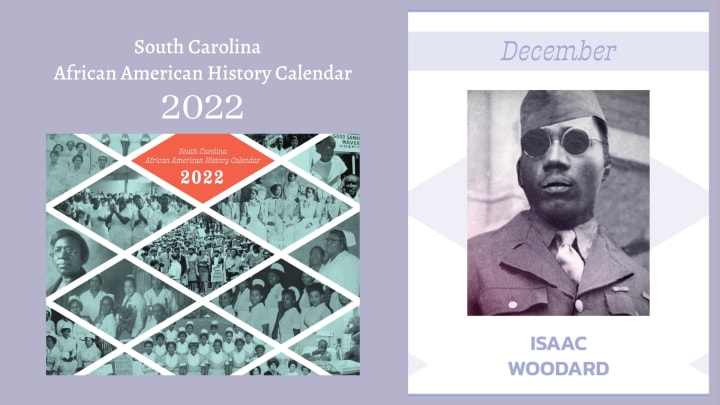
When he eventually reached a hospital under the care of the Veterans Administration, the diagnosis was devastating. Both eyes were irreparably damaged. He would never again see the world he had fought to protect.
Ordinarily, such an attack on a decorated soldier would spark a swift and furious demand for accountability. But this was 1946. This was the Jim Crow South. The officer who blinded him was brought to trial, but an all white jury acquitted him in less than half an hour. Not a single member of the jury believed Woodard. Not a single one believed that a white police officer could be guilty of such an atrocity. The system that should have protected him instead stood firmly against him.
But outside that courtroom, America was beginning to pay attention.
Black newspapers covered the story, outraged by yet another example of state sanctioned violence against returning Black veterans. The NAACP launched a widespread campaign, highlighting the hypocrisy of a nation that sent Black men overseas to fight tyranny only to brutalize them when they came home. Orson Welles, one of the most recognized voices on radio at the time, dedicated multiple broadcasts to Woodard’s story. He described the beating in unflinching detail, condemning the brutality not just as an isolated act, but as part of a pattern of racist violence that the country could no longer tolerate.
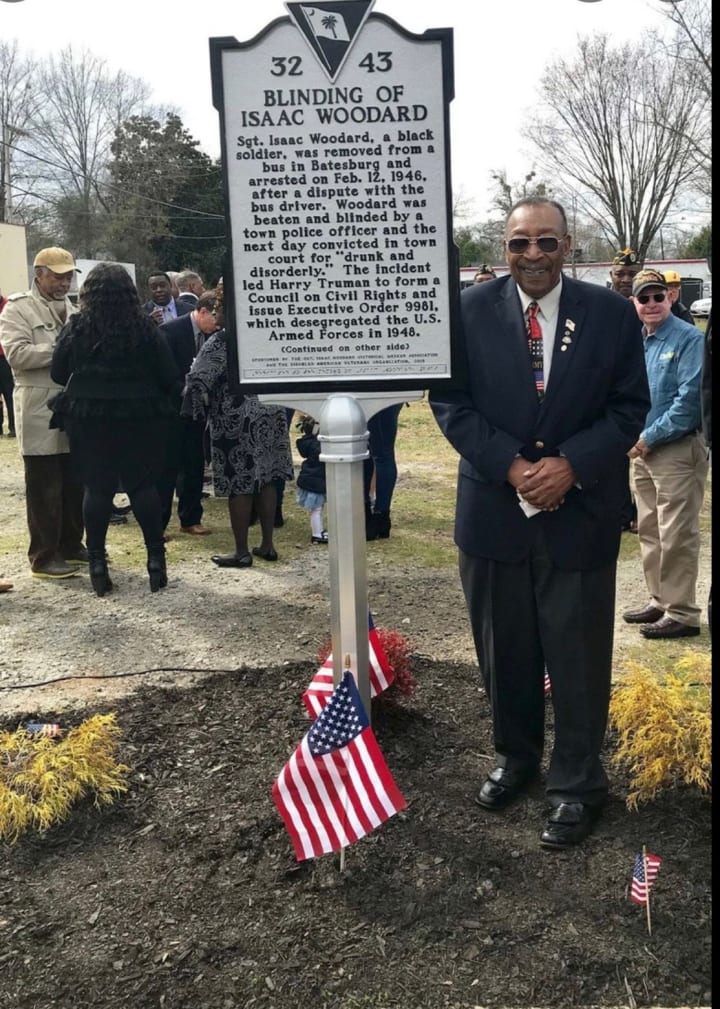
Public pressure mounted. Americans across the nation, particularly in the North, were shocked that a soldier could be attacked so viciously simply for asking to use a restroom. The outrage reached the desk of President Harry S Truman. The president was deeply moved and disturbed by the account. The fact that Woodard had been blinded while still in uniform infuriated him. Truman, who had grown increasingly troubled by reports of racial violence, ordered a federal investigation. For the first time in American history, a sitting president publicly confronted the issue of racially motivated brutality in the South.
Woodard’s suffering became the moral catalyst for Truman’s landmark civil rights actions. In 1947, the president delivered an historic speech declaring that civil rights were a moral responsibility of the federal government. One year later, on July 26, 1948, Truman signed the executive order desegregating the United States Armed Forces. This single action reshaped the future of the American military and became an essential stepping stone toward the broader Civil Rights Movement.
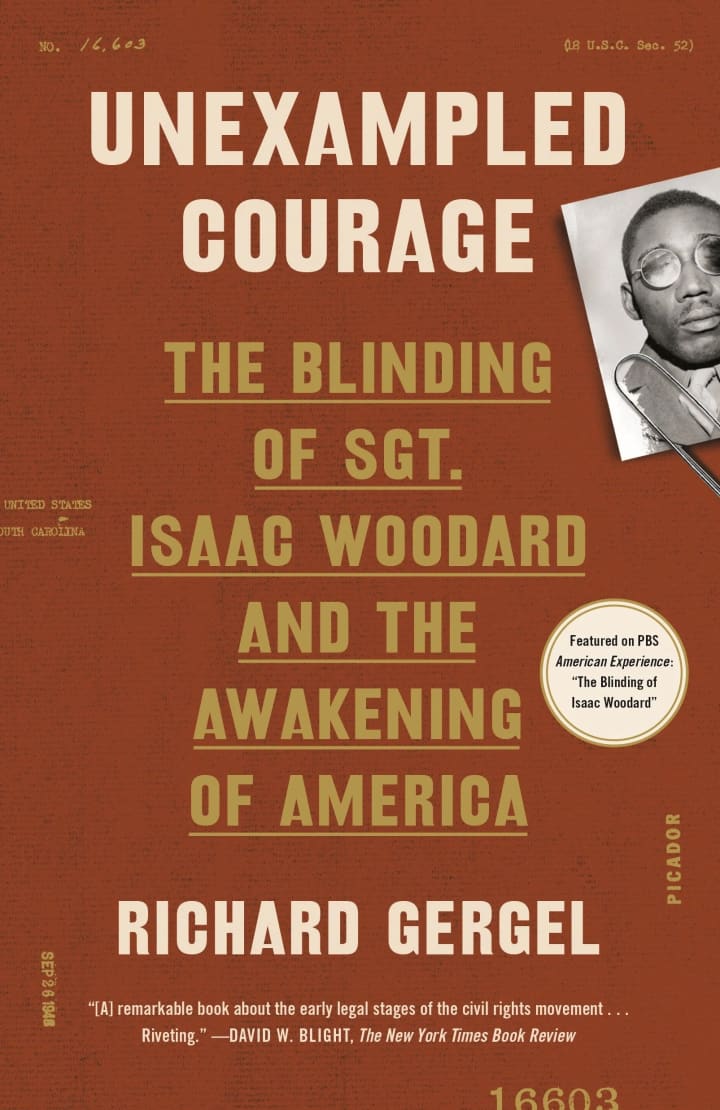
Isaac Woodard never again lived a life of sight. He never again saw the faces of his loved ones, the sunrise, or the uniform he once wore with honor. But even in darkness, his story illuminated a path for millions who came after him.
His experience exposed a contradiction that America could no longer ignore. The soldiers who fought tyranny abroad were expected to accept tyranny at home. The veterans who defended democracy were denied it in their own towns. The men who risked their lives for freedom were denied the very essence of it upon returning.
Woodard’s attack helped ignite a national reckoning. It awakened the conscience of a president. It moved judges, activists, and organizers into action. It signaled the beginning of a new era in which the federal government would no longer look away from racial violence and injustice.
And though he lived the rest of his life in darkness, Isaac Woodard became a beacon.
He revealed the truth America needed to confront.
He exposed the brutality America needed to acknowledge.
He helped spark a movement America desperately needed to begin.
Sergeant Isaac Woodard Jr. fought for his country.
And the moment he came home, his own country stole his sight.
Yet through that cruelty, a new vision for justice in America began to take shape.
His sacrifice must never be forgotten.
If you want this turned into a formatted magazine article, a speech, or a dramatic narration script, I can create that too.

About the Creator
Organic Products
I was born and raised in Chicago but lived all over the Midwest. I am health, safety, and Environmental personnel at the shipyard. PLEASE SUBSCRIBE to my vocal and check out my store
Keep reading
More stories from Organic Products and writers in Criminal and other communities.
Black History Unfiltered
They Believed the Lie—So They Wrote It Into Law by Soul on Fire LEAVIE SCOTT The rumor moved like wildfire because it was designed to. It had the pacing of a ghost story and the precision of a press release. Whispers turned to headlines, headlines turned to hearings, and before long, the lie had grown legs long enough to step into the federal register.
By Organic Products a day ago in Criminal
When an Online Affair Turned Deadly
The tragic case involving Sharee Miller her husband Bruce Miller and former investigator Jerry Cassaday is a disturbing story of manipulation obsession and a murder-for-hire plot that ultimately destroyed several lives.Sharee Miller met Bruce Miller while working at his auto salvage yard in Flint, Michigan.Their relationship moved quickly, and the two soon married. On the surface, their life appeared stable, but behind closed doors the marriage was marked by constant conflict and emotional turmoil. Friends and investigators later described the relationship as deeply troubled, with repeated arguments and growing resentment on both sides.
By Kure Garba2 days ago in Criminal
He Confessed to Murder in My DMs: The Dark Side of Going Viral
When your most-liked story becomes someone else's confession booth The message came in at 2:13 a.m. I saw the notification glow on my nightstand, that soft blue light that usually means spam, or a heart emoji, or someone asking, “Did this really happen?”
By abualyaanart3 days ago in Criminal




Comments (1)
🚀💙❤🌹 WOW 🌹 What a story💛💗🚀 🚀 🚀 🚀💙💗🌹 LOVE IT🌹💛💗🚀 🚀 Thank you