
Floating Power and Fragile Diplomacy
How U.S. carrier strike groups, drones, and global rivals are reshaping modern conflict


Floating Power and Fragile Diplomacy
In recent weeks, renewed attention on U.S. naval movements, particularly carrier strike groups operating across strategic waterways, has highlighted a deeper shift in how global power is projected. From the South China Sea to the Indian Ocean, the presence of American naval assets is no longer just a show of strength—it is a message shaped by technology, deterrence, and fragile diplomacy.
At the center of this discussion stands the U.S. aircraft carrier strike group, often described as a floating military base. Nuclear-powered aircraft carriers like the USS Abraham Lincoln represent the most complete combat package in the modern world. They combine air power, missile defense, surveillance, command-and-control systems, and escort ships into a single mobile force capable of operating independently for months.
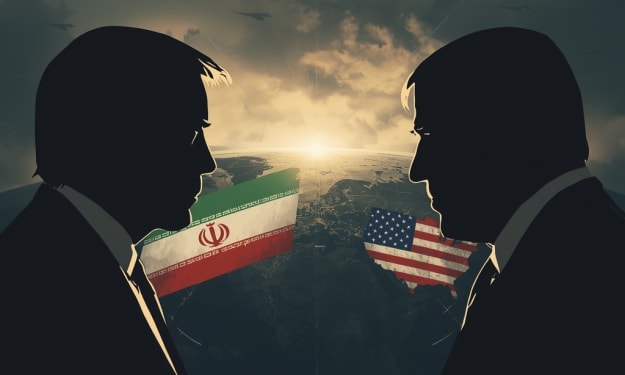
These deployments are not random. They are calculated responses to rising tensions involving Iran, China, and regional proxy forces. U.S. Central Command closely monitors these theaters, where even small miscalculations can escalate into wider conflict. The goal, officially, is deterrence—preventing war by demonstrating overwhelming capability.
Yet deterrence today is far more complex than in previous decades. Modern warfare is no longer defined solely by fighter jets and missiles. Drones, swarm attacks, cyber operations, and electronic warfare now challenge even the most advanced defense systems. Saturation attacks—where large numbers of low-cost drones or missiles are launched simultaneously—can test the upper limits of air defense networks.
This reality has forced militaries to rethink assumptions. Even powerful naval groups face constraints. Every defense system has a limit. Command-and-control networks, radar coverage, and interceptor capacity can be stretched under coordinated pressure. The question is no longer whether a carrier can be hit, but how conflicts are managed before they reach that point.
Iran’s growing drone capabilities and its use of regional proxies have added to these concerns. Rather than direct confrontation, proxy-held areas allow deniability while still applying pressure. This strategy complicates diplomatic responses and raises the risk of misinterpretation. A single drone incident can trigger retaliation, even if no official declaration of war exists.
China’s role adds another layer. While not directly involved in Middle Eastern confrontations, Beijing carefully studies U.S. naval operations. The South China Sea remains a parallel arena where American and Chinese forces operate in close proximity. Advances in Chinese drone technology, electronic warfare tools, and anti-access strategies signal that future conflicts may focus on disabling systems rather than destroying platforms outright.
Historical examples underline these risks. Past conflicts have shown how infrastructure attacks—using tools like carbon-based weapons or grid-disruption technologies—can cripple command systems without large-scale bombing. Modern militaries understand that shutting down communication and power networks can be as effective as kinetic strikes.
Political leadership further shapes these dynamics. Statements made during the Donald Trump era emphasized unpredictability, mixing diplomatic outreach with forceful rhetoric. Public claims that “nothing would happen” were often paired with visible military positioning. This dual approach aimed to pressure opponents while avoiding open war, but it also introduced uncertainty for allies and adversaries alike.
Diplomacy, when it works, remains quieter than military movement. Negotiations happen behind closed doors, often overshadowed by the visible presence of warships and jets. When diplomacy stalls, silence itself becomes strategic. The absence of communication can be read as warning, hesitation, or preparation.
What emerges from this environment is a world where power is constantly displayed but rarely used directly. Aircraft carriers sail not just to fight wars, but to prevent them. Drones fly not only to strike, but to test reactions. Every movement is watched, analyzed, and recorded.
The danger lies in coordination failures. As systems grow more complex, the margin for error shrinks. A misidentified drone, a disrupted control signal, or a misread political statement could push events beyond control. In such a world, restraint becomes as important as strength.
Ultimately, the modern battlefield is global, layered, and interconnected. Floating military power remains dominant, but it is no longer absolute. The future of security will depend not only on who has the strongest forces, but on who understands the limits of force—and the value of diplomacy—before those limits are tested.
About the Creator
Wings of Time
I'm Wings of Time—a storyteller from Swat, Pakistan. I write immersive, researched tales of war, aviation, and history that bring the past roaring back to life
Keep reading
More stories from Wings of Time and writers in Criminal and other communities.
Why the World Is Watching Iran, Israel, and the United States So Closely
Why the World Is Watching Iran, Israel, and the United States So Closely In recent days, many people around the world have felt uneasy after seeing news headlines about Iran, Israel, and the United States. Words like “missiles,” “retaliation,” and “support for action” have appeared repeatedly in political statements. While no official war has been declared, the situation has reached a level where global attention is fully focused on what might happen next.
By Wings of Time 2 months ago in Criminal
Ken Childs and the Shadow Network Behind Celebrity Surveillance
Hollywood is no stranger to intrigue. Behind the red carpets, blockbuster premieres, and glamorous headlines lies a parallel world where privacy is fragile and information can be extremely valuable. Over the years, celebrities have faced stalkers, hackers, and fraud schemes designed to exploit their wealth and visibility. Recently, reports circulating online have drawn attention to a controversial narrative involving private investigator Ken Childs and allegations that place him near the center of a disturbing story about celebrity surveillance.
By Shane Smith5 days ago in Criminal



Comments
There are no comments for this story
Be the first to respond and start the conversation.