Right-wing populism's rise in Europe: a sign of trouble or the new normal?
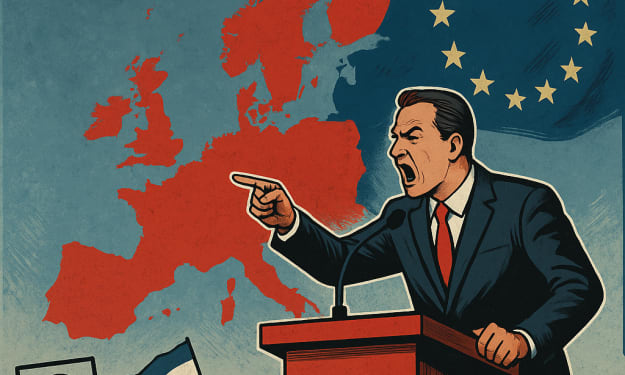
By emphasizing national identity, border control, and opposition to multiculturalism, leaders like Viktor Orbán in Hungary and Marine Le Pen in France have successfully built political capital. In Italy, Giorgia Meloni’s Fratelli d’Italia (Brothers of Italy) has surged in popularity by promoting “God, family, and homeland” — a powerful appeal to traditional values amid rapid societal change.
The messaging is simple but effective: reclaim sovereignty, protect borders, and preserve national identity. It resonates with citizens who believe that international institutions like the European Union are undermining their way of life or that their culture is in danger. The EU in a Populist World
One of the most pressing concerns raised by the spread of right-wing populism is its effect on European integration. The European Union was founded on principles of shared governance, collective responsibility, and liberal democracy. Populist leaders, however, often frame the EU as a bureaucratic machine that erodes national autonomy.
Brexit was the most visible manifestation of this sentiment, with the United Kingdom choosing to leave the EU in 2016 after a heated campaign driven largely by nationalist and anti-immigration rhetoric. Although no other country has followed suit, the threat of “Euroscepticism” is alive and well.
Countries like Hungary and Poland have already clashed with Brussels over rule-of-law issues, media freedom, and judicial independence. As more populist parties gain seats in national parliaments and the European Parliament, the unity and liberal foundation of the EU could be tested like never before.
Populism and the War in Ukraine
The war in Ukraine has created a new political fault line in Europe. Some populist leaders have expressed skepticism regarding the cost of the war, despite the fact that the majority of EU states have supported Ukraine with military aid and sanctions against Russia. Hungary’s Orbán, for instance, has maintained closer ties with Russia than most EU leaders. This ambivalence reflects a broader tension in populist politics: the desire to appear strong and sovereign, while avoiding foreign entanglements that may not directly benefit the nation-state.
Interestingly, the war has also reignited debates over energy dependence, national defense, and European unity — areas where populists often demand a more “realistic” or isolationist approach. Whether this stance gains more traction will depend on how long the war drags on and how deeply it affects European economies.
Media Manipulation and Democratic Backsliding
One of the dangers of the populist surge is the erosion of democratic institutions. In Hungary, Orbán’s government has been accused of consolidating control over the media, judiciary, and educational system. Similar trends are emerging in other populist-governed states, where dissenting voices are silenced, and press freedom is under threat.
Populist leaders often present themselves as defenders of the “will of the people,” using this rhetoric to justify actions that weaken democratic checks and balances. Over time, these actions can lead to what scholars call “soft authoritarianism” — a system that maintains the facade of democracy while eroding its core.
Even though elections still take place in this setting, they are neither free nor fair. Civil society is weakened, political opposition is harassed, and citizens are exposed to relentless state propaganda. The line between democracy and autocracy becomes dangerously thin.
Youth, Climate, and the Counter-Movement
While the rise of right-wing populism is undeniable, it is not without resistance. Across Europe, young people are increasingly mobilizing in support of progressive causes, including climate justice, gender equality, and refugee rights.
Greta Thunberg's Fridays for Future and other movements have brought attention to the generational divide on important political issues. Urban populations, students, and minority communities are pushing back against the nationalist narrative, often through grassroots organizing and digital activism.
Moreover, liberal parties and centrist coalitions are learning to adapt. Some have adopted more pragmatic messaging, while others are forming broader alliances to counter the populist wave. Whether this strategy will succeed in upcoming elections remains to be seen, but it signals that Europe’s democratic spirit is far from defeated.
Conclusion: A Defining Moment for Europe
Europe stands at a political crossroads. The rise of right-wing populism is not just a reaction to economic or cultural anxiety — it is a reshaping of political norms and national priorities. If left unchecked, it could lead to a fragmented continent, where democracy is weakened, human rights are compromised, and the dream of a united Europe fades into the past.
But history is not destiny. The populist surge is a call to action — for politicians, civil society, and citizens alike — to reimagine a Europe that is both democratic and inclusive, proud yet open, secure yet compassionate.
In the end, the battle for Europe’s future is not just about politics; it’s about values. And how we respond today will determine what kind of Europe we live in tomorrow.