
Aerial Confrontation: The 2025 India-Pakistan Air Conflict
A Detailed Breakdown of the Modern-Day Air War Between Two Nuclear Neighbors

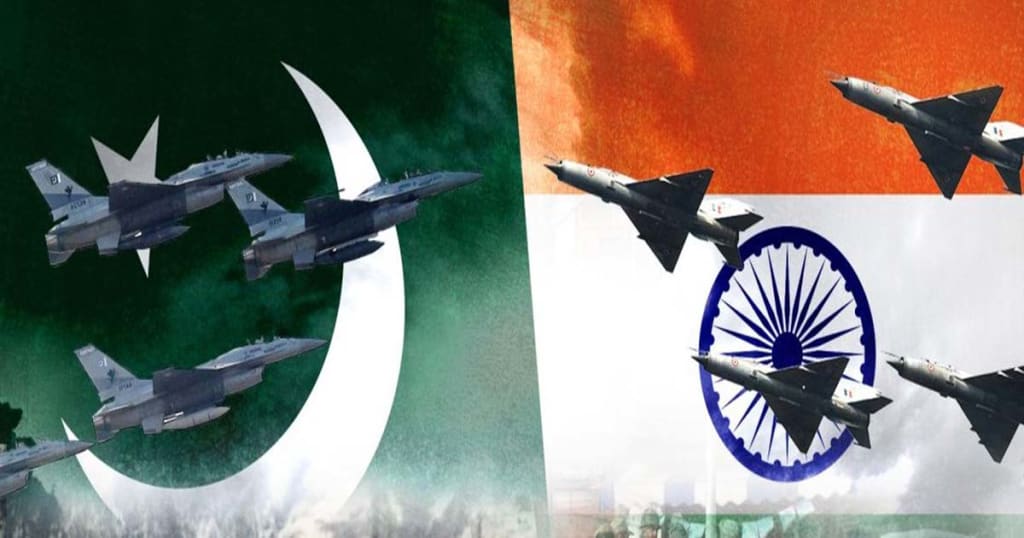
In early May 2025, a new wave of military tensions erupted between India and Pakistan, two nuclear-armed neighbors with a long history of conflict. This time, the battlefield was not only limited to the ground or diplomatic tables—it unfolded in the skies, on digital fronts, and in high-stakes international negotiations. This story outlines the chain of events, key attacks, technological assets involved, and the global implications of this short but intense confrontation.
The Spark of the Fire: India’s Operation Sindoor
On May 7, 2025, the Indian Air Force (IAF) launched a surprise aerial campaign dubbed "Operation Sindoor." The operation was intended to strike alleged terrorist launchpads and command centers deep within Pakistan and Pakistan-administered Kashmir. Flying deep into Pakistani territory under heavy electronic warfare support, India deployed its Rafale jets carrying SCALP cruise missiles and AASM precision-guided bombs. Targets included key infrastructure points in Bahawalpur, Muridke, and Muzaffarabad, which were suspected of harboring militant groups such as Jaish-e-Mohammed and Lashkar-e-Taiba.
Immediate Response: Pakistani Air Defense Activates
Within minutes of the initial strikes, Pakistan's Air Defense Network, comprising LY-80 missile systems and Chinese-built JY-27 radar, came online. The Pakistan Air Force (PAF) scrambled multiple squadrons of JF-17 Block III and J-10C fighter jets, engaging the Indian aircraft near the Line of Control (LoC). Pakistan claimed to have successfully shot down three Indian Rafales, one Su-30MKI, and a MiG-29. Video footage of one downed aircraft crashing in Azad Kashmir surfaced online, although India denied any losses.
India’s Counter Claim and Electronic Warfare
India dismissed Pakistan's claims and instead reported that its electronic warfare units had jammed Pakistan’s GPS and radar systems during the strike. According to Indian officials, the operation was a “100% success,” and all IAF pilots returned safely. However, satellite images and third-party verification hinted at destruction on both sides, suggesting that the truth was more complex than both governments admitted.
Pakistan Retaliates: Operation Bunyān Mārsūs
On May 10, Pakistan launched “Operation Bunyān Mārsūs,” a comprehensive counter-offensive. This included drone swarms, cruise missile attacks, and manned aircraft incursions. Fatah-II rockets targeted Indian airbases in Pathankot, Adampur, and Udhampur. Drones believed to be Chinese Wing Loong IIs, armed with air-to-ground missiles, attacked key supply lines and ammunition depots. JF-17 Thunders provided cover fire during these operations. One Indian airbase near Bhuj suffered a direct hit, with four aircraft reportedly damaged and one C-130 transport plane destroyed.
The Role of Air Defense Systems
India’s S-400 Triumf air defense system, imported from Russia, intercepted several Pakistani missiles and drones. The system, however, was overwhelmed at one point when 45 drones and 12 missiles were launched in a coordinated attack from Pakistan's western sector. India retaliated by launching BrahMos missiles, striking Pakistani command centers in Lahore and Sialkot. Pakistan claimed civilian casualties, further escalating the crisis.
Cyber Front: The Invisible War
In a bold move, Pakistan launched cyberattacks targeting India’s military communication infrastructure. Key satellite uplinks and encrypted command networks experienced brief blackouts. Meanwhile, Indian cyber units responded by shutting down sections of Pakistan’s national internet backbone, temporarily disabling critical banking and transportation networks in Islamabad and Karachi.
India Deploys Stealth UAVs and Rafales with Meteor Missiles
In response to the growing threat, India deployed its indigenously built Ghatak stealth UAVs for reconnaissance and surgical strikes. Rafale jets equipped with Meteor air-to-air missiles were seen patrolling near Punjab and Rajasthan borders. These aircraft were engaged in high-speed dogfights with Pakistani J-10Cs over the Himalayan region. One JF-17 was reportedly shot down, and its debris landed in occupied Kashmir. Pakistan’s Ministry of Defense disputed the loss but did not provide proof.
China and the USA Step In
As the world watched nervously, China and the United States urged both nations to de-escalate. China, a strategic partner of Pakistan, warned India to refrain from crossing certain “red lines,” while the USA sent envoys to both New Delhi and Islamabad. Surprisingly, it was former U.S. President Donald Trump who played a behind-the-scenes role in initiating a ceasefire dialogue via the United Nations Security Council.
The Ceasefire and Ongoing Tensions
After seven days of intense aerial engagements, cyber warfare, and media propaganda, a ceasefire agreement was signed in Geneva. However, the situation remains fragile. Both sides have stationed more jets and drones near the
About the Creator
Abutalha
Passionate writer sharing real stories with heart. I write to inspire, heal, and connect. Follow my journey where every word carries meaning and truth.
Fair Exchange, No Robberies
Dark Memoirs - Index There are at least two kinds of people in the world: those who write this half-arsed kind of intro to a story that looks to separate the rare and the norm, and those who realise it's an overused framing device and don't.
By Paul Stewart12 days ago in Chapters
Not an Exception
Dark Memoirs - Index "For writers who knowingly lie, for those who substitute unbelievable human behavior for the way people really act, I have nothing but contempt. Bad writing is more than a matter of shit syntax and faulty observation; bad writing usually arises from a stubborn refusal to tell stories about what people actually do—to face the fact, let us say, that murderers sometimes help old ladies cross the street.
By Paul Stewart3 days ago in Chapters


Comments
There are no comments for this story
Be the first to respond and start the conversation.