Historical Fiction
"The Kingdom Without a Name". AI-Generated.
The Kingdom Without a Name: Lost to Time, Bound by Fate Chapter One: The Marked One The mist came every morning in Brinmere. It rolled over the hills like a living memory, ancient and restless. Villagers swore it was harmless—just weather—but they never strayed into it. Not past the old standing stones. Not east.
By Khazar khayam9 months ago in Chapters
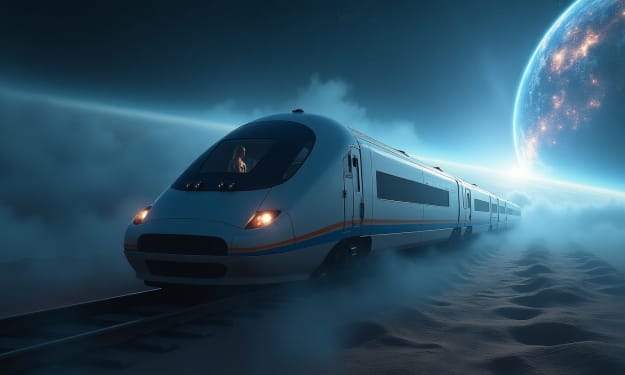
Last Train to the Stars
Last Train to the Stars: They called it the Odyssey Line—the last train Earth would ever build. Not a train in the old sense, with tracks and stations. This one launched like a rocket, curved around the broken bones of the moon, and vanished into deep space. Only a few knew its true destination. Fewer still had ever come back.
By Salah Uddin9 months ago in Chapters
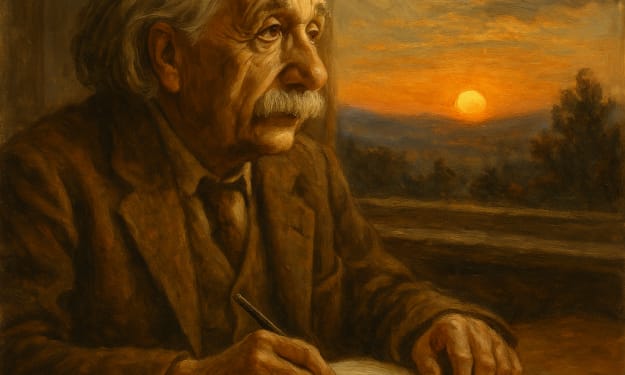
The Final Equation
May 11, 1955 Zurich, Switzerland I awoke this morning with a curious clarity. Not of the body—this vessel grows frailer with each sunrise—but of the spirit. The wind brushed through the trees like a soft sigh, and I felt, for the first time in many years, that the burden I had carried was no longer mine alone.
By Alain SUPPINI9 months ago in Chapters
The Secret Drawer
Growing up, there was one rule in our house I never dared to break: Don’t touch the drawer in Dad’s study. It was an ordinary drawer in an old wooden desk — scratched, dusty, the handle barely hanging on. But to me, it might as well have been a vault. Dad’s tone made it clear — that drawer was off-limits.
By Straylight9 months ago in Chapters
Einstein Among Shadows
Journal Entry – February 2, 1936 – Brussels A thin frost has clung to the iron rails outside my apartment window all morning. The city moves beneath a veil of cold, silent mist, muffling even the clatter of the trams. I watch from the desk in my small room, papers scattered and forgotten, as the Belgian winter folds over the rooftops. These days I find myself writing less about physics and more about people.
By Alain SUPPINI9 months ago in Chapters
The Unbroken Equation
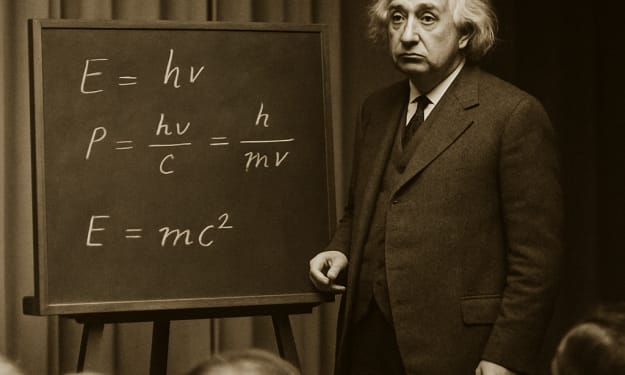
May 3, 1937 The chill of Lake Geneva drifted through the open window of Einstein’s modest apartment. A kettle hissed on the stovetop while chalk dust floated lazily in the morning sun. He stood before a blackboard crowded with dense notations, pausing only to sip the now-cold tea forgotten on the sill. The room was quiet save for the soft scratch of chalk and the distant clatter of streetcars below. Europe, meanwhile, was anything but quiet.
By Alain SUPPINI9 months ago in Chapters
The Quiet Rebellion of Genius
May 1941. The air over Zürich trembles with the dull unease of wartime proximity. Switzerland remains officially neutral, but neutrality is fragile when flanked by fascism. Einstein walks through the corridor of the Federal Polytechnic, now adorned with blackout curtains and guarded entrances. His gait is slower than it was a decade ago, but his eyes remain sharp—burning with restlessness and responsibility.
By Alain SUPPINI9 months ago in Chapters
The Day I Stopped Apologizing for Existing
The Day I Stopped Apologizing for Existing I’ve always been the type of person who apologizes to chairs. You know, the ones you bump into and go, “Oh sorry,” as if the chair might file a complaint for emotional damage.
By shittu adeola9 months ago in Chapters
The Quiet Revolution
May 1943 — Geneva I write tonight with a heavy hand and a restless heart. The war has swallowed much of Europe, yet Switzerland—like a rock in a torrent—remains outwardly calm. Behind the diplomatic neutrality, though, I feel the pressure mounting, not only on my nation, but within me. The work we began to stop the atomic catastrophe before it starts has taken a darker turn.
By Alain SUPPINI9 months ago in Chapters
The Copenhagen Accord
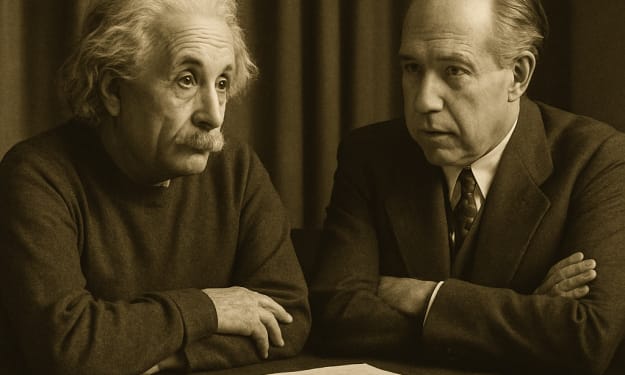
May 2, 1936 – Copenhagen The morning sky over Copenhagen was washed in grey. Einstein sat in the small breakfast room of Niels Bohr’s modest home, stirring his tea with the absentmindedness of a man whose thoughts danced between atoms and the future of civilization.
By Alain SUPPINI9 months ago in Chapters