Fiction
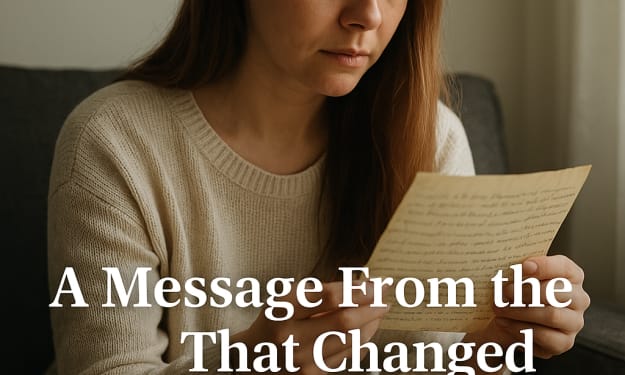
The letter that changed everything
Tania was 28, and from the outside, everything looked perfect. She worked as a customer relationship officer at a prestigious bank in Lahore. Her hair was always tied neatly, her heels clicked with authority, and her phone buzzed constantly with updates, approvals, and balance sheets. Her family was proud. Society approved. She was “settled.”
By Shehzad khan7 months ago in BookClub
A Message From the Past That Changed My Life. AI-Generated.
GI never expected a dusty old envelope to unravel the tightly sealed parts of my heart. It wasn’t the sort of letter you’d expect to find in a forgotten drawer — especially not one addressed to me, in a handwriting I hadn’t seen in years. The message from the past wasn’t just ink on paper. It was a mirror. A voice. A moment that paused time and made me rethink everything I believed about life, love, and purpose.
By Sophia Grace7 months ago in BookClub
Book review: White Fang by Jack London
Reading White Fang by Jack London is like experiencing the wild through the eyes of a creature torn between nature and civilization, instinct and affection. It is a novel that engages not only the reader’s imagination but also one’s empathy, as it portrays a world where survival is unforgiving, yet the possibility of transformation and understanding lingers at the edge of every encounter. First published in 1906, White Fang stands as one of London’s most enduring and evocative works, a companion piece in many ways to his earlier novel The Call of the Wild, though it reverses the thematic trajectory—this time, from wilderness into the realm of human society.
By Caleb Foster7 months ago in BookClub
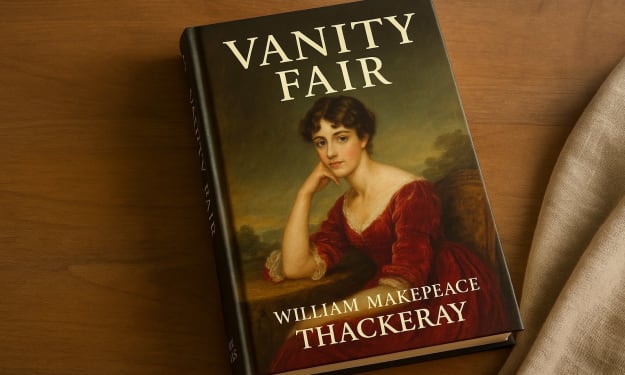
Book review: Vanity Fair by William Makepeace Thackeray
Reading Vanity Fair by William Makepeace Thackeray is like peering into a grand, gaudy mirror held up to early 19th-century English society—a mirror in which every vanity, ambition, flaw, and fleeting virtue is reflected with sharp clarity and biting wit. From the first few pages, I was struck not only by the brilliance of the prose, but by the narrator’s sly detachment and the sense that this was not just a story to be consumed, but a performance to be observed, interrogated, and remembered. First published serially from 1847 to 1848, this sprawling novel is often classified as a satire or a picaresque, and it defies easy categorization. While its tone is frequently comic and ironic, it is also deeply serious in its examination of morality, ambition, and human folly. It is aimed at readers who are not only lovers of rich narrative and vivid character but who appreciate the layered commentary that Thackeray weaves through every scene.
By Caleb Foster7 months ago in BookClub
Book review: Ulysses by James Joyce
Reading Ulysses by James Joyce is not so much engaging with a novel as it is stepping into a vast, breathing organism of language and consciousness. It is one of those books that demands complete surrender—not only of your attention but of your expectations of what a novel should be. When I first approached it, I knew I was about to embark on something monumental, but nothing quite prepared me for the intellectual rigor, emotional complexity, and linguistic beauty it contained. It is not a casual read, nor is it conventionally entertaining, but it is a deeply transformative literary experience.
By Caleb Foster7 months ago in BookClub
Book review: Treasure Island by Robert Louis Stevenson
There are books we read in childhood that never quite leave us, whose echoes remain long after the final chapter is closed. Treasure Island by Robert Louis Stevenson is one such book for me, a novel that first captured my imagination years ago and has since only deepened in richness with each revisit. Originally published in 1883, this adventure novel has long been considered a cornerstone of children's literature, but its lasting appeal extends far beyond youthful audiences. It is a tale of high seas, buried treasure, and dangerous alliances, and at its heart lies a profound meditation on morality, courage, and the ambiguity of human nature.
By Caleb Foster7 months ago in BookClub
Book review: The War of the Worlds by H. G. Wells
As someone who has long been fascinated by classic science fiction, revisiting The War of the Worlds by H. G. Wells felt like more than just reading a novel—it felt like stepping into the very roots of the genre. This book is often mentioned with reverence, and after immersing myself in it again, I can clearly see why. It’s a masterclass in suspense, speculative thought, and social commentary, wrapped within a narrative that still feels urgent and provocative more than a century after its publication.
By Caleb Foster7 months ago in BookClub
Book review: The Unnamable by H. P. Lovecraft
Sometimes a story draws you in not with elaborate events or sweeping narratives, but with the quiet menace of atmosphere, the whispered promise of something vast and unknowable just beyond the veil of ordinary perception. H. P. Lovecraft’s The Unnamable is one such story—brief in length, modest in action, and yet deeply resonant in its exploration of the boundaries of human understanding. Reading it is like peering through a crack in reality, where logic begins to falter and fear takes root.
By Caleb Foster7 months ago in BookClub
Ahh, Hambug Again
Stave One: A Miserable Christmas Eve Liberty had perished – it was an absolute, and little doubt could be given upon that. The moment the President had taken his oath – everything had been certified as tangible as the death certificate of Freedom’s undoing. It had been affirmed and stamped with official government authority and with it the ability to do whatsoever he wished instantly became that of President Thrump.
By Sai Marie Johnson7 months ago in BookClub
Book review: The Turn of the Screw by Henry James
Reading The Turn of the Screw by Henry James is like descending into a shadowed corridor where every flicker of candlelight reveals another ambiguity. From the very first pages, I found myself pulled into a narrative that is as haunting as it is elusive, and that compels the reader to participate actively in the unraveling of its mysteries. The story wraps itself around you gradually, drawing you deeper with its unsettling atmosphere and psychological depth, until you realize there is no simple way out.
By Caleb Foster7 months ago in BookClub
Book review: The Street by H. P. Lovecraft
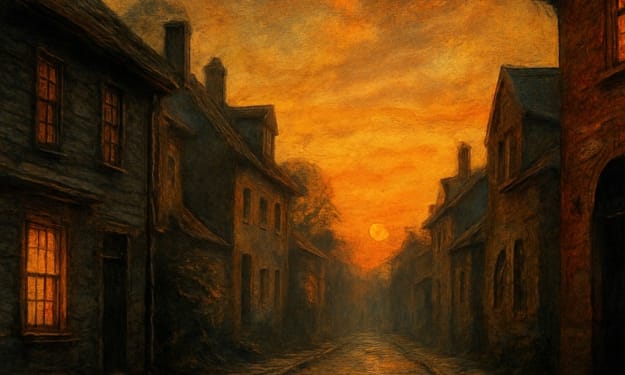
Reading The Street by H. P. Lovecraft is an experience unlike any other I’ve had with short fiction. Though brief in length, this story leaves a surprisingly lasting impression, not through plot alone, but through atmosphere, symbolism, and a strange fusion of nostalgia and foreboding. As with many of Lovecraft’s works, it operates less as a straightforward narrative and more as a vessel for broader philosophical or cultural concerns, wrapped in richly archaic prose and filtered through a haunting, almost dreamlike lens.
By Caleb Foster7 months ago in BookClub