
Book review: Vanity Fair by William Makepeace Thackeray
Vanity Fair is a novel by the English author William Makepeace Thackeray, which follows the lives of Becky Sharp and Amelia Sedley amid their friends and families during and after the Napoleonic Wars.


Reading Vanity Fair by William Makepeace Thackeray is like peering into a grand, gaudy mirror held up to early 19th-century English society—a mirror in which every vanity, ambition, flaw, and fleeting virtue is reflected with sharp clarity and biting wit. From the first few pages, I was struck not only by the brilliance of the prose, but by the narrator’s sly detachment and the sense that this was not just a story to be consumed, but a performance to be observed, interrogated, and remembered. First published serially from 1847 to 1848, this sprawling novel is often classified as a satire or a picaresque, and it defies easy categorization. While its tone is frequently comic and ironic, it is also deeply serious in its examination of morality, ambition, and human folly. It is aimed at readers who are not only lovers of rich narrative and vivid character but who appreciate the layered commentary that Thackeray weaves through every scene.
The story follows two central characters, Becky Sharp and Amelia Sedley, whose fortunes, temperaments, and paths through society differ sharply. Becky, an orphan of low birth but remarkable intelligence and cunning, is determined to climb the social ladder by any means necessary. Amelia, by contrast, is gentle, sentimental, and loyal to a fault, though often blind to the realities around her. Their stories unfold against the backdrop of Napoleonic Europe, with the Battle of Waterloo casting a literal and metaphorical shadow over their lives. The novel’s title, drawn from The Pilgrim’s Progress by John Bunyan, signals the moral landscape we’re entering: a carnival of pretense, greed, and artifice where everyone is for sale and little is what it seems.
What makes Vanity Fair such a compelling and singular reading experience is Thackeray’s narrative voice. He positions himself not just as a storyteller, but as a master of ceremonies, frequently breaking the fourth wall, inserting asides, addressing the reader directly, and commenting on the absurdities of his characters and their world. This technique, while playful, is never frivolous. It adds a layer of intellectual engagement that forces the reader to remain alert and complicit in the unfolding drama. The novel is subtitled “A Novel Without a Hero,” and indeed, Thackeray refuses to give us a singular figure to admire or emulate. Instead, he offers us a rich tapestry of flawed individuals, some more sympathetic than others, but all drawn with psychological nuance and social insight.
The language is one of the book’s great pleasures. Thackeray’s prose is elegant, witty, and often laced with irony so dry it nearly crackles on the page. His descriptive passages can be lush or economical, depending on the needs of the moment, and his dialogue captures the mannerisms and hypocrisies of the age with remarkable precision. The pacing is deliberate and expansive, giving him room to explore not only the events of the plot but the social mores, economic realities, and emotional undercurrents of his characters’ lives. This makes the novel something of a slow burn at times, particularly for readers accustomed to the breakneck speed of modern storytelling, but the depth and richness of detail are more than worth the investment.
The structure of the novel is traditional in one sense—linear and chronological—but Thackeray’s interjections and digressions give it a freshness that feels almost postmodern. He often pauses the action to offer mini-essays on topics ranging from courtship rituals to military honor, and while these asides can occasionally test the reader’s patience, they more often serve to deepen the novel’s satirical bite and philosophical scope. Imagery plays a significant role as well; the recurring use of puppets and theater metaphors underlines the performative nature of social life, and the many domestic interiors described in the book speak volumes about their occupants’ aspirations and insecurities.
At the heart of Vanity Fair is a profound meditation on power, status, and the lengths to which people will go to secure both. Becky Sharp, though often cast as an anti-heroine or even a villain, emerges as one of the most fascinating and complex characters in English literature. Her wit, resourcefulness, and defiance of gender and class expectations make her both admirable and dangerous. Amelia, in contrast, can sometimes feel insipid, but she represents the traditional ideal of womanhood that Thackeray both critiques and, at times, appears to mourn. Their contrasting trajectories raise important questions about morality, merit, and the social order, and Thackeray never offers easy answers. Instead, he allows contradictions to coexist, giving the novel its lifelike ambiguity.
Emotionally, the novel is as varied as its characters. There are moments of genuine tenderness and pathos, particularly in the quiet despair of some secondary figures like Dobbin, whose unrequited love is portrayed with heartbreaking subtlety. There are also moments of dark comedy, of biting satire that exposes the pretensions and pettiness of those climbing or clinging to the social ladder. The emotional impact is cumulative rather than immediate; the more one invests in the novel’s world, the more moving and resonant it becomes. It is a book that lingers not through dramatic catharsis, but through the slow accumulation of insight.
If Vanity Fair has a flaw, it lies perhaps in its length and its occasional narrative digressions, which can test modern readers’ endurance. There are chapters that seem more essay than story, and Thackeray’s moralizing, while often justified, can at times feel intrusive. Additionally, some readers may struggle with the episodic nature of the plot, which resists a clear arc or climactic resolution. But these are minor quibbles in light of the novel’s achievements. It is an expansive, richly textured work that captures the absurdity and tragedy of human striving with remarkable clarity and compassion.
What impressed me most about Vanity Fair was Thackeray’s refusal to sentimentalize. He presents a world where virtue is rarely rewarded, where self-interest often triumphs, and yet he does so with such wit and intelligence that the book never feels cynical. Instead, it feels deeply humane—an acknowledgment of our flaws without a condemnation of our worth. The novel made me think not only about the society it depicts but about the one I live in, and the ways in which ambition, appearance, and moral compromise still shape our lives.
So, Vanity Fair is a masterwork of English literature, a novel that entertains, provokes, and enlightens in equal measure. Its characters are unforgettable, its insights are enduring, and its style is unmatched. I would recommend it to any reader interested in the intersection of storytelling and social commentary, to those who appreciate satire that is as incisive as it is compassionate. My final verdict: a brilliant, sprawling, and unsparing portrait of a society addicted to status and spectacle, and a timeless reminder of how little the human heart has changed.
This book review was written using the following references 👇
About the Creator
Caleb Foster
Hi! My name is Caleb Foster, I’m 29, and I live in Ashland, Oregon. I studied English at Southern Oregon University and now work as a freelance editor, reviewing books and editing texts for publishers.
Keep reading
More stories from Caleb Foster and writers in BookClub and other communities.
Book review: Ulysses by James Joyce
Reading Ulysses by James Joyce is not so much engaging with a novel as it is stepping into a vast, breathing organism of language and consciousness. It is one of those books that demands complete surrender—not only of your attention but of your expectations of what a novel should be. When I first approached it, I knew I was about to embark on something monumental, but nothing quite prepared me for the intellectual rigor, emotional complexity, and linguistic beauty it contained. It is not a casual read, nor is it conventionally entertaining, but it is a deeply transformative literary experience.
By Caleb Foster7 months ago in BookClub
My New Book is Finally Here
My poetry collection Beautiful and Brutal Things is done. It's actually done and finally published over 270 pages. Over a year of my life went into this book. More than a year, really. Long days at my computer, sometimes seven days a week because I couldn't stop even when I probably should have. Then two months of editing that felt harder than the writing itself. But it's finished, and I'm still standing, and the book is real.
By Tim Carmichael5 days ago in BookClub
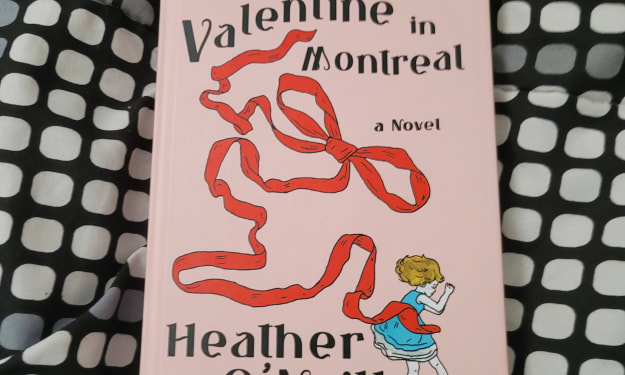
Valentine in Montréal
Don't be fooled by the title. The story is actually very interesting: My name is Valentine. I am twenty-three years old and I work at a little store at Berri-UQAM métro. I am very ordinary-looking and Barney, who works the same shift as me at the store, says I do not know how to dress. I have been working there for four years, and I have never missed a day. This is why sometimes I seem familiar to people, even though they can't place me.
By Kendall Defoe 7 days ago in BookClub



Comments
There are no comments for this story
Be the first to respond and start the conversation.