Caleb Foster
Bio
Hi! My name is Caleb Foster, I’m 29, and I live in Ashland, Oregon. I studied English at Southern Oregon University and now work as a freelance editor, reviewing books and editing texts for publishers.
Stories (46)
Filter by community
Book review: The Descendant by H. P. Lovecraft
Some stories don’t simply unfold — they whisper from the shadows, beckoning the reader to peer into the abyss of ancient memory and forbidden knowledge. The Descendant by H. P. Lovecraft is one such story. Though fragmentary and unfinished, it offers a haunting glimpse into a narrative that could have become one of Lovecraft’s most atmospheric works. Reading it feels like standing at the threshold of something vast and unknowable, just catching the scent of the horror that lies beyond. And despite its brevity, it lingers — like a dream half-remembered and wholly unsettling.
By Caleb Foster7 months ago in BookClub
Book review: The Valley of Fear by Arthur Conan Doyle
Some books surprise you not because of a twist or a revelation, but because they take a form you didn’t expect and lead you down a path far more layered than you originally imagined. The Valley of Fear by Arthur Conan Doyle is one such work. I approached it as yet another Sherlock Holmes adventure, but what I found was a novel that artfully blends classic deduction with a sweeping, deeply atmospheric backstory — a tale that veers into the territory of political intrigue, betrayal, and moral ambiguity. It's a work that stands apart in the Holmes canon not just because of its content, but because of its structure and ambition.
By Caleb Foster7 months ago in BookClub
Book review: The Hound of the Baskervilles by Arthur Conan Doyle
There are books that entertain, books that intrigue, and books that cast a shadow over your imagination long after you’ve turned the final page. The Hound of the Baskervilles by Arthur Conan Doyle belongs, without a doubt, to that last category. I recently revisited this timeless classic and found myself once again spellbound by its foggy moors, mysterious legends, and the razor-sharp deductions of Sherlock Holmes.
By Caleb Foster7 months ago in BookClub
Book review: A Study in Scarlet by Arthur Conan Doyle
When I first opened A Study in Scarlet, I wasn’t quite prepared for how distinctive and gripping the experience would be. This novel, penned by Sir Arthur Conan Doyle in 1887, marks the debut of one of literature’s most iconic figures: Sherlock Holmes. As a reader of mystery and detective fiction, I’ve encountered countless iterations of the brilliant sleuth archetype, but returning to the origin point in Doyle’s foundational work reminded me why Holmes remains a timeless figure in the genre.
By Caleb Foster7 months ago in BookClub
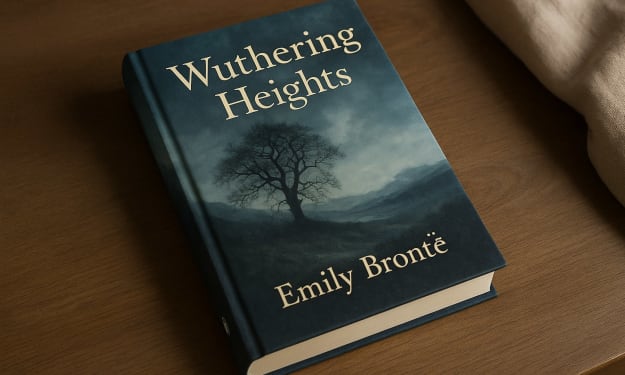
Book review: Wuthering Heights by Emily Brontë
It’s not often that I find myself so haunted by a novel long after I’ve closed its final page, but reading Wuthering Heights by Emily Brontë left me with a lingering intensity that is difficult to shake off. From the very first chapter, the book plunges into a moody, brooding atmosphere that seems to wrap itself around the reader like the Yorkshire moors it so vividly describes.
By Caleb Foster7 months ago in BookClub
Book review: The Sign of the Four by Arthur Conan Doyle
Reading The Sign of the Four by Arthur Conan Doyle was a return to one of literature’s most beloved partnerships—Sherlock Holmes and Dr. Watson—and an opportunity to re-immerse myself in the brisk, atmospheric world of Victorian-era London mystery. As the second novel featuring the legendary detective, it builds upon the firm foundation of character and intrigue established in A Study in Scarlet, offering a richer and more emotionally charged narrative that expands our understanding of Holmes, Watson, and the often shadowy realm they navigate.
By Caleb Foster7 months ago in BookClub
Book review: White Fang by Jack London
Reading White Fang by Jack London is like experiencing the wild through the eyes of a creature torn between nature and civilization, instinct and affection. It is a novel that engages not only the reader’s imagination but also one’s empathy, as it portrays a world where survival is unforgiving, yet the possibility of transformation and understanding lingers at the edge of every encounter. First published in 1906, White Fang stands as one of London’s most enduring and evocative works, a companion piece in many ways to his earlier novel The Call of the Wild, though it reverses the thematic trajectory—this time, from wilderness into the realm of human society.
By Caleb Foster7 months ago in BookClub
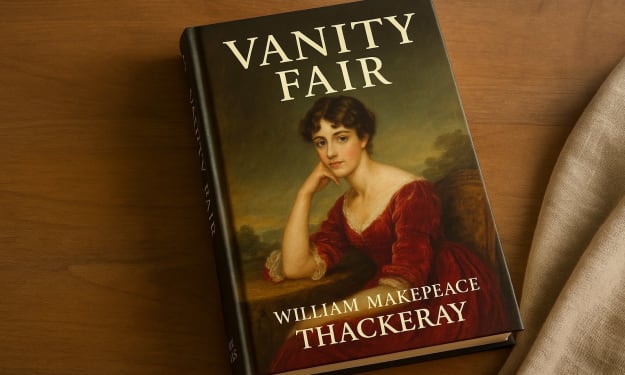
Book review: Vanity Fair by William Makepeace Thackeray
Reading Vanity Fair by William Makepeace Thackeray is like peering into a grand, gaudy mirror held up to early 19th-century English society—a mirror in which every vanity, ambition, flaw, and fleeting virtue is reflected with sharp clarity and biting wit. From the first few pages, I was struck not only by the brilliance of the prose, but by the narrator’s sly detachment and the sense that this was not just a story to be consumed, but a performance to be observed, interrogated, and remembered. First published serially from 1847 to 1848, this sprawling novel is often classified as a satire or a picaresque, and it defies easy categorization. While its tone is frequently comic and ironic, it is also deeply serious in its examination of morality, ambition, and human folly. It is aimed at readers who are not only lovers of rich narrative and vivid character but who appreciate the layered commentary that Thackeray weaves through every scene.
By Caleb Foster7 months ago in BookClub
Book review: Ulysses by James Joyce
Reading Ulysses by James Joyce is not so much engaging with a novel as it is stepping into a vast, breathing organism of language and consciousness. It is one of those books that demands complete surrender—not only of your attention but of your expectations of what a novel should be. When I first approached it, I knew I was about to embark on something monumental, but nothing quite prepared me for the intellectual rigor, emotional complexity, and linguistic beauty it contained. It is not a casual read, nor is it conventionally entertaining, but it is a deeply transformative literary experience.
By Caleb Foster7 months ago in BookClub
Book review: Treasure Island by Robert Louis Stevenson
There are books we read in childhood that never quite leave us, whose echoes remain long after the final chapter is closed. Treasure Island by Robert Louis Stevenson is one such book for me, a novel that first captured my imagination years ago and has since only deepened in richness with each revisit. Originally published in 1883, this adventure novel has long been considered a cornerstone of children's literature, but its lasting appeal extends far beyond youthful audiences. It is a tale of high seas, buried treasure, and dangerous alliances, and at its heart lies a profound meditation on morality, courage, and the ambiguity of human nature.
By Caleb Foster7 months ago in BookClub
Book review: The War of the Worlds by H. G. Wells
As someone who has long been fascinated by classic science fiction, revisiting The War of the Worlds by H. G. Wells felt like more than just reading a novel—it felt like stepping into the very roots of the genre. This book is often mentioned with reverence, and after immersing myself in it again, I can clearly see why. It’s a masterclass in suspense, speculative thought, and social commentary, wrapped within a narrative that still feels urgent and provocative more than a century after its publication.
By Caleb Foster7 months ago in BookClub
Book review: The Unnamable by H. P. Lovecraft
Sometimes a story draws you in not with elaborate events or sweeping narratives, but with the quiet menace of atmosphere, the whispered promise of something vast and unknowable just beyond the veil of ordinary perception. H. P. Lovecraft’s The Unnamable is one such story—brief in length, modest in action, and yet deeply resonant in its exploration of the boundaries of human understanding. Reading it is like peering through a crack in reality, where logic begins to falter and fear takes root.
By Caleb Foster7 months ago in BookClub