Discussion
#Norsevember
Do you read Norse books? Then I'm happy to introduce Norsevember, a reading event in which we talk about, recommend, read and review Norse inspired books! Started by Alex of Spells and Spaceships in 2020, it was born after he thought to dedicate a month to read and review Norse books, and others on Twitter expressed their enthusiasm to do the same.
By Marie Sinadjan2 years ago in BookClub
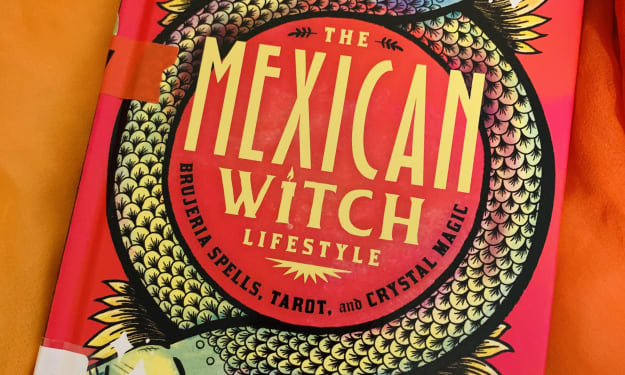
How to become a good witch
"To earth, sky and the universe, astrology, cosmology, alchemy and magickal spells we offer thanks. Gifts of prophesy, midwifery, soul retrieval and clairvoyance, now attend. Unto us impart your spiritual advice, blessings and knowledge".
By Novel Allen2 years ago in BookClub
"Mastering Short Story Magic"
Salutations, and welcome to this enlightening expedition into the intricacies of crafting short stories. If you've ever found yourself entangled in the enigma of weaving a truly satisfying short narrative or felt overwhelmed by the mosaic of diverse and sometimes contradictory advice, rest assured that your sentiments are shared by many. In this profound exploration, we shall peel back the layers of prevalent misconceptions that may have acted as restraints on your creative aspirations, and we shall journey deeper into the core facets of successful short story composition.
By Alisa İnnokate2 years ago in BookClub
"The Art of Laughter: Unearthing Comedy in Everyday Life"
"Have you ever taken notice of how numerous jokes commence with the phrase, 'Have you ever noticed?' And what's up with, 'What's the deal?' There's an abundance of humor hidden in the everyday, mundane aspects of life that we usually overlook. So, if you're aiming to inject some levity into your tale, presentation, or screenplay, here are a few tips and techniques for unearthing the comical. All exceptional storytelling, comedy writing included, is made up of a handful of fundamental ingredients: who, what, when, where, why, and how. Writers have been probing these questions since at least the 1st century BC, and none of them can be addressed with a mere 'yes' or 'no.' They crave details, and the more precise those details are, the more amusing the narrative becomes. Let's kick off with the 'who,' the comical character. Think about the books, TV shows, and films that tickle your funny bone. They typically feature amusing archetypes. The know-it-all, the endearing underdog, the terrible boss, the neurotic, the scatterbrain. Interestingly, these are all stock characters hailing from Commedia Dell'Arte, the artistic comedy of the late Renaissance Italy, and they've yet to lose their charm. The Commedia principle for crafting comedic characters is simple: find the flaw, then magnify it. Alternatively, you can experiment with opposites. When the smartest person in the room commits the silliest blunder, or the goofball outsmarts the genius, our laughter is triggered because we didn't anticipate it. The ancient Greek humorist Aristotle is reputed to have asserted, 'The key to humor is surprise.' This surprise, or incongruity theory of humor, posits that we laugh at things that appear out of place or defy our expectations, such as a frog dating a pig, a lizard peddling insurance, a baby grooving to disco, a nun dancing to disco, or a feline showcasing any disco-related moves. Actually, just a baby, a nun, or a cat doing pretty much anything, especially involving disco. One fun way to identify incongruities is by forming connections, literally drawing them in a mind map. Begin small; select a word, let's say 'pickle,' jot it down, and then as swiftly as possible, establish connections. What do pickles bring to mind? Who savors pickles? What cherished pickle-related recollections from childhood do I have? Another excellent method for generating comedic content is shifting from observation to imagination. Transition from 'what is' to 'what if.' For instance, what if instead of a horse, you had a pair of coconuts? Now, envision some memorable moments in history, literature, or film and consider how they'd unfold if coconuts were involved. Allow your imagination to run wild, even if an idea seems overdone, too apparent, or just plain daft, jot it down nonetheless. What seems evident to you might not be to someone else, and the most foolish idea could unexpectedly turn out to be the cleverest. Speaking of real-life absurdities, have you ever noticed how much comedy revolves around the exasperating, infuriating, and mortifying experiences we encounter? Will Rogers once quipped, 'Everything is funny as long as it happens to somebody else.' So, if you're having a dreadful morning, imagine it happening to a character you're crafting, and by the afternoon, you might have a humorous story to tell. After you've delineated your characters and plot, here are a few swift and simple comedy writing techniques to make them sizzle. The 'rule of three' or 'zig-zag.' Experiment with setting up an anticipated pattern (zig-zig), then subvert it (zag). A rabbi, a priest, and a coconut stroll into a bar. The 'punchline rule' suggests placing your punchline at the end of the sentence. A rabbi, a priest, and a coconut sashay into a disco. This leads us to the 'rule of K.' For some reason, words with a 'k' sound tend to tickle our ears and are deemed comical. Coconut, disco, pickles, crickets? Well, we don't always elicit a chuckle. Humor is subjective, comedy is an experiment, and writing is all about revising. Keep on trying. Discover the imperfections, uncover the details, introduce incongruities, incorporate 'k' words, and bear in mind the most pivotal rule for crafting comedy: relish the process. As Charles Dickens once mused, 'There is nothing in the world so irresistibly contagious as laughter and good humor.' And disco."
By Alisa İnnokate2 years ago in BookClub
Ant Vision: Shedding Light on Their Visual World
Ants are fascinating creatures that have evolved over millions of years to become highly specialized and successful insects. One common question that often arises when discussing ants is whether they have eyes. The answer to this question is somewhat complex, as it depends on the specific ant species and their role within the colony. In general, ants do possess visual organs, but the nature and functionality of these organs can vary significantly.
By Alexander jackson2 years ago in BookClub
The Syrian Child's Hope: A Tale of Resilience
Once upon a time, in the war-torn city of Aleppo, there lived a Syrian child named Ahmed. His childhood was far from ordinary, for he had grown up amidst the chaos and destruction of the Syrian civil war. Despite the challenges, Ahmed's spirit remained unbroken, and he held onto a glimmer of hope that shone even in the darkest of times.
By Alexander jackson2 years ago in BookClub
Remembering the Tragedy at COB Speicher : A Glimpse into the Dark Reality of Terrorism. Content Warning.
On June 12, 2014, the world witnessed a horrific tragedy that shook the foundations of humanity. COB Speicher in Iraq, once a symbol of dreams and aspirations, became a haunting ground where the lives of more than 2,000 young student pilots were cruelly cut short, their dreams shattered, and their future stolen. The perpetrators of this unimaginable atrocity were ISIS, a terrorist organization that showed no mercy.
By Alexander jackson2 years ago in BookClub
The Complex Reality in Gaza: Examining the Israeli-Palestinian Conflict
The Israeli-Palestinian conflict is a deeply intricate and multifaceted issue, with Gaza being one of its most volatile epicenters. In this discussion, we aim to explore the complexities of this longstanding conflict and offer a balanced perspective on the suffering of children in Gaza and the role of Israel in this volatile situation.
By Alexander jackson2 years ago in BookClub
The benefits of Cardamom on human life
Cardamom has been around for centuries, used in both cooking and medicine. It's made from the seeds of different plants, like ginger, and has a unique flavor that can be used in a variety of dishes. It can be found in whole seed pods, pre-ground spice powder, essential oils, and herbal supplements, usually in capsules. Studies have suggested that it may have some health benefits, but more research is needed before it can be used to treat medical conditions.
By Faisal Patel2 years ago in BookClub
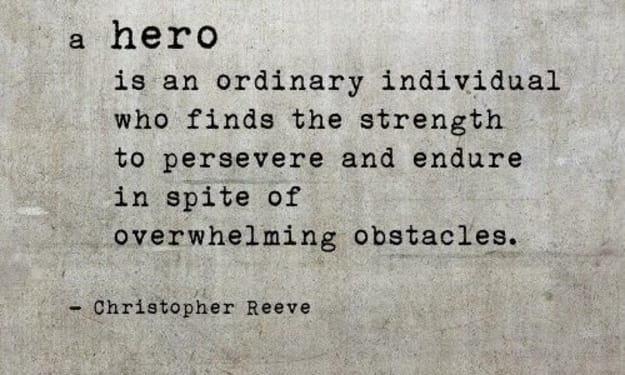
"Unleash Your Inner Hero: The Universal Journey of Transformation"
What's the common thread that ties together Harry Potter, Katniss Everdeen, and Frodo with the heroes of age-old legends? (Roar) If I told you that they all share the DNA of a singular hero, would you believe it? Joseph Campbell certainly did. He embarked on a journey through myths spanning the globe, resulting in his magnum opus, "The Champion with a Myriad Countenances," where he recounted numerous tales and unveiled how each one embodies the monomyth - the Hero's Odyssey.
By Alisa İnnokate2 years ago in BookClub