
The Syrian Child's Hope: A Tale of Resilience
From War-Torn Aleppo to Global Advocate for Hope and Unity

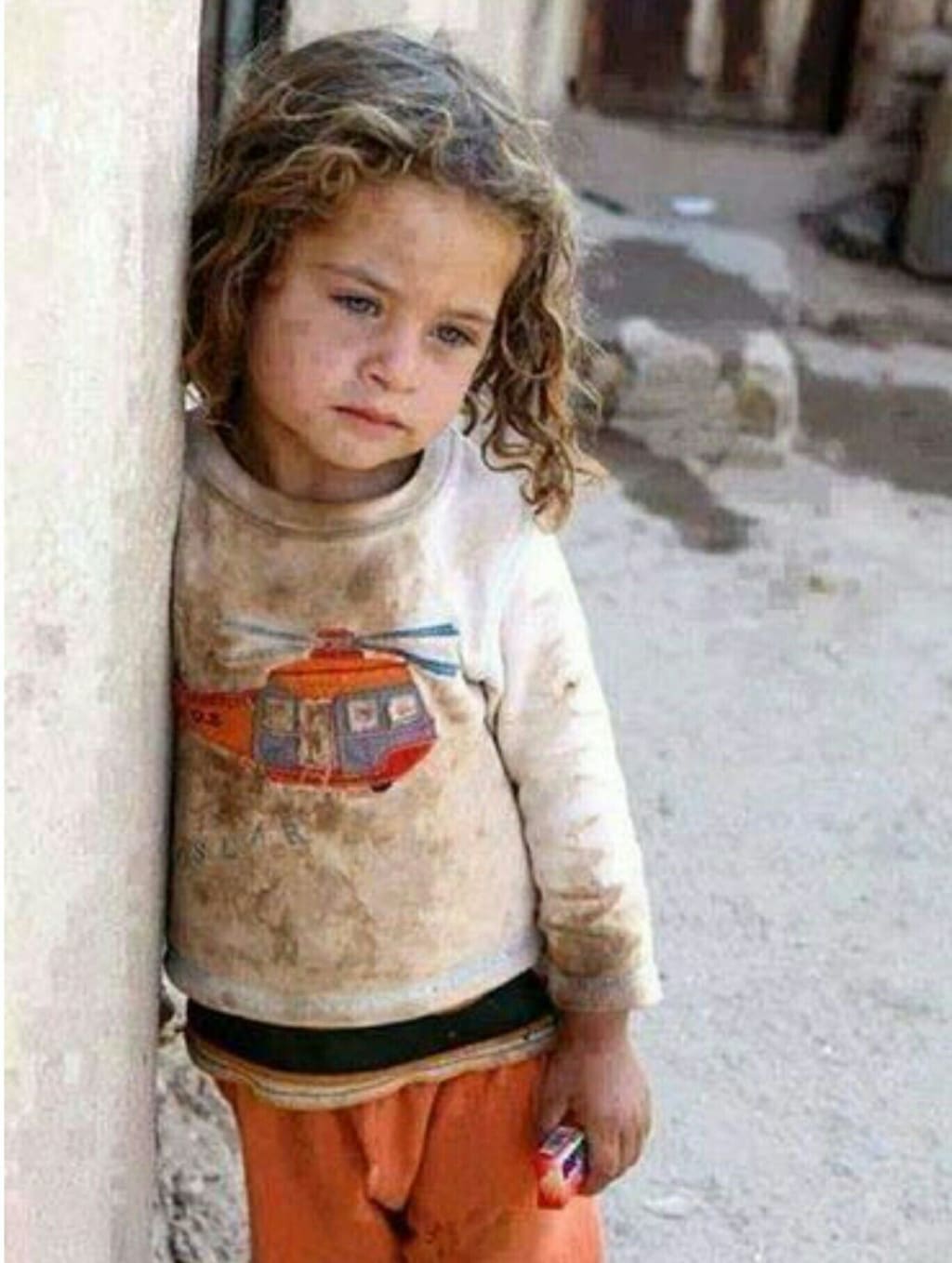
Once upon a time, in the war-torn city of Aleppo, there lived a Syrian child named Ahmed. His childhood was far from ordinary, for he had grown up amidst the chaos and destruction of the Syrian civil war. Despite the challenges, Ahmed's spirit remained unbroken, and he held onto a glimmer of hope that shone even in the darkest of times.
Ahmed's days were filled with the sounds of distant explosions and the sight of crumbling buildings. His family had lost their home, and they now resided in a makeshift shelter with several other displaced families. Life was a daily struggle, but Ahmed's parents, Amina and Khalid, did their best to provide for their son and instill in him the values of kindness and perseverance.
Ahmed's most cherished possession was a tattered old book he had found in the rubble of a destroyed library. It was a collection of stories, and Ahmed would read it by the dim light of a kerosene lamp every night. These stories transported him to a world far removed from the harsh reality of his daily life. They provided him with solace, reminding him that there was more to life than the war that had stolen his childhood.
One day, while rummaging through the ruins of a bombed-out school, Ahmed discovered a small, wounded bird. Its fragile wings were broken, and it chirped weakly, seeking help. Ahmed gently picked up the bird and took it back to his shelter. He fashioned a tiny splint for the bird's wings from a piece of cardboard and tended to it with great care, just as he had seen his mother care for the wounded in their makeshift clinic.
As days turned into weeks, Ahmed's bird, which he named "Sama," slowly regained its strength. Sama became his constant companion, a symbol of hope and resilience. He and Sama formed an unbreakable bond, a friendship that transcended language and circumstances.
One evening, as Ahmed and Sama sat outside their shelter, a group of children from neighboring families noticed the miraculous transformation of the wounded bird. Inspired by Ahmed's kindness, they too started bringing injured animals to him for help. Ahmed became known as "The Bird Healer" among the children, and a sense of community began to form among the displaced families.
As the war raged on, Ahmed's determination to make a difference grew. He started a small garden in the courtyard of their makeshift shelter, planting whatever seeds he could find. This garden became a symbol of resilience in the midst of destruction. The children and families who had once been strangers began to work together, tending to the garden and sharing the meager harvest.
News of the "Hope Garden" and Ahmed's story spread, and soon, aid organizations took notice. They provided assistance to the displaced families, enabling them to rebuild their lives. Schools and medical facilities were established in the area, and a sense of normalcy began to return to the lives of these children.
Ahmed's dream was to be able to return to school, and with the help of the aid organizations, his dream became a reality. He continued to study and learn, all the while sharing his story and the importance of resilience with the world.
Years passed, and the war eventually came to an end. Ahmed, now a young man, had become an advocate for peace and resilience. He traveled the world, sharing his experiences and spreading the message of hope and unity. His story, along with Sama and the "Hope Garden," served as a reminder of the indomitable human spirit in the face of adversity.
Ahmed's journey from a war-torn childhood to an advocate for peace became an inspiration for many. His resilience, kindness, and the love he had for a wounded bird had not only transformed his life but had also sowed the seeds of hope and healing for a bet
About the Creator
Alexander jackson
"Captivating tales and life's wisdom – join me on a journey of shared experiences through words. Let's explore, learn, and connect together!"
Keep reading
More stories from Alexander jackson and writers in BookClub and other communities.
Remembering the Tragedy at COB Speicher : A Glimpse into the Dark Reality of Terrorism
On June 12, 2014, the world witnessed a horrific tragedy that shook the foundations of humanity. COB Speicher in Iraq, once a symbol of dreams and aspirations, became a haunting ground where the lives of more than 2,000 young student pilots were cruelly cut short, their dreams shattered, and their future stolen. The perpetrators of this unimaginable atrocity were ISIS, a terrorist organization that showed no mercy.
By Alexander jackson2 years ago in BookClub
Rachel Reviews: Lakefront Wolves by Joseph Deegan
Meet Finn. He's an 18 year old kid who has potential. He's bright with great school scores and he's also an athlete, a footballer of some prowess. He has it all going for him, it would seem, and yet, he's determined to send what could be a well-planned, stable existence firmly off the rails. He drinks, he smokes, he takes drugs, he has violent tendencies and he's in danger of losing not only his mind but all that he holds dear.
By Rachel Deeming15 days ago in BookClub
7 Books With Brilliant Ideas You'll Be Thinking About All Year
The most powerful books do more than tell stories or deliver information—they plant brilliant ideas that reshape how we see the world, our work, our relationships, and even ourselves. These are the books that spark conversations, inspire action, and linger in our minds long after we close them.
By Diana Meresc7 days ago in BookClub
Babbling Dixie
The short form of tomorrow is never the whole story. Abbreviations mean nothing when we are born to die and we all are aren't we? Being spoken for before birth is something we're not supposed to remember like some kind of karma after effect. Still here we are spending our lives looking for each other.
By Canuck Scriber Lisa Lachapelleabout 6 hours ago in Fiction



Comments (1)
we must act right now to save as many human lives as possible