Nikesh Lagun
Bio
Stories (21)
Filter by community
Focus Isn't About Trying Harder: It's About Friction
In the age of constant notifications, open tabs, background noise, and infinite scrolling, we've come to believe that focus is a matter of willpower. If we just tried a little harder, eliminated laziness, and summoned more discipline, we could finally sit down and get things done. But what if this assumption is wrong?
By Nikesh Lagun8 months ago in Psyche
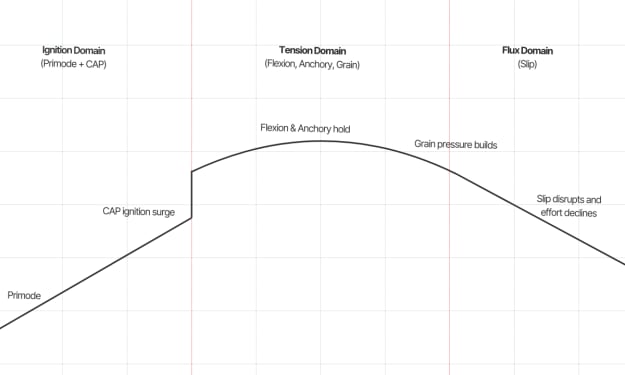
Burnout, Flexion, and the Cognitive Drive Architecture of Effort Failure
Burnout doesn't always mean you're doing too much. Sometimes it means the task stopped adapting to you. The common story is that burnout arrives because you've stretched yourself too far, too many hours, too many responsibilities, too little rest. And yes, that happens.
By Nikesh Lagun8 months ago in Psyche
When the Task Feels Wrong: There’s Nothing Wrong With You; It Just Doesn’t Fit Yet
That sensation, the strange friction between a clear task and your inability to begin, is not failure. It’s not laziness. And it’s not about skill. It’s a structural misfit. What you’re experiencing is what I call a shape problem.
By Nikesh Lagun8 months ago in Psyche
Effort Isn’t a Feeling. It’s a System.
You sit at your desk. You know what needs to be done. You care. You’re committed. Still, nothing moves. Minutes pass. The tension builds. Maybe you scroll. Maybe you spiral. Maybe you start something else that feels easier, cleaner, and safer.
By Nikesh Lagun8 months ago in Psyche
Slip and the Foundations of Cognitive Drive Architecture
In cognitive science and psychology, fluctuations in mental performance are often attributed to motivation, distraction, or emotional state. While these factors undoubtedly play a role, a newly proposed structural field—Cognitive Drive Architecture (CDA)—suggests that the story of effort variability is more mechanically complex. CDA introduces a system-level theory for understanding how cognitive effort emerges, stabilizes, or fails, based on internal configuration rather than external conditions or surface-level traits.
By Nikesh Lagun9 months ago in Psyche