Muhammad Saad
Stories (465)
Filter by community
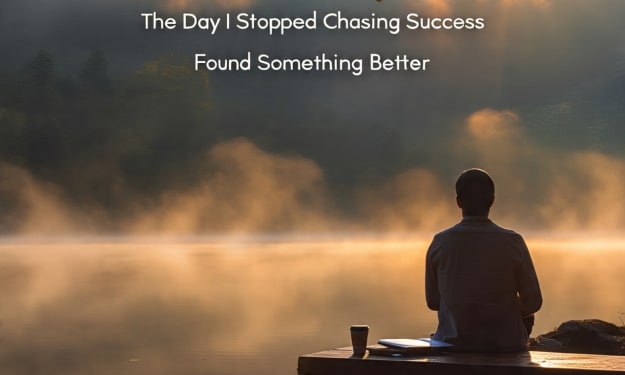
"The Day I Stopped Chasing Success and Found Something Better"
I woke up that morning with a knot in my stomach. My phone screen lit up with messages, reminders, and one glaring red notification: Deadline Missed. The client I’d spent three months trying to impress was pulling the plug. I had been working 60-hour weeks, skipping meals, losing sleep, and avoiding friends—all for this project. And now, with one missed email and a single misstep, it was gone. I sat on the edge of my bed, staring at the floor. I didn’t cry. I didn’t scream. I just felt… empty. Out of instinct more than anything, I grabbed my jacket and walked outside. It was early—just past six—and the sun hadn’t fully risen. The streets were still half-asleep, just like me. My feet led me to a nearby park I rarely visited, even though it was just a ten-minute walk from my apartment. The trail curved around a quiet lake, its surface glassy and undisturbed. I sat on a bench facing the water, trying not to think. No calendar, no Slack pings, no unread emails. Just stillness. That’s when I noticed an older man sitting on the bench a few feet away. He looked up and smiled gently. I gave a polite nod back, assuming that would be the end of it. But after a few minutes of shared silence, he said something I wasn’t expecting. “You look like someone who’s been chasing too hard.” I turned, surprised. “Excuse me?” He chuckled softly. “I used to wear that same face. Like you’re holding your breath and running uphill at the same time.” I laughed, not because it was funny, but because it was painfully true. “I just lost a big opportunity,” I said. “I’ve been trying to build something, and now it’s… just gone.” He nodded like he’d heard it a hundred times. “I used to be in finance. Built a team, ran a firm, worked nights, missed birthdays, all of it. Thought if I just got to the top, it would all be worth it.” I leaned forward, interested. “And was it?” He shook his head slowly. “Not the way I expected. I got there. I had the title, the money, the house. But I realized I’d become a stranger to my own life.” That hit harder than I wanted to admit. I stared out at the water. “So what did you do?” “I quit,” he said simply. “Started teaching at a community college. Made a lot less money. Had a lot more time. Started watching the sunrise again.” I let his words hang in the air. I didn’t know this man. I didn’t even know his name. But something about his presence felt steady—like he knew what was on the other side of the storm I was in. He stood to leave but paused. “You know, it’s easy to get caught chasing things that were never meant to be caught. Sometimes, stopping is the bravest thing you can do.” And with that, he walked off down the trail and disappeared around the bend. I sat there long after he left, thinking about what he said. That morning, I didn’t go back to my desk. I didn’t open my laptop. I went to a bookstore instead. I wandered through aisles, picked up a paperback I hadn’t read since college, and sat in the café with a coffee I actually tasted. That was the first day in years I didn't measure my worth by my productivity. In the weeks that followed, I made some changes. I didn’t quit my job—not right away—but I redefined how I worked. I started drawing boundaries, saying no to things I used to say yes to out of fear. I took walks in the morning. I called old friends. I even started writing again—something I hadn’t done since my twenties. And strange as it sounds, new opportunities came. Ones that matched who I was becoming—not the person I’d been trying to force myself to be. I never saw that man again. I don’t know his name. But I think about him often. The way he sat with quiet confidence. The way he reminded me that life doesn’t have to be a race. That morning, I thought I had lost everything. Looking back now, I realize it was the day I found something better.
By Muhammad Saad 6 months ago in Humans
"The Truth They Never Told Us: What School Forgot to Teach About Life"
In a classroom lit by fluorescent lights and filled with the hum of busy pencils, I once sat memorizing the Pythagorean theorem. I could calculate the hypotenuse of a triangle, recite the stages of mitosis, and name all the rivers in South America. But when I stepped out of school and into real life, I was left wondering: why didn’t anyone teach me how to actually live? No one ever explained how to manage money—how credit works, why debt snowballs, or how a simple budgeting app could save me years of stress. I learned about the Great Depression in history class, but no one taught me what a credit score was, how to build one, or why missing a $30 payment could haunt me longer than a bad breakup. Taxes? That was a total mystery. I remember feeling proud after my first job at 18, holding that paycheck like it was made of gold. Then came tax season. W-2s, deductions, withholdings—I was lost. I turned to Google and TurboTax, because school had left me blank. I could write a five-paragraph essay on Macbeth, but I had no idea what "filing jointly" meant. Then came relationships. School taught us about the biological mechanics of reproduction, but not about emotional intelligence. No one told me how to communicate when I felt overwhelmed, how to listen without judgment, or that love wasn’t supposed to feel like anxiety. I could diagram a sentence, but I couldn’t untangle the messy feelings that come with being vulnerable. Mental health? Not a topic. We had gym class to stay fit and alert, but no one taught us how to manage anxiety, cope with depression, or even recognize burnout. I learned about Newton’s laws of motion, but no one prepared me for the emotional laws of adulthood—the inertia of stress, the friction of failure, the acceleration of pressure when everything feels urgent. And then there’s the job hunt. Resumes, interviews, cover letters—all blank pages to me. I didn’t know how to write a compelling summary about myself. I was told to “follow my passion,” but no one explained how to negotiate a salary, build a personal brand, or even ask for a raise without sounding ungrateful. Life didn’t care that I graduated with honors. Life asked me if I could adapt, self-regulate, plan, and persist. I don’t say this to blame teachers—they did what they could with what they were told to teach. But the system itself seemed built for test scores, not for thriving. The education system taught me facts and figures, but life demanded resilience, adaptability, and self-awareness. Ironically, I’ve learned more from podcasts, YouTube tutorials, late-night Google searches, and trial-and-error than I did in years of structured schooling. I’ve learned how to invest by watching free webinars. I’ve figured out how to repair credit by reading blog posts. I’ve developed emotional tools through therapy and journaling—none of which were ever part of my curriculum. So why does this gap exist? Because for decades, we assumed that academic knowledge equals success. That memorizing equals mastery. That straight A's equal a straight path. But that’s not the full picture. Success in life is less about what you know, and more about how you apply, adapt, and connect. Imagine a curriculum that includes: Financial literacy 101: budgeting, investing, understanding debt. Emotional survival skills: conflict resolution, setting boundaries, mindfulness. Practical independence: cooking, apartment hunting, reading contracts. Digital literacy: cybersecurity, online reputation, personal branding. Career building: writing resumes, interview practice, networking strategies. This isn’t fantasy—it’s necessity. Because the truth is, we’re all students of life long after we graduate. We’re constantly figuring it out. And maybe, just maybe, if we start valuing life skills as much as academic ones, the next generation won’t feel so lost at 25, wondering why nobody warned them. They’ll know that success isn’t about memorizing the map—it’s about learning how to read the terrain.
By Muhammad Saad 6 months ago in Humans
"The Measure of a Nation: What Population Really Tells Us"
In the center of a crumbling village in eastern Europe, there is a rusted swing set. It creaks gently in the wind now, though once, it echoed with the laughter of children who filled the air with life. My grandmother used to live there. She said the village once had four bakeries, a school with two floors, and a market that bloomed every Saturday with colors and noise. Now, only the post office remains, and even that’s more memory than utility. When I visited last summer, I counted exactly 27 people. Twenty-five of them were over sixty. In cities, we worry about overpopulation—about crowded trains, rising rent, and vanishing personal space. But in places like my grandmother’s village, the opposite is true: there are too few people, and the silence is what spreads. And somehow, both of these realities are part of the same global story. More Than Just Numbers When people hear the word population, they think statistics—birth rates, death rates, immigration flows, charts and graphs. But what population really tells us is a story: of how people live, where they move, what they leave behind, and what they’re dreaming of next. The measure of a nation isn't just in its GDP or its landmass. It’s in the faces of those who walk its streets. It’s in the lullabies whispered in the early hours and the factories buzzing just before dusk. It's in the quiet of a village fading away, and in the chaos of a city being born. The Growing and the Emptying In Lagos, Nigeria, over 2,000 people move in every day. The skyline stretches higher each year. Children grow up dreaming not of leaving, but of building within. Meanwhile, in rural Japan, entire towns are becoming ghost-like. Local governments have started offering abandoned homes to foreigners for free—just to keep the lights on. It’s tempting to call this progress or decline. But it's more complex than that. Population changes reflect who we are becoming—what we value, what we fear, what we hope for. We are a species in motion. A Personal Reckoning I remember one night during my stay in the village, I met a man named Tomasz. He was 78, the former mayor, and the unofficial historian of the town. He invited me into his home, poured some tea, and pointed to a yellowed map on the wall. “There used to be 1,400 people here,” he said, his finger tracing the outline of a now-defunct school. “Every family had four, five children. We had dances in the square, festivals in spring. You couldn’t walk a block without greeting someone.” “Where did they go?” I asked. He shrugged. “Where they had to.” Cities, other countries, jobs—places where life promised something more. His own children now lived in Berlin and Warsaw. He didn’t blame them. Before I left, he said something that’s stayed with me: “Population doesn’t just measure growth. It measures connection.” Why It Matters It’s easy to see population as abstract—too big, too broad, too political. But behind every demographic shift is a story: a mother deciding whether she can afford another child, a young adult choosing between tradition and opportunity, a nation deciding who is welcome and who is not. The most populous countries in the world are also the most diverse, the most conflicted, the most dynamic. That’s not a coincidence. Where people gather, stories collide. Innovation is born. So is tension. And resilience. The places with shrinking populations, like my grandmother’s village, carry a different kind of wisdom—a quiet testament to what happens when people leave and don’t come back. There’s beauty in that too. A dignity. A Shared Future The future of population isn’t just about how many of us there are. It’s about how we choose to live together. Will we hoard opportunity, or spread it? Will we build megacities that welcome all, or walls that keep out the unfamiliar? We often think numbers tell us everything. But they don't. Not really. What they do is ask us questions: Who are we becoming? What are we leaving behind? And how do we make space—not just for more people, but for better lives? The Final Thought When I left the village, Tomasz waved from his porch. The swing creaked behind him. And I couldn’t help but wonder: What happens to a place when no one remembers it? What happens to a story when there’s no one left to tell it? Maybe that’s the real measure of a nation—not just how many people it holds, but how well it remembers, and how willingly it dreams.
By Muhammad Saad 6 months ago in Humans
Earth: The Living Puzzle
From space, Earth looks like a marble — blue, green, and white, suspended in the black canvas of the universe. But beneath its beauty lies a complex, living system—an ancient puzzle still being assembled piece by piece. Scientists, explorers, and thinkers across time have tried to decipher it. And now, more than ever, that puzzle demands our attention. The Puzzle of the Past Earth is over 4.5 billion years old. Its surface has been shaped and reshaped by fire, ice, water, and life itself. The continents we know today were once part of a single supercontinent called Pangaea. It broke apart, drifted, and gave birth to the landmasses we now call home. Fossils, like time-stamped puzzle pieces, reveal ancient oceans, vanished species, and catastrophic events. The extinction of the dinosaurs, for instance, was caused by an asteroid that struck with the force of billions of atomic bombs. That single impact reshaped Earth’s biological path—and made room for mammals, and eventually humans, to rise. Each layer of rock tells a story. Each ice core drilled from Antarctica holds frozen bubbles of ancient air, allowing scientists to “read” Earth’s climate over hundreds of thousands of years. The planet keeps records, even if we don’t always know how to interpret them yet. The Present We Inhabit Today, Earth is a masterpiece of balance—one that supports nearly 9 million species, with humans playing the most dominant role. But our presence is starting to warp the puzzle. Since the Industrial Revolution, our use of fossil fuels has sent vast amounts of carbon dioxide into the atmosphere, trapping heat and warming the planet. Glaciers are melting. Sea levels are rising. Coral reefs, once vibrant underwater cities, are bleaching and dying. Weather patterns are growing more extreme, from hurricanes in the Atlantic to wildfires in the Arctic. At the same time, Earth’s biodiversity—the rich tapestry of life—is unraveling. Species are disappearing at a rate 1,000 times the natural background rate. This isn’t just a tragedy for wildlife. Every lost species is a missing piece in ecosystems that provide us with clean air, water, and food. Yet Earth remains resilient. Forests still breathe. Rivers still run. Migrating birds still trace invisible sky-paths mapped over millennia. The planet is not giving up—it’s waiting for us to listen. The Fragile Future The puzzle of Earth’s future is the most uncertain of all. Will we continue to take more than we give? Or will we learn to live in harmony with the only home we’ve ever known? Solutions exist. Renewable energy like solar and wind can replace dirty fuels. Cities can be redesigned to be green, walkable, and sustainable. Agriculture can be transformed to regenerate soil and protect pollinators. Most importantly, our relationship with nature can shift—from one of domination to one of stewardship. Young people around the world are already stepping up. Movements like Fridays for Future and Earth Guardians are led by youth who understand what’s at stake. Scientists are developing carbon-capture technology, reviving endangered species, and restoring damaged ecosystems. Indigenous communities, who have long lived in balance with the land, offer ancient wisdom for modern problems. But change must come quickly. The next ten years will shape the next thousand. If we delay, the cost will be measured not just in dollars—but in lives, livelihoods, and lost potential. One Planet, One Chance In a way, Earth itself is the greatest puzzle ever created—self-sustaining, interconnected, and endlessly fascinating. Every rainforest, glacier, desert, and deep-sea trench is a piece. So are we. We are not separate from this planet. We are made of it. The calcium in our bones came from ancient stars. The water in our cells has flowed through rivers and clouds for millions of years. When we protect the Earth, we protect ourselves. As we look forward, let’s stop treating Earth like a resource and start treating it like a relative—an elder whose stories we must learn, honor, and pass down. Because the puzzle is still being built. And we still have time to finish it—together. --- Author's Note: Our planet doesn’t need us—but we absolutely need it. Earth: The Living Puzzle is a reminder that science, history, and hope are all connected. Every small action counts. And every one of us is a piece that matters.
By Muhammad Saad 6 months ago in Earth
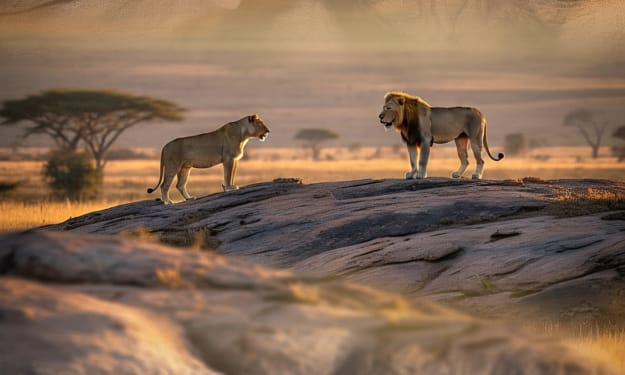
Roar of Two Kings
The sun was just beginning to rise over the golden savannah, casting a warm glow across the tall grasses. Birds cried overhead. Wildebeest huddled near the river. But high on the ridge, two lions stood still—silent shadows against the growing light. They were brothers once. Now, they were rivals. Tau, the older lion, bore the scars of countless battles. His mane had darkened with age, and his eyes held the calm of one who had ruled long and wisely. He stood tall on the eastern hill, facing the dawn. Across the valley stood Ralo, younger by two seasons, but fierce and ambitious. His mane was fuller, his muscles younger, and his eyes burned with the fire of challenge. He had waited, watched, and now, he roared. It was a roar that cracked across the plains, sending flocks of birds skyward. It was not just a challenge—it was a declaration. The pride had seen the signs for weeks. Ralo’s defiance, the younger lionesses lingering longer at his side, the boldness with which he walked the territory that Tau once claimed alone. There was no room for two kings in this kingdom. Tau didn’t roar back. He didn’t need to. He turned slowly and began the descent into the valley between them. They met where the sun touched the earth, amid dry grass and old bones. No lioness followed. No cubs watched. This was between them, and them alone. Ralo growled low. “You’ve ruled long enough, brother.” Tau’s voice was a whisper. “Is this what you want? Or what the pride whispers in your ear?” “I want what’s mine. What I’ve earned.” Tau looked at him then—not as a rival, but as the cub he once shielded from hyenas, the young lion he hunted with, taught to wrestle, taught to roar. “You think ruling is about power,” Tau said. “But power fades. Responsibility doesn’t.” “You speak like an old lion.” Ralo stepped closer. “Maybe you are.” The wind shifted. For a moment, time stood still. Then they lunged. Claws met fur. Teeth snapped. Dust rose around them as the ground bore witness to the battle of blood and legacy. It didn’t last long. Battles between lions rarely do. A few minutes, maybe less. But to the earth beneath them, to the spirits watching from the acacia trees, it was an eternity. Tau stood, chest heaving, a gash above his eye. Ralo lay still, groaning, breath shallow but alive. Tau did not strike again. He turned away. “Finish it,” Ralo rasped. Tau paused. “No,” he said. “You are not my enemy.” “But I challenged you—” “And I answered. Not to kill you, but to remind you who we are.” Ralo stared up at the sky, the heat of pain pulsing through him. “Then what now?” Tau looked toward the rising sun. “We lead—together.” Ralo blinked. “There’s no pride in two kings.” “There is,” Tau said, “if they remember why they lead.” High on the ridge, two lions stood once again. One bore wisdom. The other, fire. And beneath them, the pride stirred—stronger not because of who won, but because of who chose not to destroy what they could not replace. And when they roared again, it was not in defiance, but in unity. A sound that echoed across the plains. A sound the savannah would remember.
By Muhammad Saad 6 months ago in Wander
Conversation with baby boy
The sun filtered gently through the half-drawn curtains, casting golden stripes across the nursery floor. A soft coo broke the stillness, followed by a high-pitched squeal of delight. Ryan looked up from the pile of laundry he was folding on the couch, grinning. That unmistakable sound belonged to his seven-month-old son, Leo — his little chatterbox. "Are you telling stories again, buddy?" Ryan asked, walking toward the crib. Leo beamed when he saw his dad, arms flailing and legs kicking in excitement. He let out a loud “Ahhh-ba-ba!” and reached up with his tiny hands. Ryan scooped him up effortlessly, planting a kiss on the soft fuzz of his hair. “What a morning, huh? Did you sleep well? Dream about dinosaurs again?” Leo responded with a string of enthusiastic syllables, a babbling melody full of stops, starts, and laughter. “Really?” Ryan nodded solemnly. “You don’t say. And then what happened?” They settled into the rocking chair by the window, where the father-and-son ritual always took place. Ryan liked to call it their "morning meeting." No phones, no distractions. Just time to talk — even if only one of them knew what they were actually saying. Leo loved it. His babbles came in waves — urgent and expressive. He’d pause dramatically, then burst into another string of sounds, looking Ryan straight in the eyes like he was waiting for a response. “You think the giraffe toy is secretly in charge of the crib?” Ryan asked, playing along. “I had my suspicions.” Leo laughed — a high, infectious giggle that made Ryan’s heart feel like it might float away. Since becoming a stay-at-home dad eight months ago, Ryan had grown used to the rhythm of Leo’s sounds. Mornings were for conversations, midday was for naps and soft lullabies, afternoons for crawling practice and music. He’d always been a quiet guy — not big on words. But with Leo, words came easily, even if most of them were silly. "Okay, let's talk business," Ryan said in a mock-serious tone. He grabbed a soft board book from the shelf and opened it to a page showing animals. “Who’s this?” Leo reached out and smacked the picture of the duck. “Gah!” “Very good, Mr. Leo! That is indeed a duck. Promotion for you.” He flipped the page. “And this one?” Leo squinted, then squealed: “Mmmmm-ba!” “Elephant? Not quite. But I admire the confidence.” It was in these little exchanges that Ryan felt the enormity of fatherhood. Not in the big milestones like first steps or first words — though those would come — but in the quiet consistency of showing up, listening, and responding to a baby who didn’t speak his language but understood everything that mattered. Leo tilted his head and looked at his father with wide, curious eyes. For a moment, he was quiet — unusually so. Ryan blinked. “What’s on your mind, little guy?” Leo reached up and patted Ryan’s cheek gently. Then, in a soft murmur, he said, “Da-da.” Ryan froze. Time paused. “Wait... what did you say?” he whispered, his heart thudding against his ribs. Leo’s face lit up. “Da-da!” It was clear. Distinct. Intentional. Ryan felt a rush of warmth rise to his face, and suddenly his eyes were misty. “That’s me,” he whispered, kissing Leo’s forehead. “I’m Da-da.” He couldn’t believe it. All the endless diaper changes, the sleepless nights, the lullabies hummed off-key — none of it had prepared him for how powerful this moment would be. It wasn’t just a sound. It was acknowledgment. A tiny voice reaching out, bridging a gap with just two syllables. “Say it again?” Ryan smiled. Leo bounced in his arms and clapped. “Da-da-da-da!” Ryan laughed, blinking away the tears. “You’ve made my whole year, kiddo.” Outside, the world went on with its noise and its rush. But in that room, time softened. A father and his son sat by the window, sharing their first real conversation. There were no fancy words or deep insights — just tiny talks filled with big smiles and even bigger love. Ryan knew that one day, Leo would speak in full sentences. He’d ask questions about stars and dinosaurs and why the sky changes color. He’d form opinions, throw tantrums, make jokes, and tell stories of his own. But this moment, this first exchange, would always hold a sacred place. Because it was the beginning. And sometimes, the smallest voices say the most important things.
By Muhammad Saad 6 months ago in Humans
The Best Food
The smell hit Maya the moment she opened the front door—a blend of garlic, onions, and something sweet, something warm. She dropped her backpack, kicked off her shoes, and followed her nose into the kitchen. There, as always, stood Grandma, apron tied neatly, wooden spoon in hand, her silver hair pulled into a tidy bun. A large pot simmered on the stove, and the kitchen table was a beautiful mess—dough dusted in flour, half-chopped vegetables, and a bowl of something golden and sticky. "You're just in time," Grandma said without turning. "Stir the pot for me, will you?" Maya grinned and took over the spoon. "What are we making?" "Something special. An old recipe from my mother’s mother. We used to make it during the monsoon season back home." Maya raised an eyebrow. Grandma had lived a lifetime before coming to this little house in the suburbs. Sometimes, she told stories about mango trees, rainstorms, and spice markets. But Maya had never tasted the food from those stories. Not really. "I thought we were making stew." "Stew, yes," Grandma said. "But not just any stew. This—" she tapped a handwritten note taped to the wall "—is tarkari. It's got lentils, yams, spices… and a little memory." Maya kept stirring, the scent growing richer. "What do you mean, memory?" Grandma chuckled. "Every good dish is part memory. We cook not just with our hands, but with what we remember. Who we cooked with, how it made us feel. Sometimes, you taste something and it brings back a whole afternoon from years ago." Maya nodded slowly. She thought of the cafeteria’s pizza, the stale kind, and how it reminded her of rainy lunch periods. Not quite the same, but maybe it counted. They worked in silence for a few minutes, the only sounds the bubbling pot and the occasional thump of a knife on the cutting board. Maya loved these afternoons with Grandma—just the two of them, no rush, no schoolwork. "What makes this the best food?" Maya asked, carefully dropping a pinch of cumin into the pot. Grandma paused. "It’s not just the taste. It’s the story. My mother made this when our house flooded, and we had only a few ingredients left. It fed six people for three days. She made it again when your uncle was born, and again when I left for college. Each time, it reminded us that we were still a family, no matter what changed." Maya looked into the pot. It didn’t look like much. But it smelled like home. "Want to know the secret?" Grandma asked. Maya nodded eagerly. "It's not just the spices. It's stirring slowly, thinking of who you love. Food listens. It carries feeling. So if you're angry when you cook, people taste it. But if you're kind…" She smiled, tapping Maya's nose with flour. "…they’ll never forget it." Maya kept stirring, slower this time, imagining Grandma as a girl, barefoot in a kitchen across the ocean. She pictured her great-grandmother, strong and warm, stirring the same stew. When the dish was finally done, they sat at the table with bowls in their hands. The stew was thick, fragrant, and golden with turmeric. Maya took a bite—and closed her eyes. It was unlike anything she'd ever tasted. Spicy but gentle. Sweet but earthy. It made her feel something she couldn’t quite explain—like she belonged to a story bigger than herself. “This,” she said, “is the best food I’ve ever had.” Grandma smiled. “Now you know. The best food isn’t found in restaurants or cookbooks. It’s made with memory, love, and someone to share it with.”
By Muhammad Saad 6 months ago in Potent
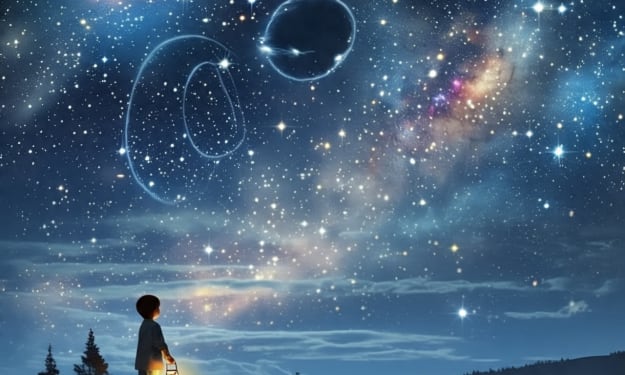
The Child Who Taught the Stars to Dream
The village of Bramblewood was a quiet place, nestled between silver-threaded forests and soft hills that shimmered in the moonlight. Nothing ever really happened there—or so the grown-ups liked to say. But children know better than adults what happens when the world goes quiet. That’s when wonder tiptoes in. At the edge of the village lived a small girl named Liora. She was an odd child, by Bramblewood standards. She didn’t play the usual games or chatter about chores and school. Instead, she spent hours staring at the sky, lying in the tall grass, whispering stories to the clouds and listening for their replies. "She's always dreaming," the townsfolk said with a shake of their heads. "That one’s got her head in the stars." They weren’t wrong. Every night, after the lanterns were blown out and the fires faded, Liora would slip out of her cottage and climb Windwhistle Hill. She brought only a blanket, her sketchbook, and a tiny glass lantern that glowed even without a flame—something she said was a gift from the moon. No one knew where it had come from. But it pulsed softly with light, like a heartbeat. Liora would sit beneath the sky for hours, watching the stars blink awake. She saw more than anyone else did. Not just constellations or planets—but stories. She said the stars dreamed, just like people. But they’d forgotten how. “They're lonely,” she whispered one night to a small field mouse who had curled beside her. “They shine so bright, but they’ve forgotten why.” So Liora did what she did best: she told them stories. Each night, she’d choose a star and whisper to it. Tales of dragons who learned to sing, of raindrops who wished to be snowflakes, of clocks that ticked backwards to visit forgotten days. She believed that if she could give each star a dream, they might remember how to make their own. And something strange began to happen. At first, no one noticed. But the skies over Bramblewood began to shift. Stars flickered in strange rhythms, like laughter. New constellations appeared—ones not in any map. A leaping fox. A child with wings. A lighthouse surrounded by clouds. The astronomers in the cities scoffed. “Optical illusions,” they claimed. But the children in Bramblewood felt it. When they looked up, they felt warmth behind their eyes, like being remembered. Some even said the stars whispered back. One night, as Liora settled into her usual spot, she noticed something unusual. A single star—low, golden, and trembling—seemed to be pulsing brighter than the others. She focused on it, her breath catching. “I’ve never seen you before,” she murmured. The star blinked. Once. Twice. Then— It fell. A streak of gold slashed the sky and vanished behind the trees near the old well. Without thinking, Liora grabbed her lantern and ran. The forest wasn’t kind at night. It creaked and groaned and sometimes rearranged itself when no one was looking. But Liora was not afraid. She had walked this path in her dreams a thousand times. She found it in a clearing: a small figure curled into a glowing ball, like a child made of light and starlight. As she stepped closer, it opened its eyes—vast and deep, like entire galaxies had been folded into them. “You called me,” it said. Liora’s voice trembled. “You’re a star.” The child nodded. “You gave me dreams. Now I want more.” Liora sank to her knees. “Why me?” The star-child tilted its head. “Because you remember wonder. Most forget. But you… you tell it stories.” It reached out and touched her forehead. And suddenly, Liora saw things—universes being born in silence, comets that sang lullabies, black holes that kept secrets like old diaries. And in the middle of it all, a great loneliness. “They're all dreaming alone,” she whispered. The star-child nodded. “But dreams grow brighter when shared.” They stayed there until the first hint of dawn. Then the star-child rose, glowing even brighter. “I must return,” it said. “But I’ll carry your stories with me. And I’ll teach the others to dream again.” Liora reached out, touched its hand. “Will I see you again?” The child smiled. “Look up.” And with that, it rose—slowly, then swiftly—like a lantern caught by the wind, returning to the sky. It flared once, brilliantly, before settling into place among the stars. That morning, the villagers woke to find a new star shining directly above Windwhistle Hill. Brighter than any other, it pulsed in steady rhythm—like a heartbeat. They didn’t know what it meant. But the children did. Liora never stopped visiting the hill. She still told stories. Only now, she wasn’t alone. More children began to gather, blankets in hand, eyes wide with wonder. They listened, and soon, they started sharing stories of their own. The stars listened too. And high above, in the endless tapestry of night, new constellations bloomed—each one born of a story, a dream, a whisper from a child who still believed. Some say stars burn because of science. But maybe, just maybe… some of them burn because of stories told by children who never stopped believing in wonder.
By Muhammad Saad 6 months ago in Wander
The Day Time Froze at 11:11
I remember the exact moment time stopped. It was 11:11 a.m., Tuesday. The sun had just broken through a week-long storm, scattering gold across my bedroom wall like scattered coins. I was sipping lukewarm coffee, half-listening to the soft whirr of the ceiling fan, when the world grew... still. At first, I thought it was just me — that dizzy, floating sensation I’d come to associate with grief. But it wasn’t in my head. The coffee froze in mid-pour as I tilted the mug. Outside the window, a crow hovered mid-wing, trapped in silent flight. The fan above didn’t turn. The second hand on my grandfather's clock, always loud, had gone quiet — caught between the tick and the tock. 11:11. The moment itself wasn’t unusual — people make wishes at that time. I had, too, as a kid. Back then, I believed time listened. I believed everything mattered. That belief had faded. Until now. --- I walked through the house in slow motion, though it wasn’t me who was slowed — it was the world. My mother’s knitting needles were frozen mid-air in the living room, suspended in the middle of an unfinished scarf she’d been making for winter, though winter was months away. My younger brother, Sam, was on the porch, one sneaker half-on, reaching toward a paper airplane he’d just thrown. It hung in the air like it had never left his hand. Everything — and everyone — was locked in that precise instant. Except me. Panic flickered in my chest, but it was softened by awe. The kind of awe you feel at the edge of a cliff or inside a cathedral. It wasn’t terrifying. It was... reverent. Like time had taken a breath — and I’d been invited to witness it. But then, I saw her. --- She stood in the hallway at the end of the house, just outside my father’s old study. I hadn’t seen her in over a year, not since the accident. Her dress — the soft yellow one she wore the summer we fell in love — floated around her knees like a painting come to life. Her eyes met mine, warm and tear-glossed. “Ellie?” I whispered. She smiled. I stepped forward, heart slamming in my chest. “Is this real?” She nodded. Ellie — my Ellie — had died in a car crash last spring. I’d tried to tell myself it wasn’t my fault. I wasn’t the one driving. But I had made her late. We’d argued over something stupid — which song would be our first dance at the wedding. She left in frustration. I watched from the window as she pulled away. That was the last time I saw her alive. Until now. --- “How are you here?” I asked, barely breathing. Ellie reached out, and though I couldn’t feel warmth, I felt weight — the pressure of her hand wrapping mine. Her fingers brushed my palm, leaving a tingling trace of memory. “This moment isn’t for the world,” she said softly. “It’s for you.” “But how?” She stepped closer. “Time broke for you, because you broke it first. You’ve been stuck in that moment — the moment I left. Even when the clocks kept ticking, you didn’t move forward.” I felt tears rising. “I didn’t know how.” “You still don’t,” she said gently. “But now, you’re listening.” I looked around — at the house frozen in motion, at the silence that hummed like a heartbeat. “Why 11:11?” I asked. Ellie smiled. “Because it’s a wish. It’s the universe’s way of opening the door. But you had to walk through.” I wanted to hold her. To beg her to stay. To scream that this wasn’t fair — that we’d never gotten our first dance, our shared apartment, our stupid dog. But all that came out was, “I miss you.” “I know,” she said. “But you can’t live in missing. You have to live in the now.” --- We stood together in the stillness — the last moment of us. Then she leaned forward and kissed my forehead. Her lips were cool, like a memory fading in the breeze. “When time starts again,” she said, “promise me you’ll move with it.” I tried to answer, but my throat clenched. And just like that, she stepped back into the hallway shadows. Her outline blurred, like fog meeting sunlight. She faded — not all at once, but gradually, like a song slipping out of reach. Then I heard it. Tick. The clock resumed its motion. The crow outside cawed in surprise and flew on. Sam’s paper airplane glided lazily through the air and landed on the porch steps. The coffee finished its pour. Everything — everyone — moved forward. Except now, so did I. --- The world didn’t notice what had happened. But I did. Every 11:11 since then, I pause — not to wish, but to remember. To listen. Because time froze once, just for me. And in that suspended moment, Ellie left me a secret: That healing doesn’t come from forgetting. It comes from moving with the hands of the clock — not against them.
By Muhammad Saad 6 months ago in Wander
"The Hidden Life of Your Money"
Most people don’t think much about what happens to their money after they spend it. They swipe a card or hand over a bill, get a receipt, and move on. But if your dollar could talk, it would tell a story more exciting and far-reaching than you'd expect. Let’s follow one ordinary dollar — call it “Buck” — and see where it goes. --- Chapter 1: The Coffee Shop It’s Monday morning. You’re groggy and running late, so you grab your usual $5 latte from the local coffee shop. Part of that money — let’s say Buck — goes straight into the register. The rest? Tips, supplies, and expenses. But Buck? Buck ends up in the hands of the cashier, Sarah, who’s working her way through college. At the end of her shift, Sarah pockets her tips and heads to the grocery store. Buck is now part of her $20 purchase — apples, pasta, and some cheap granola bars. Just like that, Buck changes hands again, now owned by the supermarket. --- Chapter 2: The Supply Chain At the supermarket, Buck is added to the daily cash flow that helps pay for deliveries and electricity. When the store buys more stock from its wholesaler, Buck becomes part of a larger transaction that supports truck drivers, warehouse staff, and suppliers across the country. Eventually, Buck trickles down to a farmer in California, who grows the apples you love. That dollar may help him fix a broken irrigation pipe or buy seeds for the next planting season. It’s no longer just “your dollar” — it’s fuel for an entire network. --- Chapter 3: The Bank Not all money moves physically. Often, it rests — temporarily — in banks. Let’s rewind. When you got paid last week, your paycheck was direct-deposited into your account. That money didn’t just sit there. Your bank lent it out — to someone applying for a mortgage, to a small business needing startup capital, or even to fund government bonds. Every dollar you save becomes part of the financial system that drives investment and growth. Buck, in the form of electronic digits, may have helped someone buy their first home or fund a medical clinic in a developing country. That’s the hidden power of saving — your money can work for you and others, even when you’re not spending it. --- Chapter 4: The Dark Side But not every journey is bright. Sometimes, Buck finds itself in less noble places: fueling fast fashion made in sweatshops, supporting companies that exploit workers or damage the environment, or lost to high-interest debt that keeps families struggling for years. Where you spend and how you invest can unintentionally support practices that don’t align with your values. For example, using a credit card irresponsibly can bury someone in interest payments — $1 spent turns into $3 repaid over time. That’s not just expensive. It’s dangerous. Buck becomes a burden when it’s not treated with respect. --- Chapter 5: The Bigger Picture Now let’s zoom out. If millions of people spend and invest consciously — choosing local businesses, ethical companies, sustainable products — the ripple effect can be massive. A dollar might help a small café survive a recession. Another could support clean energy. Another could educate a girl halfway across the globe. When you save, you create security for yourself. When you spend thoughtfully, you influence the world. Money is not just a tool; it’s a vote for the kind of future you want. And it all starts with Buck — and all his little friends. --- Epilogue: The Choice Is Yours Most people see money as either a source of stress or freedom. In truth, it’s both — depending on how you use it. So next time you reach into your wallet, take a second to ask yourself: Where will my dollar go next? What kind of story will it tell? Because every Buck has a journey. And you are its guide. --- Key Takeaways: Every dollar you spend has a ripple effect. Your money supports jobs, businesses, and industries — for better or worse. Saving and investing wisely can help others. Banks and institutions use your money to fund loans and growth. Your financial choices shape your life and the world. Being intentional can align your spending with your values. Even small amounts add up. Don’t underestimate the power of just one dollar.
By Muhammad Saad 6 months ago in Earth
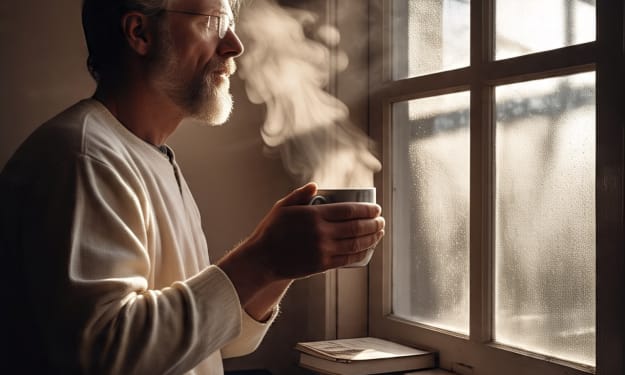
"Steeped in Silence"
The kettle hissed, a thin ribbon of steam curling toward the ceiling like incense from a quiet prayer. Thomas leaned against the kitchen counter, waiting. He never rushed this part — the water had to be just before the boil, not roaring, not angry. Just ready. He opened the wooden tea box. Inside were rows of small glass jars, each labeled in his tidy handwriting: Assam, Sencha, Silver Needle, Lapsang Souchong. He ran a finger across the lids, finally stopping on one labeled Oolong. A balanced choice — not too sharp, not too soft. Like today. The teapot was already warm, preheated with hot water he’d swirled and discarded. He added the tea leaves with a small bamboo scoop, watching them fall like tiny curled whispers. Then he poured the hot water, not directly on the leaves but in a circular motion, letting the liquid coax out the story hidden in the dried leaves. Thomas carried the tray to the small table by the window. The house was quiet, as it had been for some years now. No children shouting. No clatter of keys at the door. No voice calling from the next room. Just the soft crackle of the fireplace and the sound of steeping tea. He poured the first cup slowly, the liquid amber and clear. He always poured for two, still. The second cup sat across from him, untouched. It always would. He lifted his own cup, cradling it between his palms. The warmth seeped into his fingers. He inhaled deeply — floral, earthy, a hint of roast. He took the first sip, letting it sit on his tongue, eyes closed. It was never just about the tea. It was about being with the tea. Years ago, when the world moved faster and his thoughts raced even faster still, it was Anna who taught him to slow down. "Sit," she’d said once, gently tugging him away from his laptop. "Breathe. Drink this." He had grumbled, as he always did when interrupted. But he sat. And he drank. It was jasmine green that first time. Light and fragrant. He remembered blinking at her in surprise. “It tastes like a garden in the spring,” he’d said. She smiled. “Exactly. Tea listens to the season. Maybe you should, too.” They made it a ritual. Sunday mornings. Just the two of them, no phones, no clocks. They sat across from each other in silence, speaking only when the tea called for words. The ritual grounded them — through promotions, relocations, even through grief when her mother passed. Tea became their shared language. After the diagnosis, Anna had joked, “Well, at least I’ll have time for more tea.” He had laughed then, because that’s what you do when your heart breaks in slow motion. But they kept drinking. Even when she could barely hold the cup, he would brew, he would pour, and he would sip for both of them. After she passed, the house changed. Or maybe it was he who changed. For a while, the tea grew cold in the pot, untouched. The ritual felt like a cruel echo. But one morning, without thinking, he found himself boiling water again, hand hovering over the jars. He chose Jin Xuan, their favorite oolong. Mellow. But with depth. And he sat. Alone, but not entirely. Today’s brew was just right. Smooth, with a buttery warmth that lingered. He smiled faintly. He could almost hear her voice: “You used too much leaf again.” He looked across the table at the empty chair, then out the window. The garden was overgrown now, but still wild with life — hummingbirds darted between the lavender, bees flirted with the marigolds. The world continued. So did the tea. He stood, refilled the pot with hot water, and poured another cup — for her. “I know,” he murmured. “Too much leaf.” The room held its silence, but it was a full kind of silence, steeped in memory, not absence. Outside, the wind shifted. Inside, the steam rose again. And Thomas drank.
By Muhammad Saad 6 months ago in Styled
Earth: The Home We Share
Long before humans walked its lands or gazed up at the stars, Earth spun silently in the blackness of space. A pale blue sphere cloaked in clouds, it was already teeming with life — from the tiniest microbes deep in the ocean to towering trees that stretched toward the sky.
By Muhammad Saad 6 months ago in Earth