Muhammad Saad
Stories (465)
Filter by community
Walking into the Light
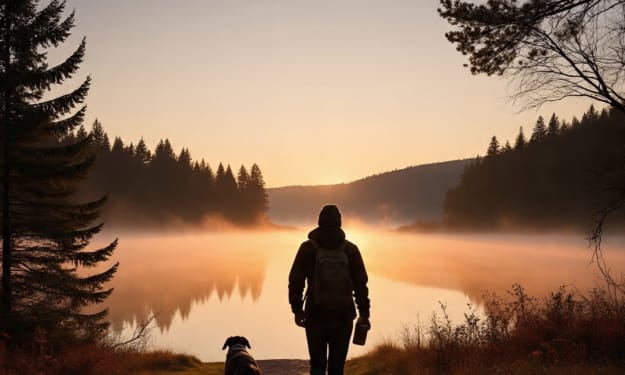
Walking into the Light How Early Morning Strolls at Dawn Can Transform Your Mind, Body, and Day Every morning at 5:45 AM, before the world begins to stir, I lace up my sneakers, zip up my jacket, and step outside into a world that still feels half-asleep. The sky is deep blue, tinged with the faintest promise of sunrise. My street is quiet, save for the soft rustle of leaves and the distant hum of a lone car. This is my sacred hour — the dawn walk. It started as a simple way to add movement to my day. I was working from home, sitting far too long, and needed an excuse to stretch my legs. But I didn’t expect this small habit to become a daily ritual that would shift the way I see everything. There’s something almost magical about walking while the world is still waking up. The air is cooler, crisper, and somehow more honest. I pass the same old trees and sidewalks as I would at any other time, but at dawn, they seem more alive — like they’re sharing a quiet secret with those few of us awake early enough to listen. Some mornings, the mist clings to the ground, curling around my ankles as I walk. Other days, the sky blooms with oranges and pinks, as if the sun is painting the day ahead just for me. Birds begin their chorus slowly, one curious chirp at a time, then a full-blown melody. I find myself walking slower just to take it in. There’s science behind this peace, too. Morning sunlight helps reset our circadian rhythms, improving sleep and mood. Studies show that low-intensity aerobic activity, like walking, reduces stress hormones and increases endorphins. But even without the data, I can feel the difference. On the mornings I skip my walk, I’m foggier, more irritable. When I walk, I’m clear-headed and grounded. One of the most surprising benefits is the space for reflection. With no phone in hand and no agenda, my thoughts wander freely. I’ve solved problems during these walks that stumped me for days. I’ve had ideas for projects, remembered old friends I needed to call, and even processed emotions I didn’t realize I was carrying. It’s not just exercise — it’s therapy. Sometimes I pass another dawn-walker — an older man with a slow, steady gait and a beagle trotting beside him, or a young woman in a hoodie, earbuds tucked away, also choosing silence over sound. We nod, a quiet camaraderie passing between us. We’re part of a quiet club: the ones who rise to meet the day before it arrives. It’s not always perfect. Some mornings are cold and gray, and it takes willpower to get out of bed. There are days when I feel too busy or too tired. But I remind myself: it’s just 20 minutes. And it always gives back more than it takes. Walking at dawn has become more than a habit — it’s a way of coming home to myself before the noise of the day begins. It’s a gentle rebellion against rushing. A way to claim a piece of time that belongs only to me. If you’ve never tried it, I encourage you: set your alarm a bit earlier. Don’t overthink it. Just get up, put on something warm, and walk out the door. You don’t need a destination. Let your feet find their rhythm. Let the quiet fill you. Let the light guide you. You may discover, as I did, that the world is different at dawn — softer, wiser, more generous. And you may find, slowly but certainly, that you are different too.Start writing...
By Muhammad Saad 5 months ago in Petlife
The Light Beneath the Leaves
The Light Beneath the Leaves How the Forest Dwellers Built Harmony from Shadows in the Hidden Village of Thaloren Deep within the emerald heart of the Elderwood Forest, where the sunlight danced through layers of ancient leaves and time moved gently like a breeze, lay the hidden village of Thaloren. You wouldn’t find Thaloren on any map, for it wasn’t drawn with lines or walls—it lived among the trees, woven into the roots and branches of the forest itself. Thaloren was home to the Sylari, a gentle people with bark-textured skin, leaf-kissed hair, and eyes that shimmered like dewdrops. They lived in harmony with the forest, crafting homes inside tree hollows, gathering food from glowing fruit-bearing vines, and singing to the stars each evening from treetop platforms. Long ago, however, Thaloren had not always been peaceful. There had been a time when the forest dimmed, when the ancient canopy grew too thick and blocked out the sun. Plants stopped growing, animals grew restless, and the Sylari began to fear the shadows. They blamed each other for the darkness, building small fires to keep it away, which only scared the forest more. But in the midst of this fear, a young Sylari named Liora believed differently. She had always felt the forest breathe with her—each root a heartbeat, each leaf a whisper. "The darkness is not punishment," she told her people. "It is an invitation to listen. To learn what the forest needs." The elders laughed. “You’re too young to understand,” they said. “Fire is safety. Fire is control.” But Liora didn’t give up. Guided by dreams and quiet intuition, she wandered deep into the untouched parts of the forest, further than anyone dared. There, she found something unexpected—not monsters or danger, but light. Gentle pulses of golden glow rising from beneath the roots, where the forest stored its oldest memories. Liora knelt by the glowing soil and whispered, “What are you?” The forest answered not in words, but in warmth. In understanding. The light was life—pure, ancient, and shared. It had been buried, waiting to be remembered. When she returned to Thaloren, her hands glowed with the soil’s light. The villagers stared in awe. "This is the light beneath the leaves," she told them. “It’s not from fire. It’s from listening. From trusting.” With careful guidance, Liora taught them how to tend to the forest in a new way—by restoring the balance. They trimmed the canopy, allowing sunlight to filter through again. They sang to the roots, planted bioluminescent seeds, and slowly, the village began to change. The fires were no longer needed. The fear faded. Homes glowed softly at night from the natural light of moss-lanterns and crystal fruit. Children played in the trees without worry. Elders sat beneath moonflowers and told stories not of fear, but of hope. And Liora became the first “Lightkeeper” of Thaloren, honored not for control, but for care. Years passed, and Thaloren flourished. The forest thrived, not just above ground, but below, where light and life wove together like threads in an ancient tapestry. The Sylari no longer tried to tame the forest—they walked beside it. Every year, on the longest night, the village gathered around the Heartroot Tree—the oldest in the forest—and planted one glowing seed in the soil. It was their tradition, a symbol of trust, and a promise to the forest that had once been forgotten. As Liora grew older, she often sat by the Heartroot, her hands resting on the earth. When asked how she had known what to do, she would smile and say, "Sometimes the light you need isn't above you. It's beneath you—quiet, patient, waiting to be seen." And so Thaloren remained, hidden from the world, not because it needed to be secret, but because some places grow best when they grow together, gently, beneath the leaves.
By Muhammad Saad 5 months ago in Fiction
What is poetry
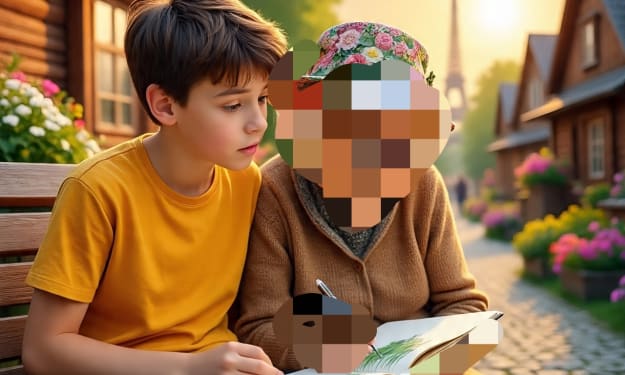
The Window Maya sat by the window of her grandmother’s old cottage, a steaming mug of tea in her hands and a wool blanket wrapped around her shoulders. The autumn wind whispered through the trees outside, scattering golden leaves across the garden like forgotten memories. It had been years since she’d last been here, and everything smelled like time—dust, dried lavender, and something older, quieter. The window was the same. It framed the garden like a painting. Ivy crept along the wooden sill. As a child, Maya believed the window was magical. Her grandmother used to tell her that if you stared through it long enough, you wouldn’t just see the garden—you’d see what the garden remembered. Back then, it felt like a story to help her sleep. But now, at twenty-eight, sitting in the same chair her grandmother used to rock in, Maya wondered if there was more truth in her grandmother’s stories than she realized. She reached for the journal she found in a drawer earlier that morning. It was bound in worn leather, its pages filled with neat handwriting and old poems, each dated, each signed: L.R.—Lilian Rose, her grandmother. She flipped through them, stopping at one that seemed different. It was titled “The Window Remembers.” She read the poem aloud, her voice soft, hesitant: "Through pane of glass and time’s slow thread, The window watches what’s long dead. But those who sit and truly see, May glimpse what once was, used to be." As she read the final line, a chill ran down her spine. She looked out again. The garden shimmered, just for a second. The apple tree that now stood bare and twisted suddenly blossomed, white flowers blooming in an impossible instant. A younger version of her grandmother appeared beneath it—laughing, holding hands with a man Maya had never seen before. Maya blinked, and they were gone. The tree was bare again. The garden was quiet. She stared at the window, her breath caught in her throat. Had she imagined it? She flipped back through the journal, searching for clues. Page after page told of the garden, of love, loss, and someone named Thomas. She’d never heard of him before. There were poems about waiting, of a love who went to war and never returned. Her grandfather’s name was William. Who was Thomas? Curious and a little shaken, Maya went outside. The wind tugged at her sweater as she walked to the tree. At its base was an old stone, nearly buried in earth and moss. She cleared it with trembling hands. “Thomas Hale – 1922–1944” A date. A name. Real. Her grandmother had never mentioned him. Never once. Yet he was buried in the garden, remembered in poems, and shown through a window that may have held more than just glass. Back inside, the window stood still, silent. Maya sat again, her thoughts spinning. What was the truth of her grandmother’s life? What parts had she hidden in poems? How many of our memories are buried under silence? She picked up the journal and turned to the last blank page. Taking a pen from the drawer, she began to write. Not a poem. A letter. To herself. To her future. To the people who would one day sit by the same window and wonder. And outside, unnoticed, a single white blossom bloomed on the apple tree.
By Muhammad Saad 5 months ago in Poets
"Tourism for Good: How Travel Enriches Communities and Cultures"
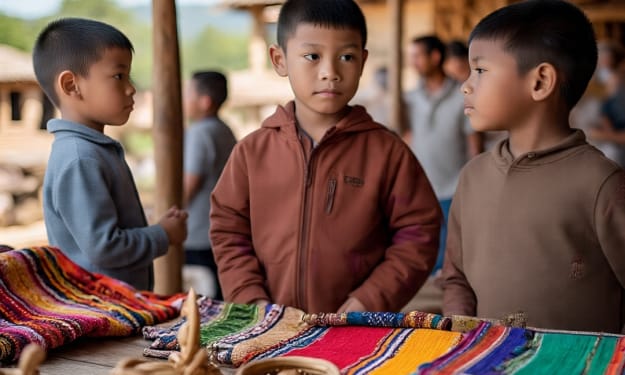
Tourism for Good: How Travel Enriches Communities and Cultures In the small town of Ubud, Bali, where lush rice terraces stretch across the land and temples stand as quiet guardians of tradition, the sound of laughter rings out from a local art market. A group of travelers gathers around Wayan, a skilled woodcarver, as he demonstrates the intricate techniques passed down from his grandfather. His hands move gracefully over the teak, shaping a figure that tells a centuries-old story of his people. The visitors are captivated—not just by the craft, but by the connection they feel. This is the essence of tourism done right. Tourism is often seen through two lenses: the economic benefits and the environmental or cultural concerns. But there’s a growing global movement toward responsible, sustainable tourism—a kind of travel that goes beyond sightseeing and selfies, and instead fosters genuine cultural exchange, protects natural beauty, and supports local communities. The Power of Positive Tourism When travelers choose to engage respectfully and consciously, tourism can be a powerful force for good. It creates jobs, supports small businesses, and helps preserve cultural heritage. In many countries, tourism is a key driver of the economy. According to the UN World Tourism Organization, tourism accounts for about 10% of global GDP and supports one in every ten jobs worldwide. In rural areas especially, tourism brings opportunities where few exist. Local guides, guesthouse owners, artisans, and restaurant workers all benefit from the influx of visitors. These jobs not only provide income but also help keep families rooted in their communities instead of migrating to cities in search of work. Take, for example, the mountain villages of Peru’s Sacred Valley. For generations, these communities depended solely on agriculture. But with the rise of cultural tourism around Machu Picchu, locals have opened eco-lodges, guided treks, and weaving cooperatives that allow travelers to experience authentic Andean life. Visitors learn traditional dyeing techniques or share meals cooked with native crops, while their money directly supports local livelihoods. Culture Sharing, Not Culture Selling Responsible tourism is about mutual respect and exchange. Travelers gain a deeper understanding of the places they visit, and locals feel pride in sharing their culture. This exchange builds empathy, reduces prejudice, and strengthens global citizenship. In Morocco, for instance, community-based tourism has helped Berber villages showcase their traditions while maintaining their way of life. Visitors stay in earth-brick homes, learn to cook tagine, and hear oral histories passed down through generations. Rather than turning culture into a product, these experiences honor and preserve it. Of course, there are challenges. Over-tourism can strain resources, damage fragile ecosystems, and drive up local prices. But many destinations are addressing this with sustainable strategies—limiting visitor numbers, promoting off-the-beaten-path locations, and enforcing eco-friendly policies. A Better Way to Travel As travelers, we have the power to shape the tourism industry through our choices. Supporting locally owned accommodations, eating at family-run restaurants, and hiring certified local guides are simple ways to ensure your money stays in the community. Avoiding unethical activities—like elephant rides or exploiting sacred sites—also helps protect the dignity and environment of the places we visit. Technology, too, is playing a role. Apps and platforms now help travelers find eco-lodges, carbon-offset flights, or ethical volunteer opportunities. Social media is being used not just to document trips, but to inspire more conscious travel choices. A Shared Journey In a world that often feels divided, tourism reminds us of what connects us. When done thoughtfully, travel becomes more than recreation—it becomes a bridge between people, a celebration of diversity, and a source of shared hope for a better future. As Wayan finishes his carving in Ubud, he smiles and hands it to a young couple, who thank him not just for the souvenir, but for the story. In that moment, tourism becomes more than an economic transaction—it becomes a meaningful human connection. And in the end, that’s what the best journeys are all about.
By Muhammad Saad 5 months ago in Fiction
Wanderlust Wonders
Wanderlust Wonders A Journey of Discovery, Connection, and Unforgettable Moments For years, Maya had dreamed of seeing the world beyond her office window. Her days were filled with emails, meetings, and routines that rarely changed. But one rainy afternoon, while sipping tea and scrolling through photos of faraway places, she made a decision that would change her life—she signed up for a 10-day cultural tour through southern Europe. From the moment she stepped off the plane in Lisbon, Portugal, everything felt different. The air smelled of sea salt and pastries, and the streets buzzed with a rhythm that made her feel alive. She was joined by a small group of travelers from different corners of the globe—each with their own reasons for being there, but all united by curiosity and wonder. Their tour guide, Rafael, was passionate and full of stories. As they wandered through cobblestone streets, visited ancient castles, and tasted local delicacies, he brought history to life. In Lisbon, they marveled at tiled buildings and rode the iconic yellow trams. In Seville, Spain, they clapped along to flamenco dancers, their heels striking the floor like thunder. Every stop was a new adventure. But the true beauty of the tour wasn’t just in the places they visited—it was in the connections Maya made. On the third day, while watching the sunset from a vineyard in Andalusia, she struck up a conversation with Elena, a teacher from Argentina. They spoke about life, family, and the courage it takes to chase your dreams. By the end of the evening, they were laughing like old friends, sharing stories over glasses of local wine. As the group continued on to Granada, and then to the Mediterranean coast, Maya noticed herself changing. She began waking up earlier, excited for the day ahead. She started journaling again, capturing moments and emotions she hadn’t felt in years. She learned to say “thank you” in five different languages, tried foods she couldn’t pronounce, and danced in plazas under string lights with people she’d only just met. One of the most unforgettable moments came on the ninth day, in a small coastal town in southern France. The group had just arrived, and the sun was setting over the water. Rafael gave everyone free time to explore. Maya wandered toward a quiet beach and found a local artist painting the ocean. They spoke in a mix of English, French, and gestures, and he let her try her hand at painting. As she brushed soft blues and oranges onto the canvas, Maya felt something shift inside her—a peaceful joy she hadn’t known she was missing. On the final day of the tour, the group gathered for a farewell dinner. There were hugs, photos, and promises to stay in touch. Maya stood up to thank Rafael and her fellow travelers. Her voice trembled slightly, but her smile was wide. “This trip reminded me that the world is full of beauty and kind people,” she said. “Sometimes, you just have to take that first step out of your comfort zone.” When she returned home, things looked the same, but Maya no longer felt the same. She had stories to tell, memories to cherish, and a heart full of gratitude. The trip had awakened something in her—a sense of possibility, of connection, and of wonder. And perhaps most importantly, it reminded her that it’s never too late to start exploring.
By Muhammad Saad 5 months ago in Wander
Shaping a Better Tomorrow: Stories of Progress Around the World
Shaping a Better Tomorrow: Stories of Progress Around the World From climate wins to tech breakthroughs, how global communities are creating real, positive change in 2025 In a world often overshadowed by headlines of crisis and conflict, 2025 is quietly proving that hope, innovation, and collaboration are alive and thriving. Across continents, people are not only envisioning a better future — they’re building it. Turning the Tide on Climate Change In Kenya’s semi-arid regions, what was once dusty, barren land is now turning green. Through a grassroots movement known as “The Green Wall of Hope,” communities are reforesting thousands of hectares of degraded land. Supported by local NGOs and global climate funds, these efforts have helped increase food security, restore biodiversity, and even bring rainfall patterns back to normal in some areas. Meanwhile, Costa Rica recently celebrated its 350th consecutive day powered entirely by renewable energy. The country’s ambitious push into hydropower, wind, and solar has become a model for the world, showing that clean energy isn’t just a dream — it’s a real, achievable goal. In northern Europe, countries like Denmark and the Netherlands have launched massive “climate-positive” building projects. These eco-homes generate more energy than they use and are made from recycled or carbon-neutral materials. Cities are becoming greener, not just in foliage but in policy. Tech for Good: Innovation with Heart In 2025, artificial intelligence (AI) is no longer just a buzzword — it’s saving lives. In India, AI-powered diagnostic tools are being used in rural clinics to detect diseases like tuberculosis and cervical cancer early, reducing mortality rates dramatically. Trained on thousands of global health datasets, these tools help doctors in under-resourced areas make faster, more accurate decisions. Meanwhile, in Brazil, a startup has developed a portable, solar-powered water purifier that can turn polluted river water into clean drinking water in minutes. It’s already being used in over 500 remote villages, improving health outcomes and reducing plastic waste from bottled water. Even space technology is being redirected for Earth’s benefit. In partnership with international space agencies, African nations are using satellite imagery to better manage crops, track water sources, and respond to natural disasters. Farming is becoming smarter, safer, and more sustainable. Education Without Borders Access to quality education is one of the most powerful tools for change, and 2025 has seen huge steps forward. Thanks to global internet initiatives and low-cost devices, children in some of the most remote areas of the world are now learning alongside their peers in urban centers. In rural Mongolia, solar-powered digital classrooms have opened new doors for nomadic communities. With interactive curriculums and real-time access to teachers across the globe, students are excelling in science, languages, and mathematics like never before. In refugee camps in Turkey and Jordan, young learners are engaging with customized education platforms that help them catch up on lost years of schooling, giving them the confidence and skills to rebuild their futures. The Power of People and Partnerships Perhaps the most inspiring progress is coming not from governments or corporations, but from everyday people. In Seoul, South Korea, neighborhoods have launched "Shared City" initiatives — where people swap goods, share rides, and build community gardens together. These programs reduce waste, strengthen social ties, and bring meaning back to urban living. In Canada, a national mental health campaign called “Thrive Together” is breaking the stigma surrounding mental illness. Free therapy, peer support networks, and school-based wellness programs have led to a noticeable drop in youth suicide rates and improved well-being across all age groups. And in Ukraine, where communities continue to rebuild after years of conflict, volunteer efforts are driving restoration. Libraries, schools, and parks are being rebuilt with the help of local residents and international support — a powerful symbol of resilience and unity. A Global Vision of Progress While no country is without its challenges, the stories of 2025 remind us that progress is possible — not just in labs and legislatures, but in fields, classrooms, and neighborhoods. Around the world, people are choosing cooperation over conflict, sustainability over short-term gain, and empathy over division. These choices may not always make headlines, but they are reshaping our future one solution at a time. As we look ahead, the message is clear: A better world isn't just possible — it's already happening.
By Muhammad Saad 5 months ago in Education
The Brighter Mind: Unlocking the Power of Positive Human Psychology
The Brighter Mind: A Story of Resilience and Connection In a small village nestled between green hills and a winding river, lived a young boy named Ayan. Though his village had little in terms of wealth, it overflowed with stories, kindness, and the quiet strength of people who had learned how to be happy with what they had. Ayan was curious—about people, about the world, and most of all, about what made some people smile through pain while others struggled in the face of the same hardship. He would often sit under the giant banyan tree at the village’s center, asking questions to anyone who passed by. One afternoon, an old traveler named Mira arrived. Her face was wrinkled with time, but her eyes sparkled with joy. She had walked across countries, carrying only a small satchel and an open heart. Intrigued, Ayan asked her, “How do you stay so happy, even when life is hard?” Mira sat beside him, smiling. “Happiness doesn’t always come from what happens to us,” she said, “but from how we think about what happens.” She went on to explain the idea of positive psychology—the science of strengths, resilience, gratitude, and purpose. Ayan had never heard of such a thing. In school, he learned about survival and struggle, but not about flourishing. Mira told him that human beings are wired for connection, growth, and meaning. Even in pain, there can be purpose. That night, Ayan couldn’t sleep. He thought about the people in his village—how his mother always sang while she cooked, even when money was tight. How the old carpenter, who lost his wife years ago, still carved toys for the children every week. There was sadness in their lives, yes, but also incredible strength. Inspired, Ayan began talking more deeply with the people around him. He asked them what made them feel strong. He learned that his teacher found peace through journaling, that his friend Tariq stayed hopeful by helping others, and that the baker found joy in small acts of kindness. Each person, without knowing it, was practicing positive psychology. With Mira’s help, Ayan started a Wellbeing Circle. Every Sunday, people would gather under the banyan tree. They shared what they were grateful for, spoke about their challenges, and reminded each other of their strengths. They practiced mindfulness, told stories of resilience, and encouraged one another to focus not just on surviving, but thriving. Months passed. The village slowly changed—not because it became richer or easier, but because people saw each other differently. They listened more. They judged less. When a storm destroyed several homes, the community rebuilt together, singing as they worked. Years later, Ayan became a psychologist. He traveled to other villages, sharing what he had learned under that old tree. He taught that human psychology isn’t only about fixing what’s wrong, but also about building what’s strong. One day, he returned to his village with his own son. Together, they sat beneath the same banyan tree. His son asked, “Papa, why do people help each other even when they have so little?” Ayan smiled. “Because we’re wired to care. And when we care for others, we heal ourselves too.” His son looked up at the tree branches, where sunlight filtered through like golden threads. “I think this tree is magic,” he whispered. Ayan laughed. “Maybe it is. Or maybe the magic is in us—and we just needed a place to remember.” --- Moral of the Story: We all carry within us the seeds of hope, gratitude, and connection. Positive psychology teaches us not to ignore pain, but to rise above it by focusing on strengths, meaning, and relationships. Happiness is not a destination—it's a way of seeing the world, together.
By Muhammad Saad 5 months ago in Humans
Light of the Horizon
Nestled between rolling green hills and the edge of a crystal-blue lake lay the village of Liora—a place so quiet, many maps forgot it existed. Yet, for those who found it, Liora was unforgettable. No one rushed in Liora. Morning began not with alarms but with the sound of birdsong and the smell of warm bread baking. Children played barefoot in dewy fields, their laughter echoing through the valley. The sky always seemed a little bluer, and the air carried the scent of lavender and hope. It was in this village that Maren arrived one autumn morning, a traveler in search of something she couldn’t quite name. She had left the noise of the city behind—its honking cars, endless screens, and hurried footsteps—and followed a hand-drawn map given to her by an old woman on a train. “Go there,” the woman had whispered. “They still remember how to live.” Maren didn’t expect much. Perhaps a quaint stop, a few photo opportunities, maybe some fresh bread. But as she stepped off the small bus that only came twice a week, something shifted. The air seemed lighter here, the kind that made you breathe a little deeper without realizing it. An elderly man named Elias greeted her at the village square. He had a beard like soft wool and eyes that had seen decades of peace. “Welcome to Liora,” he said, his voice like river stones. “Here, we live by the rhythm of kindness.” Maren smiled politely, not yet understanding. But she stayed. Each day, she watched. A child, no more than five, helped her grandmother water plants in mismatched pots. A group of teenagers repaired a neighbor’s broken fence without being asked. There were no locks on doors, no loudspeakers, no stress. When someone was ill, food appeared on their porch. When someone grieved, the village walked silently with them to the lake, candles in hand. No one was rich in Liora—not in money. But in time, in community, in joy—they were wealthy beyond measure. It wasn’t long before Maren began to change. She found herself waking with the sun, baking bread with the village baker, singing songs in languages she didn’t know. She painted for the first time in years, her fingers smudged with color. Her shoulders, once heavy with unspoken worries, relaxed. One evening, she sat by the lake as the sun melted into the water. Next to her was Anya, a girl of about ten, drawing in the dirt with a stick. “Do you like it here?” Anya asked, not looking up. “I do,” Maren replied. “It’s… peaceful.” Anya grinned. “That’s because we choose peace. Every day.” Maren looked at her, surprised. “You choose it?” “Of course,” Anya said, as if it were the most obvious thing in the world. “Kindness doesn’t just happen. We plant it, like seeds.” That night, those words stayed with Maren. Months passed. The villagers began calling her one of their own. She had found what she didn’t know she was seeking—not just peace, but a way of being. A reminder that goodness wasn’t a rare miracle, but a choice made in every small act. When she finally left, she didn’t feel like she was leaving something behind—but carrying something forward. She knew the world outside Liora was louder, harder. But she also knew something else now: that goodness, once seen, can’t be unseen. That peace, once planted, can grow anywhere. Even in the busiest cities. Even in the darkest times. And so, Maren drew her own map—simple, hand-drawn, with a note on the bottom that read: “Go here. They still remember how to live.”
By Muhammad Saad 5 months ago in Earth
"Millionaire Mindset: Unlocking the Path to Wealth and Freedom"
Millionaire Mindset: Unlocking the Path to Wealth and Freedom Proven Tips and Smart Strategies to Build Wealth, Think Big, and Achieve Financial Success At 28, Maya Lewis sat alone in her tiny apartment, staring at the ceiling fan spinning slowly above her. The rent was due, her job was draining her soul, and her bank account was clinging to its last $56. Something had to change. She wasn't lazy, nor was she lacking ambition. She simply hadn’t been taught how to think like the people she admired—the ones who seemed to build wealth effortlessly. But that night, she made a decision: she would learn what it really meant to become a millionaire—not just in money, but in mindset. Step 1: Shift Your Mindset Maya began by feeding her mind with new information. She read biographies of successful people, listened to financial podcasts on her daily commute, and surrounded herself—virtually at first—with mentors who talked about growth, not lack. One phrase kept coming up: “You don’t get rich by working for money—you get rich by making money work for you.” That hit her hard. She realized that saving alone wasn’t the answer. She needed to build. Step 2: Start Small, Think Big With just $56 in her account, Maya knew she couldn’t invest in real estate or buy stocks right away. But she could invest in herself. She used $20 to buy a used personal finance book, which introduced her to budgeting, debt payoff strategies, and the magic of compound interest. She set a goal: become debt-free in 18 months. Then she created a basic budget, started a side hustle doing freelance writing, and sold unused items online. Each small win built her confidence. But the biggest change wasn’t external. It was how she saw herself. She wasn’t broke anymore—she was becoming resourceful. And that, she realized, was one of the first secrets of the millionaire mindset. Step 3: Build Multiple Income Streams By the time Maya had saved her first $5,000, she no longer saw money as a source of stress—it was a tool. She learned how to divide it: part went to savings, part to investing, and part back into her side business. As her freelance work grew, she created digital products—courses, templates, eBooks—and started earning passive income. Eventually, that small hustle earned her more than her day job. Millionaires, she learned, rarely rely on just one income source. They build multiple streams: active income, investments, businesses, and royalties. So she did the same. Step 4: Think Long-Term, Act Daily Maya kept a vision board beside her desk with the words: Freedom. Impact. Wealth. Every day, she asked herself: What’s one step I can take today to move closer to this? She automated her finances, learned about index funds and real estate, and connected with mentors who challenged her thinking. One of them told her: > "Don’t chase money—chase value. The more value you create, the more wealth you attract." That shifted everything. Step 5: Give and Grow By age 33, Maya had crossed the $1 million net worth mark. But what surprised her most was how little it had to do with luck—and how much it had to do with mindset, discipline, and serving others. She began teaching others what she had learned—hosting free webinars, mentoring young entrepreneurs, and investing in causes she believed in. Wealth, she realized, wasn’t about flashy cars or big houses. It was about freedom—the freedom to choose how she spent her time, who she worked with, and what legacy she wanted to leave behind. --- Final Thoughts: Your Millionaire Mindset Starts Now Maya’s journey wasn’t fast or perfect. But it was real, and it was intentional. If there’s one thing she’d tell her younger self—and anyone starting from zero—it’s this: > "You don’t have to be born into wealth to build it. You just need the mindset to believe it's possible, the courage to start, and the discipline to keep going." Becoming a millionaire is not just about numbers. It’s about who you become in the process—how you think, what you value, and how you show up every single day. So whether you're sitting with $50 or $50,000, your journey to wealth begins with a choice: Think like a millionaire, act with purpose, and unlock the life you were meant to live.
By Muhammad Saad 5 months ago in Trader
The Mind’s Mirror: How Poetry Reflects and Heals the Human Psyche
Adam was the kind of man most people overlooked—not because he lacked charm or intelligence, but because he had mastered the art of blending in. At 35, he worked as a data analyst in a quiet office, lived alone in a modest apartment, and kept his routines as tidy as his spreadsheets. Everything in Adam’s life was ordered, efficient, and—if he was honest—just a little empty. It wasn’t always that way. As a teenager, Adam had been different. He had filled journals with poems—raw, lyrical reflections on life, love, and everything in between. He remembered sitting under the old oak tree in his backyard, scribbling lines while listening to the wind hum through the leaves. Back then, he didn’t write to impress anyone. He wrote to feel alive. But somewhere along the way, poetry had been packed away, like an old hobby that no longer fit into adulthood. One rainy evening in October, Adam wandered into a used bookstore to escape the weather. As he browsed through the shelves, his fingers landed on a slim book titled The Quiet Voice Within. Curious, he flipped it open and read: > “I never knew I was breaking Until I saw the cracks In my silence, the truth was aching To come crawling back.” He stopped. Something inside him stirred—like hearing the echo of a language he hadn’t spoken in years. He bought the book, almost shyly, and took it home. --- Rediscovering the Voice Within That night, Adam sat by his kitchen window, reading poem after poem, the words cutting through the static of his daily life. For the first time in years, he felt something shift. The poems didn’t offer answers—they asked questions. Gentle, haunting, and deeply human questions. He pulled out an old notebook from the back of his closet. It was dusty, but still half-empty. He stared at the blank page for a while, then began to write—not for anyone else, not for perfection, but just to see what would come out. And it did. Slowly at first, then with growing ease. His first poem was a short one: > “I built walls out of numbers But dreams slipped through the cracks. I’m learning now, To welcome them back.” It wasn’t profound. But it was honest. And for Adam, that was enough. --- A Gentle Awakening Over the next few weeks, Adam made writing part of his morning ritual. Coffee, sunlight, a few minutes of quiet with his thoughts. He began to notice how differently he felt throughout the day—less numb, more alert, more connected. He also started to read more poetry—classics by Rumi and Rilke, modern pieces by lesser-known writers he found online. He even found a podcast where people read poems and talked about the emotions behind them. One episode featured a guest who said something that stuck with him: “Poetry is the mind’s mirror. It doesn’t lie, and it doesn’t flatter—it just reflects who we really are beneath the noise.” Adam paused the audio and whispered, “That’s it.” That’s what he’d been missing all these years—his reflection, his voice. --- A New Chapter One Saturday, Adam noticed a flyer in the coffee shop near his office: “Poetry Open Mic – All Levels Welcome.” His first instinct was to ignore it. But something inside nudged him: You have something to say. He spent the week polishing a short poem he had written about loneliness and quiet hope. It was called “Porch Light.” He wasn’t trying to be brilliant—just real. The night of the event, he felt his heart pounding as he waited for his name to be called. The room was small, warm, filled with mismatched chairs and kind faces. When he finally stepped up to the mic, his voice shook at first. But as he read, a calm settled in. The room was silent. And when he finished, people clapped—not politely, but warmly. Genuinely. A woman approached him afterward and said, “Your poem felt like something I’ve felt for years. Thank you.” Adam smiled, humbled and surprised. For the first time in ages, he felt seen—not for what he did, but for who he was. --- Becoming Whole Again Months passed. Adam kept writing. He even started a small poetry blog where he shared pieces anonymously. He wasn’t chasing fame. He was simply doing what made him feel human again. He still worked his 9-to-5, still lived in the same apartment—but now, his days had color, meaning, rhythm. He no longer lived in silence. His words had given him back his voice. And every now and then, he’d return to that poem that started it all: > “I built walls out of numbers But dreams slipped through the cracks. I’m learning now, To welcome them back.”
By Muhammad Saad 5 months ago in Poets
Whispers Above the Clouds
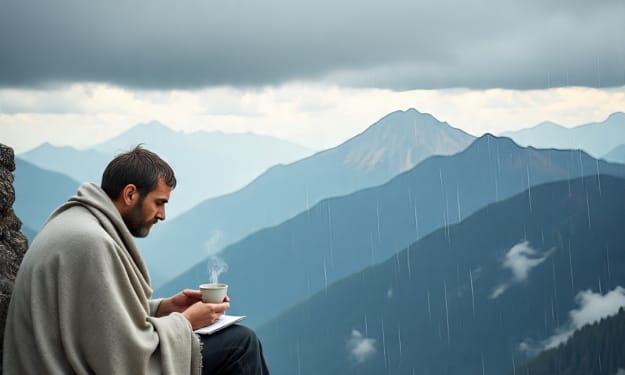
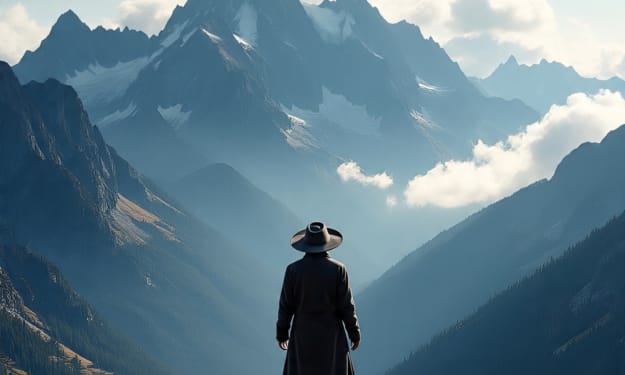
Whispers Above the Clouds A Rainy Day Reflection with Tea on the Mountain's Crown The sky leans low with a silver frown, As raindrops kiss the mountain's crown. I sit where earth and heavens meet, Tea in hand, the silence sweet. Clouds drift like thoughts I’ve left behind, Their edges frayed, their paths unsigned. Each sip a warmth against the chill, Each breath a moment standing still. No roads below can reach me here, Where wind and whisper both are clear. The world fades soft, the rush undone— A poem steeped in mist and sun. Ink runs slow on dampened page, As nature turns another age. Yet in this rain, in sky so wide, A quiet joy begins to rise. For what is life, if not a climb, With moments like this, lost in time? Above the noise, above the crowds— I found my soul among the clouds.
By Muhammad Saad 5 months ago in Poets
Whispers on the Wind
Whispers on the Wind Rainfall and Reverie at the Mountain's Crown I climbed where silence wears the sky, Where clouds and cliffs in stillness lie, Each breath a hymn, each step a prayer, Above the noise, beyond despair. The rain began—a soft ballet, Its silver threads in gentle sway, No thunder roared, no storm was near, Just whispered truths I came to hear. The wind, it spoke in ancient tones, Of moss on stone and weathered bones, Of suns that rose, of stars long gone, Of all that passes, yet lives on. Below, the world in shadow slept, Its dreams in folded valleys kept. But here, where earth and heaven blend, I felt beginnings, not the end. Each raindrop kissed my lifted face, A quiet blessing, a small grace. Not lost, but found without a sound— In rain, in sky, on sacred ground. So if you seek what can't be taught, Where storms bring peace, not battles fought, Then climb the path, and let rain spin Its whispers on the mountain wind.
By Muhammad Saad 5 months ago in Poets