
"Tourism for Good: How Travel Enriches Communities and Cultures"
Discover the Positive Impacts of Responsible Tourism on People, Places, and the Planet
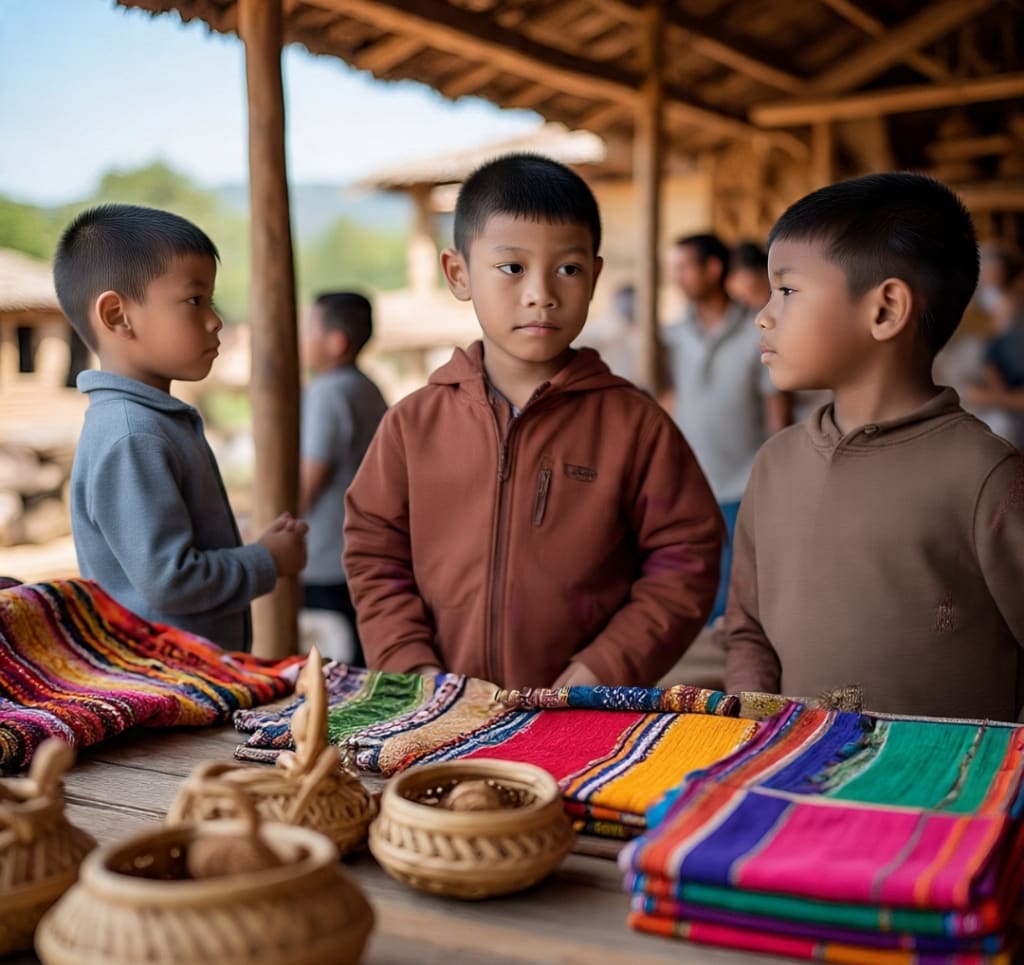
Tourism for Good: How Travel Enriches Communities and Cultures
In the small town of Ubud, Bali, where lush rice terraces stretch across the land and temples stand as quiet guardians of tradition, the sound of laughter rings out from a local art market. A group of travelers gathers around Wayan, a skilled woodcarver, as he demonstrates the intricate techniques passed down from his grandfather. His hands move gracefully over the teak, shaping a figure that tells a centuries-old story of his people. The visitors are captivated—not just by the craft, but by the connection they feel. This is the essence of tourism done right.
Tourism is often seen through two lenses: the economic benefits and the environmental or cultural concerns. But there’s a growing global movement toward responsible, sustainable tourism—a kind of travel that goes beyond sightseeing and selfies, and instead fosters genuine cultural exchange, protects natural beauty, and supports local communities.
The Power of Positive Tourism
When travelers choose to engage respectfully and consciously, tourism can be a powerful force for good. It creates jobs, supports small businesses, and helps preserve cultural heritage. In many countries, tourism is a key driver of the economy. According to the UN World Tourism Organization, tourism accounts for about 10% of global GDP and supports one in every ten jobs worldwide.
In rural areas especially, tourism brings opportunities where few exist. Local guides, guesthouse owners, artisans, and restaurant workers all benefit from the influx of visitors. These jobs not only provide income but also help keep families rooted in their communities instead of migrating to cities in search of work.
Take, for example, the mountain villages of Peru’s Sacred Valley. For generations, these communities depended solely on agriculture. But with the rise of cultural tourism around Machu Picchu, locals have opened eco-lodges, guided treks, and weaving cooperatives that allow travelers to experience authentic Andean life. Visitors learn traditional dyeing techniques or share meals cooked with native crops, while their money directly supports local livelihoods.
Culture Sharing, Not Culture Selling
Responsible tourism is about mutual respect and exchange. Travelers gain a deeper understanding of the places they visit, and locals feel pride in sharing their culture. This exchange builds empathy, reduces prejudice, and strengthens global citizenship.
In Morocco, for instance, community-based tourism has helped Berber villages showcase their traditions while maintaining their way of life. Visitors stay in earth-brick homes, learn to cook tagine, and hear oral histories passed down through generations. Rather than turning culture into a product, these experiences honor and preserve it.
Of course, there are challenges. Over-tourism can strain resources, damage fragile ecosystems, and drive up local prices. But many destinations are addressing this with sustainable strategies—limiting visitor numbers, promoting off-the-beaten-path locations, and enforcing eco-friendly policies.
A Better Way to Travel
As travelers, we have the power to shape the tourism industry through our choices. Supporting locally owned accommodations, eating at family-run restaurants, and hiring certified local guides are simple ways to ensure your money stays in the community. Avoiding unethical activities—like elephant rides or exploiting sacred sites—also helps protect the dignity and environment of the places we visit.
Technology, too, is playing a role. Apps and platforms now help travelers find eco-lodges, carbon-offset flights, or ethical volunteer opportunities. Social media is being used not just to document trips, but to inspire more conscious travel choices.
A Shared Journey
In a world that often feels divided, tourism reminds us of what connects us. When done thoughtfully, travel becomes more than recreation—it becomes a bridge between people, a celebration of diversity, and a source of shared hope for a better future.
As Wayan finishes his carving in Ubud, he smiles and hands it to a young couple, who thank him not just for the souvenir, but for the story. In that moment, tourism becomes more than an economic transaction—it becomes a meaningful human connection.
And in the end, that’s what the best journeys are all about.
About the Creator
Keep reading
More stories from Muhammad Saad and writers in Fiction and other communities.
Rain, Tea, and Timeless Words
Rain, Tea, and Timeless Words A heartwarming story of connection, calm, and the beauty of conversation. The rain had arrived softly, as if the sky were whispering secrets to the earth. It tapped gently on the roof of the little cottage at the edge of the hill, drumming a rhythm that felt like an old, familiar lullaby. Inside, the air smelled of cardamom and honey. A teapot steamed quietly on a wooden tray, accompanied by two handmade cups and a plate of warm biscuits. The scent of the tea drifted into the open air, dancing with the fresh petrichor that seeped through the window screens. Maya stood at the edge of the veranda, watching the raindrops slide down the leaves in the garden. The world seemed to shimmer in green and silver, like nature had been freshly painted. She turned slightly and smiled. “You always knew when to come,” she said. Across from her, seated in a wicker chair with a soft shawl draped around her shoulders, sat Lila—her oldest friend. Time had added a few silver strands to their hair, a few gentle lines around their eyes, but it hadn’t touched their laughter, or the comfort of their quiet conversations. “I think the rain sends me invitations,” Lila replied, smiling back. “And your tea seals the deal.” They laughed—softly, but freely. The kind of laughter that doesn’t chase silence away but fills it with light. As they sat with their tea, the garden unfolded before them like a peaceful painting. Birds rustled under leaves, the flowers swayed, and the occasional breeze carried the scent of jasmine. “Do you remember,” Maya began, “how we used to sit like this when we were twenty? Rainy afternoons with tea and dreams.” Lila nodded, her eyes twinkling. “We planned everything on those days. Where we’d live, the books we’d write, the cafés we’d open…” “…the mountains we’d climb,” Maya added, grinning. “We never opened the café, but we did find our mountains.” They paused, sipping their tea. The conversation wasn’t urgent—it never was between them. It flowed naturally, like the stream that ran just beyond the garden fence. “What I love about us,” Lila said after a moment, “is that we never stopped making space for days like this. Even when life got loud.” Maya nodded thoughtfully. “Tea, rain, and real words. That’s our ritual. No pretending. Just presence.” Outside, the rain thickened for a few minutes, softening the landscape into a watercolor. Inside, the warmth of the tea and the glow of their conversation made the room feel like a haven. “Do you think people still talk like this?” Lila asked. “Without phones, without noise—just words and wonder?” Maya tilted her head. “Some do. Some are learning again. I think the world is remembering the value of slowness. Of listening.” There was a silence then—not empty, but full of meaning. The kind of silence only deep friendship allows. They watched the world breathe. Suddenly, Lila reached into her bag and pulled out a small notebook, its cover worn and soft at the edges. “I brought this,” she said. “It’s something I’ve been writing. Thoughts, poems, little moments I don’t want to lose.” She handed it to Maya, who opened it gently, as if holding something sacred. The pages were filled with neat, flowing handwriting—some playful, some profound. One short poem caught her eye: Rain remembers every story, Even the ones we whisper in silence. Tea listens better than most people. And time— Time waits, when love is true. Maya looked up, eyes misty. “It’s beautiful,” she whispered. Lila smiled. “You inspired most of it. Our talks. These afternoons.” They sat for a while longer, reading and sipping, until the rain began to slow, and golden light broke gently through the clouds. The garden sparkled as if it had been dusted with diamonds. Before Lila left, they hugged tightly, the kind of hug that says thank you for being part of my life’s story. As she walked down the stone path, umbrella in hand, Maya called out, “Same time next rain?” Lila turned, grinning. “Always.” Maya returned to the veranda, poured herself the last of the tea, and sat quietly. The sky had cleared, but the feeling of the rain lingered like a memory—soft, fresh, and full of life. She picked up Lila’s notebook again and wrote a line on the last page: Some friendships are brewed like tea—warm, strong, and better with time.
By Muhammad Saad 4 months ago in Fiction
Incident Preparedness Guidelines: Safety Procedures for Unplanned Incidents.
Dear New Staff Member, Herein are instructions that are provided as a courtesy to ensure safety across our green campus. Please follow them carefully. As you are aware from your recent onboarding course, your wellbeing and that of the children in your care is paramount to our institution. Consistency is key. In precarious situations, panic is somewhat inevitable. Naturally, we aim to minimise this as much as humanly possible. You will invariably, from your mandatory attendance of the above-named course, recall that children under undue pressure respond best to routines that are both familiar and rehearsed.
By River and Celia in Underland 5 days ago in Fiction




Comments
There are no comments for this story
Be the first to respond and start the conversation.