Muhammad Saad
Stories (465)
Filter by community
Rays of the Rising Sun
Rays of the Rising Sun Embracing Hope with Every New Dawn Each morning paints the sky anew, With shades of gold and gentle blue. The darkest night must step aside, As light returns with quiet pride. The breeze is soft, the world is still, Yet every leaf begins to thrill. The sun climbs high with steady grace, A warm smile on the planet’s face. No dream is lost, no hope too small, The dawn has room to hold them all. It whispers, “Try just one more day,” And gently clears the clouds away. So rise, dear soul, and greet the light, Let go of worry, fear, and fright. For every sunrise starts a song— A chance to heal, to grow, belong.
By Muhammad Saad 5 months ago in Poets
Whispers of Rain and Daffodils
Whispers of Rain and Daffodils A Mountain Afternoon of Tea, Tranquility, and Golden Blooms The rain had begun as a whisper—soft, steady, and soothing—as if the mountain itself had decided to exhale. Elena stood at the window of her little wooden cabin, tucked high in the emerald folds of the hills. Outside, the world was washed in silver mist and muted greens, and a field of daffodils danced gently in the rain, their golden heads bobbing like a thousand cheerful nods. She smiled. This was the kind of day that some might call gloomy. But to Elena, it was perfect. She had always loved the mountains in the rain. They seemed more alive, more secretive—like the trees and stones were whispering ancient stories only the clouds could understand. She reached for her favorite shawl, a handwoven piece of sky-blue wool, and wrapped it around her shoulders before heading to the little kitchen. The kettle was already steaming, singing a gentle tune. She prepared a tray with care: her favorite porcelain teapot painted with tiny bluebells, two delicate cups, a small jar of wildflower honey, and a plate of freshly baked lemon shortbread. Even though she lived alone, she always set out two cups. One for herself, and one for the spirit of the day—rain, daffodils, peace—whatever you wanted to call it. There was comfort in ritual, in treating even a rainy afternoon as something worthy of celebration. Elena carried the tray to the window seat—a cozy nook filled with cushions and a thick wool blanket. The view was nothing short of magic. The daffodils shimmered in the mist like drops of sunlight caught in a dream. Beyond them, pine trees stretched toward the sky, their branches heavy with raindrops. She poured the tea and took a deep breath. The scent of bergamot and honey filled the room. Just then, a soft knock echoed from the front door. She blinked. Who could be visiting on a day like this? Opening the door, she found her neighbor, Thomas, standing there in a raincoat, holding a small bouquet of daffodils wrapped in twine. His gray curls were damp, and his eyes sparkled beneath the brim of his hat. “I saw your daffodils blooming and thought you might like a few for your table,” he said, smiling. Elena laughed softly, touched. “You brought the sunshine in with you,” she replied. “Come in. I’ve just made tea.” They settled by the window, sipping from their matching cups, watching the rain together in quiet companionship. The sound of the rain played like soft music on the roof, and time seemed to slow. “You know,” Thomas said after a while, “I think days like this remind us to pause. We’re always chasing something in the sun. But here, with the rain and tea and flowers… this is life, too. Maybe even the best part.” Elena nodded. “It’s like the world is whispering, not shouting. And when we listen, we hear things we’ve missed.” They sat for hours, talking sometimes, and sometimes simply watching. The rain never let up, but it never felt heavy. It felt like a gift. By late afternoon, the daffodils outside were brighter than ever, their petals holding tiny raindrops like jewels. Inside, the room glowed with soft lamplight, laughter, and the warmth of shared peace. As the kettle whistled again, Elena smiled to herself. There was something magical about rainy days in the mountains—something most people overlooked in their hurry for clear skies. But not her. Not anymore. She had tea, daffodils, the rain, and company. And in that quiet, golden-lit moment, everything was exactly as it should be.
By Muhammad Saad 5 months ago in Motivation
Whispers of the Morning Light
Whispers of the Morning Light A Celebration of New Beginnings and Endless Possibility The sky exhales a breath of gold, As night retreats and dreams unfold. Soft whispers rise from blades of grass, A gentle hymn as shadows pass. The world, once wrapped in velvet shade, Now glows where morning light has laid. Each dewdrop holds a silent prayer, Of hope reborn from midnight's care. A robin sings on trembling bough, No fear of then—just here and now. Its song, a thread through dawn’s embrace, Weaves courage into time and space. The past may sleep, its lessons done, But see—upon the hills, the sun! It writes in flame across the blue: Today is fresh. Today is true. So rise with heart unburdened, free, Like leaves that dance with destiny. For every ending births a spark— A light to guide us from the dark. And in this hush, this golden gleam, Lie seeds of every shining dream. Begin again, let spirits soar— The morning whispers: “There is more.”
By Muhammad Saad 5 months ago in Poets
Conversations with Cartoons: Learning Life's Lessons with a Smile
Introduction: By MS. .,..........., Conversations with Cartoons: Learning Life’s Lessons with a Smile How Positive and Correct Characters Teach Us Kindness, Confidence, and Communication On a sunny Saturday morning, 9-year-old Maya sat under the big oak tree in her backyard with her favorite sketchbook. It was a peaceful spot where she often drew her favorite cartoon characters — funny, kind, and full of helpful advice. Today felt different. As she finished shading in a smiling superhero with a red cape and a big heart on his chest, something magical happened. The page shimmered, sparkled, and before she could blink, the superhero popped out of the drawing — right into her backyard! “Whoa!” Maya gasped, dropping her pencil. “Don’t worry!” the superhero said with a friendly grin. “I’m Captain Positive! And it looks like you could use a little help.” “Help? With what?” Maya asked, eyes wide. Captain Positive chuckled. “With a little thing called confidence. I heard you were feeling unsure about your school speech on kindness.” Maya nodded slowly. “Yeah… I want to do well, but I’m nervous.” Before she could say more, a soft breeze swirled through the air, and suddenly, two more characters appeared — a clever owl with glasses and a notebook, and a bouncy bunny with a giant smile. “I’m Professor Correct,” said the owl in a wise voice. “And this is Sunny Bunny. We’re here to help you talk, listen, and feel good about what you say.” Sunny Bunny jumped in. “Let’s have a chat! Talking things out can help us think things through!” Maya giggled. “Okay… So how do I stop being nervous?” Captain Positive knelt beside her. “First, remember this: nerves are just energy. Turn that energy into excitement. You care about your speech — that’s a good thing!” Professor Correct adjusted his glasses. “And second, use kind and clear words. When we speak honestly and kindly, people listen.” “Right!” said Sunny Bunny, hopping around. “Say what’s true, say what’s nice, and say it with a smile!” Maya thought for a moment. “But what if I mess up?” Captain Positive gave her a thumbs up. “Mistakes are part of learning. Every superhero makes them. What matters is how you bounce back.” Professor Correct added, “If you forget a word, pause, breathe, and continue. The message is more important than perfection.” Maya nodded. “Okay… So be confident, be kind, and don’t worry about being perfect.” “Exactly!” said all three characters at once. Then Sunny Bunny pulled out a pretend microphone. “Practice time! Tell us what kindness means to you.” Maya took a breath. “Kindness means helping others, even when no one’s watching. It’s about using words that make people feel good, not bad. It’s about listening and trying to understand how others feel.” “Brilliant!” cheered Captain Positive. “That’s the spirit!” “And you said it clearly and kindly,” Professor Correct added. “You’re ready for your speech!” said Sunny Bunny, tossing imaginary confetti into the air. Just then, the oak tree shimmered again, and the characters began to glow. “It’s time for us to go,” said Captain Positive. “But remember, we’re always with you — in your heart and in your thoughts.” “Keep drawing, keep dreaming, and keep doing what’s right,” Professor Correct said warmly. “Talk it out, think it through, and bounce back with joy!” Sunny Bunny cheered. With a final flash of light, the three cartoon friends disappeared back into the pages of Maya’s sketchbook. Maya stared at the drawing — now glowing slightly — and smiled. She felt different. Stronger. Braver. Ready. On Monday, Maya stood in front of her class, hands only a little shaky. She remembered the advice from her cartoon friends and took a deep breath. “Hi, everyone,” she began. “Today I want to talk about kindness…” And she did — with confidence, kindness, and a big, bright smile. --- Moral of the Story: Even when we feel nervous or unsure, we can learn to speak kindly, clearly, and confidently. By imagining support from positive and correct cartoon characters, we can remind ourselves to be brave, be honest, and always do our best — with a smile.
By Muhammad Saad 5 months ago in Humans
Rain, Tea, and Timeless Words
Rain, Tea, and Timeless Words A heartwarming story of connection, calm, and the beauty of conversation. The rain had arrived softly, as if the sky were whispering secrets to the earth. It tapped gently on the roof of the little cottage at the edge of the hill, drumming a rhythm that felt like an old, familiar lullaby. Inside, the air smelled of cardamom and honey. A teapot steamed quietly on a wooden tray, accompanied by two handmade cups and a plate of warm biscuits. The scent of the tea drifted into the open air, dancing with the fresh petrichor that seeped through the window screens. Maya stood at the edge of the veranda, watching the raindrops slide down the leaves in the garden. The world seemed to shimmer in green and silver, like nature had been freshly painted. She turned slightly and smiled. “You always knew when to come,” she said. Across from her, seated in a wicker chair with a soft shawl draped around her shoulders, sat Lila—her oldest friend. Time had added a few silver strands to their hair, a few gentle lines around their eyes, but it hadn’t touched their laughter, or the comfort of their quiet conversations. “I think the rain sends me invitations,” Lila replied, smiling back. “And your tea seals the deal.” They laughed—softly, but freely. The kind of laughter that doesn’t chase silence away but fills it with light. As they sat with their tea, the garden unfolded before them like a peaceful painting. Birds rustled under leaves, the flowers swayed, and the occasional breeze carried the scent of jasmine. “Do you remember,” Maya began, “how we used to sit like this when we were twenty? Rainy afternoons with tea and dreams.” Lila nodded, her eyes twinkling. “We planned everything on those days. Where we’d live, the books we’d write, the cafés we’d open…” “…the mountains we’d climb,” Maya added, grinning. “We never opened the café, but we did find our mountains.” They paused, sipping their tea. The conversation wasn’t urgent—it never was between them. It flowed naturally, like the stream that ran just beyond the garden fence. “What I love about us,” Lila said after a moment, “is that we never stopped making space for days like this. Even when life got loud.” Maya nodded thoughtfully. “Tea, rain, and real words. That’s our ritual. No pretending. Just presence.” Outside, the rain thickened for a few minutes, softening the landscape into a watercolor. Inside, the warmth of the tea and the glow of their conversation made the room feel like a haven. “Do you think people still talk like this?” Lila asked. “Without phones, without noise—just words and wonder?” Maya tilted her head. “Some do. Some are learning again. I think the world is remembering the value of slowness. Of listening.” There was a silence then—not empty, but full of meaning. The kind of silence only deep friendship allows. They watched the world breathe. Suddenly, Lila reached into her bag and pulled out a small notebook, its cover worn and soft at the edges. “I brought this,” she said. “It’s something I’ve been writing. Thoughts, poems, little moments I don’t want to lose.” She handed it to Maya, who opened it gently, as if holding something sacred. The pages were filled with neat, flowing handwriting—some playful, some profound. One short poem caught her eye: Rain remembers every story, Even the ones we whisper in silence. Tea listens better than most people. And time— Time waits, when love is true. Maya looked up, eyes misty. “It’s beautiful,” she whispered. Lila smiled. “You inspired most of it. Our talks. These afternoons.” They sat for a while longer, reading and sipping, until the rain began to slow, and golden light broke gently through the clouds. The garden sparkled as if it had been dusted with diamonds. Before Lila left, they hugged tightly, the kind of hug that says thank you for being part of my life’s story. As she walked down the stone path, umbrella in hand, Maya called out, “Same time next rain?” Lila turned, grinning. “Always.” Maya returned to the veranda, poured herself the last of the tea, and sat quietly. The sky had cleared, but the feeling of the rain lingered like a memory—soft, fresh, and full of life. She picked up Lila’s notebook again and wrote a line on the last page: Some friendships are brewed like tea—warm, strong, and better with time.
By Muhammad Saad 5 months ago in Fiction
Whispers in the Rain
Whispers in the Rain: How Rain Inspires the Rhythm and Beauty of Poetry Rain has always held a special place in the hearts of poets. It’s more than just water falling from the sky; it’s a symphony of sounds, a dance of droplets, and a muse that awakens creativity. For centuries, poets have found inspiration in the gentle patter of rain, weaving its rhythm into their verses and using its presence to evoke emotion, hope, and renewal. On a quiet afternoon, Maya sat by her favorite window, a worn notebook open on her lap and a pen poised in her hand. Outside, the sky was a soft gray, and the first drops of rain began to fall. There was a unique magic in this moment—the world slowing down, the steady rhythm of raindrops tapping against the glass, and the fresh, earthy scent that followed the rain’s arrival. Maya loved rain. It wasn’t just the way it cooled the air or the way it made the world look like a watercolor painting; it was how the rain seemed to whisper stories. Every drop was a word, every shower a stanza, inviting her to listen and write. As the rain intensified, the room filled with its soothing melody. Maya’s pen moved almost by itself, sketching lines that captured the essence of the rain’s song: “A thousand tiny dancers falling from the sky, whispering secrets as they pass by.” The rain, she realized, was like poetry itself—both unpredictable and comforting, simple and profound. It spoke of renewal, washing away the dust of yesterday and nurturing the seeds of tomorrow. Just as a poem uses words to bring emotions to life, the rain used droplets to awaken the earth. Throughout history, many poets have shared Maya’s affection for rain. From the delicate haikus of Matsuo Bashō to the passionate verses of Pablo Neruda, rain has been a recurring symbol—sometimes a metaphor for sadness or longing, sometimes a sign of hope and new beginnings. It bridges the gap between nature and human emotion, inviting us to pause, reflect, and feel. Maya’s favorite poem about rain was by Langston Hughes, who wrote: “Let the rain kiss you. Let the rain beat upon your head with silver liquid drops. Let the rain sing you a lullaby.” These words echoed in Maya’s mind as she wrote. The rain wasn’t just a backdrop; it was a companion in her creative journey, encouraging her to open her heart and express her deepest thoughts. Outside, the rain slowed to a gentle drizzle, and sunlight began to peek through the clouds, casting a soft glow over the wet streets and glistening leaves. Maya closed her notebook, feeling grateful for the gift the rain had given her—a quiet moment of inspiration and connection. She stepped outside, letting the cool droplets fall on her face. Each drop felt like a tiny blessing, reminding her that even in the stormiest times, there is beauty and hope. The world was alive, refreshed, and ready to grow, just like her poetry. In that moment, Maya understood that rain and poetry share a timeless bond. Both invite us to listen deeply—to the world around us and to the feelings within us. Both teach us that there is grace in vulnerability, strength in softness, and power in expression. As she walked back inside, Maya carried with her the rain’s message: to embrace every moment, to find joy in the simple things, and to keep writing her own story—one drop, one word, one poem at a time.
By Muhammad Saad 5 months ago in Poets
"The Greatest Games on Earth: A Celebration of Global Favorites"
The Greatest Games on Earth: A Celebration of Global Favorites Games have always been more than just entertainment. Across continents and cultures, they connect people, spark creativity, and inspire friendly competition. Whether played on dusty playgrounds, glowing screens, or cozy living room tables, games bring joy to every corner of the world. Today, we’re taking a journey to celebrate some of the best and most beloved games that have won the hearts of millions — proving that fun is a truly universal language. The Beautiful Game: Soccer (Football) Let’s start with the world’s most popular sport — soccer, or football as it's known in most countries. From the favelas of Brazil to the fields of rural Africa, and the grand stadiums of Europe, this game unites people in a way few others can. All you need is a ball, some open space, and a few friends. The rules are simple, but the passion runs deep. International tournaments like the FIFA World Cup bring together billions of fans every four years, showcasing the best talent and the strongest teamwork. No matter where you go, a soccer game is never far away. Video Games: A Digital Revolution In the last few decades, video games have grown from pixelated pastimes to a massive global industry. Titles like Minecraft, Fortnite, The Legend of Zelda, and Among Us are not just games — they’re cultural phenomena. Millions of people log on daily to play, build, explore, and connect with others across the globe. What makes video games special is how they mix imagination, technology, and social interaction. Players can cooperate on missions, compete in esports tournaments, or simply relax and explore virtual worlds. With mobile games becoming more accessible than ever, everyone from young children to grandparents is discovering the joy of gaming. Board Games: Old Classics, New Twists Board games are a timeless tradition. Classics like Chess, Monopoly, Scrabble, and Ludo have been around for decades — some even centuries — and they continue to entertain families around the world. Chess, for example, is over 1,000 years old and is still one of the most respected games of strategy and intellect. In recent years, board games have had a huge comeback, with modern favorites like Catan, Ticket to Ride, and Codenames gaining popularity. What’s wonderful about board games is how they encourage face-to-face interaction, critical thinking, and lots of laughter — often with just a dash of friendly rivalry. Traditional Games: Culture in Motion Every culture has its own traditional games, passed down through generations. In India, Kabaddi and Carrom are hugely popular. In South Korea, Yut Nori is played during holidays with family members. In Africa, games like Mancala teach strategy using simple materials like stones and holes in the ground. These traditional games are more than just pastimes; they are reflections of history, values, and community. They remind us that fun doesn’t require fancy equipment — just imagination and a willingness to play. Games That Teach and Heal Some games do more than entertain — they educate and heal. Educational games help children learn math, language, and science in ways that are engaging and memorable. Puzzle games develop logic and focus. In therapy, certain games are used to help people cope with anxiety, depression, and stress, providing a sense of achievement and relaxation. The growing world of “gamification” — applying game elements to learning or work — shows just how powerful games can be in motivating people and bringing out their best. Why Games Matter At their core, games are about connection — to others, to ourselves, and to the world around us. They teach cooperation, competition, patience, and perseverance. They can turn strangers into friends and a dull afternoon into an adventure. No matter your age, background, or location, there’s a game out there for you. And that’s the beauty of it. Whether you're scoring a goal, building a digital world, or sharing laughs over a board game, you're taking part in something special — something that unites us all. So the next time you pick up a controller, kick a ball, or roll the dice, remember: you're joining a global celebration of creativity, community, and joy.
By Muhammad Saad 5 months ago in Gamers
The Joy of Giving: How a Thoughtful Gift Can Brighten a Life
The Joy of Giving: How a Thoughtful Gift Changed Everything It was a chilly Saturday morning in late November, the kind where the air smells like winter is just around the corner. Ellie Jameson stood in the corner café, hands wrapped around a steaming cup of cocoa, watching snowflakes dance outside the window. The city buzzed with the early excitement of the holiday season, and gift bags and laughter were everywhere. But Ellie wasn’t thinking about shopping lists or sales. She was thinking about Mrs. Hargrove. Mrs. Hargrove had lived next door to Ellie for most of her childhood. A retired piano teacher with a gentle smile and silver hair always pinned in a neat bun, she had become a quiet presence in Ellie’s life. When Ellie was little, Mrs. Hargrove taught her to play “Twinkle, Twinkle, Little Star” on an old upright piano that creaked more than it played. As Ellie grew, so did their bond. They baked cookies in December, shared stories over lemonade in the summer, and exchanged birthday cards without fail. But things had changed lately. After a fall last year, Mrs. Hargrove had stopped going out as much. She no longer played the piano, and her warm laughter wasn’t heard through the walls like it used to be. It worried Ellie, who now lived alone and worked from home. The silence next door had started to feel heavier than usual. As Ellie sipped her cocoa, she had an idea. Not a big, expensive one—but something meaningful. Something that might remind Mrs. Hargrove of the joy she once shared so freely. The next few days were filled with careful planning. Ellie visited a vintage music shop tucked away in a quiet part of town. There, she found it: a delicate music box with painted flowers and a small ballerina that spun when the lid was lifted. But the real magic was the tune it played—Clair de Lune, one of Mrs. Hargrove’s favorite pieces. Ellie remembered her playing it countless times during long summer evenings. She wrapped the box in soft blue paper and tied it with a silver ribbon. No card, no message—just the gift. She wanted the music to do the talking. On a frosty Wednesday morning, Ellie knocked gently on Mrs. Hargrove’s door. After a few moments, the door creaked open. Mrs. Hargrove looked surprised, wrapped in a cozy shawl, her eyes slightly dimmer than Ellie remembered—but still kind. “I brought you something,” Ellie said, offering the small box with a hopeful smile. Mrs. Hargrove took it with slightly trembling hands and invited Ellie in. They sat together at the kitchen table, just like they used to. Ellie watched as the ribbon was untied, the paper unfolded with care. And when the lid of the box was opened, and the soft melody began to play, something beautiful happened. Tears welled up in Mrs. Hargrove’s eyes—but her smile returned. Not just a polite smile, but one that reached all the way back to those warm, musical evenings. “Oh, Ellie,” she whispered, placing a hand over her heart. “I haven’t heard this in years.” They sat in silence, listening. Then, slowly, Mrs. Hargrove stood and, for the first time in months, walked to the piano. It still sat there, dusty but dignified. She ran her fingers gently along the keys before pressing a few tentative notes. The sound was a little off-key, but it didn’t matter. Ellie’s eyes lit up. “I might be a bit rusty,” Mrs. Hargrove chuckled. “Play anyway,” Ellie said. And she did. It was imperfect, but perfect. Notes filled the room like sunlight after a long winter. That morning turned into an afternoon of stories, music, and even some cookies—just like old times. Ellie walked home with a full heart. In the weeks that followed, the music returned to their small corner of the world. Mrs. Hargrove began playing again, often with the window open just a little so the notes could travel. Neighbors stopped to listen. Ellie visited more often, and together they even planned a small recital for the holidays, inviting kids from the neighborhood. All because of one simple, thoughtful gift. --- The Power of a Thoughtful Gift Sometimes, the best gifts aren’t the biggest or most expensive. They’re the ones that carry meaning—the ones that remind someone they’re seen, remembered, and valued. Ellie’s gift didn’t just bring back music to Mrs. Hargrove’s life—it restored connection, warmth, and joy. In a world full of noise and rush, giving with heart can be the quietest, yet most powerful, act of all.
By Muhammad Saad 5 months ago in Humans
The Bright Side of the Mind
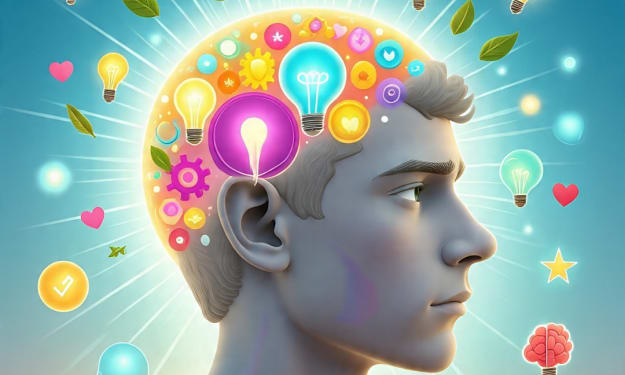
The Bright Side of the Mind Surprising Psychological Facts That Can Boost Your Happiness, Confidence, and Well-Being Emma sat by her window one crisp autumn morning, sipping tea and flipping through a self-help book she’d borrowed from the library. She wasn’t unhappy—just curious. Like many people, she wondered: What actually makes us feel good? Not just fleeting happiness, but the deep, satisfying kind that lingers. Her search led her down a rabbit hole of psychology articles, TED Talks, and studies. What she discovered wasn’t just insightful—it was empowering. The facts weren’t complex theories or clinical advice; they were simple truths backed by science that could make a real difference. She began testing them out in her own life. One of the first things Emma learned was this: Gratitude rewires the brain. Studies from the University of California found that people who wrote down three things they were grateful for every day were not only happier, but physically healthier. Emma started a small journal. At first, it felt awkward. But within weeks, she noticed a shift. She wasn’t ignoring her problems—she was just giving equal attention to the good. Her morning tea tasted better. Her cat’s soft purring felt warmer. Her challenges didn’t disappear, but she faced them with more resilience. Then she came across another gem: Smiling—genuinely or not—can boost mood. It sounded silly, but psychologists at the University of Kansas had proven it. When Emma forced herself to smile during tough tasks, she noticed she felt slightly better—and her posture even straightened. It was as if her body was tricking her mind into feeling stronger. It worked during meetings, chores, even traffic. Her favorite discovery, though, was this: Helping others helps you just as much. It turns out that acts of kindness trigger a release of dopamine—the brain’s natural reward chemical. It’s called the “helper’s high.” Emma started small: holding the door, sending kind messages, complimenting strangers. The effects were almost immediate. People smiled more around her. Her mood lifted. Her social anxiety shrank. She didn’t need grand gestures—just genuine connection. Emma also learned that we become what we think about. Psychologists call it “neuroplasticity”—the brain's ability to reshape itself based on our thoughts and behaviors. Negative thinking strengthens negative pathways. But practicing optimism, mindfulness, and self-compassion actually strengthens the parts of the brain linked to emotional regulation and joy. Emma wasn’t always positive, but she became more aware. When she caught herself spiraling, she paused and replaced the thought. What if this goes right? she’d ask herself. And often, it did. Of course, no journey is perfect. Some days, Emma forgot to be grateful or kind. Some days, she didn’t feel like smiling. But the beauty of these psychological facts was that they didn’t require perfection—just repetition. Bit by bit, she was shaping a new version of herself. One evening, her friend Marcus came over, worn down by work stress and burnout. “You’ve been different lately,” he said, noticing her calm presence. “Happier. How?” Emma smiled. Not the forced kind, but the real kind. “Honestly? I started listening to my brain.” She shared some of what she’d learned—not as advice, but as a story. Her story. Marcus nodded slowly. “I could try that,” he said. And in that moment, another ripple of kindness began. --- Key Takeaways from Emma’s Story (Based on Real Psychological Research): Gratitude practice improves happiness and physical health. Smiling, even when it feels unnatural, can improve mood and reduce stress. Helping others activates the brain’s reward systems, improving emotional well-being. Positive thinking strengthens the brain’s emotional resilience through neuroplasticity. Small, consistent actions are more powerful than dramatic changes. --- In a world filled with noise and pressure, sometimes the most powerful truths are the simplest. Emma didn’t need a life coach or a miracle. She needed only to look inward, understand how her mind worked, and start making tiny shifts in her daily life. And just like that, happiness became less of a mystery—and more of a choice.
By Muhammad Saad 5 months ago in Humans
"Clash of Titans: A Thrilling Display of Cricketing Brilliance"
Clash of Titans: A Thrilling Display of Cricketing Brilliance A Nail-Biting Encounter Filled with Skill, Spirit, and Sportsmanship Cricket fans were treated to a heart-pounding spectacle as the Blue Hawks and the Crimson Strikers faced off in a high-stakes, day-night encounter at the National Stadium on Saturday. With both teams in top form and tied in the points table, the match was billed as a virtual semi-final — and it lived up to every expectation. The atmosphere was electric from the first ball. The Blue Hawks won the toss and elected to bat first, a decision that sparked immediate excitement. Their opening pair, Aryan Malik and Rizwan Desai, walked out confidently, determined to set a solid foundation. Facing fierce pace from the Strikers’ lead bowler, Junaid Khan, the openers navigated the early overs with composure. Malik, known for his calm temperament, played a classy innings. He rotated the strike smartly and punished the bad balls, while Desai brought the flair, hitting two towering sixes that had the crowd on their feet. Together, they put on a 78-run opening stand before Desai was dismissed, edging a sharp delivery to the keeper. The middle overs saw a fierce battle between bat and ball. The Strikers’ spinners, led by the experienced Mehul Joshi, tightened the screws. The Blue Hawks briefly faltered, losing two quick wickets. But a stabilizing partnership between captain Veer Sinha and young talent Harsh Patel turned the tide. Their mix of caution and aggression brought the innings back on track. The Hawks posted a competitive total of 176 for 6 in 20 overs, with Malik top-scoring at 62 and Sinha chipping in with a brisk 34. In response, the Crimson Strikers came out with aggressive intent. Their star opener, Danish Farooq, started with a flurry of boundaries, including a breathtaking straight drive that drew applause even from rival fans. However, the Hawks’ pace spearhead, Zaid Sheikh, struck early, removing the other opener with a searing yorker. The Strikers’ innings was a rollercoaster. Farooq kept them in the hunt with a magnificent 58 off 36 balls, but regular wickets kept pegging them back. The game tilted constantly—first in favor of the Hawks, then back towards the Strikers as Rahul Iyer launched a stunning counterattack with 3 sixes in an over. With 15 runs needed off the last over and only two wickets in hand, the pressure was immense. The Hawks handed the ball to young left-arm seamer Ayaan Khan, who had been expensive earlier in the innings. The stadium held its breath. After conceding a boundary off the first ball, Khan bowled three dot balls, each increasing the tension. A mistimed shot on the fifth ball resulted in a run-out. With 6 needed off the final ball, Iyer swung hard — but only managed a single. The Blue Hawks had won by 4 runs in one of the most thrilling finishes of the season. The players from both sides shook hands warmly after the match, acknowledging the high level of competition and mutual respect. The crowd, which included families, schoolkids, and veteran cricket lovers, gave both teams a standing ovation. It was not just a match—it was a celebration of cricket. The Blue Hawks’ captain, Veer Sinha, praised the opposition. “This is what cricket is about — pressure, passion, and performance. Hats off to the Strikers. They pushed us to our limits.” His counterpart, Ravi D’Souza, echoed the sentiment. “We may have lost the match, but cricket was the winner today.” The match served as a reminder of why cricket continues to capture hearts — not just because of the talent on display, but for the spirit in which the game is played.
By Muhammad Saad 5 months ago in Gamers
Shining Through: The Best World Record of 2025
In a year that many expected to be like any other, 2025 surprised the world with something extraordinary — a global movement so powerful, it set a world record no one had ever imagined possible. Not for speed, strength, or technology — but for kindness. It all began in January, when a small school in Finland launched a project called "Kindness Chain". The goal was simple: every student had to perform one act of kindness and then encourage the person they helped to pass it on. The idea quickly spread across social media, catching fire faster than any viral challenge before it. Within weeks, thousands of people in dozens of countries were joining in — planting trees for strangers, helping the elderly with groceries, sending supportive letters to people they’d never met, and donating food and clothes in record amounts. The hashtag #PassItOn2025 trended globally, and for the first time in years, positive news was leading every headline. Then, something unexpected happened. In March, the Global Goodwill Council, a non-profit international watchdog for humanitarian efforts, began documenting the movement. They counted over 700 million confirmed acts of kindness by April — an all-time world record. But more than the numbers, what shocked everyone was how the movement had spread to places once divided by conflict, politics, or pain. In a small town in Syria, children from formerly opposing groups planted olive trees together. In Brazil, a youth group cleaned up entire neighborhoods, then taught digital skills to elderly locals. In India, a community pooled resources to build homes for displaced families. Across oceans and borders, kindness became the world’s most powerful common language. By June, schools, companies, hospitals, and even governments began organizing large-scale "positivity days." Businesses gave employees paid time to volunteer. Hospitals saw patient recovery improve when kindness programs were introduced. Some cities reported a measurable drop in crime rates, linking it to the growing culture of empathy and community care. Perhaps the most emotional moment came on World Kindness Day, November 13th. Coordinated across 193 countries, over 1 billion people participated in the largest synchronized human chain ever recorded — physically and digitally. People joined hands in real life or shared live selfies online with heartfelt messages of unity. From the snowy mountains of Canada to the deserts of Africa, the image of humanity, hand-in-hand, circled the Earth. The Guinness World Records confirmed it as the largest collective human event in history. News outlets dubbed it “The Year the World Remembered Its Heart.” The story of 2025 became more than a trend — it became a testimony to the strength of compassion. The United Nations honored the movement with a new global observance: The International Day of Kindness and Unity, to be celebrated every year on the third Saturday of November. The event would serve as a reminder that the greatest changes don’t always come from big inventions or political breakthroughs — sometimes, they start with small, selfless acts. And while the official record was noted, most people involved didn’t care about the numbers. What stayed with them were the connections they formed, the smiles they saw, and the healing they felt — both in others and in themselves. As the sun set on 2025, one truth remained clear: in a world often overwhelmed by noise and division, the quiet power of kindness had shone through, louder and brighter than anyone ever expected. It wasn’t just a record. It was a revolution — of hope, unity, and the simple belief that one good deed can truly change the world.
By Muhammad Saad 5 months ago in Fiction
The Heart of Connection
The Heart of Connection How Love and Friendship Shape Our Lives, Backed by Science and Real Stories When Rosa turned 83, she didn’t want a party. Not because she disliked celebrations, but because her world had become quieter in recent years. Her husband had passed away a decade earlier, her children lived in other cities, and many of her old friends were either gone or fading with time. Most days, she sat by the window, knitting or reading the same dog-eared books, watching the seasons change outside but feeling little change within. Loneliness, scientists say, is more than an emotional ache—it can be as dangerous as smoking 15 cigarettes a day. Harvard’s 80-year Study of Adult Development—one of the longest studies on happiness—found that the quality of our relationships is the biggest predictor of long-term health and fulfillment, even more than income or fame. But Rosa didn’t need a study to tell her she missed connection. She just didn’t know how to find it again. Everything shifted the day Rosa’s neighbor, Malik, knocked on her door. He was 12, tall for his age, with curious eyes and a habit of speaking quickly when he got excited. His mother had just moved into the apartment next door, and Malik had locked himself out while she was at work. “Can I wait here until my mom gets home?” he asked. Rosa hesitated—then opened the door wider. That small moment cracked open something neither of them expected. At first, their conversations were brief. He asked about the books on her shelf. She asked about his drawings. Over time, their afternoons turned into a quiet routine: she’d make tea, and he’d sketch while she told stories about growing up in Havana or working as a nurse in New York. What surprised Rosa most wasn’t just how much she enjoyed his company—it was how much she felt needed again. Science calls this "bi-directional connection”—where both people benefit from the relationship. For Rosa, it meant purpose. For Malik, it meant having a patient adult who listened when the world around him felt too fast. One day, Malik came over with a school project: “Write about a person who changed your life.” “I want to write about you,” he told Rosa shyly. “You make me feel... like I matter.” Her eyes filled with tears. Decades of research show that acts of emotional connection—listening, empathizing, simply being present—can actually rewire the brain, increasing oxytocin (the “bonding hormone”) and decreasing cortisol (the stress hormone). Even brief moments of genuine connection can boost mood and strengthen the immune system. Rosa began to change. She started baking again—coconut cookies like her mother used to make. She ventured into the community center down the block and joined a storytelling circle. She even helped organize a small art show for Malik and his classmates. Her doctor, who had once warned her about rising blood pressure and declining energy, was amazed. “Whatever you’re doing,” he said, “keep doing it.” What she was doing was simple: connecting. Years later, when Rosa passed peacefully in her sleep, Malik—then a high school senior—spoke at her memorial. He described how she taught him more than just history or how to make proper tea. “She showed me that love and friendship don’t have an age limit. That even one person, really seeing you, can change everything.” --- The heart of connection isn’t grand gestures or perfect relationships. It’s found in the everyday: a shared laugh, a warm hand on your shoulder, a moment of being understood. These are the moments that shape us. Love and friendship aren’t extras in life’s story—they are the story. And as science continues to affirm what our hearts already know, one truth becomes clear: We are wired for connection. And when we find it—or offer it to someone else—we come alive.
By Muhammad Saad 5 months ago in Humans