Muhammad Hassan
Bio
Muhammad Hassan | Content writer with 2 years of experience crafting engaging articles on world news, current affairs, and trending topics. I simplify complex stories to keep readers informed and connected.
Stories (209)
Filter by community
Swiss Bar Fire: Could a Simple Foam Check Have Saved Lives
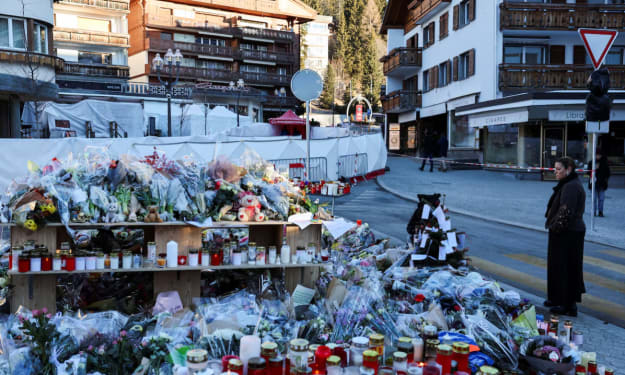
It was supposed to be a night of celebration. New Year’s Eve in Crans‑Montana, a picturesque Swiss ski resort, brought together locals, tourists, and thrill-seekers ready to welcome 2026. But what happened inside a popular bar that night turned a celebration into a tragedy: a devastating fire that claimed at least 40 lives and injured more than 100 people. As authorities investigate, one detail has emerged as particularly shocking: the bar’s soundproofing foam — the material used to absorb sound in the basement — caught fire almost instantly. Officials now say that this foam should have been checked by law as part of regular safety inspections. Let’s take a closer look at what went wrong, why this simple detail became deadly, and what lessons this tragedy holds for the future. When Fun Turns Fatal The fire happened at Le Constellation, a bar known for its lively parties and basement dance floor. Reports suggest the blaze began when sparklers or small fireworks touched the foam on the ceiling. Within minutes, the fire spread faster than anyone could react. What made this incident particularly horrific wasn’t just the blaze itself — it was how quickly it turned deadly. Victims were trapped in narrow stairways, and many were teenagers or young adults celebrating the New Year. Families and friends are now left grappling with a tragedy that could have been prevented. A Legal Blind Spot? Here’s where the story gets complicated. According to Crans‑Montana’s mayor, Nicolas Féraud, the bar hadn’t undergone a safety inspection in over five years, despite laws calling for annual checks. But the mayor also suggested that the law didn’t explicitly require foam checks, implying that inspectors might not have been at fault. Enter Stephane Ganzer, the canton’s head of security. Ganzer disagreed, stating clearly that Swiss regulations cover fire-risk materials, including soundproofing foams. In other words, someone should have noticed the potential hazard — either the bar owners or the authorities. This clash between statements highlights a serious problem: even in a country like Switzerland, known for meticulous safety standards, ambiguities in law enforcement can have deadly consequences. Why Foam Matters Soundproofing foam is common in bars, clubs, and music venues. It absorbs noise, makes parties more enjoyable, and protects neighbors from sound complaints. But most people don’t think of it as a fire hazard. In reality, not all acoustic foam is fire-resistant. Some can ignite easily, especially when exposed to sparks or heat sources. If properly tested and inspected, however, flammable foam can be replaced or treated to reduce risk. At Le Constellation, investigators say the foam wasn’t fire-rated and hadn’t been checked in years — a tiny detail that turned into a deadly flaw. The Aftermath: Accountability and Questions Now, the big questions are legal. Authorities are investigating the bar’s owners for possible negligence. They’re also examining whether regulators failed to enforce safety inspections properly. Key points under investigation: Were annual safety inspections skipped? Should inspectors have checked the foam as part of fire safety compliance? Could stricter enforcement have prevented the disaster? Courts will ultimately decide responsibility, but the case is already shining a light on gaps in safety regulations that many assumed didn’t exist. Lessons for Public Safety This isn’t just a Swiss issue. Around the world, fire safety rules exist on paper, but enforcement can be inconsistent. Tragic events like this remind us that small oversights can have catastrophic consequences. Here are some lessons to take away: Regular Inspections Matter: Safety checks should be thorough and consistent, not just a tick-box exercise. Material Matters: Foam, décor, and finishes in public venues should always be fire-rated. Clear Legal Guidelines: Authorities and business owners need specific rules, not vague suggestions. Public Awareness: Staff and patrons should know emergency exits and safety procedures. It’s a painful truth that in this case, a seemingly minor detail — soundproofing foam — became the difference between life and death. Looking Ahead The Crans‑Montana fire will likely trigger changes in fire safety policy across Switzerland. Expect stricter enforcement, clearer inspection guidelines, and possibly mandatory fire-resistant materials in venues nationwide. For bar owners and event planners, the warning is clear: don’t assume safety compliance is automatic. Regular checks, fire-resistant materials, and staff training aren’t just bureaucratic steps — they’re lifesaving measures. And for the rest of us, the tragedy is a stark reminder: even in countries with strong regulations, vigilance matters. It’s a heartbreaking lesson that fire safety is never just a detail — it can be the difference between a celebration and a catastrophe.
By Muhammad Hassan8 days ago in The Swamp
China and Japan: Uneasy Neighbors Locked in a Familiar East Asian Standoff. AI-Generated.
East Asia has long been shaped by the complicated relationship between China and Japan. Geography has made them neighbors, history has made them rivals, and modern geopolitics has ensured that tensions never remain dormant for long. Once again, China and Japan find themselves at odds, reminding the world that beneath layers of diplomacy and economic interdependence lies a relationship still defined by mistrust, unresolved grievances, and competing visions for regional leadership. This renewed friction is not the result of a single incident. Instead, it reflects a convergence of old disputes and new anxieties—territorial disagreements, military posturing, economic competition, and shifting alliances—that together have pushed relations back into uneasy territory. A History That Refuses to Fade Any discussion of China-Japan relations must begin with history. The memory of Japan’s wartime actions in China during the first half of the 20th century continues to cast a long shadow. For many in China, issues surrounding wartime atrocities, apologies, and historical interpretation remain unresolved. Periodic visits by Japanese leaders to controversial war-related sites or debates over school textbooks often reignite public anger in China. Japan, meanwhile, argues that it has expressed remorse and provided postwar assistance, while also seeking to move forward as a peaceful nation. Yet the emotional weight of history ensures that even minor diplomatic disputes can quickly escalate into broader confrontations fueled by nationalism on both sides. Territorial Disputes and National Pride At the center of current tensions is a long-standing territorial dispute in the East China Sea over a group of uninhabited islands claimed by both countries. These islands, strategically located and potentially resource-rich, have become powerful symbols of national sovereignty. Patrols by coast guards, close encounters between vessels, and sharp diplomatic statements have become increasingly common. While neither side appears eager for direct conflict, the risk of miscalculation grows as activity in the region intensifies. For both Beijing and Tokyo, backing down is politically difficult, as territorial issues are closely tied to domestic public opinion and national pride. Security Concerns in a Changing Region Beyond territorial disputes, broader security concerns are driving the current standoff. China’s expanding military capabilities, particularly its naval presence, have raised alarm in Japan. Tokyo sees Beijing’s actions as part of a wider effort to reshape the regional balance of power. In response, Japan has been reassessing its defense posture. Long known for its pacifist constitution, Japan is gradually increasing defense spending, strengthening military cooperation with allies, and investing in advanced technologies. These moves, while framed by Tokyo as defensive, are viewed with suspicion in Beijing, which warns against what it sees as a revival of militarism. The Taiwan issue further complicates matters. Japan’s strategic proximity to Taiwan and its alliance with the United States place it uncomfortably close to one of the most sensitive flashpoints in East Asia. Any escalation involving Taiwan would inevitably draw Japan into the equation, heightening Chinese concerns. Economic Interdependence Meets Strategic Rivalry Ironically, China and Japan remain deeply connected economically. China is one of Japan’s largest trading partners, and Japanese companies have invested heavily in Chinese markets over decades. Supply chains in technology, manufacturing, and consumer goods are tightly interwoven. Yet economic ties no longer guarantee political stability. Strategic competition in areas such as semiconductors, critical minerals, and advanced manufacturing has introduced new frictions. Japan’s participation in efforts to reduce dependence on Chinese supply chains and protect sensitive technologies has been met with criticism from Beijing, which views such measures as part of a broader containment strategy. This mix of cooperation and competition creates a fragile balance—one where economic pragmatism coexists with growing strategic distrust. The Role of the United States and Regional Alliances The United States looms large in the background of China-Japan tensions. Japan’s security alliance with Washington remains the cornerstone of its defense policy. For China, this alliance is often seen as a mechanism through which the U.S. projects influence in Asia. As U.S.-China relations grow more confrontational, Japan finds itself navigating a delicate path. On one hand, it relies on American security guarantees. On the other, it must manage its relationship with China, a powerful neighbor whose cooperation remains vital for regional stability. Regional partnerships involving other Asian countries further complicate the picture. Competing visions for the future of the Indo-Pacific—one emphasizing rules-based order, the other emphasizing regional influence—continue to pull China and Japan in different directions. Domestic Politics and Rising Nationalism Domestic factors play a crucial role in shaping foreign policy. In both China and Japan, leaders face internal pressures that limit their room for compromise. Nationalist sentiments, amplified by media and public discourse, make conciliatory gestures politically risky. For China, projecting strength abroad often aligns with domestic narratives of national rejuvenation. For Japan, demonstrating resolve is increasingly linked to concerns about security and sovereignty. These internal dynamics ensure that diplomatic disagreements resonate far beyond meeting rooms and official statements. Is Dialogue Still Possible? Despite recurring tensions, channels for dialogue have not disappeared entirely. High-level meetings, economic forums, and cultural exchanges continue, albeit under strain. Both sides recognize that outright confrontation would be costly—not only for themselves but for the entire region. The challenge lies in preventing competition from spiraling into conflict. Confidence-building measures, crisis communication mechanisms, and a willingness to manage disputes rather than resolve them outright may offer a path forward, however limited. Conclusion: A Relationship Stuck Between Past and Future China and Japan remain uneasy neighbors, bound together by geography and history yet divided by mistrust and competing ambitions. Their latest standoff is not an anomaly but part of a recurring pattern in East Asian geopolitics. Whether this rivalry hardens into long-term confrontation or stabilizes into managed competition will depend on choices made in Beijing, Tokyo, and beyond. For now, the relationship stands as a reminder that in East Asia, the past is never truly past—and the future remains uncertain.
By Muhammad Hassan8 days ago in The Swamp
Shock and Anger in Minneapolis: Protests Erupt After Woman Killed by U.S. Immigration Agent. AI-Generated.
The city of Minneapolis once again found itself at the center of national attention after protests erupted following the fatal shooting of a woman by a U.S. immigration agent. Demonstrators poured into the streets demanding answers, accountability, and justice, as grief and anger spread through communities already sensitive to issues of policing and federal enforcement. The incident has not only shaken the local community but has also reopened broader debates about the role of immigration authorities, the use of force, and the fragile trust between law enforcement and the public in the United States. What Happened? According to preliminary official statements, the woman was shot during an encounter involving a U.S. immigration enforcement officer. Authorities have confirmed her death but have released limited details about the circumstances, citing an ongoing investigation. Witness accounts and early reports vary, contributing to public frustration and suspicion. What is clear, however, is that the involvement of a federal immigration agent — rather than local police — has intensified scrutiny and raised urgent questions about jurisdiction, oversight, and operational conduct. In the hours following the shooting, news of the woman’s death spread rapidly through Minneapolis, triggering spontaneous gatherings that soon grew into organized protests. Protests Fill the Streets By evening, demonstrators had taken to major intersections and public spaces across Minneapolis. Protesters carried signs reading “Justice Now,” “No More Killings,” and “End Violent Enforcement,” while chanting demands for transparency and the release of body-camera footage. Community organizers emphasized that the protests were not only about one incident but about longstanding fears surrounding immigration enforcement practices, particularly in communities of color. While the demonstrations were largely peaceful, the emotional weight was undeniable. For many residents, the shooting reopened wounds left by previous high-profile deaths involving law enforcement in the city. Why Immigration Enforcement Is Under the Spotlight U.S. immigration agencies, such as Immigration and Customs Enforcement (ICE), primarily focus on civil enforcement — detentions, deportations, and investigations related to immigration status. Unlike local police departments, they often operate with less public visibility. Critics argue that this lack of transparency creates dangerous gaps in accountability, especially when enforcement actions intersect with everyday community life. The fatal shooting in Minneapolis has intensified concerns about: Rules governing the use of deadly force by immigration agents Oversight of federal officers operating within cities Coordination — or lack thereof — between federal and local authorities The psychological impact of aggressive enforcement on immigrant communities Supporters of strict enforcement counter that agents face unpredictable and sometimes dangerous situations, but protesters argue that this cannot justify loss of civilian life. A City Shaped by History Minneapolis carries a unique historical context when it comes to police violence and public protest. The city became a global symbol of racial justice movements following the 2020 killing of George Floyd. That history has shaped how residents respond to incidents involving law enforcement. There is deep public sensitivity, a heightened expectation of accountability, and little patience for delayed or incomplete explanations. For many protesters, the shooting by an immigration agent felt like a continuation of a broader pattern, rather than an isolated tragedy. Official Responses and Investigations Federal authorities have stated that the shooting is under investigation and that standard procedures are being followed. Local officials have called for calm while acknowledging the community’s right to protest. Civil rights groups, however, are urging an independent investigation, arguing that internal reviews alone are insufficient to restore public trust. Elected officials at both city and state levels have demanded clarity on: Whether the agent was acting alone or as part of a task force What threat, if any, prompted the use of lethal force Whether body cameras or surveillance footage exist So far, the lack of detailed information has only fueled speculation and anger. Immigration Policy Meets Public Safety The incident arrives at a time when immigration policy remains one of the most divisive issues in American politics. Debates over border security, deportations, and federal enforcement powers dominate national discourse. For immigrant communities, the presence of federal agents is often associated with fear rather than protection. Advocates argue that aggressive enforcement strategies discourage people from cooperating with authorities, even in emergencies. The Minneapolis shooting underscores how immigration enforcement is no longer just a policy issue — it is a public safety issue with real human consequences. Community Voices and Grief Vigils have been held in honor of the woman who was killed, with candles, flowers, and handwritten messages lining sidewalks. Speakers at these gatherings emphasized compassion for the victim’s family and called for systemic change rather than temporary outrage. Faith leaders, activists, and local residents have urged authorities to listen rather than react defensively. “This isn’t just about one woman,” one protester said. “It’s about whether our lives are treated as disposable.” What Comes Next? As investigations continue, the future impact of the shooting remains uncertain. Protests are expected to continue until authorities provide clearer answers and demonstrate accountability. Legal experts note that the case could influence future policy discussions about: Limits on federal enforcement operations in cities Mandatory body cameras for immigration agents Stronger civilian oversight mechanisms Whether meaningful reform follows will depend largely on transparency — and on whether officials respond to public demands with action rather than rhetoric. Final Thoughts The death of a woman at the hands of a U.S. immigration agent has once again forced Minneapolis — and the nation — to confront difficult questions about power, accountability, and human dignity. In a city already shaped by protest and pain, the message from the streets is clear: justice delayed is justice denied. As demonstrators continue to march, one truth remains unavoidable — without trust, enforcement becomes fear, and without accountability, tragedy repeats itself.
By Muhammad Hassan8 days ago in The Swamp
“Always an Option”: Trump, Greenland, and the Return of Hard Power Politics. AI-Generated.
When a White House official suggested that the use of the U.S. military is “always an option” for President Donald Trump in any attempt to acquire Greenland, the comment sent a sharp jolt through diplomatic circles. What might once have sounded unthinkable — the idea of military leverage being linked to territorial acquisition — suddenly felt disturbingly plausible in a world where great-power competition is back in full force. The remark has reopened old wounds from Trump’s earlier interest in buying Greenland, but this time, the tone feels far more serious. It raises uncomfortable questions about sovereignty, international law, and the future of the Arctic as a zone of cooperation or confrontation. Greenland: Vast, Icy, and Strategically Priceless Greenland is not just the world’s largest island; it is one of the most strategically significant pieces of land on the planet. Located between North America and Europe, it sits astride critical Arctic shipping routes and hosts valuable rare-earth minerals, untapped natural resources, and advanced military positioning opportunities. The United States already maintains a military presence there through Thule Air Base (now known as Pituffik Space Base), a cornerstone of U.S. missile-warning and space-surveillance systems. As climate change melts Arctic ice, Greenland’s importance is only growing. In that context, Trump’s long-standing interest in Greenland reflects a broader shift in U.S. strategic thinking: the Arctic is no longer a frozen backwater — it is a geopolitical frontier. From Real Estate Logic to Military Language Trump’s fascination with Greenland first emerged publicly during his previous presidency, when he openly floated the idea of purchasing the island from Denmark. The proposal was widely mocked at the time, dismissed as a throwback to 19th-century imperialism. Denmark responded firmly, stating that Greenland is not for sale, and Greenland’s own leaders emphasized their right to self-determination. What has changed now is not the object of interest, but the language surrounding it. The suggestion that military force is “always an option” shifts the conversation from eccentric diplomacy to something far more unsettling. Even if the comment was meant rhetorically, it signals a worldview in which power precedes consent. Sovereignty and International Law at Stake Under international law, Greenland is an autonomous territory within the Kingdom of Denmark. Any attempt to acquire it without consent would violate fundamental principles of sovereignty and self-determination. The idea that a U.S. president could even theoretically consider military force for territorial acquisition alarms allies and adversaries alike. It undermines decades of post-World War II norms designed to prevent exactly this kind of behavior. For smaller nations, such statements are especially worrying. If powerful states openly suggest that military options remain on the table, it weakens the entire framework of international law that protects less powerful actors. What This Means for U.S.–Europe Relations Denmark is a NATO ally. So is the United States. The mere suggestion of coercive action against allied territory strains the credibility of NATO’s foundational promise: collective defense based on mutual trust. European leaders have already expressed discomfort with Trump’s revived rhetoric. For them, Greenland is not a bargaining chip, but a matter of legal ownership, democratic governance, and regional stability. If alliances are built on shared values, comments like these test whether those values still hold. The Arctic as the New Great-Power Chessboard Behind the controversy lies a larger reality: the Arctic is becoming a key arena in global competition. Russia has expanded its Arctic military infrastructure. China has declared itself a “near-Arctic state” and invested heavily in polar research and infrastructure. The U.S., wary of falling behind, is recalibrating its Arctic strategy. In this environment, Greenland looks less like a distant island and more like a strategic keystone. The danger is that competition may slide into confrontation, especially if leaders frame geopolitical interests in zero-sum terms. Domestic Politics and Trump’s Leadership Style Trump’s leadership has always emphasized strength, leverage, and unpredictability. Supporters argue that such rhetoric projects deterrence and keeps rivals guessing. Critics counter that it erodes trust and escalates tensions unnecessarily. The White House official’s remark fits this pattern. Whether meant as a serious policy position or a maximalist negotiating posture, it reflects a governing philosophy that views military power as a legitimate tool in almost any context. For Trump’s base, this reinforces the image of a president unwilling to be constrained by diplomatic niceties. For others, it raises fears of recklessness. Greenland’s Voice Often Overlooked Lost in much of the debate is the perspective of Greenlanders themselves. Greenland has been steadily increasing its autonomy and discussing eventual independence. Its population has repeatedly made clear that their future should be decided in Nuuk, not Washington or Copenhagen. Any conversation about acquiring Greenland that ignores its people risks repeating the very colonial logic that modern international norms were meant to dismantle. A Dangerous Signal to the World Perhaps the most significant impact of the statement is symbolic. When a superpower publicly suggests that military force remains an option for territorial gain, it sends a message far beyond Greenland. It tells the world that rules are flexible, norms are negotiable, and power still speaks loudest. In an era already marked by war, territorial disputes, and eroding trust, that message is profoundly destabilizing. Final Thoughts The idea that the U.S. military could be used to acquire Greenland may never move beyond rhetoric. But rhetoric matters — especially when it comes from the White House. Greenland is not just ice and rock; it is a test case for whether the 21st century will be governed by cooperation or coercion. As global tensions rise and the Arctic heats up — politically and environmentally — how leaders speak about power may shape the future as much as how they use it. In a world struggling to hold onto shared rules, even the suggestion that force is “always an option” carries consequences far beyond one island.
By Muhammad Hassan8 days ago in The Swamp
“Pray With the Pope”: A Living Network of Communion in a Divided World. AI-Generated.
In a world increasingly shaped by conflict, polarisation, and digital noise, the simple invitation to pray together may seem almost radical. Yet that is precisely what “Pray with the Pope” represents — a global initiative that has grown into a real network of spiritual communion, uniting millions of people across continents in moments of shared reflection, hope, and intention. At a time when societies feel fragmented and trust in institutions is eroding, this movement offers something profoundly countercultural: silence instead of shouting, unity instead of division, and prayer instead of performance. What Does “Pray With the Pope” Mean? “Pray with the Pope” is not a slogan or a marketing campaign. It is an open invitation issued through the Pope’s Worldwide Prayer Network, encouraging people to join the Pope each month in prayer for specific global intentions — ranging from peace and justice to climate responsibility, migration, families, and the dignity of human life. These intentions are shared publicly, often accompanied by short reflections or videos, but the heart of the movement lies elsewhere: in private homes, churches, hospital rooms, classrooms, refugee camps, and quiet corners where individuals pause to pray at the same time, for the same purpose. This shared rhythm transforms prayer into a collective act of solidarity. A Network Without Borders Unlike traditional institutions, this network has no headquarters filled with people checking attendance or enforcing participation. Its strength lies in its invisibility. Participants come from every continent. Some are lifelong Catholics, others are new to faith, and many do not even belong formally to the Church. What connects them is not ideology but intention — the desire to lift the world’s wounds into a space of hope. In a divided world marked by war, political polarisation, and social fragmentation, “Pray with the Pope” functions as a quiet counter-network — one that refuses to mirror the world’s fractures. Prayer as a Response to Global Division Pope Francis has consistently framed prayer not as an escape from reality, but as a way of entering more deeply into it. His monthly intentions often focus on the most painful issues of our time: armed conflict, poverty, environmental degradation, loneliness, and the suffering of migrants. Critics sometimes dismiss prayer as passive. But for participants, praying together becomes an act of moral attention — a refusal to look away. In this sense, the movement challenges the idea that change only happens through loud action. It suggests that interior transformation is also a force — one capable of shaping compassion, responsibility, and long-term commitment. Digital Faith in a Disconnected Age Ironically, the network thrives through digital tools. Social media, mobile apps, and online videos allow people separated by oceans and cultures to feel part of a shared moment. Yet unlike most online spaces, this one does not thrive on outrage or instant reaction. Instead, it invites slowness. A person in Manila may pray at sunrise, while someone in São Paulo joins hours later. The time zones differ, but the intention remains the same. In a culture of constant updates, this rhythm introduces a sense of sacred continuity. Beyond Religion: A Human Language Although rooted in Catholic tradition, “Pray with the Pope” speaks a language that goes beyond doctrine. Its themes — peace, care for the Earth, dignity, reconciliation — resonate with universal human concerns. This inclusiveness matters. In a world where religion is often portrayed as a source of division, this initiative demonstrates another possibility: faith as a bridge rather than a boundary. Many participants describe feeling connected not only to God, but to one another — even to people they will never meet. Communion in a Time of Crisis The concept of “communion” has deep theological roots, but here it takes on a modern meaning. Communion is not uniformity. It does not require agreement on everything. It means choosing connection despite difference. As wars continue, climate anxiety grows, and social trust weakens, the idea of a spiritual network committed to shared concern becomes increasingly relevant. “Pray with the Pope” does not promise quick solutions. Instead, it cultivates something slower and arguably more durable: empathy. A Quiet Form of Resistance In a world driven by speed, productivity, and visible results, taking time to pray can feel almost rebellious. This movement resists the pressure to constantly react. It resists the idea that only those with power or platforms matter. It reminds participants that even unseen acts — when multiplied — can shape the moral climate of the world. In that sense, “Pray with the Pope” is not just spiritual. It is deeply human. Why It Matters Today The world does not lack opinions. It lacks listening. It does not lack information. It lacks wisdom. By inviting people into shared silence and intention, this global prayer network offers a different way of being present to the world’s pain — one that neither denies reality nor becomes consumed by it. In a divided world, communion itself becomes a message. Final Reflection “Pray with the Pope” reminds us that unity does not always arrive through agreement, and change does not always begin with noise. Sometimes, it begins with millions of ordinary people pausing — wherever they are — to hold the same fragile hope. In that shared pause, a divided world finds a moment of communion.
By Muhammad Hassan8 days ago in The Swamp
From Sanctions to Sunsets: Russians Find Refuge on China’s Southern Shores. AI-Generated.
As fireworks lit up the South China Sea on New Year’s Eve, an unusual group of revelers gathered along the palm-lined beaches of Sanya, a tropical resort city on China’s Hainan Island. Champagne glasses clinked, Russian pop music played softly from beachfront cafés, and families posed for photos under lantern-lit skies. Just beyond the horizon, however, lay one of China’s most sensitive military assets — a nuclear submarine base. For thousands of Russians, Sanya has become more than a holiday destination. It is a refuge from sanctions, political tension, and the unspoken judgment they say follows them across much of the world. A Tropical Escape From a Cold Political Climate Since the imposition of sweeping Western sanctions following Russia’s war in Ukraine, international travel has become increasingly complicated for Russian citizens. Visa restrictions, flight bans, frozen bank cards, and social stigma have reshaped how — and where — Russians can travel. Many say they have grown tired of what they describe as “sideways looks” in Europe and parts of Southeast Asia — subtle signals that they are no longer welcome, regardless of personal political views. China, by contrast, has maintained diplomatic ties with Moscow and imposed no sanctions on Russian citizens. Sanya, often called “China’s Hawaii,” has emerged as one of the most attractive destinations. With direct flights from Russia, visa-friendly policies, warm weather, and luxury resorts priced far below European equivalents, the city offers something many Russians feel they have lost elsewhere: normalcy. Why Sanya? Sun, Safety, and Silent Acceptance For decades, Sanya has marketed itself as a paradise of white sand beaches, turquoise waters, and high-end resorts. What sets it apart today is not just its climate, but its political positioning. China’s stance of neutrality — or strategic ambiguity — on the Ukraine conflict has made destinations like Sanya appealing to Russians seeking to escape geopolitics altogether. Visitors report feeling largely invisible as Russians, treated simply as tourists rather than symbols of a global conflict. Local businesses have adapted quickly. Russian-language menus are common, hotel staff speak basic Russian phrases, and travel agencies cater specifically to long-stay visitors from Moscow, St. Petersburg, and Siberia. For many, Sanya represents a rare space where politics recede into the background. New Year’s Celebrations Beside Strategic Silence The symbolism of celebrating the New Year next to a Chinese nuclear submarine base is not lost on observers. Hainan Island hosts one of China’s most important naval facilities, home to submarines that form a key pillar of Beijing’s nuclear deterrence. The base is heavily guarded and officially invisible to tourists, yet its presence looms quietly over the region. That Russians are toasting champagne nearby highlights the strange intersections of modern geopolitics. While Western capitals isolate Moscow, China offers both strategic partnership at the state level and personal refuge at the civilian level. For Russian visitors, the proximity to military infrastructure feels incidental rather than alarming. Many say they feel safer in China than in destinations where political tensions are openly discussed. Economic Migration Disguised as Tourism Although many Russians arrive as tourists, a growing number stay for months at a time. Some work remotely, paid in roubles or cryptocurrency. Others have relocated small businesses, IT services, or online consulting operations to Asia-friendly time zones. Sanctions have restricted access to international banking, but China’s alternative financial systems — and the acceptance of cash and regional payment platforms — make daily life easier. Sanya’s relatively low cost of living compared to Moscow or European cities further sweetens the deal. For middle-class Russians, beachfront apartments and resort amenities are suddenly attainable. What looks like leisure tourism increasingly resembles soft economic migration. A City Caught Between Tourism and Strategy Sanya’s transformation into a haven for Russians also raises questions for China. On one hand, Russian tourists bring much-needed revenue to a region hit hard by pandemic-era travel restrictions. On the other, the city’s proximity to sensitive military installations means authorities monitor foreign presence carefully. So far, Beijing appears comfortable with the arrangement. Russian visitors are seen as politically aligned, economically beneficial, and unlikely to raise security concerns. This quiet acceptance reflects the broader China–Russia relationship: pragmatic, mutually beneficial, and grounded in shared opposition to Western dominance rather than deep cultural integration. Mixed Reactions From Locals and the World Local residents in Sanya largely view Russian tourists positively, seeing them as polite, family-oriented, and generous spenders. Unlike mass tourism from some regions, Russians tend to stay longer and integrate more smoothly into daily life. Internationally, reactions are more complex. Critics argue that destinations like Sanya enable Russians to sidestep the social consequences of their country’s actions. Supporters counter that punishing individuals for state policy only deepens global divisions. For the Russians on the beach, such debates feel distant. Many insist they did not choose the war, nor do they control their government’s decisions. A Glimpse Into a Fragmenting World The sight of Russians celebrating the New Year beside a Chinese nuclear submarine base captures a defining reality of the 21st century: the world is fragmenting into parallel systems. As Western sanctions reshape travel, finance, and social acceptance, alternative hubs are emerging — places where geopolitics bend rather than break everyday life. Sanya is one such place, where palm trees and military submarines coexist, and where global fault lines are felt more subtly than elsewhere. Final Thoughts For Russians seeking warmth — both literal and social — Sanya offers a temporary sanctuary. It is a place where sanctions fade into sunsets, and judgment gives way to quiet coexistence. Yet the beaches of Hainan also remind us that no escape is entirely apolitical. Even paradise sits in the shadow of power. As champagne corks pop and waves lap the shore, the New Year in Sanya reflects a world where refuge, strategy, and survival are increasingly intertwined.
By Muhammad Hassan8 days ago in Earth
Tractors in Paris: Why Farmers Are Rising Against the EU-Mercosur Trade Deal. AI-Generated.
When dozens of tractors rolled into Paris, clogging highways and surrounding iconic landmarks, the message from France’s farming community was impossible to ignore. On January 8, farmers stormed the capital in a dramatic protest against the EU-Mercosur free trade deal, transforming city streets into a battlefield between rural livelihoods and international trade ambitions. What unfolded was more than a single-day protest. It was the visible eruption of years of frustration felt by farmers who believe that European policies are steadily pushing them toward economic extinction. Paris Wakes Up to Tractors, Not Traffic Before dawn, farmers from across France began converging on Paris in convoys of tractors and agricultural vehicles. Despite police bans and roadblocks, many protesters successfully breached checkpoints and drove into central Paris, parking near highly symbolic locations such as the Arc de Triomphe and major government districts. By early morning, major highways feeding into the capital were completely blocked. Traffic jams stretched for tens of kilometres, paralysing commuter routes and forcing authorities into damage-control mode. While police described some actions as reckless, the demonstrations remained largely peaceful, driven more by anger and desperation than violence. For many Parisians, the tractors were a startling sight. For farmers, they were a last resort. What Is the EU-Mercosur Free Trade Deal? At the centre of the storm lies the EU-Mercosur agreement, a long-negotiated trade pact between the European Union and the South American Mercosur bloc, which includes Brazil, Argentina, Uruguay, Paraguay, and Bolivia. The deal aims to reduce tariffs and expand trade in goods such as beef, poultry, sugar, soy, and ethanol. Supporters argue it will boost European exports, strengthen geopolitical ties, and open new markets for EU industries. Farmers, however, see a very different picture. Why Farmers Are Strongly Opposed French farmers — joined by agricultural unions and rural communities — believe the agreement threatens their survival. Their concerns are rooted in three major fears: 1. Cheaper Imports Will Undercut Local Farms South American agribusiness operates on a massive scale, often producing meat and crops at significantly lower costs. Farmers argue that opening European markets to these imports will flood shelves with cheaper products, forcing local producers out of competition. 2. Unequal Environmental and Welfare Standards EU farmers are subject to some of the world’s strictest environmental, animal welfare, and food safety regulations. Protesters argue it is unfair to compete with imports produced under looser standards, which reduce costs but raise ethical and environmental questions. 3. Already Thin Profit Margins Many European farmers are already struggling with rising fuel prices, fertiliser costs, climate-related disruptions, and heavy bureaucracy. The Mercosur deal is seen as the final pressure that could push small and medium-sized farms into collapse. As one protest banner read: “Free trade for them, bankruptcy for us.” The Protest Is About More Than Trade Although the Mercosur agreement sparked the demonstrations, the anger runs much deeper. Farmers also used the Paris protest to voice frustration over: Government handling of livestock disease outbreaks Mandatory animal culls and compensation disputes Increasing administrative burdens A feeling of being ignored by urban policymakers Many rural workers believe decisions affecting their livelihoods are being made by distant officials in Paris and Brussels who have little understanding of agricultural realities. The tractors, in this sense, became symbols of a widening gap between rural France and political power. Political Pressure at a Critical Moment The timing of the protest was no accident. It came just one day before an important EU discussion on the future of the Mercosur agreement. France has officially expressed opposition to the deal, but divisions within the EU remain. Countries such as Germany and Spain are more supportive, arguing that trade expansion is vital for Europe’s global competitiveness. For President Emmanuel Macron, the protest represents a political balancing act. Ignoring farmers risks domestic backlash and further unrest. Blocking the deal outright could strain EU unity and diplomatic relations with South America. The tractors in Paris ensured that farmers’ voices would be part of that calculation. A Europe-Wide Wave of Farmer Protests France is not alone. In recent months, farmers across Europe — including in Poland, Greece, Germany, and Belgium — have staged similar demonstrations. Roads have been blocked, ports disrupted, and government buildings surrounded, all driven by concerns over trade, climate rules, and economic survival. This growing wave of agricultural protest reveals a broader European dilemma: How can the EU pursue global trade ambitions while protecting local food systems and rural communities? For many farmers, the current answer feels dangerously one-sided. What Happens Next? The future of the EU-Mercosur deal remains uncertain. It may be revised, delayed, or approved with additional safeguards. But one thing is clear: resistance from farmers is not fading. If the agreement moves forward without strong protections, analysts warn that protests could intensify — not just in France, but across the continent. Farmers have shown they are willing to disrupt cities to defend their livelihoods. For now, Paris has returned to normal traffic. The tractors have gone. But the deeper conflict between global trade policies and local agriculture is far from resolved. Final Thoughts The farmers who drove their tractors into Paris were not simply protesting a trade deal. They were demanding recognition, fairness, and a future. As Europe negotiates its place in a globalised economy, the question remains: Can progress be achieved without sacrificing those who feed the continent? The answer may shape not just trade policy — but the future of European agriculture itself.
By Muhammad Hassan8 days ago in The Swamp
Children in Gaza Return to School After Years Without Formal Education. AI-Generated.
For countless children in Gaza, the concept of going to school has long been an uncertain dream rather than a daily reality. Years of political unrest, economic hardship, and intermittent conflict have disrupted formal education, leaving a generation of young learners struggling to access the classrooms they deserve. Yet, amid the challenges, there is a renewed sense of hope: children in Gaza are returning to school, eager to learn, connect, and rebuild a sense of normalcy in their lives. The situation in Gaza has been dire for decades. Recurrent clashes, restricted movement, and limited access to essential services have left schools either damaged or overcrowded. According to reports from humanitarian organizations, thousands of children were forced to miss months, sometimes years, of formal education, often relying on informal or makeshift learning arrangements. For many, education became a luxury rather than a right. “The absence of school in the lives of these children is not just a gap in learning; it’s a gap in their development, their social growth, and their sense of security,” explains Laila Ahmed, an education coordinator with a local non-governmental organization in Gaza. “Returning to school is not simply about academics. It’s about restoring hope.” For children who have spent formative years in conflict zones, returning to classrooms carries both excitement and challenges. Many students face emotional trauma from years of instability, and some struggle to catch up with curriculum requirements after prolonged absences. Teachers, too, face the daunting task of addressing significant educational gaps while managing crowded classrooms with limited resources. Despite these obstacles, the determination of students and educators is evident. Schools in Gaza have reopened with new safety protocols and programs designed to support children who missed years of learning. Psychosocial support is being integrated into classrooms to help students cope with past traumas, while accelerated learning programs aim to bring students up to speed academically. Fatima, a 12-year-old student from Gaza City, shares her experience: “I haven’t been to school in almost three years because of the fighting. Coming back now, I feel nervous, but also happy. I want to learn, to be like other kids who can study every day.” Stories like hers underscore the resilience of Gaza’s children and the critical role of education in their recovery. International organizations and local authorities have been collaborating to make this return to school possible. The United Nations Relief and Works Agency (UNRWA), in partnership with local education ministries, has provided funding for school repairs, learning materials, and teacher training programs. These efforts are designed not only to restore physical access to schools but also to ensure that children receive quality education despite the challenges. “The world often hears about the conflict in Gaza in terms of politics and humanitarian crises, but it’s important to focus on the children,” says Ahmed. “Education is the pathway to a future where they can dream, create, and contribute to their community.” However, the road ahead remains fragile. Schools continue to face interruptions due to sporadic violence, electricity shortages, and limited infrastructure. The ongoing blockade and economic hardships exacerbate these difficulties, making it essential for international support and local commitment to remain strong. Without sustained investment, the progress achieved could easily be reversed, leaving children once again deprived of their right to education. Parents, too, play a vital role in encouraging their children to return to classrooms. Many families who have been hesitant due to safety concerns are now finding reassurance in community support networks and improved school conditions. “Sending my children back to school was a difficult decision,” admits Hani, a father of three. “But I see how much they need it, not just for learning, but for their happiness and sense of normal life.” The return to school is also symbolic for Gaza as a society. It represents resilience in the face of adversity and a commitment to rebuilding a generation that has endured the brunt of conflict. Educators hope that every day in the classroom will be an opportunity to cultivate curiosity, critical thinking, and creativity—tools that can empower children to imagine a future beyond the immediate struggles of their environment. Community involvement remains crucial. Volunteer programs, parent-teacher associations, and local youth initiatives are working hand-in-hand to support schools and students. Initiatives such as community tutoring sessions, extracurricular activities, and psychosocial workshops are helping children reintegrate into a structured learning environment, fostering a sense of belonging and security. Ultimately, the story of Gaza’s children returning to school is a story of hope, resilience, and determination. It is a reminder that education is not merely a service; it is a lifeline that nurtures growth, restores dignity, and builds the foundation for peace and stability. While challenges persist, the commitment of students, families, educators, and international partners signals that despite years of disruption, learning in Gaza can continue—and thrive. As Fatima reflects on her first days back in the classroom, her optimism shines through: “I missed school so much. Now, I want to learn everything I can, so one day I can help my community and make life better for everyone here.” In her words, the broader significance of education in Gaza becomes clear—it is more than a path to knowledge; it is a path to hope, resilience, and a brighter future. The journey ahead will be challenging, but each classroom reopened, every book distributed, and every child returning to school represents a small but powerful victory for Gaza. Education, in this context, becomes both a shield and a bridge—a shield against the ongoing turmoil and a bridge to a future filled with possibilities. In the face of adversity, the children of Gaza are proving that learning cannot be stopped. And as they take their seats once again, pencils in hand and curiosity in their eyes, they are not just reclaiming classrooms—they are reclaiming their right to dream, to grow, and to hope.
By Muhammad Hassan8 days ago in The Swamp
Rubio to Meet Danish Counterpart Next Week Amid Rising Tensions Over Greenland. AI-Generated.
Senator Marco Rubio, one of the United States’ most influential voices on foreign policy, is scheduled to meet with his Danish counterpart next week to discuss the escalating Greenland crisis. The meeting comes at a time of heightened tensions in the Arctic, where strategic interests, natural resources, and geopolitical maneuvering have turned the region into a flashpoint between global powers. Rubio’s upcoming discussions in Copenhagen highlight the United States’ concern over Greenland’s growing geopolitical significance. The Arctic island, while sparsely populated, sits atop vast mineral reserves and plays a critical role in transatlantic security. Denmark, which maintains sovereignty over Greenland, has increasingly found itself at the center of debates over foreign investment, security alliances, and the influence of countries such as China and Russia in the region. Greenland: A Strategic Prize The Arctic has long been considered a frontier of strategic importance. With melting ice opening new shipping routes and access to untapped natural resources, Greenland has moved from a remote territory to a focal point of global attention. For the United States, maintaining influence over Greenland is not just about economic interests—it’s a matter of national security. Military analysts have pointed out that Greenland’s location is critical for monitoring missile activity and for establishing early warning systems. U.S. officials have voiced concern that without a solid diplomatic and strategic partnership with Denmark, Greenland could become vulnerable to foreign influence that runs counter to American interests. Rubio’s meeting seeks to reaffirm U.S. commitments to Denmark while ensuring that Greenland’s strategic positioning aligns with shared Western priorities. The Current Crisis The so-called Greenland crisis has been fueled by several recent developments. Reports of increased Chinese investment in mining projects and infrastructure, as well as discussions of potential Russian interests, have sparked unease in Washington. While Denmark maintains administrative control over Greenland, the island enjoys a degree of autonomy, particularly in economic matters. This semi-independence has created a delicate balancing act for Danish leaders, who must reconcile Greenland’s economic ambitions with broader security concerns. Diplomatic sources suggest that Rubio will raise these points during his meetings, emphasizing the need for transparency and cooperation in Greenland’s economic and security decisions. “We are looking at a situation where strategic partnerships must be strengthened to safeguard both national and regional interests,” a source close to the senator said. Denmark’s Position Denmark has historically managed Greenland’s affairs with a careful approach, respecting the island’s autonomy while ensuring that strategic decisions do not compromise the kingdom’s security obligations. Copenhagen has been wary of any moves that could be perceived as overreach by external powers. However, Danish officials also recognize the need to balance Greenlandic economic development with defense commitments to NATO and the broader Western alliance. “The Arctic is not just about resources—it’s about alliances, responsibilities, and ensuring that Greenland’s growth does not undermine collective security,” said a Danish diplomat. Rubio’s visit is therefore expected to be both a reaffirmation of U.S.-Danish ties and an opportunity to coordinate policy responses to external pressures in the Arctic. Broader Implications The Greenland crisis illustrates the shifting dynamics of global politics in the Arctic. With climate change accelerating ice melt, previously inaccessible areas are now opening to international competition. Shipping lanes, mineral extraction, and energy resources are increasingly contested, making strategic cooperation between allies like the U.S. and Denmark more crucial than ever. For the United States, ensuring that Greenland remains aligned with Western strategic interests is paramount. Rubio’s engagement with Danish officials signals a commitment to proactive diplomacy, aiming to preempt any unilateral moves by other powers in the region. Analysts suggest that this approach could serve as a model for handling Arctic issues more broadly, combining respect for sovereignty with strategic foresight. Political Context Rubio’s involvement in Arctic affairs is consistent with his broader foreign policy focus, which emphasizes countering adversaries while strengthening alliances. The Greenland crisis is one of several areas where the senator has sought to assert influence, reflecting a broader U.S. strategy to maintain leadership in contested regions. Critics, however, argue that such interventions can strain relationships with local authorities and risk being perceived as heavy-handed. Balancing strategic priorities with respect for Greenland’s autonomy will be a central theme in the upcoming discussions. Observers will be watching closely to see whether the meeting strengthens U.S.-Danish cooperation or exposes fractures in alliance cohesion. Looking Ahead Next week’s meeting promises to be a critical moment in U.S.-Danish relations. Rubio is expected to discuss a range of issues, from military cooperation and infrastructure security to investment transparency and regional governance. While details of the agenda remain confidential, the broader goal is clear: to ensure that Greenland’s strategic importance does not become a source of tension between allies or an opportunity for rival powers. As Arctic geopolitics continues to evolve, the outcome of these discussions could shape policies for years to come. Greenland’s unique position—geographically remote yet globally significant—makes it a bellwether for how nations navigate the complexities of sovereignty, security, and economic opportunity in a rapidly changing world. Ultimately, Rubio’s diplomatic efforts underscore a central truth: in today’s interconnected world, even the most distant territories can have outsized impact on international relations. Greenland may be remote, but its role in the unfolding Arctic story is anything but marginal. The coming week in Copenhagen will be closely watched by policymakers, analysts, and the global media as the U.S. and Denmark work to navigate this delicate crisis together.
By Muhammad Hassan8 days ago in Earth
China’s Top Diplomat Tours Africa With a Focus on Strategic Trade Routes. AI-Generated.
China’s top diplomat’s latest tour of Africa has sent a clear message to the world: Africa remains central to Beijing’s long-term global strategy. While official statements emphasized friendship, development, and cooperation, the underlying focus of the trip was unmistakable — strategic trade routes, logistics corridors, and economic influence. At a time when global supply chains are under strain and geopolitical rivalries are intensifying, China’s diplomatic outreach across Africa reflects a calculated effort to secure access, stability, and influence along some of the world’s most important commercial pathways. Why Africa Matters to China More Than Ever Africa has long played a crucial role in China’s foreign policy, but its importance has grown significantly in recent years. The continent sits at the crossroads of major maritime and overland trade routes, connecting Asia, Europe, and the Americas. From the Red Sea and the Indian Ocean to Atlantic ports and inland transport corridors, Africa offers strategic access points essential to global commerce. For China, which relies heavily on imports of energy, minerals, and agricultural products — and exports manufactured goods worldwide — secure and diversified trade routes are a strategic necessity. Africa provides not only resources and markets, but also geography that can help reduce China’s dependence on chokepoints dominated by rival powers. The Diplomatic Tour: More Than Symbolism The tour by China’s top diplomat covered several key African nations, many of which already play significant roles in regional trade and infrastructure development. Official agendas highlighted cooperation agreements, development assistance, and political dialogue. However, analysts point out that infrastructure connectivity and trade logistics dominated behind-the-scenes discussions. Key themes reportedly included: Port development and modernization Railway and highway connectivity Industrial zones near transport hubs Digital trade and customs facilitation These projects align closely with China’s broader vision of building integrated trade networks that link African economies to Chinese markets — and, by extension, to global supply chains influenced by Beijing. Strategic Trade Routes at the Center of the Visit One of the most notable aspects of the tour was its focus on transport corridors rather than individual projects. China’s approach has evolved from isolated investments to region-wide connectivity strategies. Ports along the eastern African coast are particularly significant. These gateways handle trade flows between Asia and Africa and sit near vital shipping lanes. By supporting port expansion and associated logistics infrastructure, China strengthens its ability to move goods efficiently and reliably, even during periods of global disruption. Inland routes are just as critical. Railways linking ports to resource-rich interior regions reduce transport costs and stabilize supply chains. For African countries, these investments promise economic growth. For China, they ensure long-term access to raw materials and markets. Economic Cooperation or Strategic Influence? China presents its African engagement as a win-win partnership, emphasizing mutual development and respect for sovereignty. Many African governments welcome Chinese investment, citing faster project delivery and fewer political conditions compared to Western financing. However, critics argue that the focus on trade routes reflects a deeper strategic calculus. Control — or at least strong influence — over key logistics infrastructure can translate into political leverage over time. While China does not officially seek military dominance in Africa, its expanding economic footprint inevitably raises questions about long-term strategic presence, especially as trade routes increasingly overlap with security considerations. Africa’s Perspective: Opportunity and Caution African leaders have largely responded positively to the diplomatic tour. Infrastructure development remains a top priority across the continent, and China’s willingness to finance large-scale projects is attractive. For many African countries, improved trade routes offer: Increased export capacity Job creation and industrial growth Better regional integration Reduced transport and logistics costs At the same time, some policymakers and civil society groups urge caution. Concerns include debt sustainability, local labor participation, and long-term economic dependence. As Africa’s negotiating position strengthens, governments are increasingly seeking balanced partnerships that align with national development goals. Global Competition and the African Chessboard China’s intensified diplomatic engagement in Africa does not occur in a vacuum. The United States, the European Union, and other global powers are also increasing their presence on the continent. Trade routes, once viewed primarily as economic assets, are now recognized as geopolitical tools. Control over ports, shipping lanes, and logistics hubs can shape global trade patterns and influence diplomatic alignments. By reinforcing its partnerships across Africa, China is positioning itself to compete more effectively in this emerging multipolar order. The diplomat’s tour sends a signal not only to African partners, but also to rival powers watching closely. Beyond Infrastructure: Political and Diplomatic Goals Trade routes are only one layer of China’s Africa strategy. Diplomatic engagement also aims to: Secure political support in international forums Promote alternative development models Strengthen South-South cooperation narratives Counter Western influence and criticism African nations hold significant voting power in global institutions. Strong diplomatic ties can translate into valuable political backing on issues ranging from trade rules to human rights debates. Is the Belt and Road Vision Evolving? While China’s Belt and Road Initiative (BRI) remains central, the tone of the African tour suggests an evolution rather than expansion. Instead of announcing massive new projects, the focus appears to be on optimizing existing routes and ensuring long-term viability. This shift reflects lessons learned from earlier investments and growing awareness of financial and political risks. The emphasis now is on strategic consolidation, not unchecked growth. Conclusion: Africa at the Heart of China’s Global Strategy China’s top diplomat’s African tour highlights a simple but powerful reality: trade routes are the arteries of global power. By strengthening partnerships along key African corridors, China is reinforcing its economic resilience and geopolitical reach. For Africa, the challenge — and opportunity — lies in leveraging this attention to advance development goals while safeguarding sovereignty and long-term sustainability. As global competition intensifies, Africa is no longer a peripheral player but a central arena where the future of trade, influence, and diplomacy will be shaped. China’s latest diplomatic push makes one thing clear: the battle for strategic connectivity is well underway.
By Muhammad Hassan8 days ago in Earth
‘Unrealistic’ €600m Louvre Redevelopment Plans Must Be Scrapped, Say Striking Workers. AI-Generated.
The Louvre Museum, one of the most visited and iconic cultural institutions in the world, is facing growing internal unrest. A proposed €600 million redevelopment plan, aimed at modernizing parts of the historic Paris landmark, has sparked strikes and strong opposition from museum workers, who describe the project as “unrealistic,” disconnected, and harmful to both staff and visitors. While French authorities and museum management frame the redevelopment as a necessary investment in the Louvre’s future, workers argue that the plan prioritizes prestige and tourism over basic working conditions, conservation needs, and public service. The dispute has now become a broader debate about how cultural institutions should balance ambition with sustainability. What Is the €600 Million Louvre Redevelopment Plan? The proposed redevelopment plan envisions a major transformation of the Louvre’s infrastructure. According to museum leadership, the project would focus on: Renovating aging galleries and visitor areas Improving crowd management and accessibility Expanding commercial and exhibition spaces Enhancing the museum’s global competitiveness Supporters of the plan argue that the Louvre, which welcomes millions of visitors each year, must evolve to meet modern expectations. With rising tourism and increasing pressure on historic buildings, investment is portrayed as unavoidable. However, for the people who keep the museum running every day, the plan looks far less inspiring. Why Louvre Workers Are Striking Museum employees — including gallery attendants, security staff, and conservation workers — say the redevelopment proposal is deeply disconnected from reality. Their main concerns include: 1. Chronic Staff Shortages Workers argue that the Louvre is already struggling to function properly due to understaffing. Galleries are often forced to close, visitor flow becomes chaotic, and staff face burnout — issues they say will only worsen during large-scale construction. From their perspective, spending hundreds of millions on redevelopment while basic staffing needs remain unmet is not just impractical, but irresponsible. 2. Daily Working Conditions Are Being Ignored Striking workers emphasize that many essential issues have gone unresolved for years: Overcrowded galleries Insufficient rest areas for staff Outdated safety infrastructure Increased stress from record visitor numbers They argue that before dreaming of ambitious architectural upgrades, management should focus on making the museum workable and safe on a daily basis. 3. Cultural Mission vs. Commercialization Another major point of tension is the fear that the redevelopment prioritizes commercial appeal over cultural preservation. Workers worry that expanding shops, ticketed exhibitions, and premium experiences will transform the Louvre into a brand-first attraction rather than a public museum. For many employees, the Louvre is not just a tourist destination — it is a public cultural institution with an educational and preservation mission that should come first. Why Workers Call the Plan ‘Unrealistic’ The word “unrealistic” has become central to the workers’ criticism. They argue that the plan underestimates the complexity of renovating a centuries-old building while keeping it open to the public. Large-scale construction could lead to: Frequent gallery closures Reduced visitor experience Increased pressure on remaining open spaces Higher security and safety risks Workers say that without proper staffing and consultation, the redevelopment could undermine the very experience it claims to improve. A Broader Cultural Policy Debate in France The Louvre dispute reflects a larger conversation in France about cultural funding and labor priorities. As public institutions face budget pressures, workers across the cultural sector have increasingly criticized what they see as top-down decision-making. Unions argue that cultural workers are often asked to support grand national projects while coping with stagnant wages, temporary contracts, and rising workloads. In this context, the Louvre strikes are not an isolated incident, but part of a wider resistance to symbolic mega-projects that overlook human costs. Management and Government Response Louvre management has defended the redevelopment plan, stating that long-term investment is essential to preserve the museum’s status and protect its collections. Officials argue that delaying modernization could lead to greater costs in the future. French authorities have also emphasized the Louvre’s role as a global cultural ambassador, suggesting that the redevelopment would strengthen France’s cultural influence. However, critics note that these responses have so far failed to directly address workers’ core demands: more staff, better working conditions, and meaningful consultation. The Risk to the Louvre’s Global Reputation Ironically, workers warn that pushing ahead with an unpopular redevelopment could damage the Louvre’s international image. Strikes, gallery closures, and negative headlines risk creating the impression of a museum in crisis. Visitors may face long lines, restricted access, and overcrowding — problems that no amount of architectural redesign can quickly fix. From the workers’ perspective, investing in people rather than prestige is the best way to protect the Louvre’s reputation. What Are Workers Demanding Instead? Rather than rejecting change entirely, striking staff are calling for a reordering of priorities. Their demands include: Immediate recruitment of additional staff Long-term investment in working conditions Gradual, realistic renovation plans Greater involvement of workers in decision-making They argue that meaningful reform should start from the ground up, not from expensive headline projects. Conclusion: A Museum at a Crossroads The clash over the €600 million redevelopment plan places the Louvre at a critical crossroads. On one side is a vision of modernization, global prestige, and architectural ambition. On the other is a workforce demanding realism, respect, and sustainability. Whether the redevelopment plan is scrapped, scaled back, or redesigned, one thing is clear: the future of the Louvre cannot be built without the people who make it function every day. As striking workers continue to make their voices heard, the debate raises a fundamental question for cultural institutions everywhere: Should museums chase grandeur — or first secure the foundations that allow culture to thrive?
By Muhammad Hassan8 days ago in The Swamp
Fly-Arousing Orchid and Zombie Fungus Among 2025’s Most Astonishing Botanical and Fungal Finds. AI-Generated.
Nature never stops surprising us. In 2025, botanists and mycologists around the world unveiled a collection of discoveries so strange they sound almost fictional. From a fly-arousing orchid that mimics insects with unsettling precision to a “zombie” fungus capable of hijacking its host, these finds highlight how much of Earth’s biodiversity still remains hidden — and how creative evolution can be. These discoveries are not just curiosities for scientists. They offer deeper insight into pollination, survival strategies, ecosystem balance, and even potential medical breakthroughs. Together, they remind us that even in an age of satellites and AI, nature still holds countless secrets waiting to be uncovered. The Fly-Arousing Orchid: Seduction as a Survival Strategy Among the most talked-about discoveries of 2025 is a newly identified orchid species that has taken deceptive pollination to a whole new level. Found in a remote region with limited insect diversity, this orchid doesn’t attract pollinators with nectar or bright colors. Instead, it sexually deceives male flies. The flower closely resembles the shape, texture, and scent of a female fly, producing chemical signals that trigger mating behavior in unsuspecting males. Drawn in by false promises, the flies attempt to mate with the flower — a process known as pseudocopulation. During this encounter, pollen sticks to the insect’s body and is later transferred to another orchid, completing the plant’s reproductive cycle. While similar strategies have been observed in some orchid species before, researchers say this one is unusually sophisticated. Its scent profile is so precise that it targets only one specific fly species, making the relationship incredibly specialized — and fragile. Why This Orchid Matters Beyond its shock value, the fly-arousing orchid provides important lessons about coevolution. Over thousands of years, the orchid and its pollinator appear to have shaped each other’s survival strategies. This level of specialization demonstrates both the brilliance and vulnerability of nature. If the fly species declines due to climate change, habitat loss, or pollution, the orchid could face extinction. Scientists say this discovery underscores why biodiversity conservation must consider entire ecological relationships, not just individual species. The “Zombie” Fungus: When Nature Takes Control Equally unsettling — and fascinating — is the discovery of a new fungal species quickly nicknamed a “zombie fungus.” Found in tropical forest ecosystems, this fungus infects small insects and gradually alters their behavior to serve its own reproductive needs. Once inside the host, the fungus releases chemical signals that affect the insect’s nervous system. The infected insect abandons its normal behavior, climbing to an elevated position before dying. From there, the fungus grows outward, releasing spores that rain down on potential new hosts below. This mind-controlling behavior has drawn comparisons to well-known parasitic fungi, but researchers say the 2025 discovery displays previously undocumented precision in behavioral manipulation. Why Scientists Are Excited — Not Horrified While the term “zombie fungus” captures public attention, scientists are more interested in its biochemical mechanisms. Understanding how the fungus influences nervous systems could open doors to: New antibiotics or antifungal treatments Insights into neurological signaling Natural alternatives to chemical pesticides Fungi have already contributed to major medical advances, including penicillin. Discoveries like this reinforce the idea that nature’s strangest organisms may hold the most valuable solutions. Other Remarkable Botanical and Fungal Finds of 2025 The fly-arousing orchid and zombie fungus are only part of a much larger picture. In 2025, researchers also documented: Carnivorous Plants with Improved “Traps” New species of carnivorous plants were discovered using faster and more efficient trapping mechanisms, allowing them to survive in nutrient-poor soils. Glow-Enhancing Bioluminescent Fungi Scientists identified fungi with unusually bright natural bioluminescence, potentially useful for sustainable lighting research and environmental monitoring. Climate-Resilient Plants Several newly cataloged plant species showed remarkable resistance to drought and extreme temperatures, offering hope for future agricultural innovation. Each discovery adds a piece to the puzzle of how life adapts to changing environments. What These Discoveries Say About Our Planet One of the most striking takeaways from 2025’s discoveries is how much remains unexplored, especially in remote forests, underground ecosystems, and tropical regions. Scientists estimate that millions of fungal species alone have yet to be identified. These findings also highlight an uncomfortable truth: many species are being discovered at the same time they are being threatened. Habitat destruction, climate change, and pollution could wipe out organisms before we even understand their role in nature. The Role of Technology in Modern Discovery Advances in DNA sequencing, satellite mapping, and AI-assisted analysis played a major role in these discoveries. Scientists can now identify new species more quickly and understand their relationships within ecosystems with greater accuracy. However, technology alone is not enough. Field research, conservation funding, and local knowledge remain essential to uncovering and protecting Earth’s hidden biodiversity. Why the Public Should Care It’s easy to dismiss bizarre plants and fungi as scientific oddities. But history shows that today’s curiosities often become tomorrow’s breakthroughs. From medicines to sustainable materials, many human innovations began with close observation of nature. The fly-arousing orchid teaches us about communication and deception in evolution, while zombie fungi may help us understand disease control and neurological processes. Protecting biodiversity isn’t just about saving nature — it’s about safeguarding humanity’s future. Conclusion: Nature Is Stranger — and Smarter — Than We Imagine The botanical and fungal discoveries of 2025 remind us that the natural world is far more inventive than fiction. From seductive orchids to mind-controlling fungi, evolution has crafted solutions that challenge our understanding of life itself. As scientists continue to explore Earth’s hidden corners, one thing becomes clear: we are only beginning to understand the complexity beneath our feet and above our heads. Preserving these ecosystems ensures that nature’s most astonishing stories — and solutions — are not lost before they are told.
By Muhammad Hassan8 days ago in Earth