
Children in Gaza Return to School After Years Without Formal Education
After years of conflict and disruption, Gaza’s youngest residents are stepping back into classrooms, seeking normalcy and hope through education.

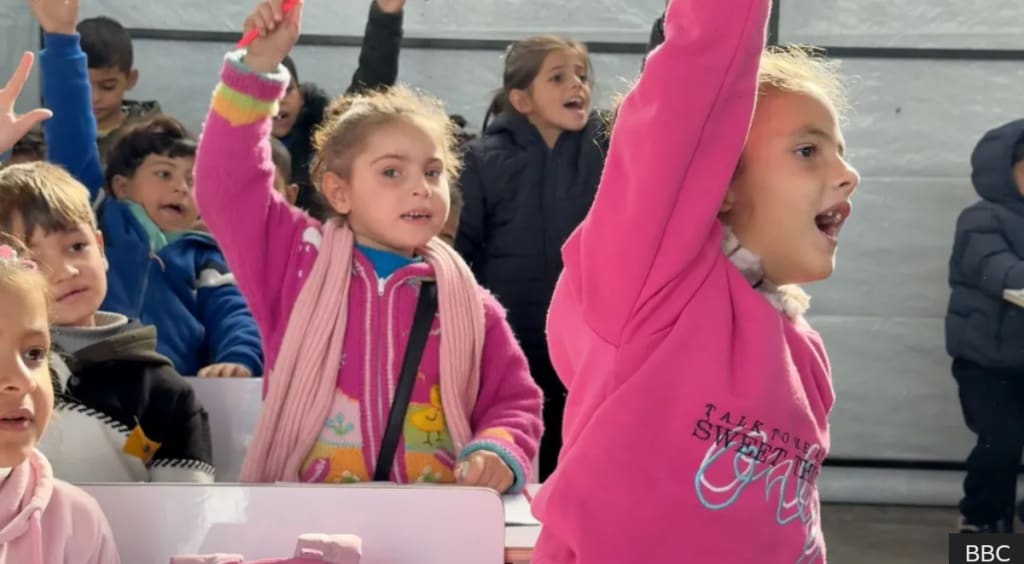
For countless children in Gaza, the concept of going to school has long been an uncertain dream rather than a daily reality. Years of political unrest, economic hardship, and intermittent conflict have disrupted formal education, leaving a generation of young learners struggling to access the classrooms they deserve. Yet, amid the challenges, there is a renewed sense of hope: children in Gaza are returning to school, eager to learn, connect, and rebuild a sense of normalcy in their lives.
The situation in Gaza has been dire for decades. Recurrent clashes, restricted movement, and limited access to essential services have left schools either damaged or overcrowded. According to reports from humanitarian organizations, thousands of children were forced to miss months, sometimes years, of formal education, often relying on informal or makeshift learning arrangements. For many, education became a luxury rather than a right.
“The absence of school in the lives of these children is not just a gap in learning; it’s a gap in their development, their social growth, and their sense of security,” explains Laila Ahmed, an education coordinator with a local non-governmental organization in Gaza. “Returning to school is not simply about academics. It’s about restoring hope.”
For children who have spent formative years in conflict zones, returning to classrooms carries both excitement and challenges. Many students face emotional trauma from years of instability, and some struggle to catch up with curriculum requirements after prolonged absences. Teachers, too, face the daunting task of addressing significant educational gaps while managing crowded classrooms with limited resources.
Despite these obstacles, the determination of students and educators is evident. Schools in Gaza have reopened with new safety protocols and programs designed to support children who missed years of learning. Psychosocial support is being integrated into classrooms to help students cope with past traumas, while accelerated learning programs aim to bring students up to speed academically.
Fatima, a 12-year-old student from Gaza City, shares her experience: “I haven’t been to school in almost three years because of the fighting. Coming back now, I feel nervous, but also happy. I want to learn, to be like other kids who can study every day.” Stories like hers underscore the resilience of Gaza’s children and the critical role of education in their recovery.
International organizations and local authorities have been collaborating to make this return to school possible. The United Nations Relief and Works Agency (UNRWA), in partnership with local education ministries, has provided funding for school repairs, learning materials, and teacher training programs. These efforts are designed not only to restore physical access to schools but also to ensure that children receive quality education despite the challenges.
“The world often hears about the conflict in Gaza in terms of politics and humanitarian crises, but it’s important to focus on the children,” says Ahmed. “Education is the pathway to a future where they can dream, create, and contribute to their community.”
However, the road ahead remains fragile. Schools continue to face interruptions due to sporadic violence, electricity shortages, and limited infrastructure. The ongoing blockade and economic hardships exacerbate these difficulties, making it essential for international support and local commitment to remain strong. Without sustained investment, the progress achieved could easily be reversed, leaving children once again deprived of their right to education.
Parents, too, play a vital role in encouraging their children to return to classrooms. Many families who have been hesitant due to safety concerns are now finding reassurance in community support networks and improved school conditions. “Sending my children back to school was a difficult decision,” admits Hani, a father of three. “But I see how much they need it, not just for learning, but for their happiness and sense of normal life.”
The return to school is also symbolic for Gaza as a society. It represents resilience in the face of adversity and a commitment to rebuilding a generation that has endured the brunt of conflict. Educators hope that every day in the classroom will be an opportunity to cultivate curiosity, critical thinking, and creativity—tools that can empower children to imagine a future beyond the immediate struggles of their environment.
Community involvement remains crucial. Volunteer programs, parent-teacher associations, and local youth initiatives are working hand-in-hand to support schools and students. Initiatives such as community tutoring sessions, extracurricular activities, and psychosocial workshops are helping children reintegrate into a structured learning environment, fostering a sense of belonging and security.
Ultimately, the story of Gaza’s children returning to school is a story of hope, resilience, and determination. It is a reminder that education is not merely a service; it is a lifeline that nurtures growth, restores dignity, and builds the foundation for peace and stability. While challenges persist, the commitment of students, families, educators, and international partners signals that despite years of disruption, learning in Gaza can continue—and thrive.
As Fatima reflects on her first days back in the classroom, her optimism shines through: “I missed school so much. Now, I want to learn everything I can, so one day I can help my community and make life better for everyone here.” In her words, the broader significance of education in Gaza becomes clear—it is more than a path to knowledge; it is a path to hope, resilience, and a brighter future.
The journey ahead will be challenging, but each classroom reopened, every book distributed, and every child returning to school represents a small but powerful victory for Gaza. Education, in this context, becomes both a shield and a bridge—a shield against the ongoing turmoil and a bridge to a future filled with possibilities.
In the face of adversity, the children of Gaza are proving that learning cannot be stopped. And as they take their seats once again, pencils in hand and curiosity in their eyes, they are not just reclaiming classrooms—they are reclaiming their right to dream, to grow, and to hope.
About the Creator
Muhammad Hassan
Muhammad Hassan | Content writer with 2 years of experience crafting engaging articles on world news, current affairs, and trending topics. I simplify complex stories to keep readers informed and connected.
Keep reading
More stories from Muhammad Hassan and writers in The Swamp and other communities.
‘Unrealistic’ €600m Louvre Redevelopment Plans Must Be Scrapped, Say Striking Workers
The Louvre Museum, one of the most visited and iconic cultural institutions in the world, is facing growing internal unrest. A proposed €600 million redevelopment plan, aimed at modernizing parts of the historic Paris landmark, has sparked strikes and strong opposition from museum workers, who describe the project as “unrealistic,” disconnected, and harmful to both staff and visitors. While French authorities and museum management frame the redevelopment as a necessary investment in the Louvre’s future, workers argue that the plan prioritizes prestige and tourism over basic working conditions, conservation needs, and public service. The dispute has now become a broader debate about how cultural institutions should balance ambition with sustainability. What Is the €600 Million Louvre Redevelopment Plan? The proposed redevelopment plan envisions a major transformation of the Louvre’s infrastructure. According to museum leadership, the project would focus on: Renovating aging galleries and visitor areas Improving crowd management and accessibility Expanding commercial and exhibition spaces Enhancing the museum’s global competitiveness Supporters of the plan argue that the Louvre, which welcomes millions of visitors each year, must evolve to meet modern expectations. With rising tourism and increasing pressure on historic buildings, investment is portrayed as unavoidable. However, for the people who keep the museum running every day, the plan looks far less inspiring. Why Louvre Workers Are Striking Museum employees — including gallery attendants, security staff, and conservation workers — say the redevelopment proposal is deeply disconnected from reality. Their main concerns include: 1. Chronic Staff Shortages Workers argue that the Louvre is already struggling to function properly due to understaffing. Galleries are often forced to close, visitor flow becomes chaotic, and staff face burnout — issues they say will only worsen during large-scale construction. From their perspective, spending hundreds of millions on redevelopment while basic staffing needs remain unmet is not just impractical, but irresponsible. 2. Daily Working Conditions Are Being Ignored Striking workers emphasize that many essential issues have gone unresolved for years: Overcrowded galleries Insufficient rest areas for staff Outdated safety infrastructure Increased stress from record visitor numbers They argue that before dreaming of ambitious architectural upgrades, management should focus on making the museum workable and safe on a daily basis. 3. Cultural Mission vs. Commercialization Another major point of tension is the fear that the redevelopment prioritizes commercial appeal over cultural preservation. Workers worry that expanding shops, ticketed exhibitions, and premium experiences will transform the Louvre into a brand-first attraction rather than a public museum. For many employees, the Louvre is not just a tourist destination — it is a public cultural institution with an educational and preservation mission that should come first. Why Workers Call the Plan ‘Unrealistic’ The word “unrealistic” has become central to the workers’ criticism. They argue that the plan underestimates the complexity of renovating a centuries-old building while keeping it open to the public. Large-scale construction could lead to: Frequent gallery closures Reduced visitor experience Increased pressure on remaining open spaces Higher security and safety risks Workers say that without proper staffing and consultation, the redevelopment could undermine the very experience it claims to improve. A Broader Cultural Policy Debate in France The Louvre dispute reflects a larger conversation in France about cultural funding and labor priorities. As public institutions face budget pressures, workers across the cultural sector have increasingly criticized what they see as top-down decision-making. Unions argue that cultural workers are often asked to support grand national projects while coping with stagnant wages, temporary contracts, and rising workloads. In this context, the Louvre strikes are not an isolated incident, but part of a wider resistance to symbolic mega-projects that overlook human costs. Management and Government Response Louvre management has defended the redevelopment plan, stating that long-term investment is essential to preserve the museum’s status and protect its collections. Officials argue that delaying modernization could lead to greater costs in the future. French authorities have also emphasized the Louvre’s role as a global cultural ambassador, suggesting that the redevelopment would strengthen France’s cultural influence. However, critics note that these responses have so far failed to directly address workers’ core demands: more staff, better working conditions, and meaningful consultation. The Risk to the Louvre’s Global Reputation Ironically, workers warn that pushing ahead with an unpopular redevelopment could damage the Louvre’s international image. Strikes, gallery closures, and negative headlines risk creating the impression of a museum in crisis. Visitors may face long lines, restricted access, and overcrowding — problems that no amount of architectural redesign can quickly fix. From the workers’ perspective, investing in people rather than prestige is the best way to protect the Louvre’s reputation. What Are Workers Demanding Instead? Rather than rejecting change entirely, striking staff are calling for a reordering of priorities. Their demands include: Immediate recruitment of additional staff Long-term investment in working conditions Gradual, realistic renovation plans Greater involvement of workers in decision-making They argue that meaningful reform should start from the ground up, not from expensive headline projects. Conclusion: A Museum at a Crossroads The clash over the €600 million redevelopment plan places the Louvre at a critical crossroads. On one side is a vision of modernization, global prestige, and architectural ambition. On the other is a workforce demanding realism, respect, and sustainability. Whether the redevelopment plan is scrapped, scaled back, or redesigned, one thing is clear: the future of the Louvre cannot be built without the people who make it function every day. As striking workers continue to make their voices heard, the debate raises a fundamental question for cultural institutions everywhere: Should museums chase grandeur — or first secure the foundations that allow culture to thrive?
By Muhammad Hassan2 months ago in The Swamp
The Forsyth House Fire
Since 1851, Forsyth House has stood on the corner of Union Street and Gordon Street in the heart of Glasgow. Its iconic, or was... because on Sunday 8th of March, 2026, a fire broke out in a small, seemingly un-named shop in the building and tore all that history down. As I write, the rubble is still unsettled and the street is still blocked off. Central Station is quiet on the upper level, and around 30 small businesses have quite literally gone up in smoke.
By S. A. Crawford3 days ago in The Swamp


Comments
There are no comments for this story
Be the first to respond and start the conversation.